
Shirana Shahbazi: All at Once — Monir Farmanfarmaian, Between Geometry, Reflection and Memory
Works by the late Iranian artist Monir Shahroudy Farmanfarmaian are currently on view at Kunstmuseum Luzern as part of Shirana Shahbazi: All at Once. An Interplay with Li Tavor.
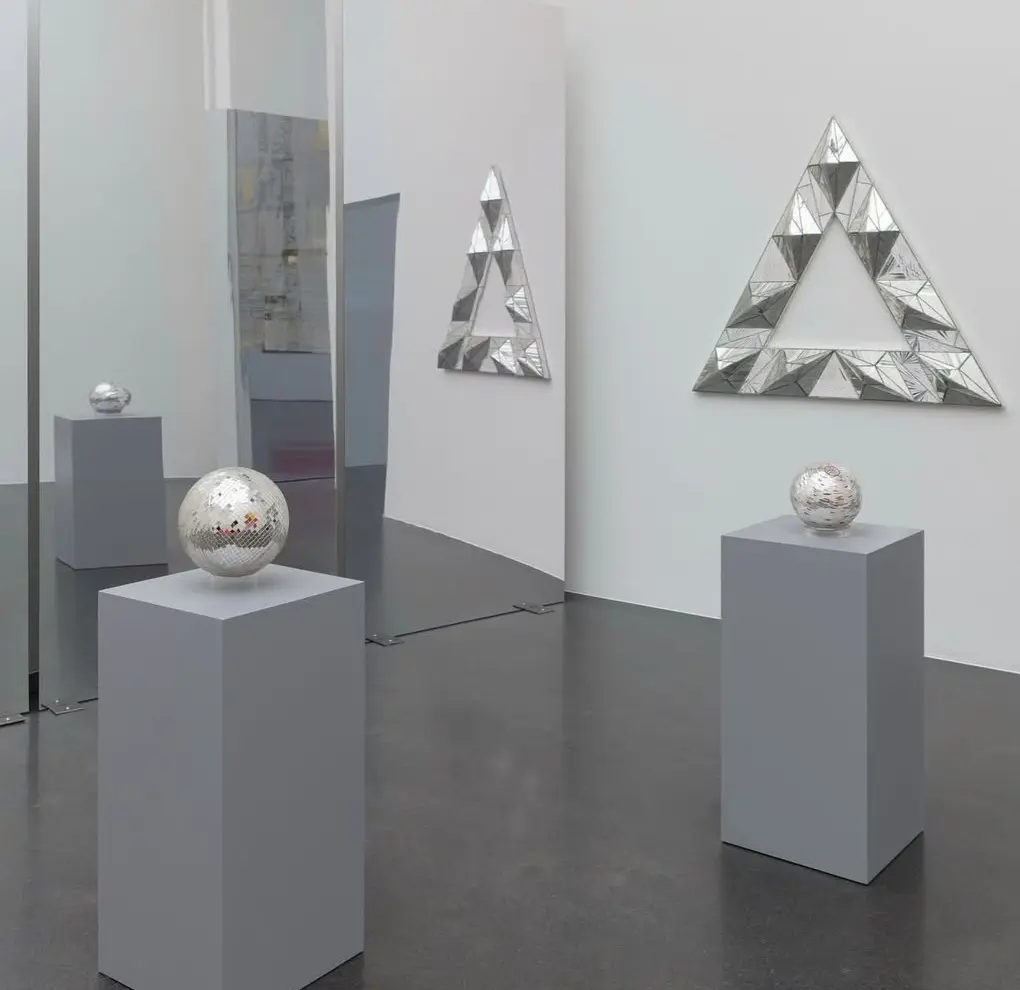
ArtDayMe : Running from 4 July to 18 October 2026, the exhibition is curated by Fanni Fetzer in cooperation with Museum Kurhaus Kleve. Alongside works by Shirana Shahbazi and Li Tavor, Farmanfarmaian’s mirror constructions introduce a distinctly Iranian language of geometry, reflection and spatial experience.
A Show Built Around Layers and Space
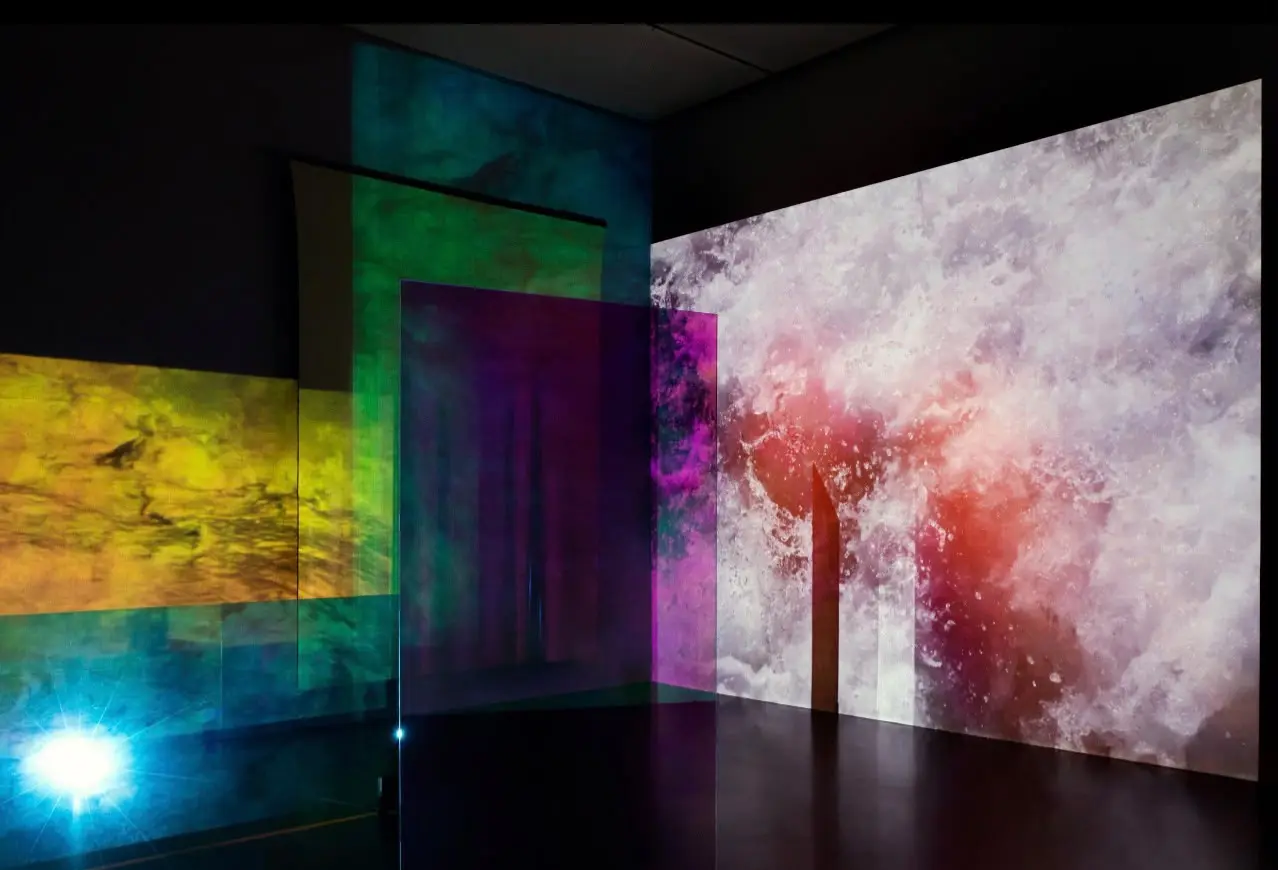
The exhibition brings together works from different stages of Shirana Shahbazi’s career, presenting photography alongside printing techniques, colour and spatial interventions. Her practice moves between figuration and abstraction, often creating ambiguous spaces in which it becomes difficult to distinguish inside from outside, foreground from background, or image from reality.
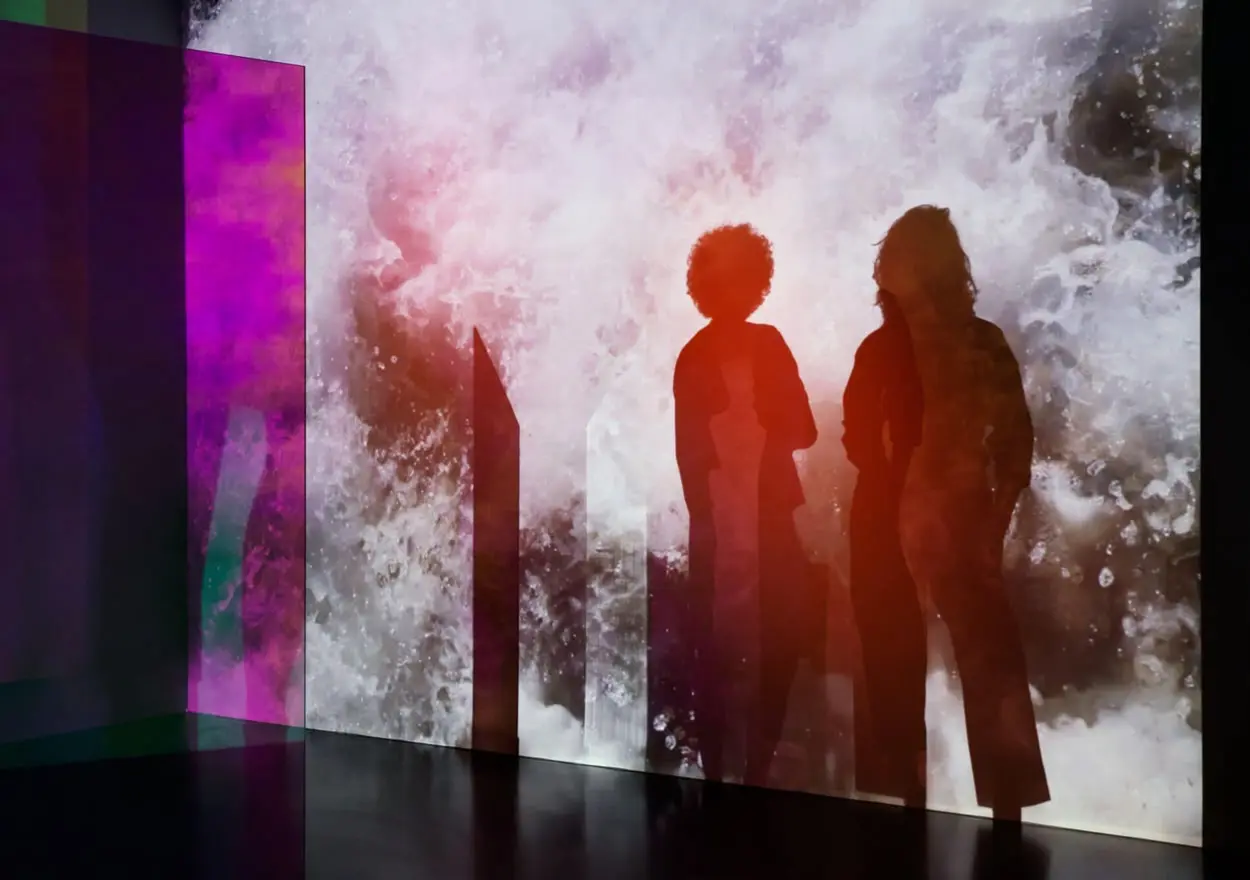
Among the works presented is her ongoing Displacement series, in which photographed architectural fragments are transformed into layered black-and-white images and intensified with hand-applied colour. Her video work An Other Place (2023), her first experiment with 16mm film, also forms part of her exploration of perception and constructed space.
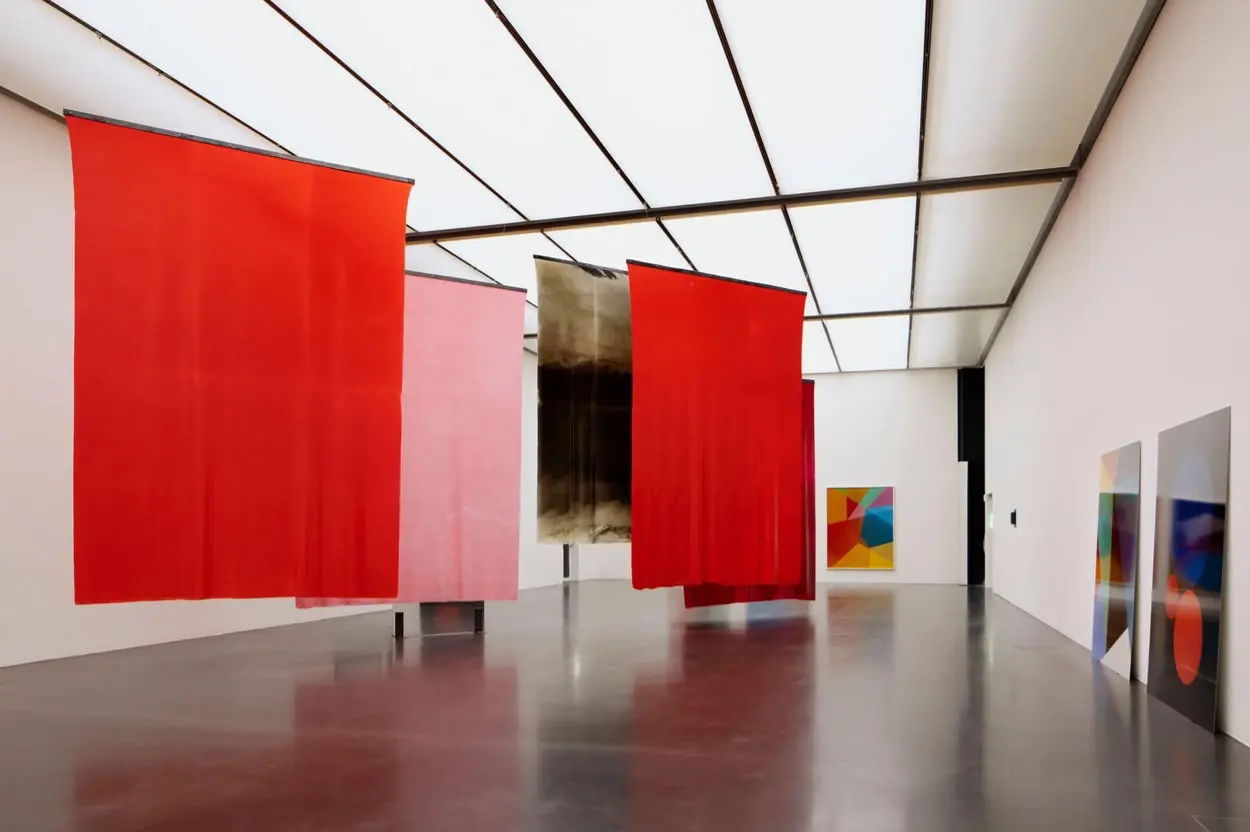
The exhibition expands beyond Shahbazi’s photographic language through the architectural intervention of Li Tavor, who responds to the museum space with latex panels suspended from the ceiling. Their position and transparency create changing overlaps with Shahbazi’s works, allowing the exhibition itself to shift according to the viewer’s perspective.
It is within this layered environment that Monir Farmanfarmaian’s work takes on particular resonance.
Geometry with a Memory
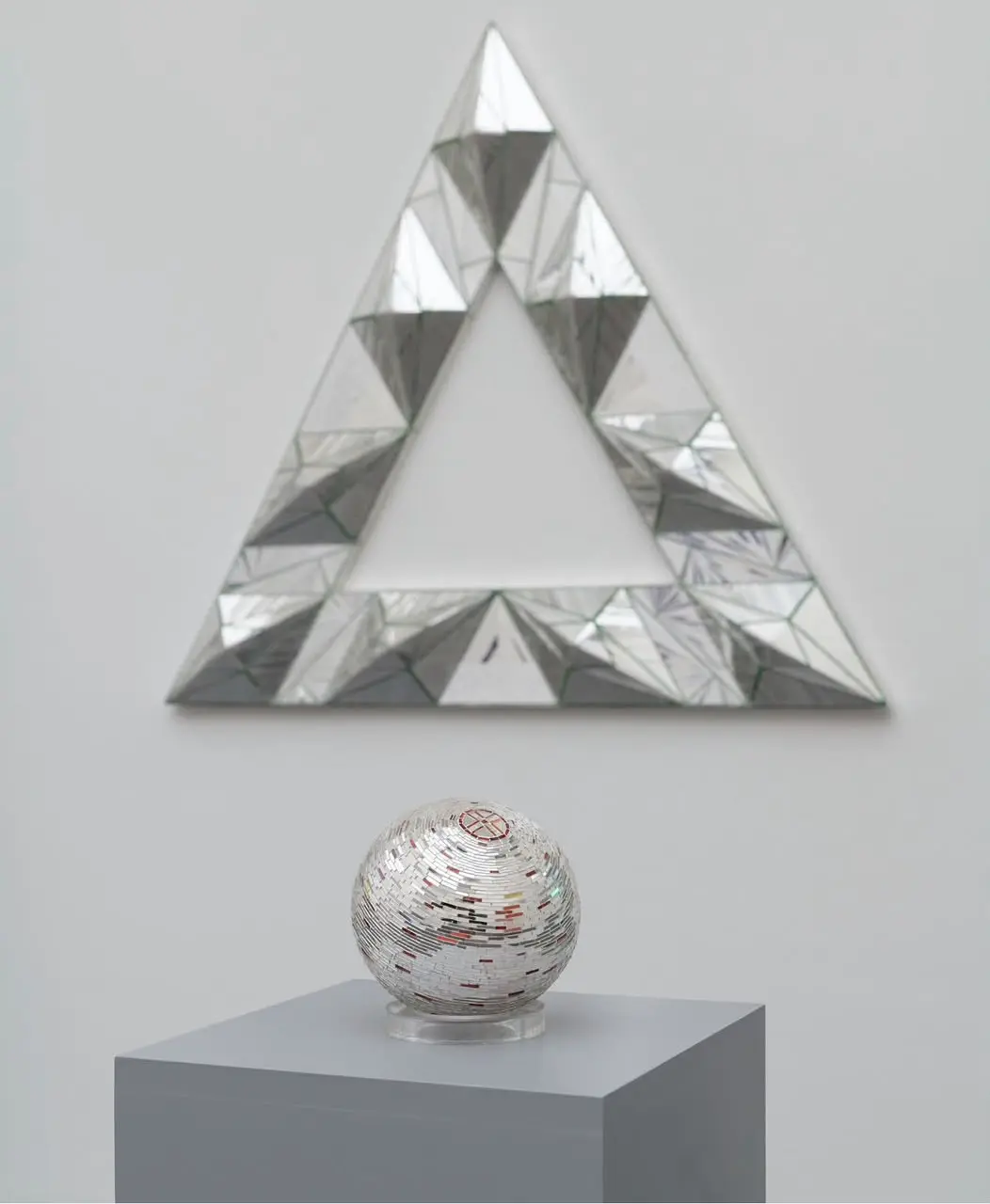
Farmanfarmaian’s mirror works are immediately striking for their precision and luminosity. Yet their significance goes beyond visual beauty.
Drawing on Iran’s long tradition of āینهکاری—decorative mirror work in architecture—she transformed a traditional craft into a contemporary artistic language. Geometric structures, repetition and fragmented reflections became ways of connecting Iranian heritage with modern abstraction.
The mirror, in her hands, is never simply a surface. It captures light, fragments the surrounding architecture and reflects the viewer back into the work.
A Conversation Across Generations
At Kunstmuseum Luzern, Farmanfarmaian’s work enters a dialogue with Shahbazi’s exploration of layers, ambiguity and the instability of perception.
Shahbazi builds complex visual spaces through photography, printing and colour.
Farmanfarmaian reaches related questions through geometry, mirrors and reflection.
Their approaches are different, but both invite the viewer to reconsider what—and how—we see.
Tavor’s suspended latex panels add another spatial dimension, while Farmanfarmaian’s reflective surfaces make the surrounding museum part of the artwork itself.
Beyond Decoration
There is something deeply human in Farmanfarmaian’s geometry.
A precisely constructed pattern can suddenly contain the reflection of a person, a window or a changing beam of light. The work becomes different with every viewer and every moment.
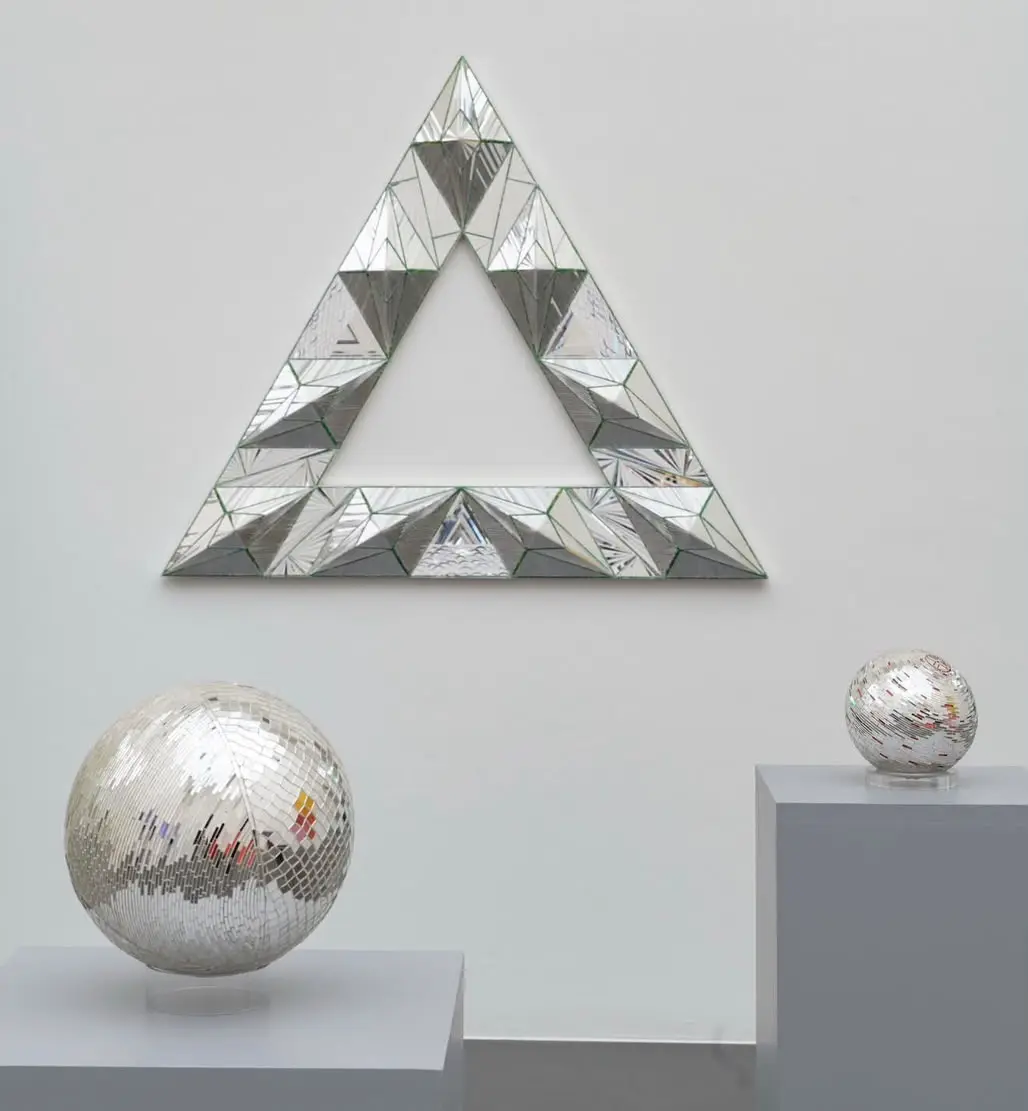
This is perhaps why her art continues to speak across generations. Her mirrors carry the memory of Iranian architecture and craft, while remaining open to contemporary interpretations of space, identity and perception.
LEAVE A RELPY