
Hoor Al Qasimi Named Among TIME100 Art 2026’s 100 Most Influential Figures in Art
The Sharjah Art Foundation president and director, described by TIME as an “Art Ambassador,” has transformed Sharjah’s artistic landscape into an international platform for contemporary art, cross-cultural dialogue, and marginalized voices.
ArtDayMe : The global influence of the Middle East’s contemporary art institutions has received significant recognition with the inclusion of Sheikha Hoor Al Qasimi, president and director of the Sharjah Art Foundation, in the inaugural TIME100 Art 2026 list.
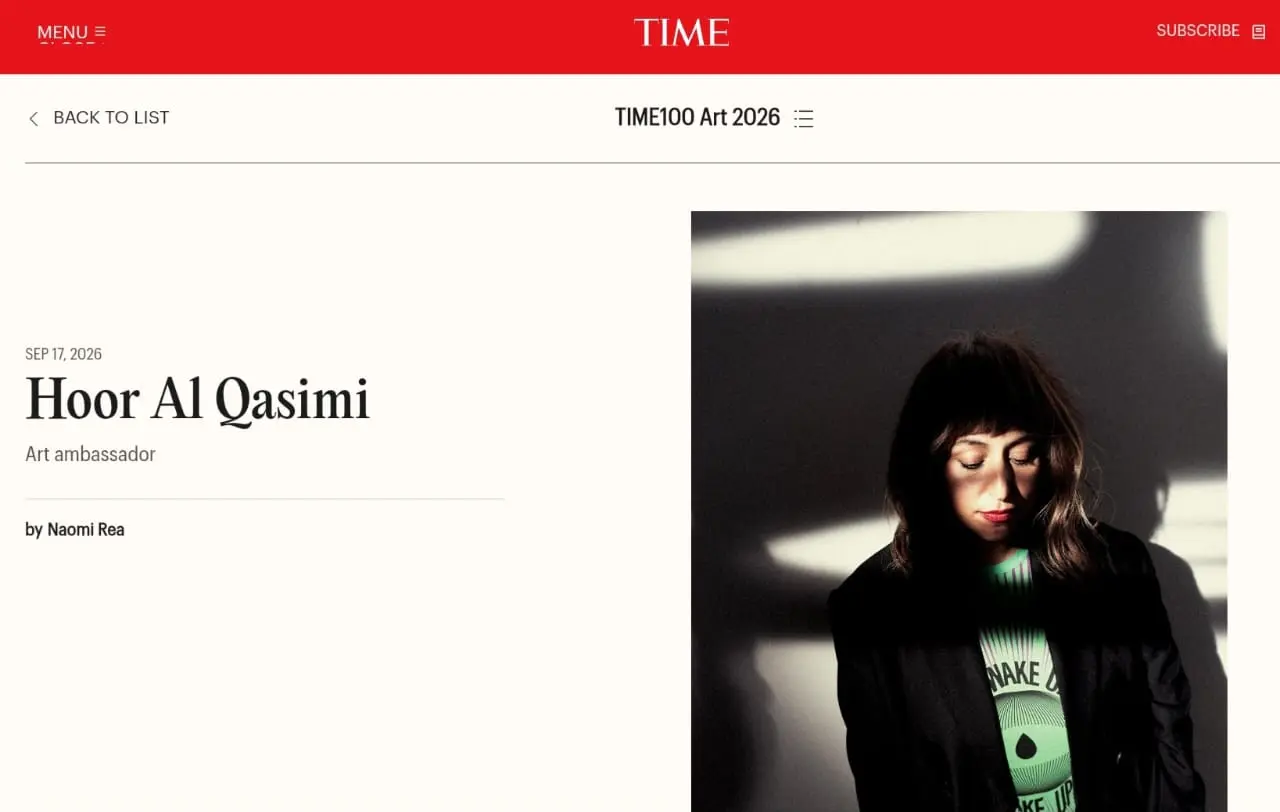
Published by TIME on September 17, 2026, the profile identifies Al Qasimi as one of the 100 most influential people in art and assigns her the title “Art Ambassador.” Written by art journalist Naomi Rea, the TIME feature presents Al Qasimi not simply as an institutional leader, but as a connector between cultures, artistic communities, and different intellectual traditions.
Her inclusion in the inaugural TIME100 Art list
places Sharjah and the United Arab Emirates at the center of an international conversation about the evolving geography of contemporary art.
_ From Sharjah Biennial to the Global Art World
TIME's profile begins by describing Hoor Al Qasimi as a "connector"—a person whose career has been built around bringing people, ideas, and cultures together through art.
According to Naomi Rea's article, Al Qasimi first organized the Sharjah Biennial at the age of 22. What was once a relatively modest local art exhibition gradually developed into an internationally recognized contemporary art event under her leadership and vision.
The transformation of the Sharjah Biennial is central to understanding Al Qasimi's influence. Rather than positioning the region's artistic institutions as followers of established Western models, her work has helped establish Sharjah as an independent intellectual and cultural destination.
TIME emphasizes that her approach has been driven by a belief that culture can bridge differences and bring people together. This philosophy has shaped her work as president and director of the Sharjah Art Foundation, one of the most important contemporary art institutions in the Arab world.
The Foundation has become a platform for exhibitions, commissions, residencies, publications, research, and educational programs, connecting artists and thinkers from across the globe.
_ An Institution Built Around Dialogue
One of the initiatives highlighted in the TIME article is the annual March Meeting, a gathering that brings artists, curators, and theorists together for several days of discussion and debate.
The March Meeting reflects an important aspect of Al Qasimi's institutional philosophy: art is not limited to exhibitions and objects. It is also a space for intellectual exchange, critical thinking, and the formation of new artistic networks.
Under her leadership, Sharjah has increasingly become a meeting point for international artistic practices, particularly those that challenge conventional geographical and cultural hierarchies in the art world.
This emphasis on dialogue has helped distinguish the Sharjah Art Foundation from institutions whose primary role is collecting or presenting established artistic canons.
_ Indigenous, Palestinian, and Iranian Voices at the Sydney Biennale
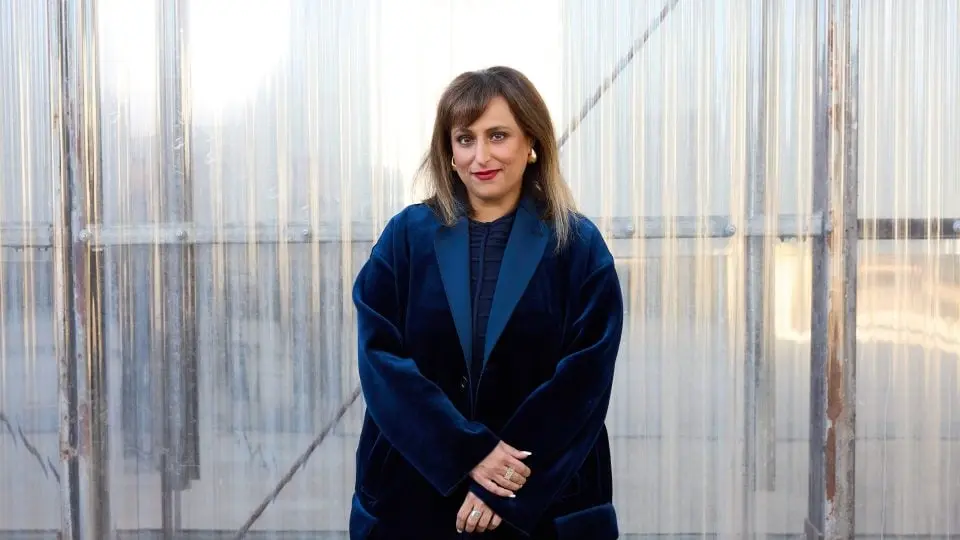
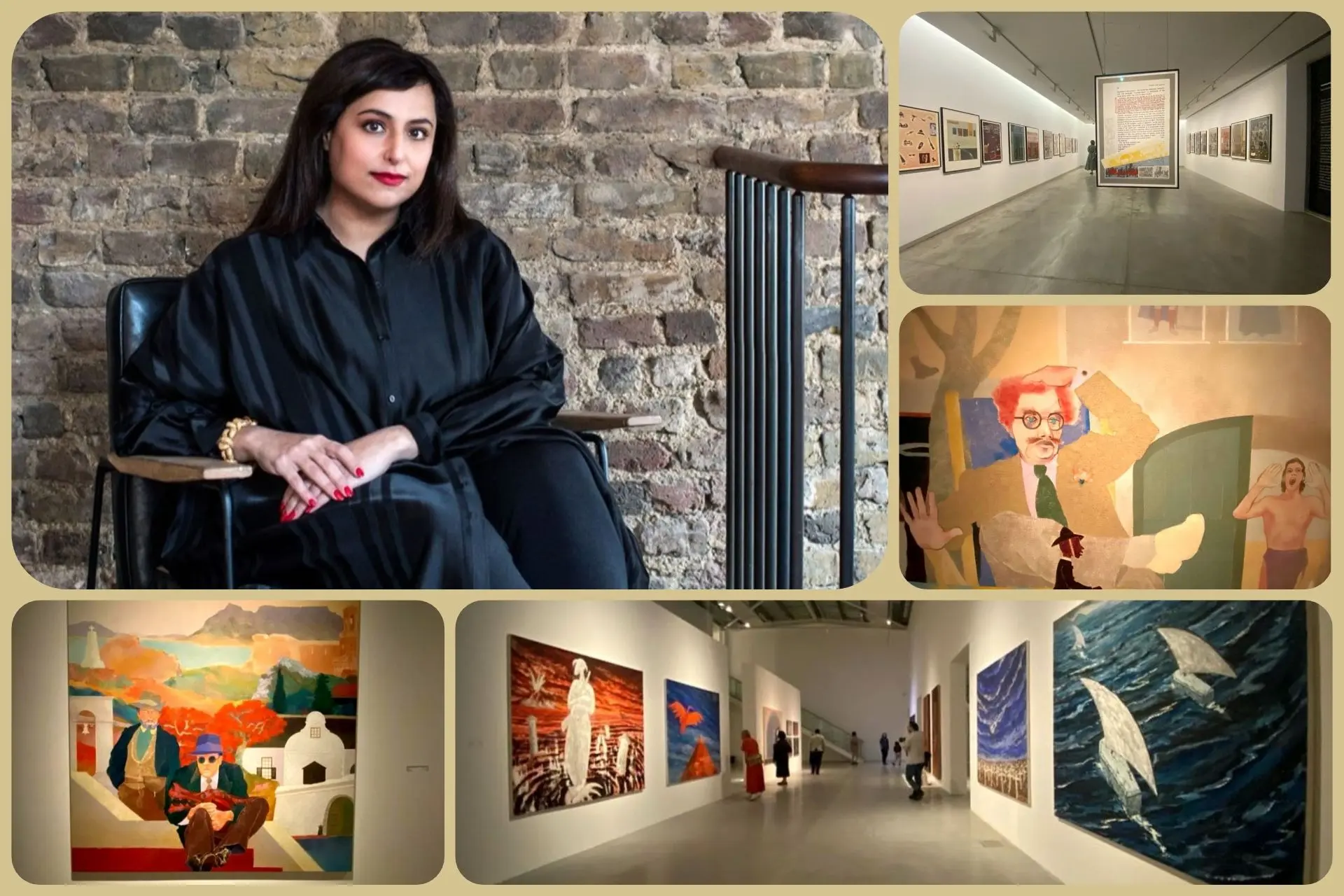
TIME also highlights Al Qasimi's role as artistic director of the 2026 Biennale of Sydney.
According to the article, she brought particular attention to powerful artistic practices by Indigenous, Palestinian, and Iranian artists. Her curatorial approach received recognition from critics for addressing artistic perspectives that have frequently been marginalized within dominant international art narratives.
This aspect of her work is especially significant in the context of contemporary curatorial practice.
Rather than treating international art as a neutral collection of global voices, Al Qasimi's projects have consistently emphasized questions of representation, history, displacement, identity, and cultural memory.
Her work demonstrates how major international exhibitions can become spaces for expanding the boundaries of visibility—particularly for artists whose work emerges from regions or communities historically underrepresented in global cultural institutions.
_ A Cultural Ambassador Beyond the Exhibition Space
TIME's recognition of Al Qasimi extends beyond her role as a curator and arts administrator.
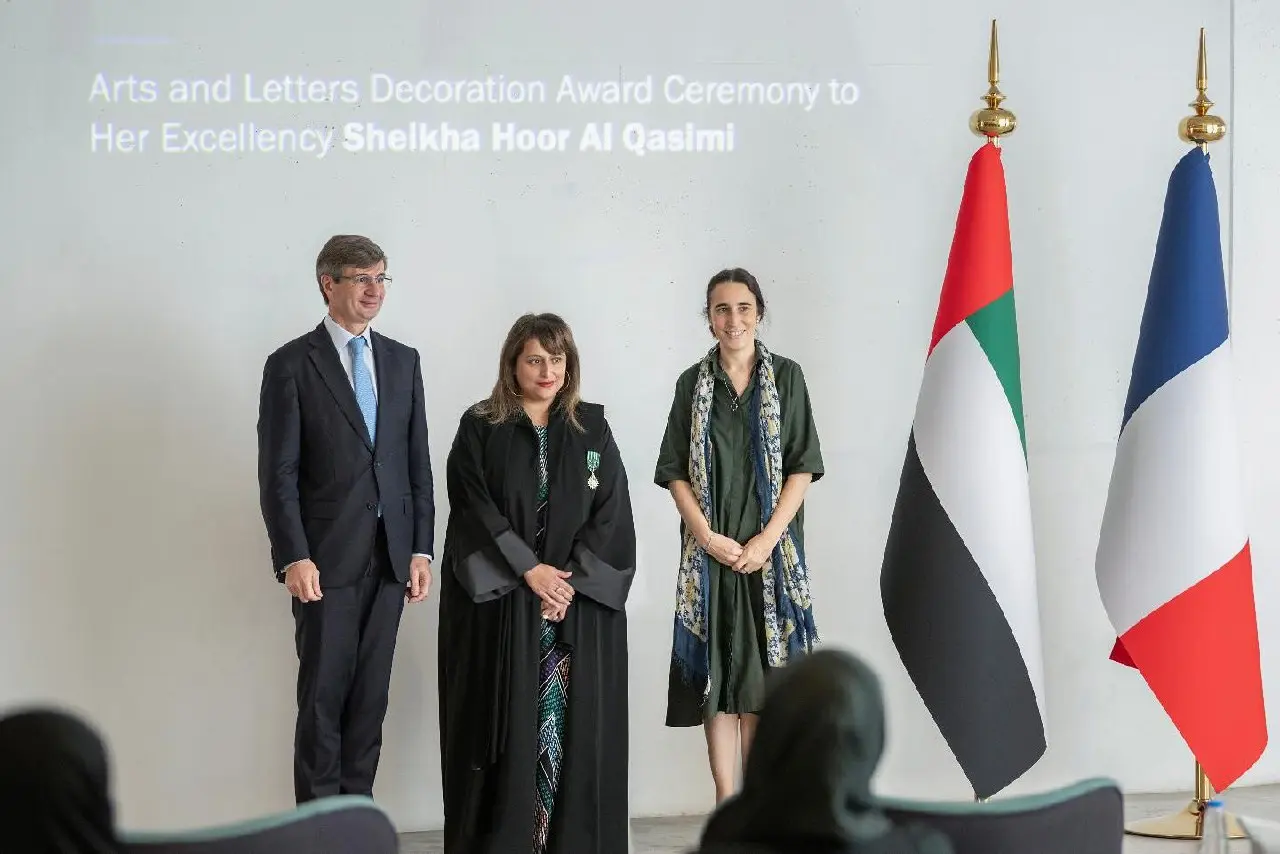
The article notes that, in recognition of her contributions to cross-cultural dialogue, she was entrusted in November with a diplomatic role as "ambassador extraordinary" by the Arab League Educational, Cultural and Scientific Organization.
This appointment reflects the growing intersection between cultural diplomacy and contemporary art in the Middle East.
In an increasingly interconnected but politically and socially unstable region, cultural institutions can function as spaces of dialogue that operate across national boundaries. Al Qasimi's career has increasingly embodied this role.
As she tells TIME: “The more we can try to connect, the better.”
The statement encapsulates a philosophy that has guided much of her professional work: building connections through culture rather than relying exclusively on political or economic frameworks.
_ Nine Institutional Roles and a New Responsibility
The TIME profile also points to the extraordinary breadth of Al Qasimi's institutional responsibilities.
In July 2026, she became president of the Sharjah Museums Authority, taking on responsibility for developing a cohesive strategy for the emirate's network of 16 museums and heritage houses.
With this appointment, TIME notes that her professional responsibilities have expanded to nine institutional roles, including leadership positions involving four cultural institutions and two universities.
The scale of these responsibilities illustrates the distinctive model of cultural development that has emerged in Sharjah.
Art, museums, education, heritage, research, and international exchange are increasingly interconnected within the emirate's cultural infrastructure.
Al Qasimi occupies a unique position within this ecosystem: she is simultaneously a curator, institutional director, cultural strategist, and international ambassador for contemporary art.
_The Significance of TIME100 Art 2026
The inclusion of Hoor Al Qasimi in TIME100 Art 2026 carries significance beyond an individual recognition.
TIME is one of the world's most established international magazines, and the TIME100 lists have become influential reference points for identifying individuals shaping global conversations across different fields.
The inaugural TIME100 Art list introduces a dedicated platform for recognizing influential figures in the international art world.
Unlike traditional art-world rankings, which often focus on market power, auction records, or institutional prestige, TIME's approach brings together individuals whose influence extends across artistic production, curatorial practice, museums, cultural policy, philanthropy, research, and public engagement.
Al Qasimi's inclusion is particularly noteworthy because it reflects the growing recognition of the Middle East not merely as an emerging art market, but as an active producer of cultural knowledge and institutional innovation.
For decades, the global art system was largely structured around European and North American institutions. Today, cities such as Sharjah, Doha, Abu Dhabi, and Dubai are increasingly contributing to the international discourse through museums, biennials, foundations, art fairs, and cultural initiatives.
The recognition of Hoor Al Qasimi by TIME is part of this broader transformation.
_ Sharjah's Expanding Cultural Influence
Over the past two decades, Sharjah has established a distinctive identity within the global contemporary art landscape.
The Sharjah Biennial, Sharjah Art Foundation, and the emirate's network of museums and cultural institutions have collectively created an ecosystem that emphasizes artistic experimentation, research, and international collaboration.
Al Qasimi's role has been fundamental to this development.
Her curatorial projects have consistently challenged the idea that contemporary art must be understood through a single dominant narrative. Instead, they have created space for multiple histories, geographies, and artistic languages to coexist.
This approach has also contributed to the visibility of artists from the Global South, the Arab world, Africa, Asia, and other regions whose practices have often remained outside mainstream international institutions.
In this context, the title "Art Ambassador" given by TIME is particularly revealing. It describes not only a professional position but also a broader cultural function.
Al Qasimi has become one of the most visible figures connecting regional artistic communities with the international art world.
_A Recognition of Institutional Leadership
The TIME profile ultimately presents Hoor Al Qasimi as a figure whose influence is rooted in institution-building.
Her career demonstrates how cultural institutions can shape a city's identity, create international networks, and influence artistic discourse far beyond their physical locations.
From the transformation of the Sharjah Biennial to the expansion of the Sharjah Art Foundation and her leadership in international biennials, Al Qasimi's work has consistently expanded the possibilities of what a contemporary art institution in the Middle East can represent.
Her inclusion in TIME100 Art 2026 therefore marks an important moment not only for her personal career but also for the region's cultural landscape.
It confirms that the contemporary art world is no longer defined exclusively by its traditional centers.
Sharjah's influence, and the institutional model developed under Hoor Al Qasimi's leadership, has become part of the global conversation.
LEAVE A RELPY