
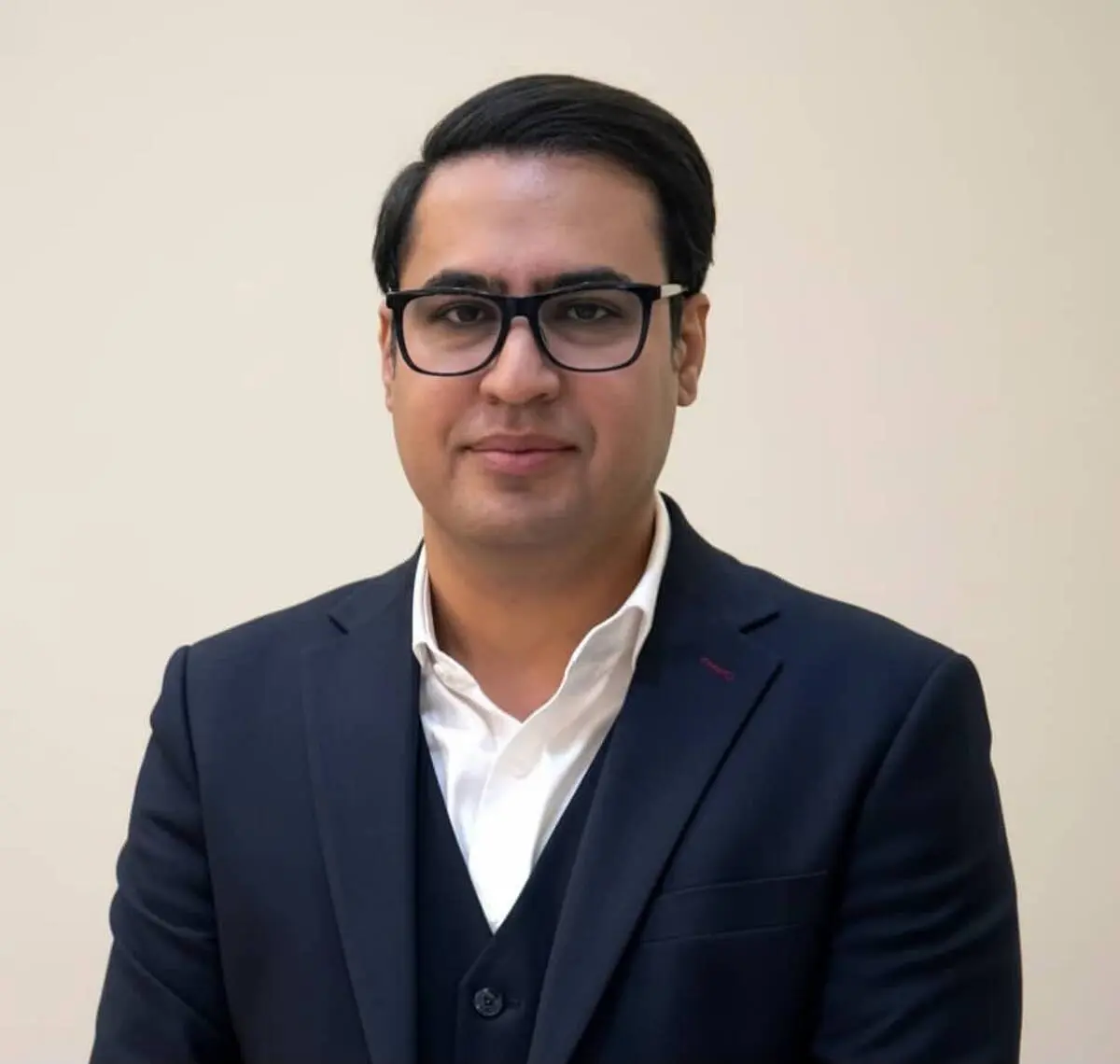
New Oil? An Analysis of the Art Economy in the Middle East by Seyedmohammad Omrany
Over the past decade, the economy of visual arts in the Middle East has shifted from a marginal and largely symbolic sphere to a significant component of the region’s cultural equations, investment strategies, and even soft-power diplomacy.
ArtDayMe : Seyedmohammad Omrany [Art Economy Expert] :
The economy of visual arts in the Middle East has, during the last ten years, evolved from a peripheral cultural activity into an influential field intersecting culture, investment, and national branding. Whereas two decades ago visual arts were largely perceived as a limited cultural practice, today they are increasingly regarded across many Middle Eastern countries as economic assets, tools of national image-making, and integral elements of the creative economy. This shift in perception has coincided with global transformations in the art market, the emergence of new collectors, and the influx of substantial public and private capital.
On a global scale, despite fluctuations caused by economic crises and geopolitical tensions, the visual arts market remains one of the more attractive investment arenas. Although the Middle East’s share of the global art market is still estimated at under one percent, regional trends indicate steady growth. Sales of works by Middle Eastern artists at international auctions have risen markedly over the past decade, with some reports pointing to a 30–40 percent increase in sales of modern and contemporary art from the region between 2013 and 2023. Cities such as Dubai, Abu Dhabi, and Riyadh have gradually become major hubs for regional art exchange, developing infrastructures that include art fairs, auction houses, museums, and cultural institutions.
One of the key drivers of this growth has been direct investment by governments and sovereign wealth funds. Countries such as Saudi Arabia, the United Arab Emirates, and Qatar have injected billions of dollars into cultural projects, seeking to diversify their economies away from oil dependency and position culture and art as pillars of future economic development. For example, the creative economy now accounts for several percentage points of Dubai’s GDP, while Saudi Arabia’s large-scale programs under the “Vision 2030” framework explicitly focus on expanding the art market, building museums, and attracting cultural tourism. Within this context, visual arts have become not merely cultural commodities, but integral parts of the tourism, investment, and international image-making value chain.
Alongside these investments, the consumer side of the art market in the Middle East has also undergone transformation. The growing number of private collectors, the expansion of online art sales, and the rise of art tourism have helped the regional art economy move beyond dependence on a handful of auctions or institutions. The online art market in the Middle East and North Africa has reached several billion dollars, and its annual growth rate suggests that a new generation of buyers—particularly among younger and middle-income groups—is entering the market.
Within this broader landscape, Iran occupies a distinctive and noteworthy position. Unlike many countries in the region, Iran’s visual arts economy has not been built on massive state-led investments, but rather on a deep-rooted and continuous domestic market. The history of gallery culture, collecting, and artistic production in Iran dates back to the 1960s and 1970s, and this historical continuity has led to the emergence of artists with established markets, stable tastes, and a certain degree of artistic authority. In terms of market structure, this places Iran closer to countries with long-standing artistic traditions.
These achievements have been realized under conditions in which Iran’s art market has effectively been deprived of foreign capital, international banking connections, and sustained participation in global art fairs. From this perspective, Iran’s art market can be described as a “resilient” market—one that relies primarily on domestic demand and endogenous capital. Internationally, Iranian modern art continues to account for the largest share of foreign sales. Works by artists such as Sohrab Sepehri, Parviz Tanavoli, Hossein Zenderoudi, and other figures of the golden generation of Iranian modernism have repeatedly achieved million-dollar prices at major international auctions over the past two decades. Estimates suggest that more than half of Iran’s global art turnover belongs to this segment, reflecting both the enduring strength of this generation and the relative weakness of systematic international promotion of contemporary Iranian art.
Domestically, visual arts have gradually acquired a more pronounced economic role alongside their cultural function. In an inflationary environment, artworks have become, for a segment of society, instruments for preserving the value of capital, thereby stimulating demand in both primary and secondary markets. Nevertheless, legal constraints, export barriers, financial transfer difficulties, and limited integration into the global art network remain among the principal challenges facing Iran’s art economy.
Overall, the visual arts economy in the Middle East is transitioning from an emerging phase toward consolidation. If countries in the region succeed in balancing investment, market transparency, and support for artists, this sector has the potential to become one of the driving forces of the creative economy. Iran, drawing on its history, artistic quality, and active domestic market, likewise has the capacity—should structural obstacles be addressed—to emerge as one of the major hubs of the art economy in the Middle East: a hub whose value lies not only in sales figures, but in cultural depth and artistic continuity.
LEAVE A RELPY