
Kiarash Yaghoubi and the Work Selected at the Fujairah Calligraphy Prize
Kiarash Yaghoubi and the Work Selected at the Fujairah Calligraphy Prize.
ArtDayMe : We examine a work by Kiarash Yaghoubi that was selected at the Fujairah International Calligraphy Prize.
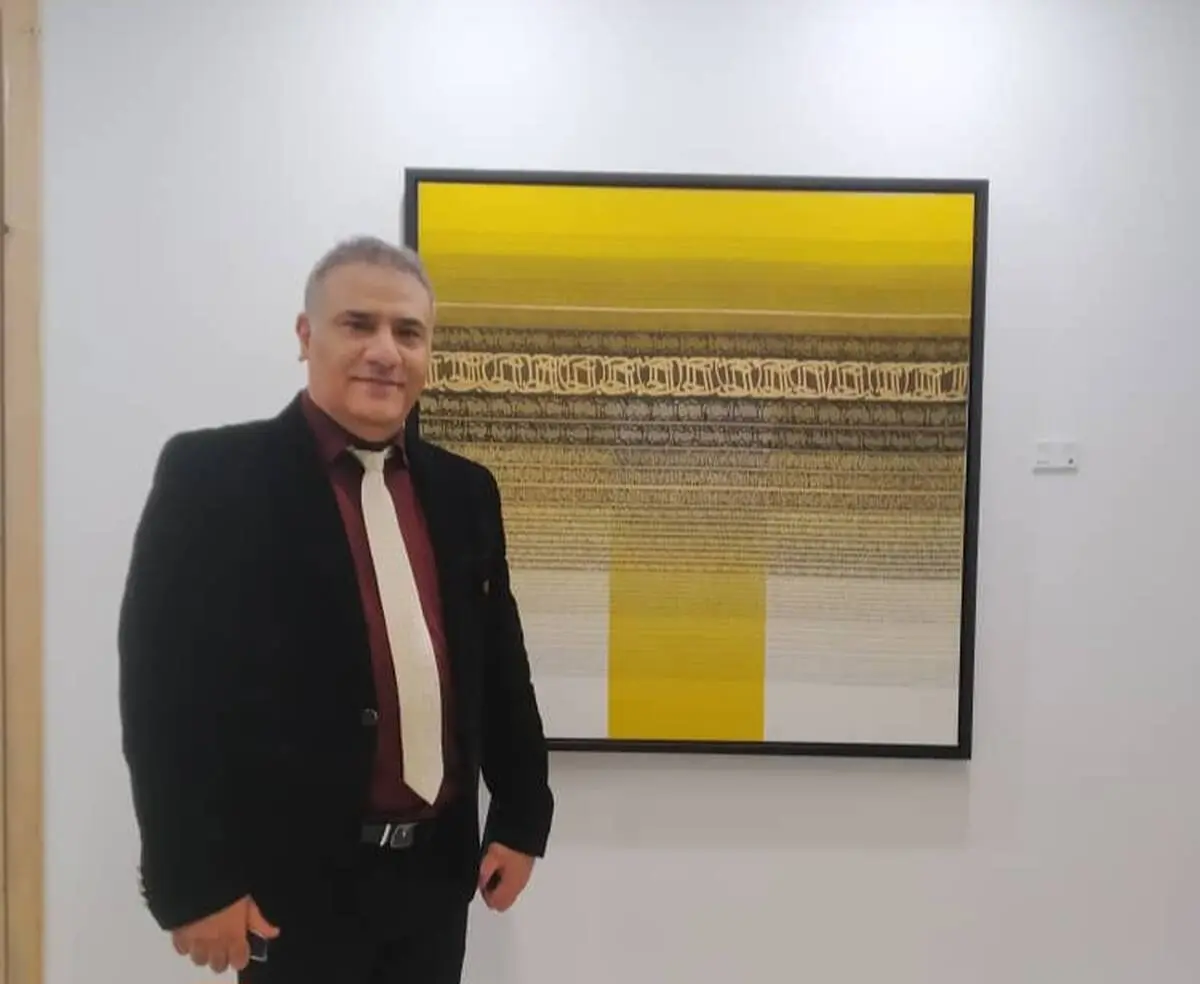
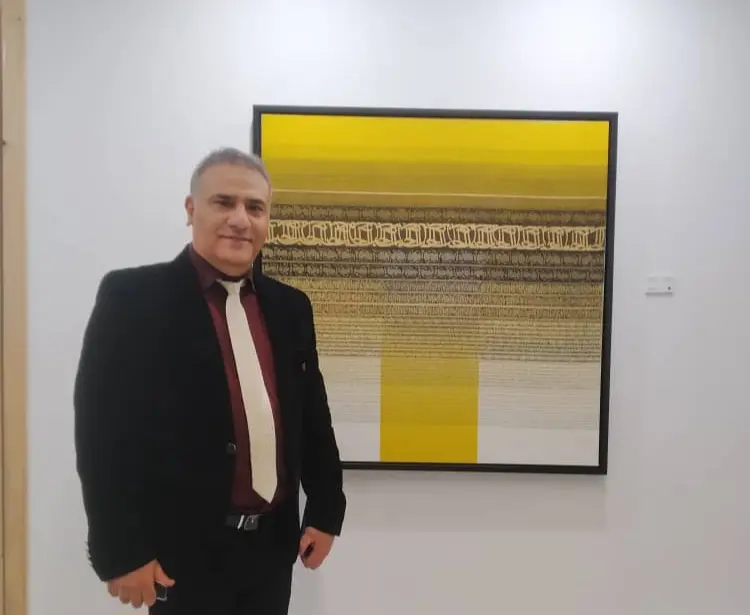
This piece belongs to the “Third Line” series, a body of work on which Yaghoubi has focused over the past three years. Created in 2025, the work measures 100 × 100 cm and is executed in mixed media on canvas (acrylic, ink, and gold leaf).

The artwork from Yaghoubi’s “Third Line” series stands as a significant example of a contemporary engagement with calligraphy and the structure of writing within the context of conceptual and abstract art. The square 100 × 100 cm format—balanced and neutral, yet simultaneously authoritative—reinforces a sense of centrality, stillness, and visual concentration.
From a compositional perspective, the structure is based on horizontal layering. Dense bands of script extend evenly across the canvas, generating a linear and repetitive rhythm. At the center, a more pronounced and legible band functions visually as a “gravitational axis.” This horizontal axis is intersected by a vertical golden column in the background—an encounter that forms a cross-like or coordinate structure, creating a controlled visual tension between horizon and verticality.
This geometric intersection constitutes the most critical structural element of the work and may be interpreted as a metaphor for the dialogue between tradition and contemporaneity, matter and meaning, or earth and transcendence.
The script itself hovers at the threshold between legibility and abstraction. While the artist employs the language of calligraphy, he detaches it from purely semantic function, treating it instead as an autonomous visual element. The density of lines intensifies in the central layers and gradually becomes lighter and more diffused toward the top and bottom edges, creating a gradient of compression that introduces spatial depth.
The title of the series, “Third Line,” suggests an intermediate approach—neither strictly classical calligraphy nor entirely deconstructed modern script, but rather a third domain in which line is redefined as image and image as text.
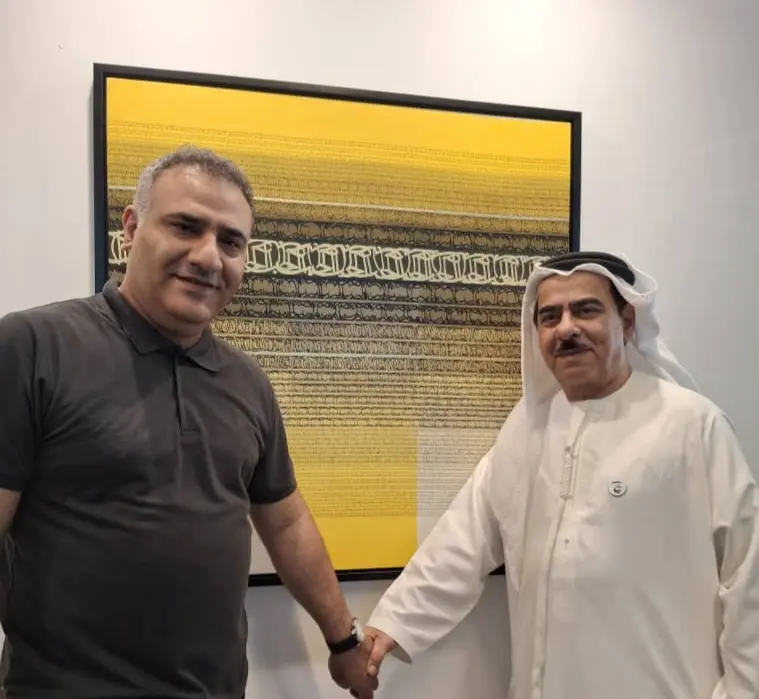
The palette is restrained yet deliberate: black, gray, white, and gold. Gold—whether through gold leaf or luminous yellow grounds—plays a pivotal role. In the Iranian-Islamic visual tradition, gold has long signified the sacred, illumination, and transcendence. Here, gold is neither decorative nor merely luxurious; it is conceptual. In contrast to the blackness of ink, it establishes a dialectic of light and darkness. The vertical golden column operates like a beam of light or a fissure in space, infusing the geometric structure with a spiritual or metaphysical dimension.
The use of mixed media (acrylic, ink, and gold leaf) generates varied textural layers. Ink provides linear delicacy and fluidity; acrylic establishes a controlled matte ground; and gold leaf introduces a reflective, luminous surface. This material diversity moves the work beyond pure two-dimensionality, granting it an object-like presence. As the viewing angle shifts, light reflections across the gold surface change, creating a dynamic experience for the viewer.
The repetition of horizontal lines produces a musical rhythm—a visual pulse that guides the eye upward and downward across the surface. Meanwhile, the vertical golden column interrupts this rhythm, introducing a conscious pause within the flow. This interruption becomes a point of contemplation: a moment that shifts the viewer from reading to seeing, and from seeing to thinking.
Although inherently two-dimensional, the layered structure, line density, and tonal modulation generate perceptual depth. The central bands appear to advance, while the more diffused areas recede into the background, distancing the work from flatness.
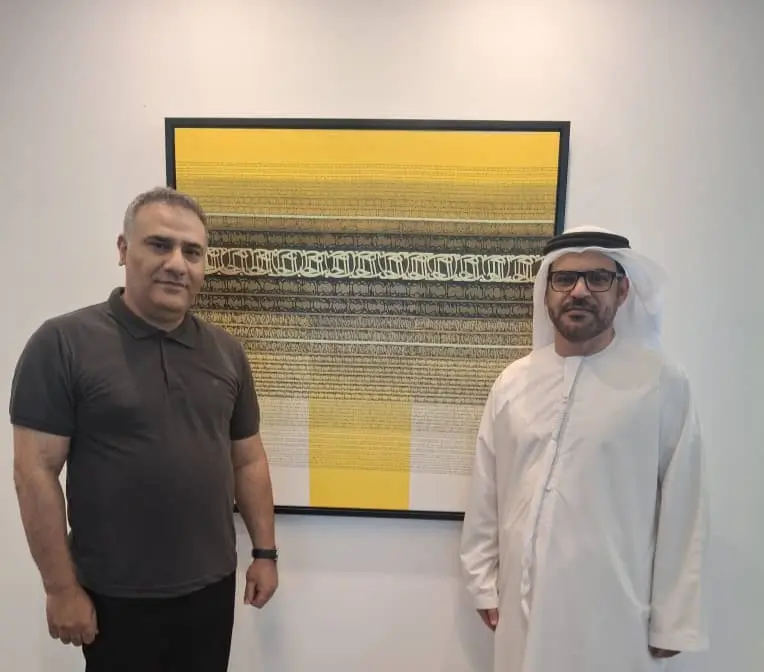
Conceptually, “Third Line” may be read as a reflection on the contemporary condition of calligraphy in Iran and the broader Middle East—an attempt to move beyond the binary of tradition and modernity toward an intermediate territory. Here, line is neither solely a bearer of text nor merely ornamental form; it becomes an independent visual language.
The intersection of dense horizontal scripts with the vertical golden column can be interpreted as the meeting of the earthly (horizon) and the transcendent (vertical axis). It may also be understood as a statement on the layered nature of cultural identity—formed through repetition, history, memory, and light.
The work aligns with the trajectory of contemporary calligraphy in Iran and the Middle East, yet adopts a more minimalist and structural approach. Its distance from figuration and emphasis on geometry and materiality bring it closer to conceptual and abstract art, while its cultural roots remain clearly traceable.
Yaghoubi’s “Third Line” is an intelligent synthesis of line, material, and light, presented within a controlled geometric framework. It is not merely an aesthetic experience but a meditation on the essence of line, cultural memory, and the relationship between tradition and contemporaneity. The 100 × 100 cm square canvas functions as a contemplative field where repetition, silence, and radiance converge, inviting a multilayered reading.
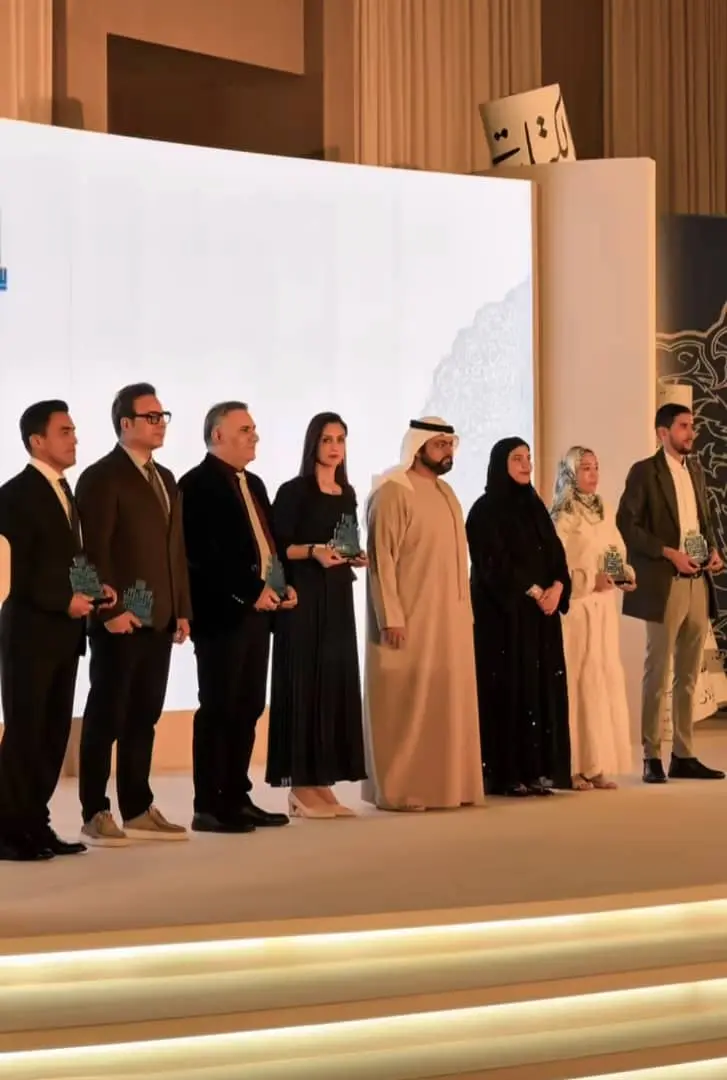
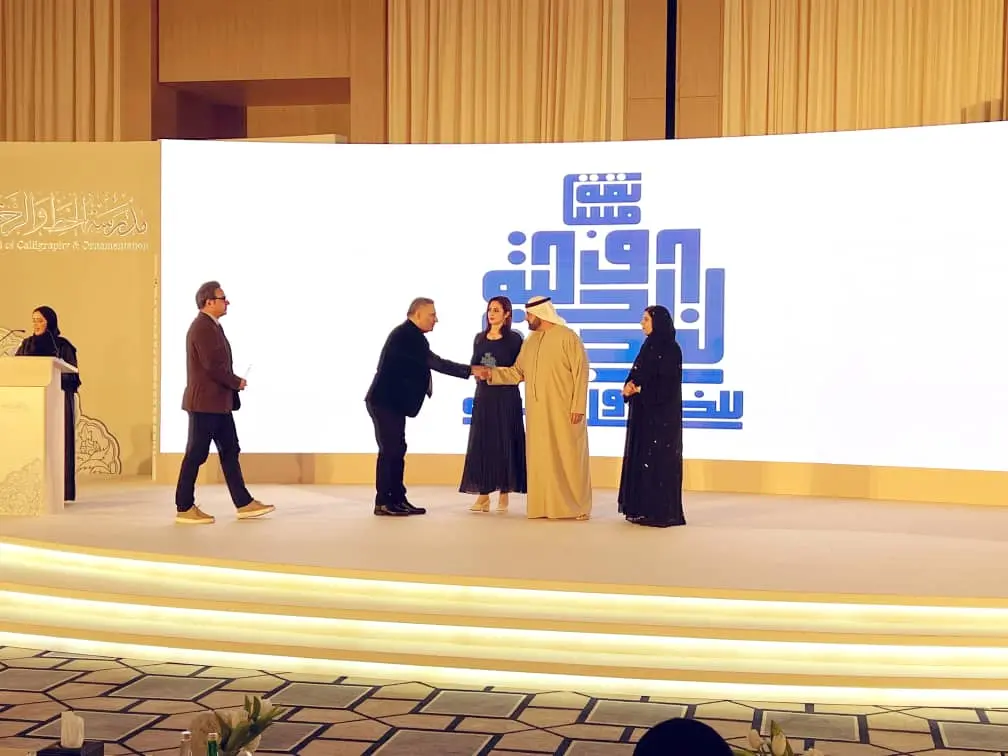
It is noteworthy that Kiarash Yaghoubi is the recipient of ten prestigious calligraphy awards in Iran, including First Prize at the Tehran Qalam Calligraphy Festival and a Selected Work Award at the 400th Anniversary Commemoration of Mir Emad. He has held more than ten solo exhibitions and participated in over thirty group exhibitions.
Seven of his works are held in the collection of the Islamic Arts Museum Malaysia, the largest museum of Islamic art in Southeast Asia. Six of his works were sold at Opera Gallery Dubai, followed by further successful exhibitions and sales in London, Japan, Bahrain, the UAE, and Turkey.
On February 25, 2025 (7 Esfand 1403), an artwork from Yaghoubi’s new series was presented by Mojdeh Gallery at the Albahie Auction House in Doha. In that sale, a 100 × 100 cm piece from the “Third Line” series achieved a price of $2,600.
These achievements have led numerous prominent collectors to include works by Kiarash Yaghoubi in their collections.
LEAVE A RELPY