
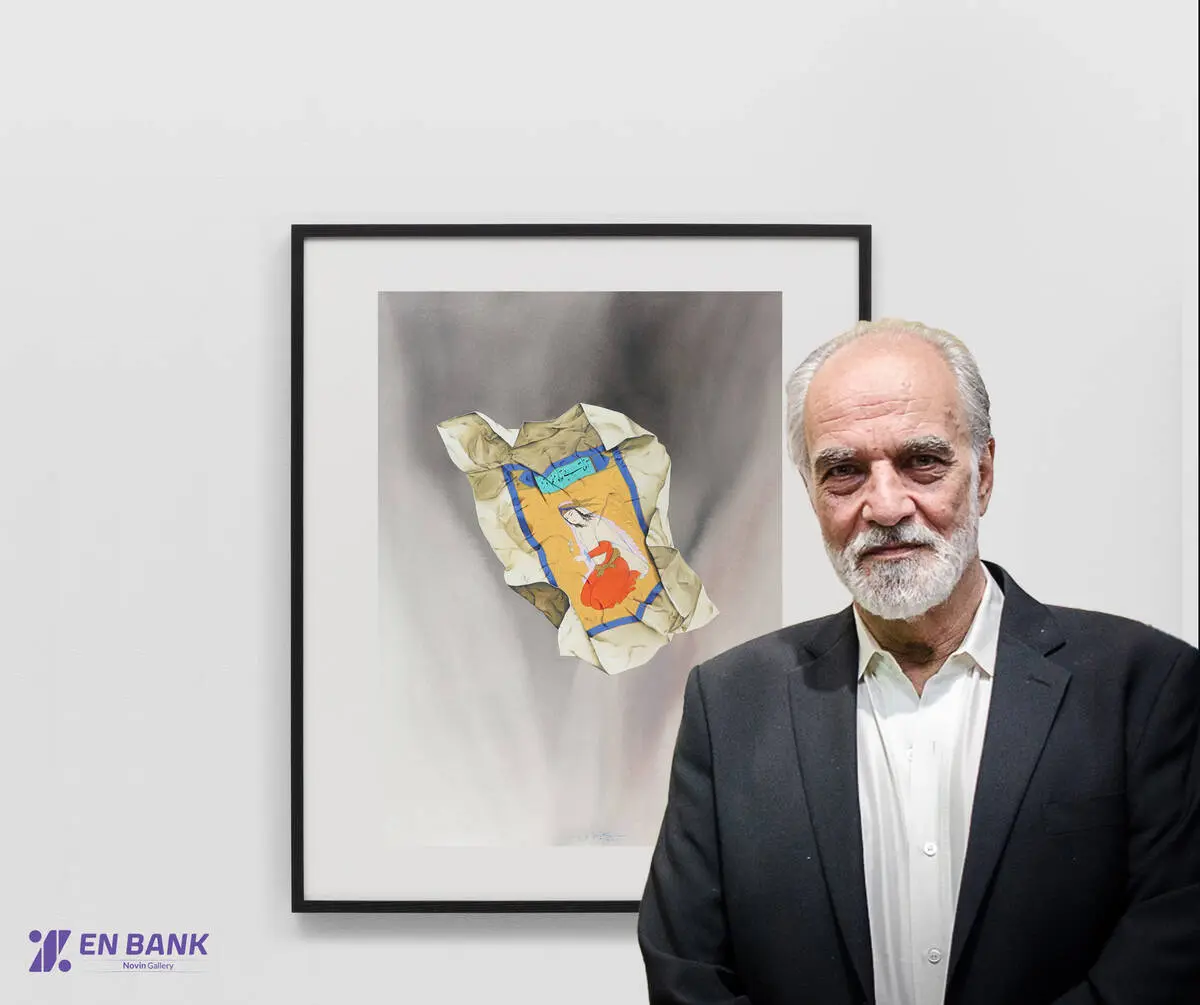
Aydin Aghdashloo’s Masterpiece in the Novin Gallery Collection of Eghtesad Novin Bank
Aydin Aghdashloo’s Masterpiece in the Eghtesad Novin Bank Art Collection
ArtDayMe – Since its establishment as Iran’s first private bank, Eghtesad Novin Bank [EN Bank] has maintained a distinguished presence in the country’s cultural landscape. Through the creation of an exceptional corporate art collection and the establishment of Novin Gallery, the bank has emerged as one of the leading institutional patrons of Iranian art, presenting a compelling portrait of the nation's artistic ecosystem.
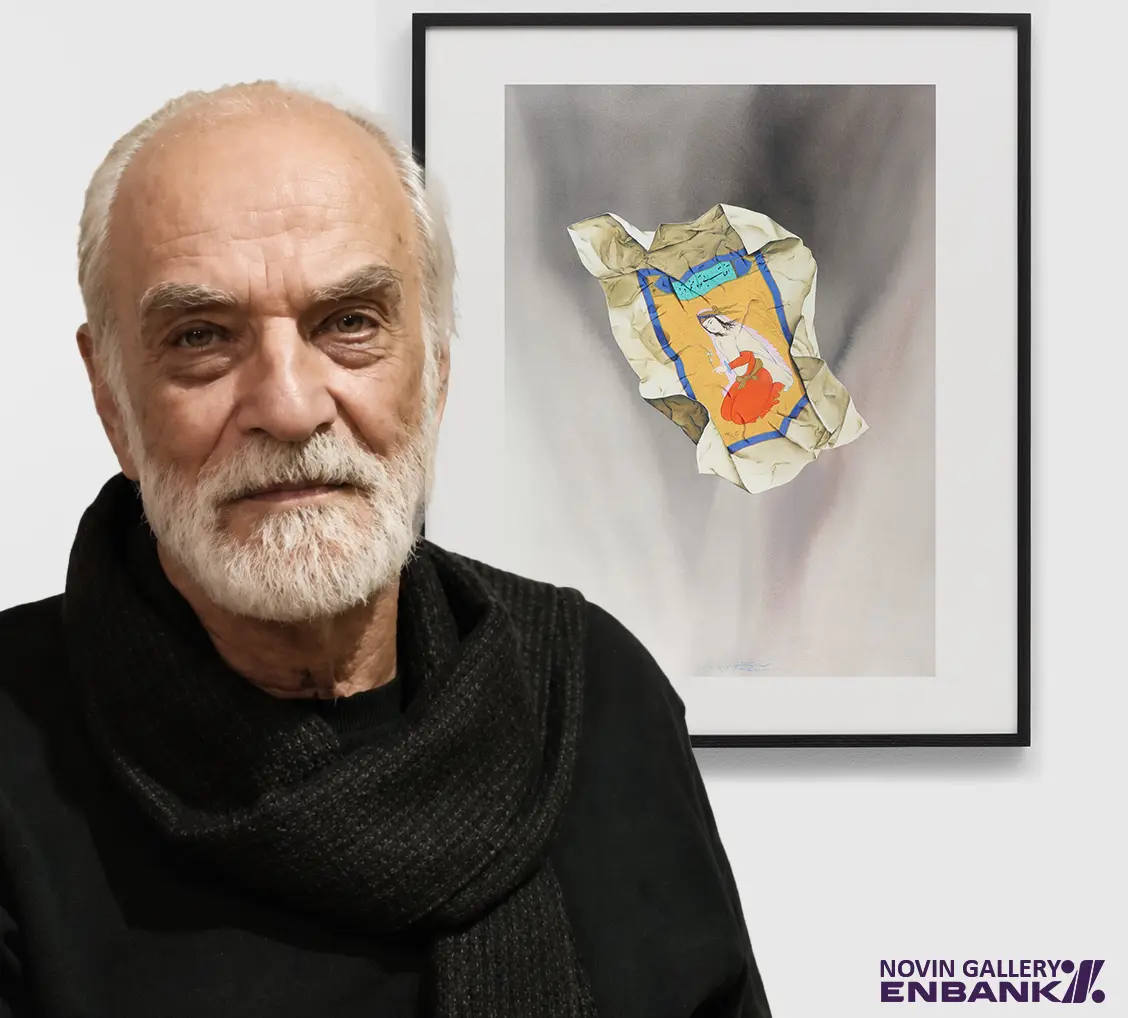
Among the highlights of the Eghtesad Novin Bank Collection is a remarkable work by Aydin Aghdashloo from his celebrated Memories of Destruction series. Executed in gouache on board and measuring 75 × 57 cm, the painting exemplifies one of the most significant bodies of work in modern Iranian art.
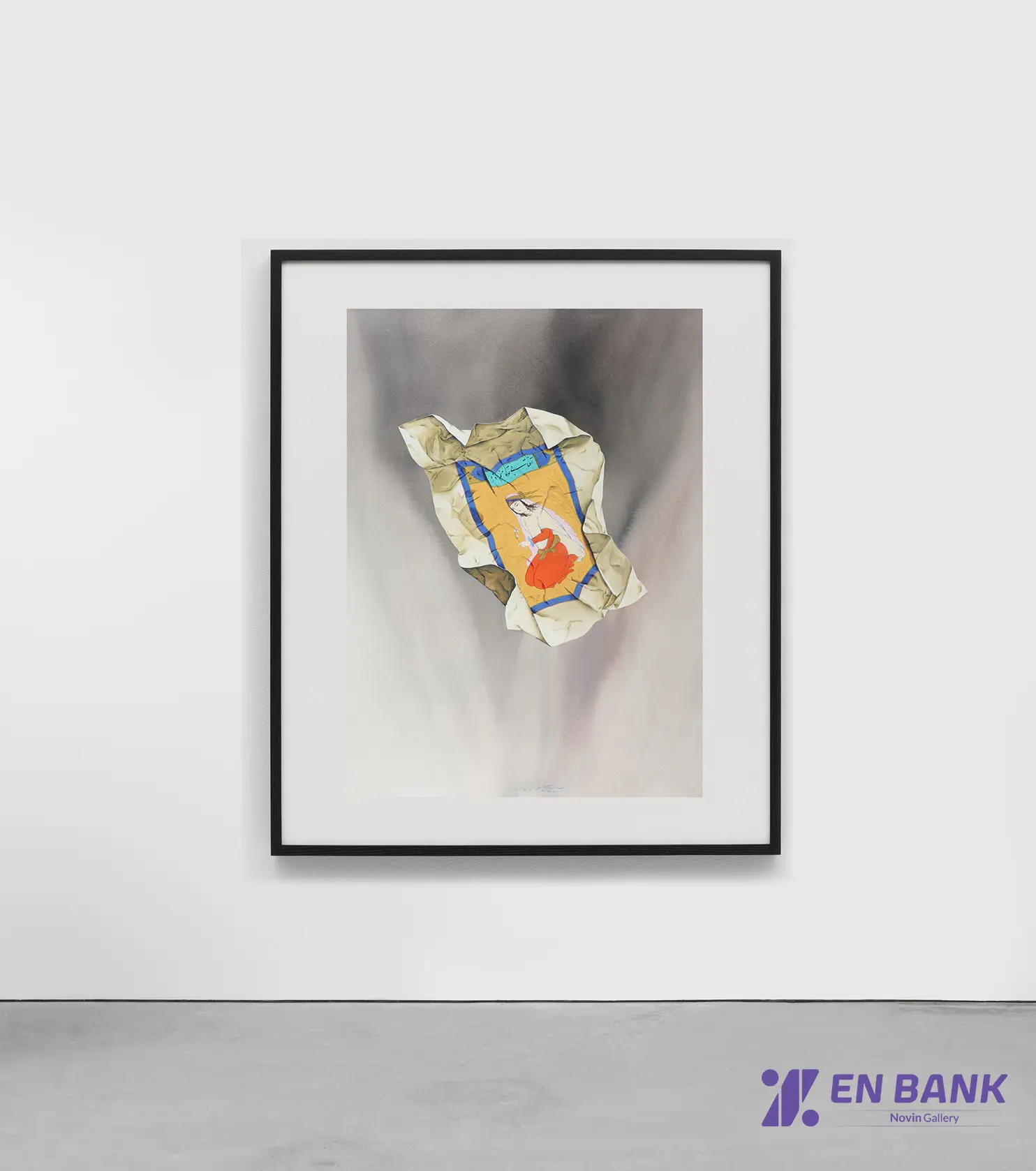
This work is a quintessential example of the visual language Aghdashloo developed from the mid-1970s onward. Rather than merely reproducing classical Persian and European masterpieces, he symbolically presents them as damaged, fractured, or partially destroyed, transforming them into meditations on the fragility of beauty, the erosion of cultural memory, and the decline of civilizations. Memories of Destruction has become the defining artistic signature of his career.
The late Iranian scholar Bahram Beyzaie described this unique approach as follows:
"...The works that Aydin recreated were never intended merely to demonstrate his extraordinary technical ability as a copyist. Clearly, faithful imitation was never the entirety of those masters' art, just as it is not the entirety of Aydin's own. It is his imagination, his historical consciousness, and his awareness of mortality that ultimately shape his work. The cracks left by time, and the injuries inflicted by history—or by human hands—become integral to his paintings. In Aghdashloo's recreations, admiration for the old masters is inseparable from a profound lament for the mortality of both artists and their creations."
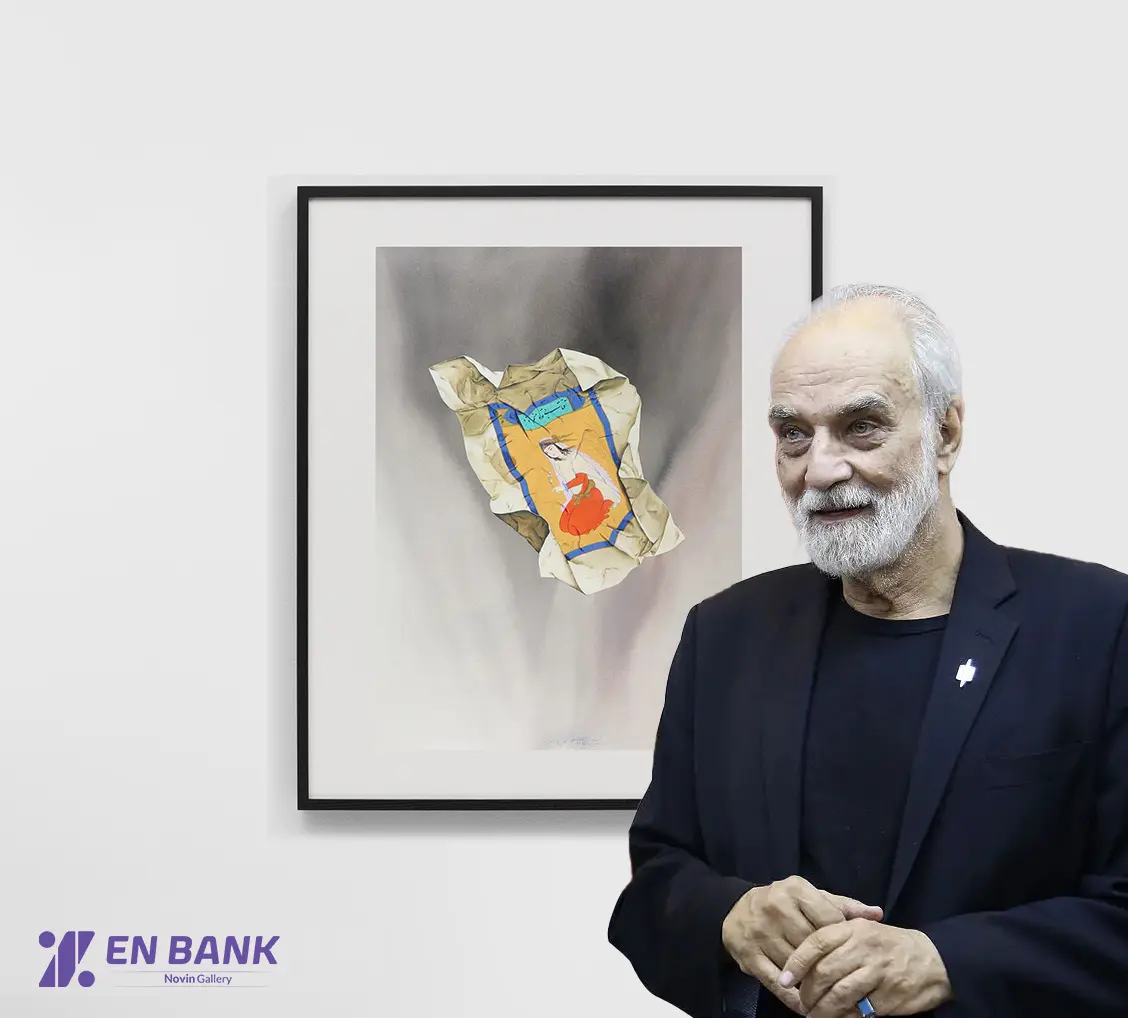
_ Aydin Aghdashloo
Aydin Aghdashloo is among Iran's most influential painters, writers, art critics, and historians. For more than six decades, he has played a pivotal role in shaping the course of modern and contemporary Iranian art.
Born in Rasht in 1940, Aghdashloo developed an early fascination with art, literature, and Iran's cultural heritage. Drawing upon an exceptional command of Persian classical painting, European Renaissance art, calligraphy, art conservation, and art history, he created a unique visual language in which past and present, beauty and decay, glory and collapse coexist within a single image.
Beyond painting, Aghdashloo has devoted decades to art criticism, scholarship, teaching, museum development, and cultural management, profoundly influencing several generations of Iranian artists.
His best-known body of work, Memories of Destruction—represented by an outstanding example in the Novin Gallery Collection of Eghtesad Novin Bank [ ENBank] —offers a deeply poetic meditation on time, destruction, historical memory, and the vulnerability of civilization. The series has become his internationally recognized artistic hallmark.
His works have been exhibited extensively in Iran and abroad. In 2016, the French government awarded him the Order of Arts and Letters (Chevalier des Arts et des Lettres) in recognition of his outstanding contributions to culture and the arts. Today, Aghdashloo is regarded not only as one of Iran's foremost contemporary artists but also as one of the most compelling interpreters of the relationship between history, culture, and humanity.
_Minimalist Composition
At first glance, the viewer's eye is drawn immediately to the center of the composition, where a crumpled Persian miniature appears suspended within an empty gray space.
The composition is profoundly minimalist. Nothing distracts from the central image, and the surrounding void intensifies its sense of vulnerability and isolation.
The negative space is as important as the miniature itself. It functions like the silence that remains after catastrophe.
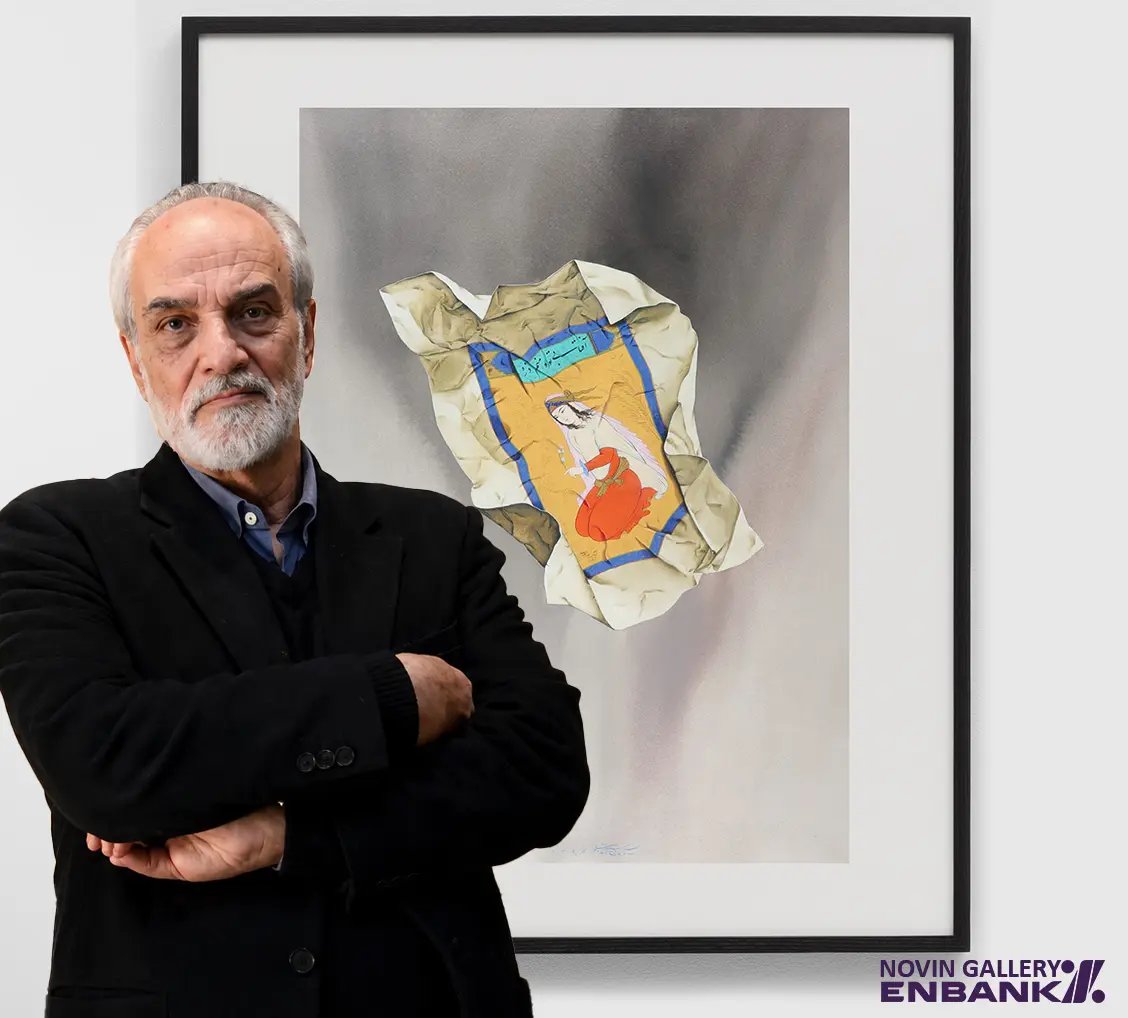
_ An Expressive Color Palette
The painting operates within two distinct chromatic worlds.
The background consists of cool, mist-like grays, evoking dust, oblivion, and the passage of time.
In striking contrast, the Persian miniature glows with luminous gold, lapis blue, crimson, and white—colors deeply rooted in the Persian miniature tradition.
This chromatic opposition embodies the tension between vitality and decay. The colors remain alive, yet the paper that carries them has become fragile and damaged.
_What Distinguishes Aghdashloo from Hyperrealists
Perhaps the most extraordinary aspect of the work preserved in the Novin Gallery Collection of Eghtesad Novin Bank lies precisely here.
Working in gouache, Aghdashloo renders every wrinkle and crease of the paper with astonishing precision, creating the illusion of a tangible object. Controlled lighting and subtle shadows give the paper remarkable three-dimensional presence.
Yet unlike many hyperrealists, realism is never his ultimate goal. It is merely the vehicle through which deeper philosophical ideas are conveyed.
Texture is the painting's dominant visual element. The entire composition is constructed upon the contrast between:
the delicacy and refinement of Persian miniature painting; and
the violence of crumpled, fractured, and weathered paper.
The damage inflicted upon the paper ultimately becomes a metaphor for damage inflicted upon culture itself.
_ A Symbolic Interpretation
The female figure from the Persian miniature represents the ideal of classical Iranian beauty.
Yet this beauty no longer survives within the safety of a manuscript, a museum, or an intact historical artifact. Instead, it appears abandoned upon a discarded, crumpled sheet of paper.
Aghdashloo does not suggest that beauty has disappeared.
Rather, he demonstrates that its place within civilization has been profoundly damaged.
That distinction is fundamental.
_ The Danger of Forgetting
The true subject of this painting is not death.
It is forgetting.
The paper still exists.
The miniature remains beautiful.
Its colors are still vibrant.
Yet everything bears the marks of injury.
Here destruction is not physical annihilation but the gradual erosion of historical and cultural memory.
Unlike many modern artists who reject tradition, Aghdashloo reconstructs it with the utmost respect before symbolically subjecting it to damage. Throughout the Memories of Destruction series, he repeatedly draws upon Persian miniatures and Renaissance masterpieces, crumpling, burning, scratching, or fragmenting them to express the collapse of cultural values.
_A Masterful Choice of Medium
The work housed in the Novin Gallery Collection was executed in gouache on board, measuring 75 × 57 cm.
The choice of gouache is particularly significant.
It enables Aghdashloo to create completely matte surfaces, exercise extraordinary control over the most subtle variations of light, and reproduce the texture of aged, wrinkled paper with astonishing fidelity.
Such technical mastery remains one of the defining characteristics of his oeuvre.
_ A Painterly Poem on the Nostalgia of Civilization
This painting is far more than an image of crumpled paper.
It is a poetic painterly manifesto on the destiny of civilization.
By eliminating every unnecessary narrative element, Aghdashloo directs the viewer toward one fundamental question:
If the creators of art and culture disappear, can beauty itself endure?
From the perspective of art history, this work stands among the finest examples of Memories of Destruction, a series in which the apparent ruin of classical masterpieces becomes a metaphor for the erosion of historical memory, cultural identity, and aesthetic values.
_ Novin Gallery of of Eghtesad Novin Bank
As Iran's first private bank, ENBank [ www.enbank.ir ] has, since its founding in August 2001, embraced a vision of development extending well beyond conventional financial practice. From its earliest years, the Bank recognized culture and the arts not as peripheral activities but as essential components of the nation's social and cultural capital.
Over the past quarter century, EN Bank has assembled one of Iran's most distinguished corporate art collections, comprising more than one hundred works by many of the country's leading modern and contemporary artists. More than a corporate collection, it represents a visual narrative of an important chapter in the history of Iranian art.
The establishment of Novin Gallery and the presentation of regular exhibitions from the collection demonstrate that these works were never intended to remain hidden within corporate offices or storage facilities. Instead, the Bank has sought to create opportunities for public engagement and meaningful dialogue around Iranian art.
At a time when many important works of contemporary Iranian art remain inaccessible within private collections, their public presentation contributes significantly to cultural circulation and strengthens society's relationship with its artistic heritage.
Today, major financial institutions around the world are evaluated not solely by economic performance but also by their contributions to cultural development, creativity, and quality of life. International experience has repeatedly shown that art can serve as a bridge between economy, culture, and society—transforming financial capital into cultural and social capital.
As August 2026 marks the twenty-fifth anniversary of EN Bank, the institution stands at an important moment in its history.
The Bank's leadership is preparing to introduce a new vision for the role of financial institutions in the arts—one that extends beyond collecting and exhibiting artworks toward actively supporting Iran's artistic ecosystem, strengthening the creative economy, expanding public access to art, and fostering new forms of collaboration among artists, audiences, and the private sector.
At a time when societies increasingly rely upon cultural resources to nurture hope, encourage dialogue, and reinforce collective identity, the meaningful engagement of economic institutions with the arts can represent far more than philanthropy.
It is, fundamentally, an investment in society's cultural future—a future in which economic development and cultural development advance together.
The twenty-five-year history of EN Bank offers an ideal opportunity for the institution to reaffirm its pioneering role—not only in Iranian private banking, but also in establishing a new model for meaningful collaboration between the financial sector and the cultural life of Iran.
LEAVE A RELPY