
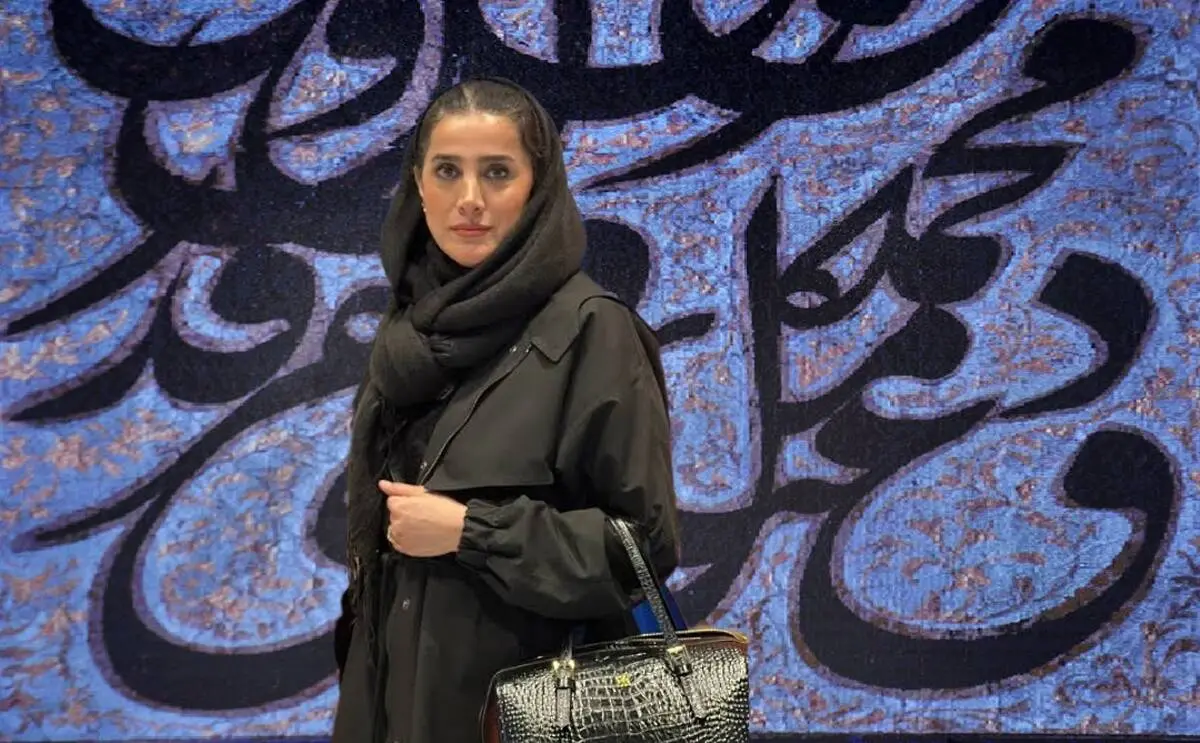
Mahboubeh Kazemi: Middle Eastern Contemporary Art Is Experiencing an Identity Suspension / The Urgent Need to Return to Authenticity
The founder and director of Baran Auction, the Middle East's first specialised auction dedicated to calligraphy, Islamic calligraphy, and Islamic arts, believes that contemporary art in the region is experiencing a state of "identity suspension" and argues that artists across the Middle East must once again focus on their own civilisational and cultural foundations.
ArtDayMe : Mahboubeh Kazemi, Founder and Director of Baran Auction—the Middle East's first specialised auction devoted to calligraphy, Islamic calligraphy, and Islamic arts—and Founder and Director of Taraneh Baran Gallery, a gallery specialising in calligraphy and the art of the written word, has contributed the following essay to ArtDayMe.
For many years, Kazemi has worked to develop the market for authentic arts, calligraphy, and Islamic arts across the Middle East. Her approach centres on the relationship between civilisational identity, the art economy, and professional mechanisms for presenting and circulating works of art.
The full text of Mahboubeh Kazemi's essay follows:
Contemporary Art at a Historical Crossroads
The contemporary art that has become increasingly widespread across the Middle East now stands at one of the most critical moments in its history.
The question is no longer simply which medium artists employ, what formal language they pursue, or within which exhibition and market circuits they operate. The more fundamental issue concerns the relationship between this art and the historical and civilisational self of the Middle East.
The essential question is whether contemporary art still possesses the capacity to speak from the standpoint of a living tradition, or whether it is gradually losing its ability to represent the civilisational identity of the region.
At a time when artistic production is subjected simultaneously to the pressures of the market, media, accelerated cultural consumption, and dominant global models, the question of identity has become one of the defining conditions for the continuity and credibility of artistic practice.
Art that loses its connection to its historical, aesthetic, and intellectual sources—even if it achieves visibility and market circulation—ultimately risks becoming a shallow and short-lived representation, deprived of the cultural depth, historical continuity, and distinctiveness that give enduring value to a work of art.
Identity in art is not an external quality that can simply be attached to a work at a later stage.
In its truest sense, identity is embedded within the very process of artistic creation. It exists in the logic of form, in the relationship between material and meaning, in the choice of visual language, in the artist's understanding of time, in concepts of beauty, and in the relationship established between art, humanity, and the world.
For this reason, any serious discussion of the future of Middle Eastern contemporary art must begin with its relationship to its indigenous Islamic identity—an identity that, when properly understood, neither inhibits innovation nor freezes artistic development, but instead provides the essential foundation upon which an authentic contemporary artistic language can emerge.
_ Identity as the Foundation of Artistic Authenticity
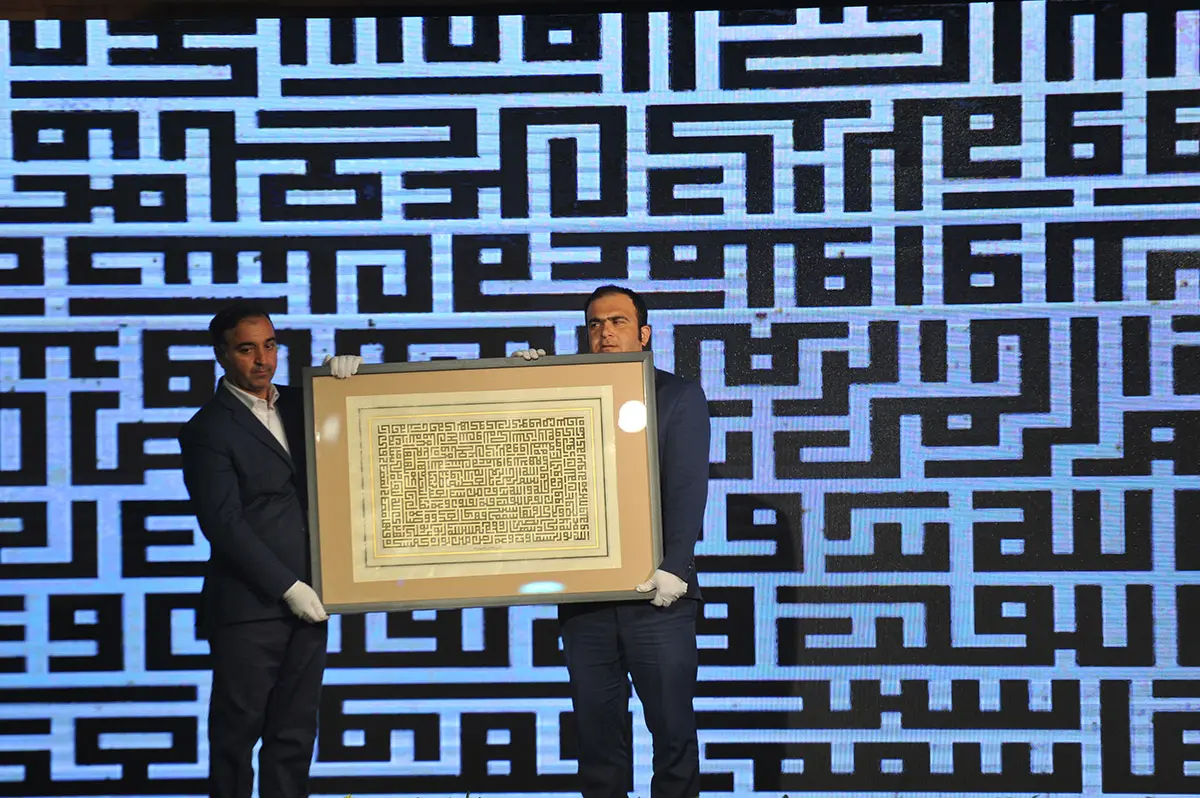
The indigenous and Islamic traditions of the Middle East have never been merely collections of beautiful forms. Throughout history they have generated a sophisticated and coherent system of meaning.
Architecture, calligraphy, manuscript illumination, traditional crafts, ornamentation, the relationship between light and space, geometry, rhythm, repetition, symbolism, and even ways of living all belong to a unified worldview in which beauty is inseparable from truth and form is never detached from meaning. It is precisely this unity that grants Islamic art its civilisational significance.
Consequently, emphasising identity does not imply a nostalgic return to historical forms or the mechanical imitation of the past. Rather, it calls for reconnecting with a living reservoir of knowledge and aesthetic thought.
Yet much of the region's contemporary art over recent decades has entered what may be described as a condition of identity suspension.
On the one hand, this condition stems from an accelerated encounter with contemporary global culture and an uncritical adoption of dominant international artistic models. On the other, it reflects institutional and market structures in which the value of an artwork is increasingly determined less by cultural depth and rooted meaning than by spectacle, fashion, rapid circulation, and market exchange.
The issue is not participation in the contemporary world, nor engagement with the global art economy.
The problem arises when such participation lacks an interpretive and identity-based foundation. Rather than fostering an authentic dialogue with the world, it ultimately leads to homogenisation and to the gradual erosion of the Middle East's cultural and civilisational distinctiveness.
_Becoming Ourselves Rather Than Becoming Others
To establish a meaningful presence on the global stage, Middle Eastern contemporary art does not need to become more like others—it needs to become more fully itself.
What grants an artwork international significance is not merely its use of a contemporary visual language, but its capacity to embody a distinctive historical and cultural experience.
Whenever art emerging from the Middle East has spoken from the position of its own authenticity, it has achieved genuine international recognition.
Whenever it has dissolved into imitation of imported artistic languages, it may have attracted temporary attention, yet it has rarely attained lasting cultural authority or historical relevance.
Viewed from this perspective, revisiting indigenous Islamic identity within contemporary art is fundamentally a project directed toward the future.
Its objective is not the repetition of historical forms, but the creative extraction of their generative potential and their translation into the language of the present.
Middle Eastern contemporary art will enter a new horizon only when tradition is understood not as an obstacle to innovation but as a source of artistic creation—a source through which the relationships between meaning, craftsmanship, beauty, and collective life may continually be renewed.
_The Essential Role of Cultural Institutions
Institutions play a decisive role in this process.
No enduring transformation in art is achieved through individual artistic talent alone. Sustainable change requires institutions capable of interpretation, support, presentation, validation, and the circulation of artistic meaning.
Identity-driven art, without an institutional ecosystem, quickly falls either into isolation or becomes exhausted within markets that lack meaningful interpretive frameworks.
For this reason, redefining Middle Eastern contemporary art simultaneously requires rethinking its cultural infrastructure: spaces devoted to intellectual inquiry, issue-oriented galleries, professional systems for exhibiting art, and platforms capable of establishing lasting connections between civilisational heritage, contemporary artistic production, and the region's creative economy.
Within this framework, the restoration and revitalisation of historic buildings and cultural spaces in cities such as Muscat, Doha, Jeddah, Beirut, Sharjah, Dubai, and Tehran should be understood as far more than architectural conservation projects.
When approached thoughtfully, such places possess the capacity to become sites where history, cultural criticism, artistic dialogue, and renewed reflection on contemporary Middle Eastern identity converge.
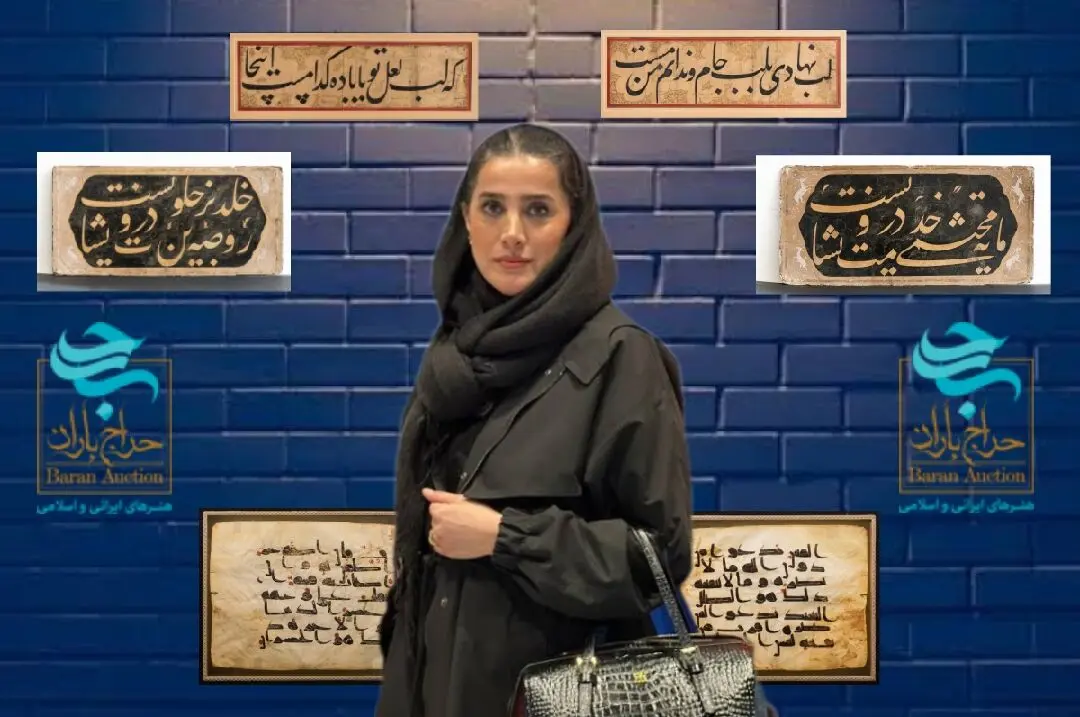
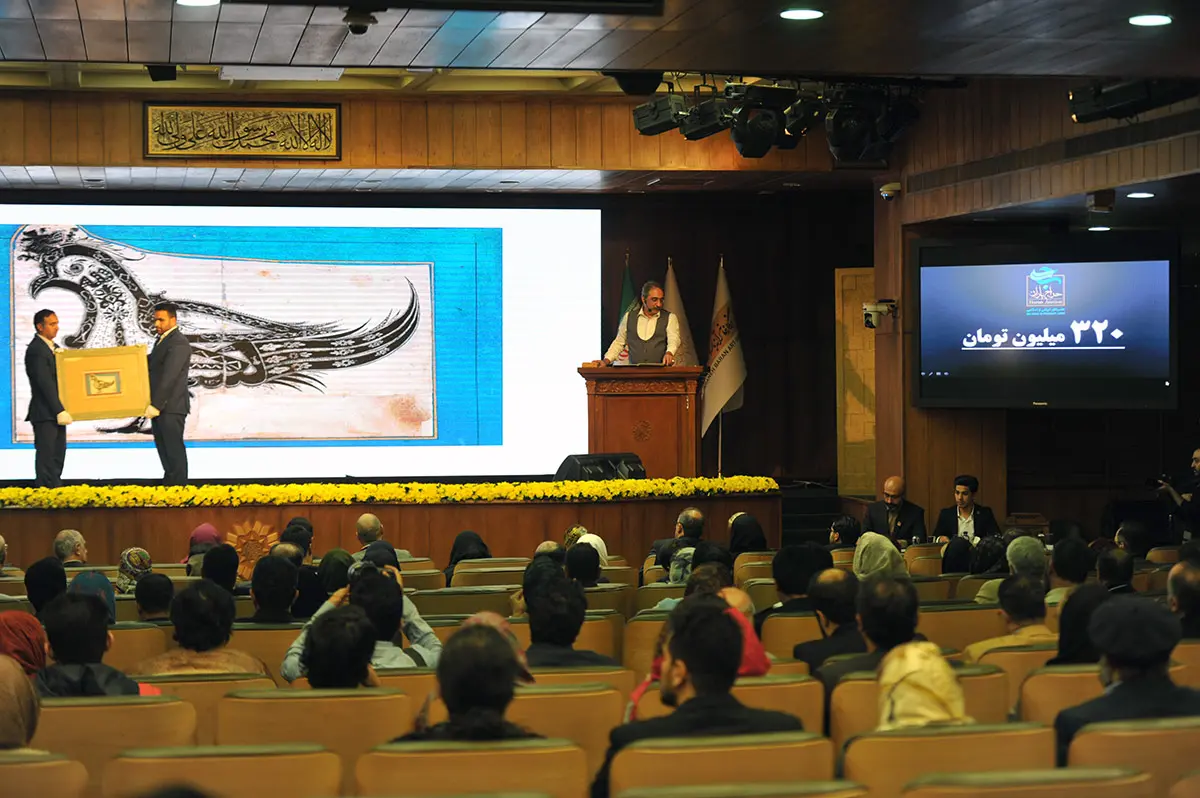
Within this same context, the experience of Taraneh Baran Gallery and Baran Auction may be considered a regional model for the development of identity-based art.
These institutions function not merely as venues for exhibiting and trading artworks, but as components of a broader cultural ecosystem in which research, storytelling, scholarly validation, professional presentation, and the art economy work together to strengthen the authority of the Middle East's deeply rooted artistic traditions, with particular emphasis on the Iranian-Islamic heritage.
The significance of such institutional models lies in their ability to bridge the gap between cultural thought and the professional art world, enabling the authentic arts of the Middle East—including Iranian-Islamic artistic traditions—to be understood not merely as admirable historical legacies, but as living, influential, and productive cultural forces within the present.
_Reimagining the Future
Today, perhaps more than ever before, we must ask ourselves what image contemporary Middle Eastern art is constructing of the region in today's world.
Can it present a narrative that is authentic, intellectually complex, historically rooted, and genuinely contemporary?
Can it speak in its own voice without dissolving into dominant global models?
Can it remain faithful to authenticity while simultaneously establishing a meaningful position within the professional art world and the global art economy?
The answers to these questions lie neither in abandoning the past nor in retreating into it.
The path forward depends upon redefining our relationship with tradition—a relationship that is creative, critical, and future-oriented.
If Middle Eastern contemporary art wishes to move beyond temporary reactions and borrowed artistic formulations, it must once again organise itself around its indigenous Islamic civilisational identity.
Such a return is not a retreat into history. It is a return to the civilisational and cultural sources of the Middle East itself—sources from which alone a credible, distinctive, and influential future for the region's art can be built within the contemporary world.
LEAVE A RELPY