
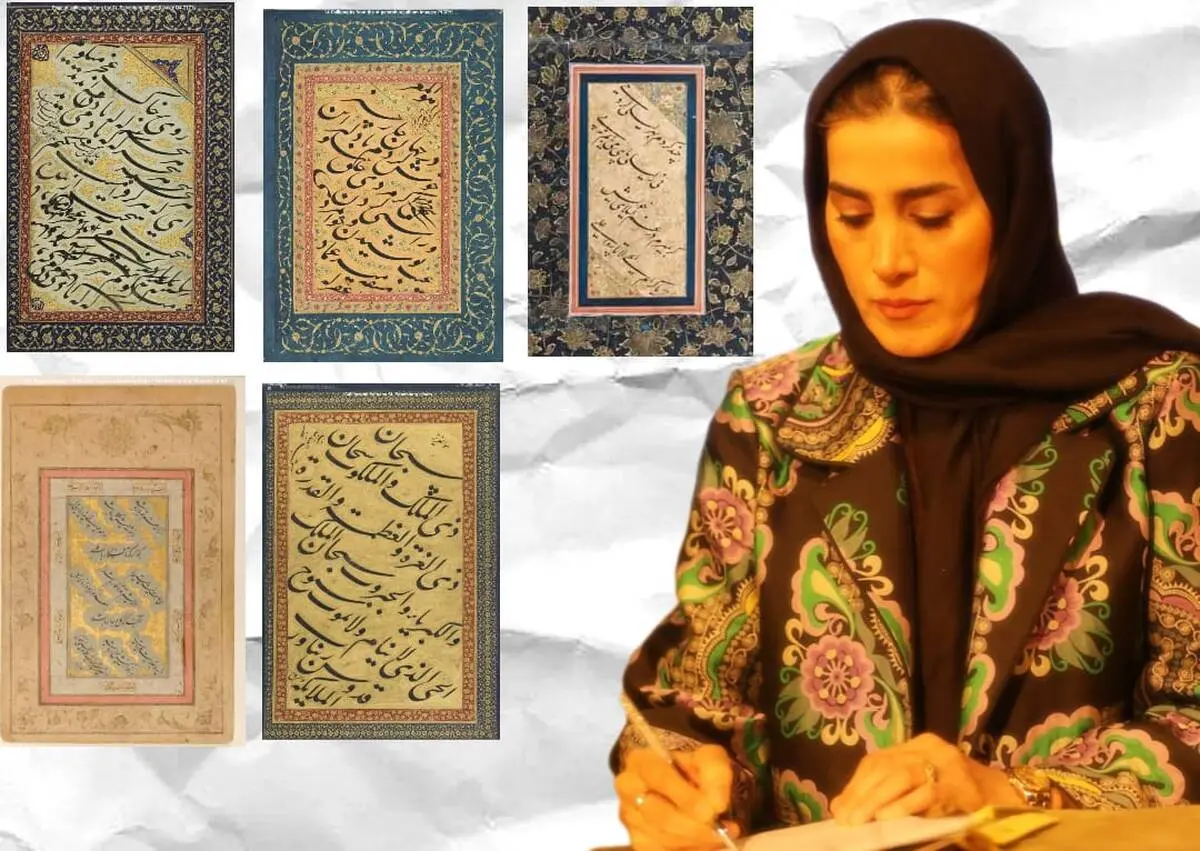
Mahboubeh Kazemi Analyzes a Mir Emad Al-Hassani Nastaliq Masterpiece: From The Met and the Louvre to Baran Auction
Mahboubeh Kazemi, founder and director of Baran Auction—the first specialized auction dedicated to calligraphy and Iranian-Islamic art—offers a detailed analysis of an outstanding calligraphic work by Mir Emad Al-Hassani that was sold at the inaugural edition of the auction. Using this masterpiece as a point of departure, she highlights remarkable examples of works by the “pinnacle of Nastaliq” preserved in some of the world’s most prestigious museums
ArtDayMe : Mahboubeh Kazemi, founder and director of Baran Auction, the first auction dedicated to calligraphy, Persian scripts, and Iranian-Islamic art, whose 2016 sale of a work by Mir Emad Al-Hassani achieved a world-record price of $200,000 under her supervision, says:
“Mir Emad Al-Hassani Qazvini (1554–1615) stands among the foremost masters of Persian calligraphy during the Safavid era. He elevated the Nastaliq script to its highest level of refinement and harmony, establishing proportions of unparalleled elegance. His name remains the benchmark of beauty in Nastaliq across Iran, the Middle East, and the wider world. In the international literature of art, he is widely recognized as the ‘ultimate standard of Nastaliq.’
The presence of his works in the world’s leading museums has firmly established Mir Emad’s global stature as one of the greatest calligraphers in history.”
Expanding on the institutions that preserve works by Mir Emad, Kazemi notes:
“Among the most significant collections holding works by Mir Emad are:
The Metropolitan Museum of Art, New York (The Met)
The Louvre Museum, Paris (Department of Islamic Art)
The Museum of Islamic Art, Berlin
The British Library, London
The Topkapi Palace Museum, Istanbul
Regarding Mir Emad’s works at The Met,
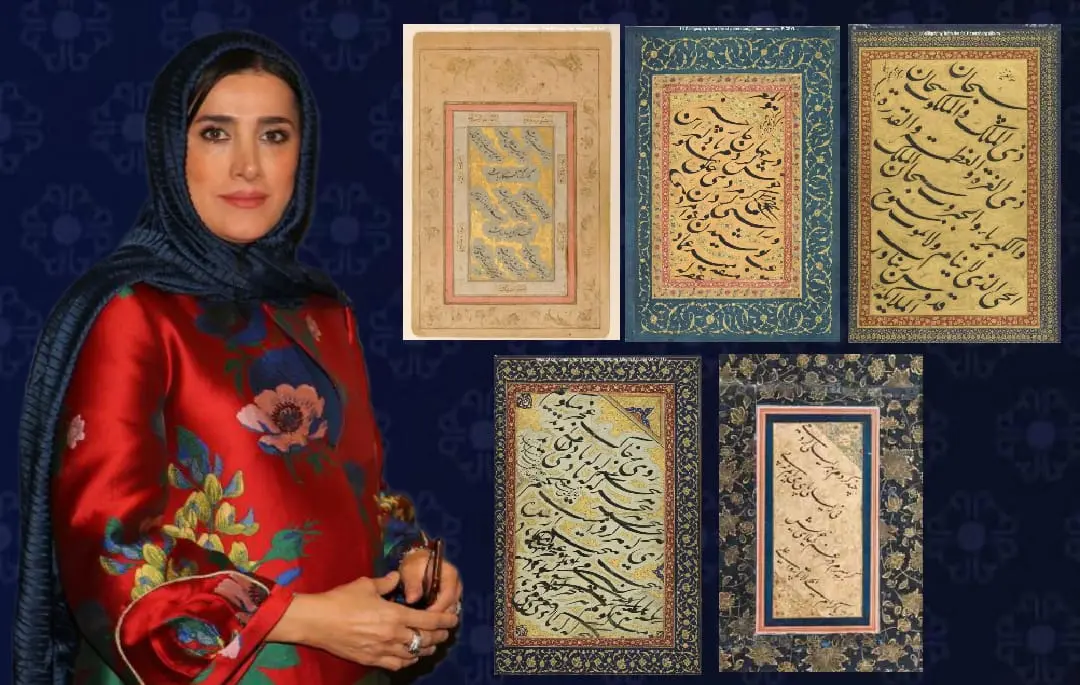
she explains: ‘One of the Nastaliq calligraphic panels preserved at The Metropolitan Museum of Art in New York, illustrated alongside this article, represents a magnificent example of perfectly balanced Nastaliq and, in my view, forms part of humanity’s shared cultural heritage. The Metropolitan collection includes calligraphic pages from the celebrated “St. Petersburg Album,” featuring exceptional examples of Nastaliq script whose breathtaking rhythm, exquisite line quality, and masterful letter composition continue to astonish art historians and theorists alike.
It is said that, through the efforts of Italian and American art patrons, this precious collection has also been published in a limited-edition format.’”
Discussing works attributed to Mir Emad at the Louvre, Kazemi states:
“Pages of calligraphy attributed to Mir Emad, along with albums of his Nastaliq works, are preserved in the Louvre’s collections relating to Iranian artists of the Safavid period.
Beyond these institutional holdings, numerous examples of his work survive in Safavid manuscripts and calligraphic albums executed in the classical Nastaliq style, many of which remain in private collections and galleries.”
Speaking about the work that achieved the highest sale price at the inaugural Baran Auction—600 million Iranian tomans (approximately $200,000 at the time)—Kazemi says:
“This calligraphic panel, measuring 14 × 6.5 cm and believed to have been created around 1611, is a distinguished example of the final crystallization of the Iranian Nastaliq script by its greatest master, Mir Emad Al-Hassani Qazvini—an artist regarded internationally as the definitive standard of Nastaliq.
The record-breaking sale of this work at Baran Auction resulted from several key factors:
Mir Emad’s unparalleled status as the summit of Nastaliq calligraphy
The exceptional quality of the script and composition
The work’s historical authenticity and excellent condition
The extreme rarity of market-available works by Mir Emad
This piece is not merely a work of calligraphy; it is a document of the highest achievements of Iranian aesthetics during the Safavid era—an artwork of enduring significance for both collectors and art historians.”
Analyzing the work in greater detail, Kazemi explains:
“From a compositional perspective, the work is structured through a balanced vertical arrangement, one of the defining characteristics of Mir Emad’s finest pieces. The measured elongations of letters, carefully calibrated spacing between words and lines, and the fluid movement of the pen create a calm and continuous visual rhythm—one that avoids both exaggeration and rigidity.
The relationship between black and white space (the balance of positive and negative space) is maintained according to the highest classical standards. No letter overwhelms another; every word occupies its natural place. This quality reflects the ‘golden equilibrium’ that characterizes Mir Emad’s Nastaliq.”
The renowned art director and specialist in Middle Eastern calligraphy continues:
“From the standpoint of calligraphic quality, we are confronted with Nastaliq at the highest level of excellence:
The vertical strokes (alifs) are elongated yet perfectly controlled.
The curves flow smoothly and effortlessly.
Connections between letters are natural and unforced.
The rhythm of the pen reveals a work born of disciplined spontaneity—a mastery that has transcended practice and become visual intuition.
The use of deep black ink on aged and valuable paper—most likely prepared with the traditional ahar-o-mohreh technique—gives the script depth and historical dignity without relying on excessive ornamentation.”
Kazemi further emphasizes:
“The paper possesses a warm, aged texture that speaks to the work’s authenticity and antiquity. Floral and vegetal marginal decorations in dark tones and gold create an atmosphere of grandeur while keeping the text at the center of attention.
The multilayered framing, incorporating complementary colors such as lapis blue and soft pink, serves not only a protective function but also enhances the visual reading of the work—a common characteristic of precious Safavid calligraphic pieces.”
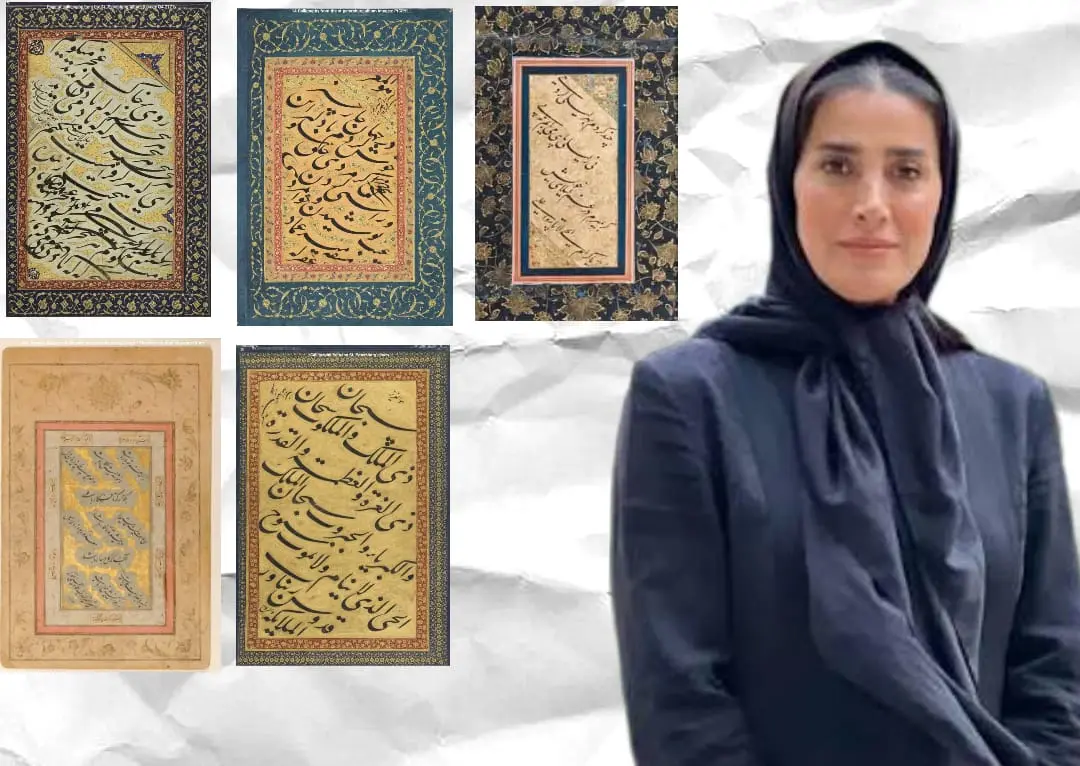
In conclusion, Mahboubeh Kazemi, founder and director of Baran Auction, remarks:
“Mir Emad Al-Hassani is rightly regarded as the artist who brought the Nastaliq script to its definitive form.
It was Mir Emad who:
Perfected the proportions of the letters.
Transformed Nastaliq from an experimental script into a classical standard.
Created a model that remains the benchmark for teaching, evaluating, and practicing Nastaliq to this day.
The work sold at the inaugural Baran Auction of Calligraphy and Islamic Art in Tehran is a complete embodiment of the Mir Emad school—a tradition founded upon simplicity, dignity, balance, and restraint from excessive ornamentation.”
To date, four editions of Baran Auction, the specialized auction for calligraphy and Iranian-Islamic art, have been successfully held. Across these editions, dozens of authentic works and masterpieces representing Iran’s artistic and civilizational heritage have been presented and Sold.
LEAVE A RELPY