
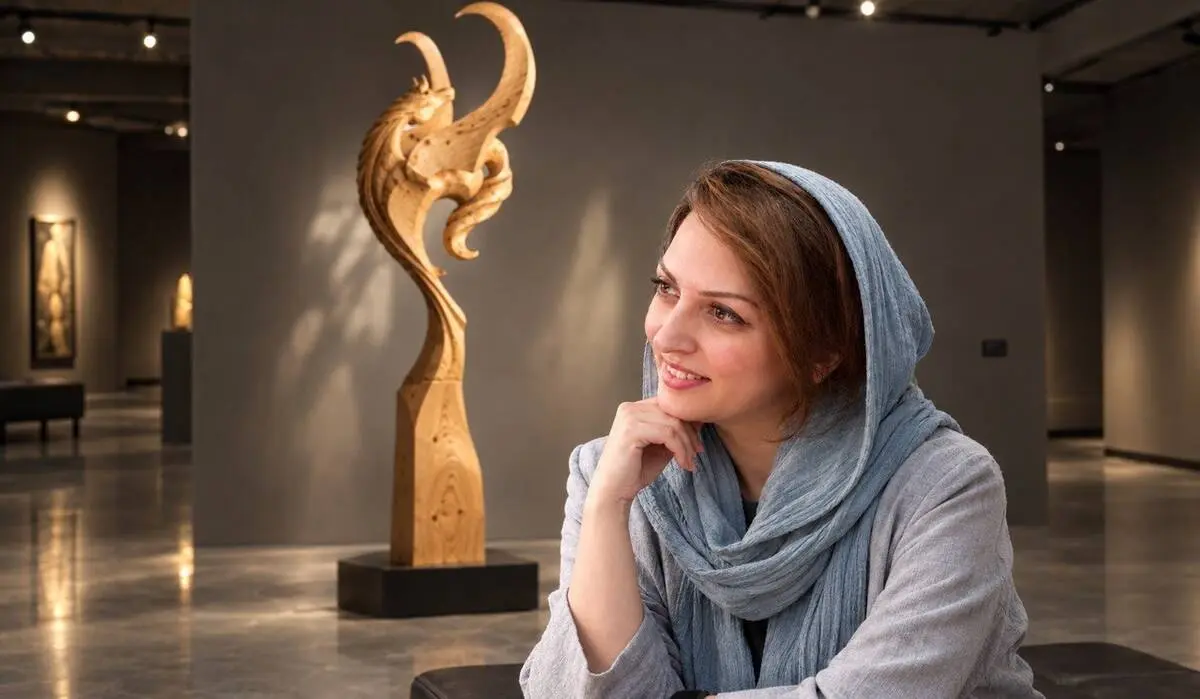
Shadi Habib’s Parnian Sculpture: Reinterpreting Form, Nature, and the Figure in Wood
The significance of *Parnian*, a wooden sculpture by Shadi Habib, lies in the way it brings the natural characteristics of wood into dialogue with a complex, multifaceted structure. The sculpture is neither entirely representational nor closely aligned with geometric abstraction. Instead, it takes shape in the space between these two realms.
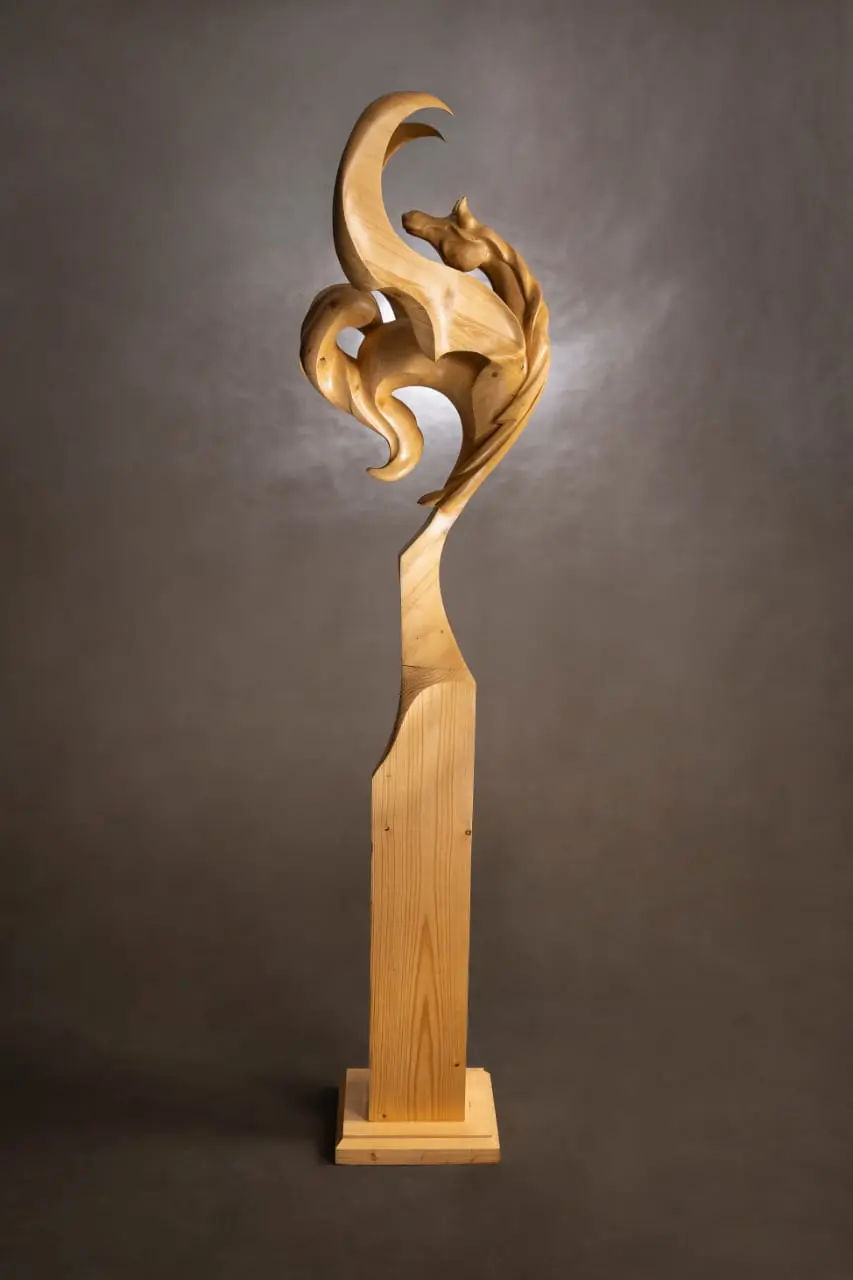
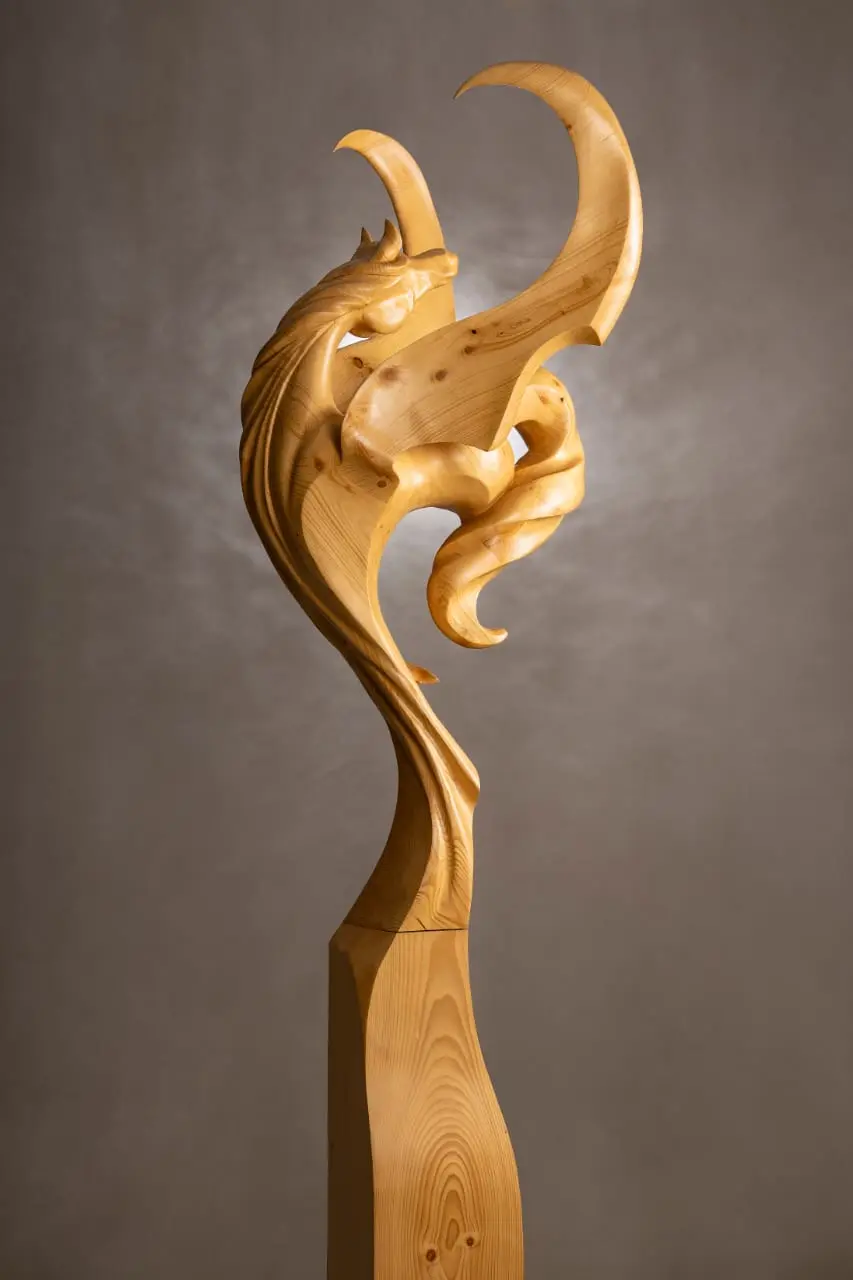
ArtDayMe : This article examines Parnian Sculpture ,a wooden sculpture by Shadi Habib created in 2013, standing 190 centimetres tall and carved from fir wood.
The significance of Parnian Sculpture lies in the way Shadi Habib combines the natural qualities of wood with a complex, multifaceted structure. In this work, the artist presents a form that is neither fully representational nor readily classified as geometric abstraction. The sculpture emerges in the space between these two realms, where form can simultaneously evoke nature and exist independently of it. From this perspective, *Parnian* offers an experience of looking and discovery—one in which the relationships between its components, spaces, and lines are continually reconfigured as the viewer changes position, revealing new dimensions of the work.
---The Artist’s Statement on Parnian Sculpture by Shadi Habib
"Parnian" reflects on the possibility of delicacy emerging from strength. It explores the relationship between material and movement, cohesion and openness, and the force through which twisting forms move beyond stillness to acquire a living presence.
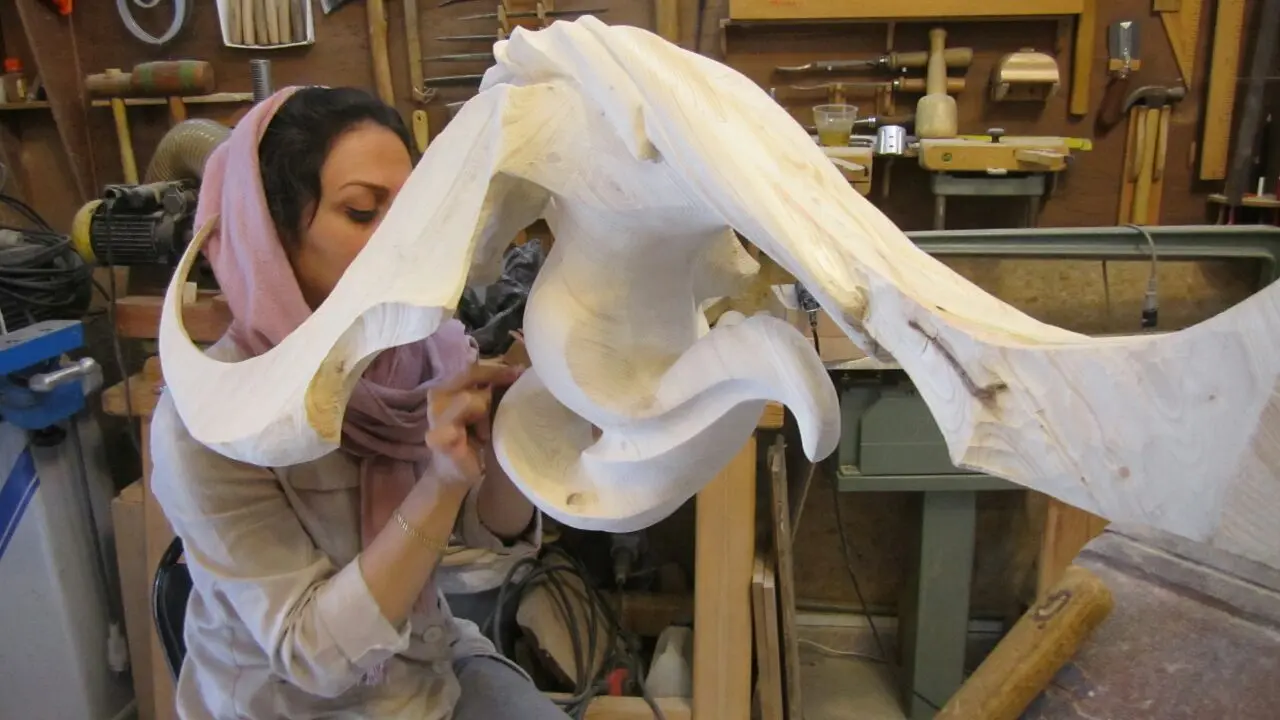
In this work, Shadi Habib approaches wood not as a passive material but as a structure whose expressive potential is revealed through the process of carving. Natural grain, variations in texture, and the continuity of volumes, together with sustained curves and twisting forms, create a visual language in which the strength of the material does not obstruct delicacy; rather, it provides the conditions for it to emerge.
The sculpture’s structure is built around a dynamic relationship between extension and torsion. Curved lines guide the eye from the lower sections towards the upper volumes, extending movement through space not as a sudden leap but as a continuous flow. Open and closed forms, interwoven volumes, and the negative spaces between them play as significant a role in shaping the work as the patterns of the wood itself. Here, empty space is not merely an absence of material; it is an integral part of the composition, allowing the volumes to breathe, separate, and reveal themselves.
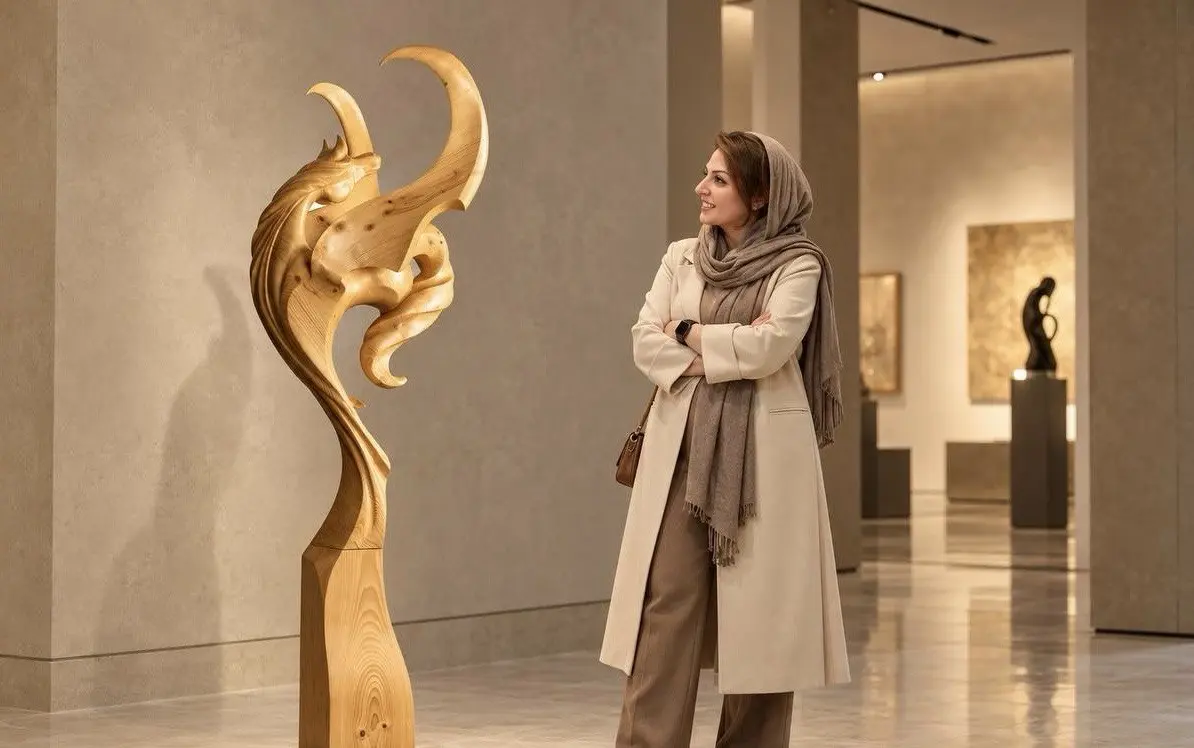
At a height of 190 centimetres, this movement extends beyond the limits of an object that is simply observed and becomes a vertical experience in space. The viewer encounters a structure whose presence is established through a balance between material weight and visual lightness. Despite the inherent solidity of wood, its lines and curves convey a sense of fluidity and openness.
The title "Parnian", with its associations of softness, delicacy, and refinement, offers a more nuanced way of reading the structure. In its encounter with wood, the contrast between softness and hardness is not a simple opposition; instead, it raises a question about the very nature of delicacy. Is delicacy a quality of the surface and the material, or can it emerge from the way forms are shaped, connected, and set in motion? In this work, delicacy is born not from the elimination of strength but from the way strength is organised.
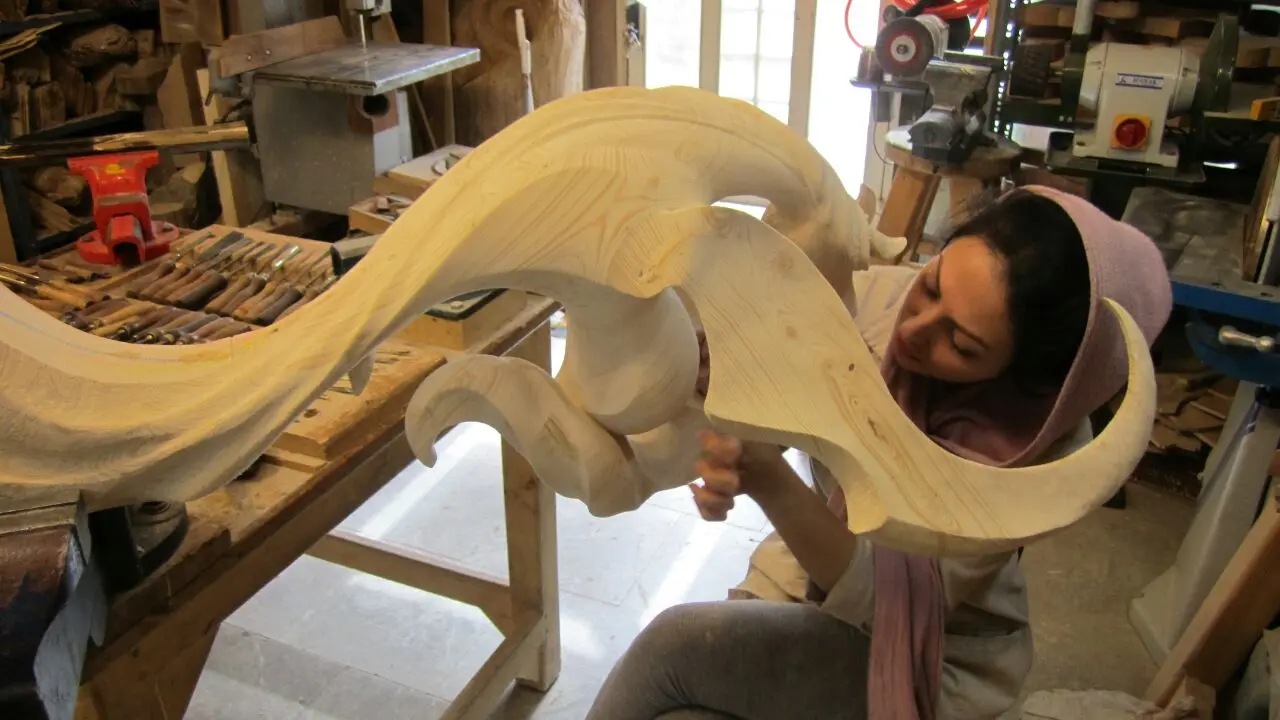
In this sense, the process of shaping wood becomes a dialogue between the artist’s intention and the material’s inherent possibilities. The final form does not result from imposing a predetermined image upon the natural character of the wood. Rather, it develops through an engagement with its grain, directional patterns, and structural potential. Through this encounter, material becomes language, and movement becomes a way of thinking about it.
Ultimately, Parnian Sculpture does not confine its meaning to a definitive narrative or an easily identifiable image. The work creates a space for contemplation, where the eye follows the curves, moves between volumes and empty spaces, and gradually discovers relationships between strength and delicacy, presence and absence, and stillness and movement.
In "Parnian", delicacy is not the opposite of strength; it is a quality that emerges from strength, transforms it, and enables the material to move through space beyond the limits of its own weight.
Parnian Sculpture takes shape in the space between earth and sky, stability and movement, weight and lightness. It tells a story of the desire to transcend one's limits without losing one's connection to one's material origins.
- An Aesthetic Analysis of Shadi Habib’s Parnian Sculpture
Reinterpreting Form, Nature, and the Figure in Wood
Parnian Sculpture by Shadi Habib, exemplifies a sculptor’s engagement with the expressive possibilities of a material that exists at the intersection of natural structure and artistic malleability.
At first glance, the work confronts the viewer with a combination of organic forms, intricate curves, and vertical extension. Within this structure, the boundary between a recognisable figure and an abstract configuration remains in constant flux. The significance of "Parnian" can be found precisely in this condition: rather than presenting a definitive image of the external world, the sculpture opens up new ways of experiencing the relationships between volume, surface, space, and perception.
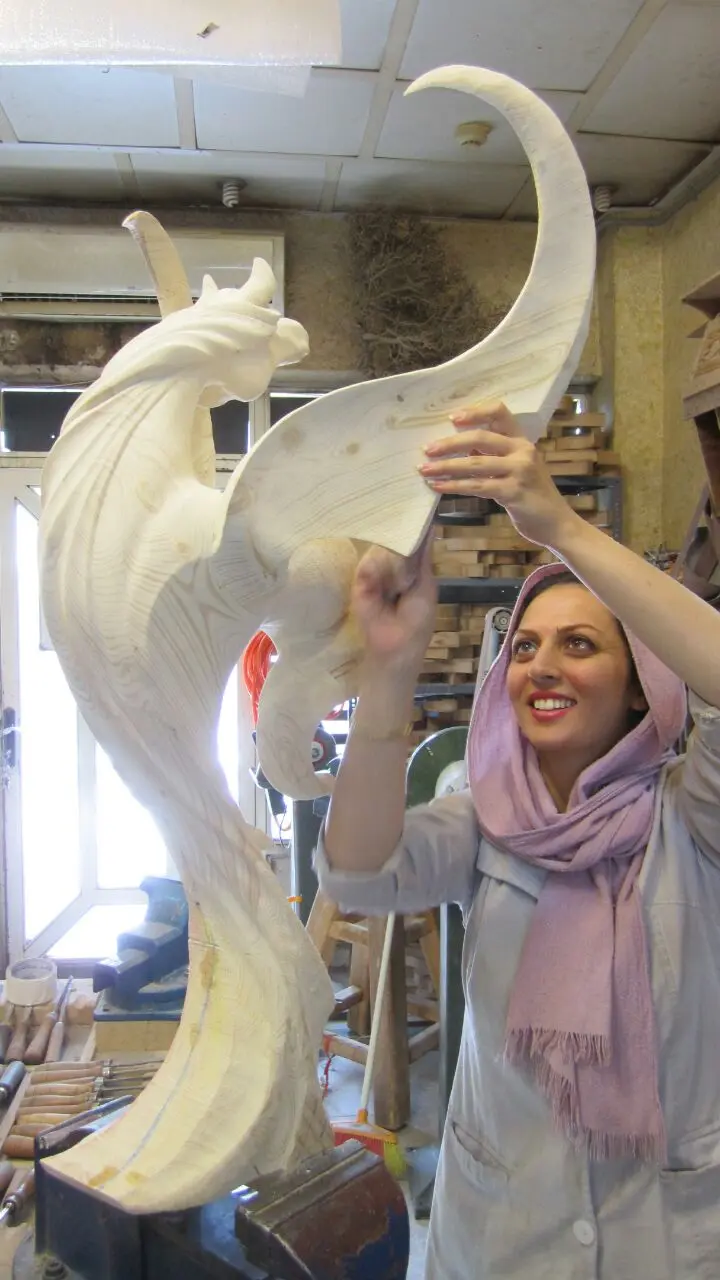
One of the sculpture’s most striking features is the organisation of its form along a vertical axis. Its elongated, relatively simple base establishes a foundation for the upper section, where multiple twists and sweeping curves depart from the geometric order of the base. This contrast creates a visual tension between stability and expansion.
At the bottom, the eye encounters a relatively calm and compact structure. As it moves upwards, however, the composition becomes increasingly intricate, with forms extending in multiple directions. The result is an ascending rhythm that guides the viewer’s attention from the stability of the base towards the dynamism of the sculptural form.
From a compositional perspective, the distribution of visual weight is another important aspect of Parnian Sculpture.
Despite its complexity and lateral expansion, the upper section rests upon a comparatively narrow base. This arrangement turns the perception of balance into a visual question, as though the structure occupies a point somewhere between stability and instability. This instability is perceptual rather than necessarily physical, arising from the organisation of the forms and the directions of their curves.
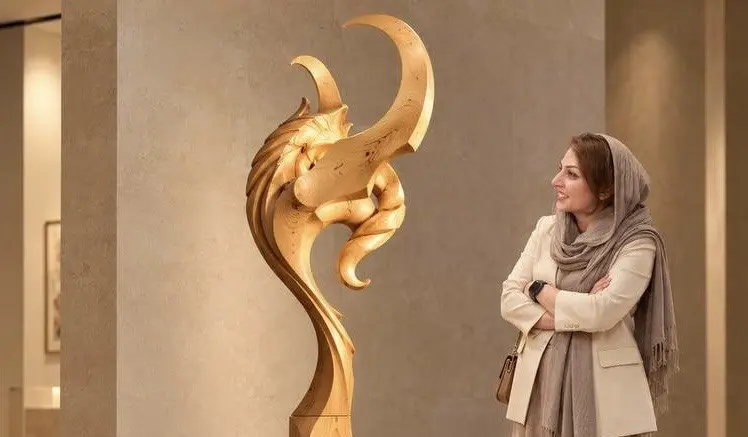
In this way, the sculpture draws attention to the relationship between physical balance and perceptual balance—two qualities that do not necessarily coincide in sculpture.
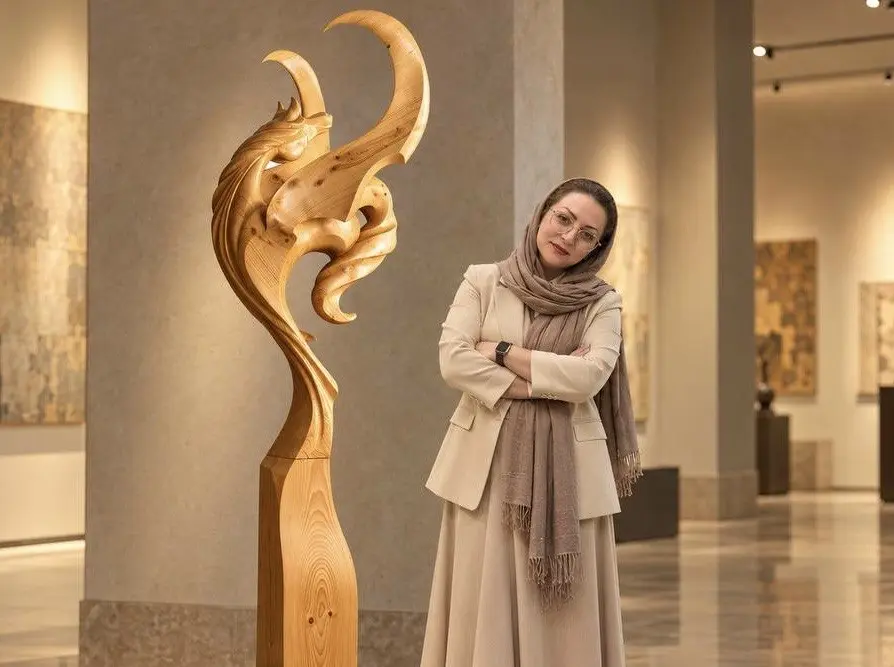
The upper forms, with their sweeping arcs and recurved tips, evoke a range of associations. Some lines may recall horns, wings, flames, or elements of animal anatomy, yet none of these interpretations dominates the reading of the work. This multiplicity of possible meanings allows the sculpture to move beyond direct representation. Viewers may discover references to nature or living creatures without having to reduce the work to the depiction of any specific subject. As a result, *Parnian* moves between familiarity and ambiguity, between the mind’s impulse to recognise and the form’s resistance to definitive naming.
From a sculptural standpoint, the relationship between positive volumes and negative spaces is equally significant. The empty spaces help define the boundaries of the figure and establish the trajectories of its lines. In some areas, a void functions as a cleft between two volumes; elsewhere, it becomes an element that carries the eye from one side of the sculpture to the other. The work is therefore experienced not through its material alone: the space surrounding and enclosed within it also contributes to the visual encounter.
The sculptor’s skill in creating these delicate openings and precisely articulated cuts is particularly striking, inviting the viewer to appreciate the intricate relationship between solid matter and void.
The choice of fir wood adds another dimension to the work’s identity. Its visible grain, knots, and natural variations in colour prevent the surface from becoming uniform, emphasising the differences between individual sections. This becomes especially important in forms characterised by twisting and changes of direction, where the grain sometimes follows the movement of the form and sometimes runs against it. The wooden surface thus provides visual information about the structure and material character of the sculpture.
Light also plays a decisive role in the reading of Parnian . Convex surfaces, raised areas, and recesses produce varying intensities of light and shadow depending on the angle of illumination. These changes allow the sculpture to acquire different visual qualities under different lighting conditions. The experience of the work therefore extends beyond the observation of a fixed volume: light can reveal or obscure the boundaries of the figure, influencing the perception of depth and distance.
- The Market for Shadi Habib’s Artworks
Shadi Habib (born 1986 in Tehran) is an artist whose practice has developed through an academic background and an interdisciplinary engagement with graphic design, handicrafts, and wood art.
She holds a degree in Graphic Design from Shariaty University, a bachelor’s degree in Handicrafts from Alzahra University, and a master’s degree in Handicrafts from the University of Art in Isfahan. She also works as a university lecturer.
From an art-market perspective, Shadi Habib’s wooden sculptures have attracted growing interest. The trajectory of her practice can be traced through acquisitions by museum and private collections, as well as appearances at auction.
A significant milestone came with her participation in the 25th Tehran Auction in 2026, where The Bird of Heaven, a wooden sculpture created in collaboration with Mohamadali Vadood, achieved a hammer price of 1.65 billion Iranian tomans, approximately US$9,700. The work had previously received recognition in the prestigious Italian A' Design Award competition in 2017.
In 2023, the Abbasi Museum Gallery in Arak also acquired one of Habib’s works and put it on display.
Beyond these sales and acquisitions, Shadi Habib’s works are held in several collections, including the digital collection of an Italian museum, the Museum of the Research Institute of National Arts under Iran’s Ministry of Cultural Heritage, the Museum of Tabriz University of Art, and private collections.
In recent years, Shadi Habib has received international recognition and awards at art events in the United States and Italy.
In 2022, her sculpture Centaur received the Best in Show award in the international ALL Figurative/Portrait competition organised by Contemporary Art Gallery Online in the United States.
In January 2025, her work BIRDS’ BATTLEFIELD won Third Place in the 3 Dimensional category of the 14th All Women Art Exhibition, organised by the US-based Light Space & Time Online Art Gallery.
Her achievements also include third-place awards in two consecutive years, 2018 and 2019, at the international Italian A' Design Award, further strengthening the international profile of her artistic practice.
Shadi Habib holds a first-grade artistic qualification in sculpture and is a member of the policy council of Iran’s National Handicrafts Olympiad. Her achievements in Iran also include first place and the First-Grade Wood Arts Medal at the Shamseh Festival.
LEAVE A RELPY