
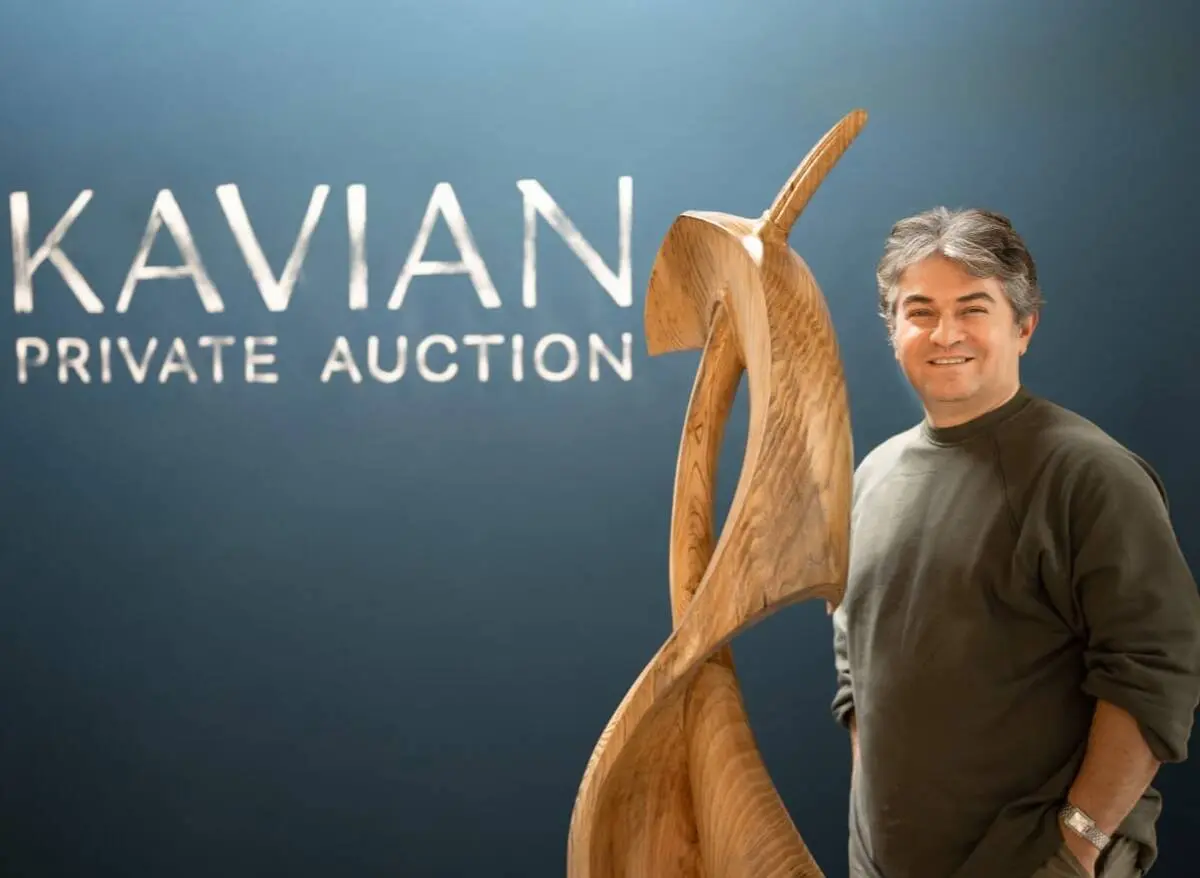
Mohamadali Vadood and a Captivating Reinterpretation of a Withered Tree / A Sculpture from Vadood’s Forever a Tree Series
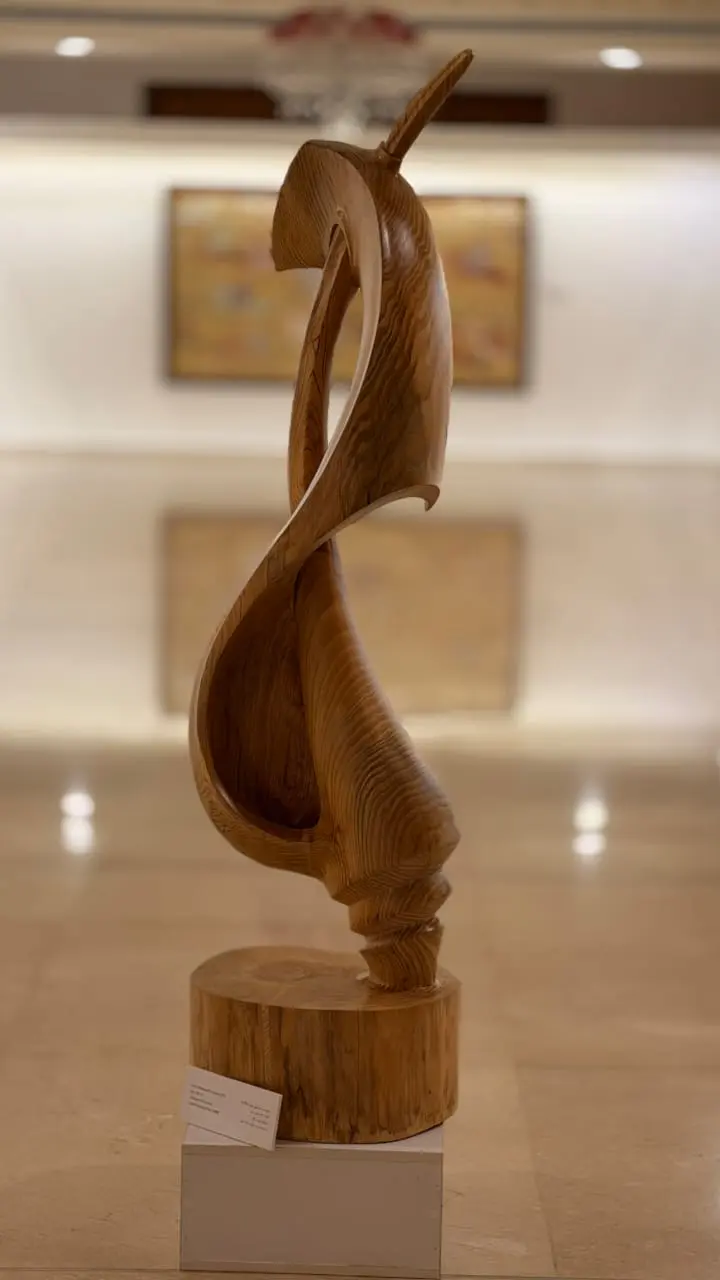
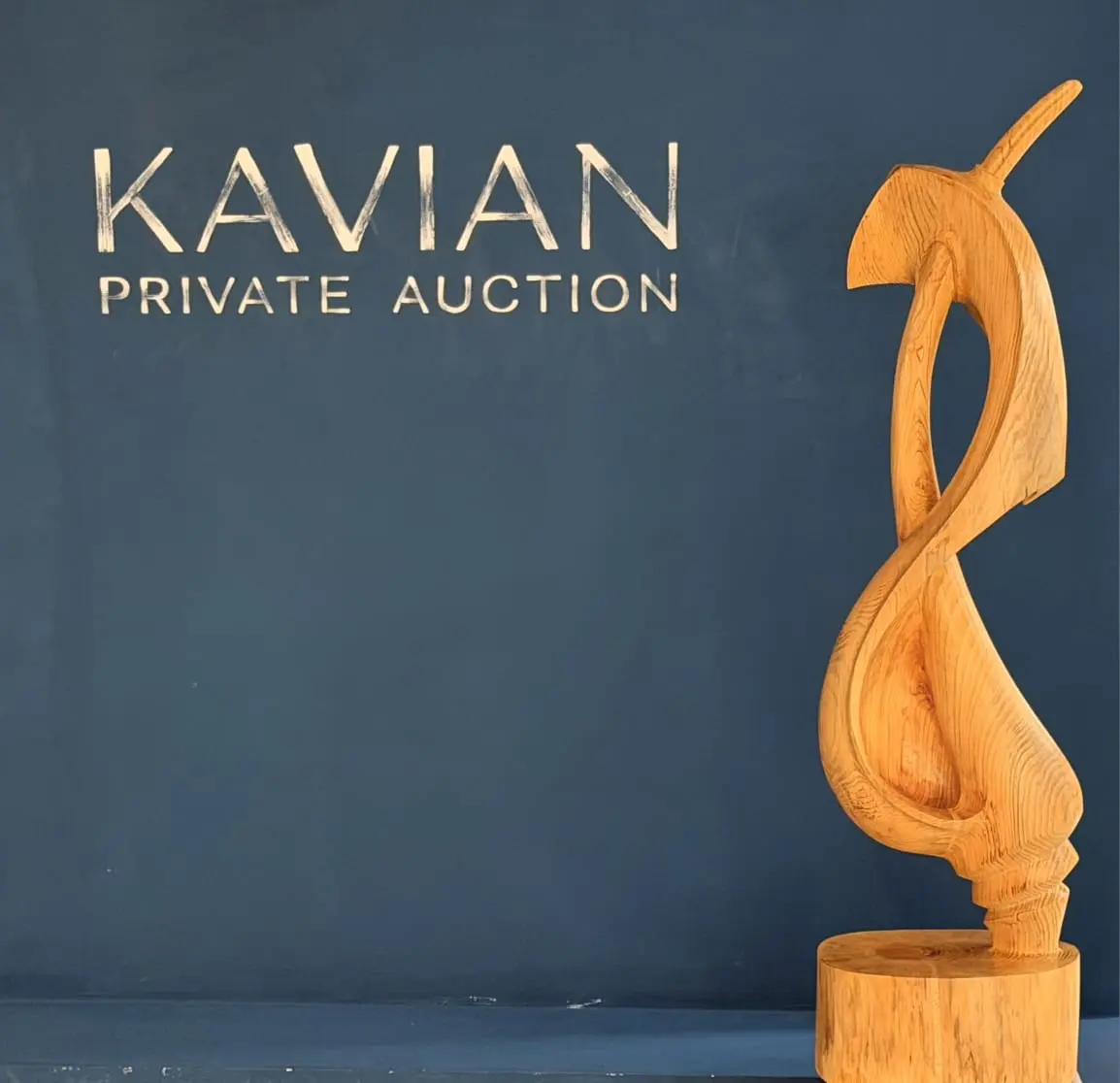
Vadood’s wooden sculpture from his Forever a Tree series, titled Amidst the Inner Turmoil, was created in 2012 (1391 in the Iranian calendar) from a single piece of pine wood and stands 140 cm tall. It captures a moment of encounter between stillness and movement.
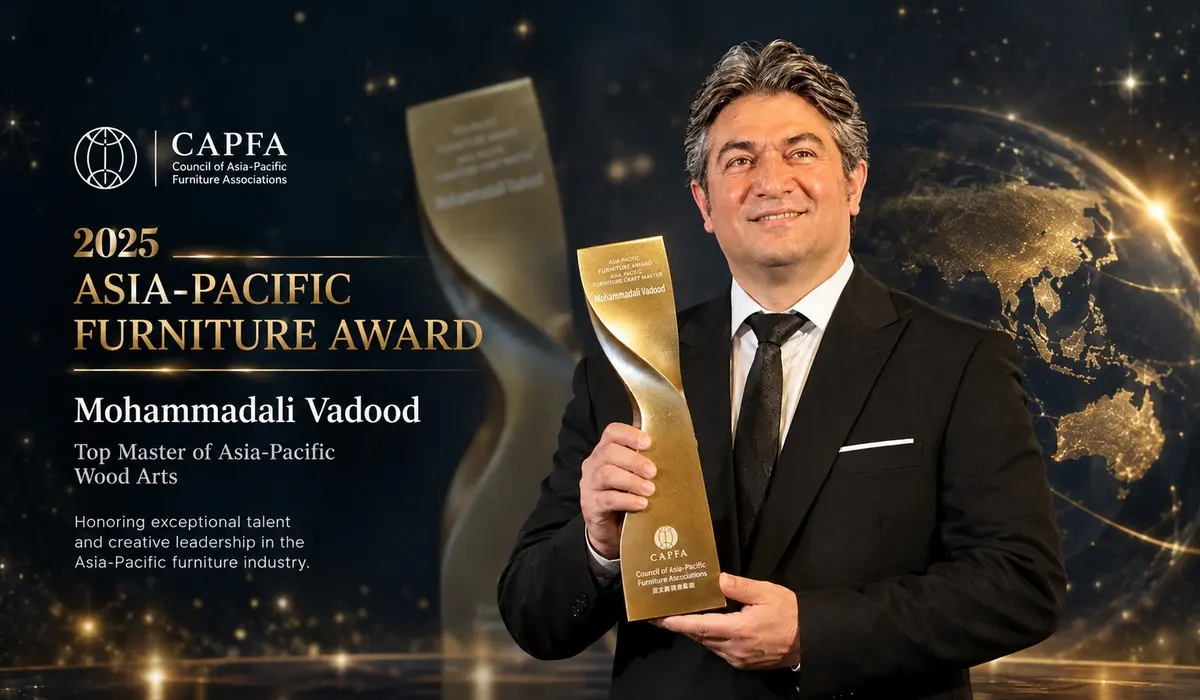
ArtDayMe : We present a remarkable work by Mohamadali Vadood (born 1978, Kermanshah), a prominent figure in Middle Eastern wood art who has received several prestigious international awards over the past decade. His distinctions include the International Creative Hand Award and the title of Man of the Year 2022 in India, both received in 2022, as well as the title of Top Master of Wood Art in Asia-Pacific in 2026.
The work is a wooden sculpture from his acclaimed Forever a Tree series, titled Amidst the Inner Turmoil. Created in 2012 (1391 in the Iranian calendar) from a single piece of pine wood, the sculpture stands 140 cm tall.
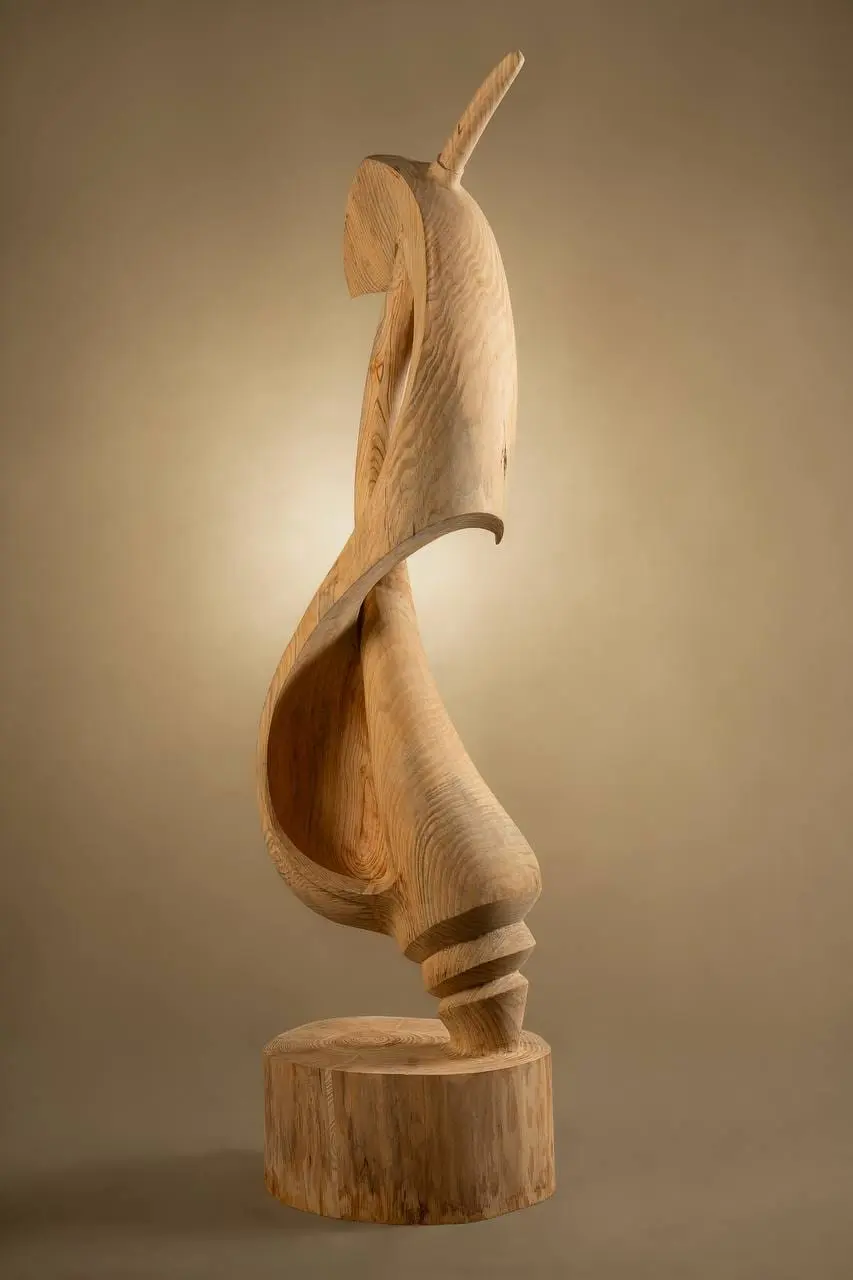
- Amidst the Inner Turmoil: Capturing the Moment of Passage / The Encounter Between Movement and Stillness
Mohamadali Vadood’s Amidst the Inner Turmoil is a meditation on the hidden struggles of existence: on the forces that continuously confront one another in the depths of human experience, between stillness and restlessness, contraction and openness, wounds and healing, and the desire to remain and the necessity of moving forward.
Vadood’s sculpture regards inner turmoil not as chaos from which one must escape, but as a necessity for self-understanding and a possibility for transformation. It captures a moment in which opposing forces, rather than cancelling one another out, establish a complex and dynamic relationship that creates the conditions for a new form of being.
Here, maturity does not signify the end of conflict; rather, it emerges from consciously confronting it. It is the capacity to live alongside forces that may sometimes disturb our peace, yet simultaneously open the way beyond the boundaries of our previous selves.
One of the defining characteristics of this wooden sculpture by Mohamadali Vadood is its ability to capture the moment of passage: the instant of encounter, penetration and transition, when two forms meet at a decisive point and their relationship is transformed.
Unlike the conventional understanding of passage as leaving something behind or breaking away from it, this transition does not entail the negation of the preceding element. Instead, it establishes a relationship of support, companionship and continuity. The stationary element, while retaining its solidity and identity, enables the other form to move forward. The moving form, in turn, discovers the trajectory of its continuation through this relationship.
From this perspective, neither element serves merely as the subject or setting for the other. Movement acquires meaning in relation to stillness, while stillness, through its encounter with movement, reveals a previously concealed potential.
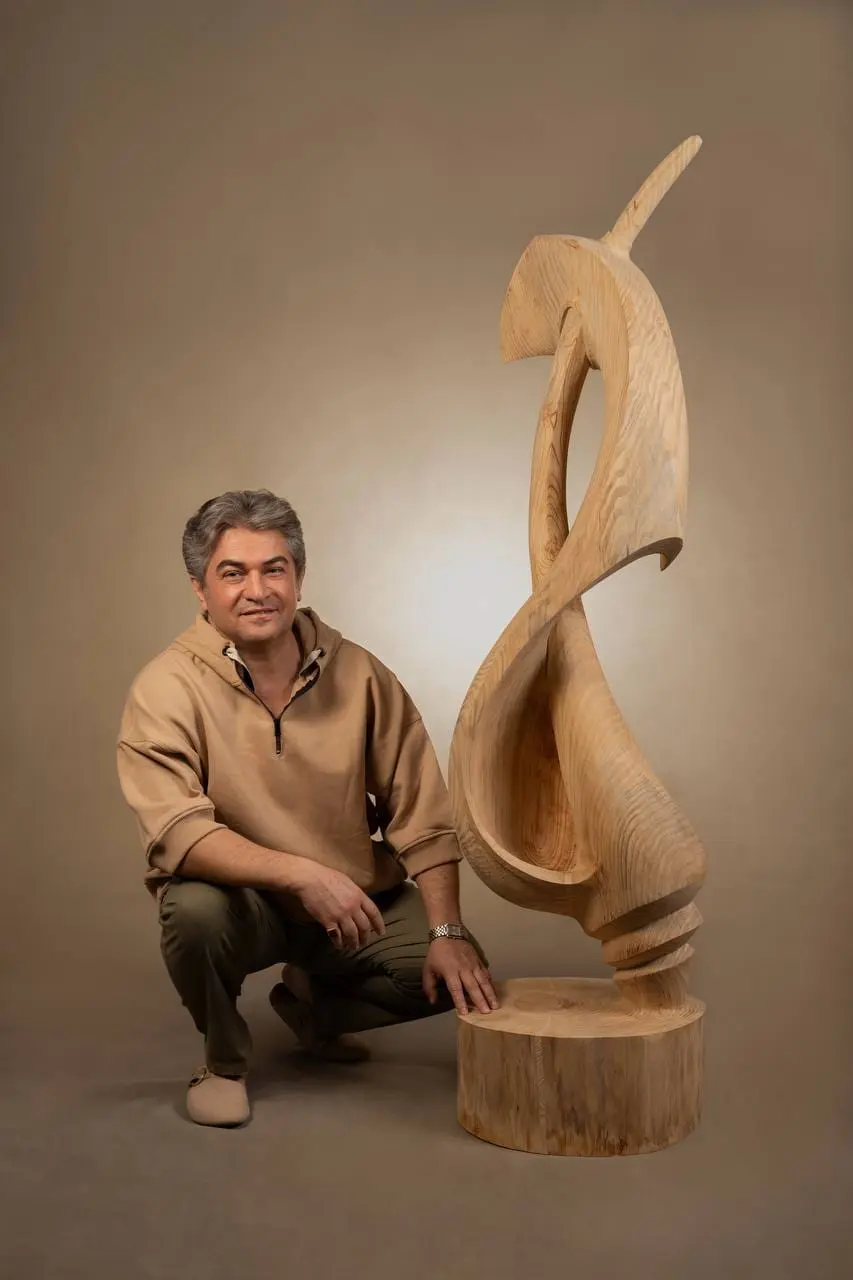
- Mohamadali Vadood: A Conceptual Dialogue Between Contemporary Wood Sculpture and the Visual Traditions of Iranian Art
The significance of the relationship between movement and stillness in Mohamadali Vadood’s Amidst the Inner Turmoil lies in its transformation of passage from a purely physical concept into an existential and human experience.
Does liberation necessarily require severing ties with that from which we have emerged? Can we move beyond our own boundaries without denying our roots?
Mohammadali Vadood’s Amidst the Inner Turmoil offers no definitive answers to these questions. Instead, through the language of form, it proposes another possibility: perhaps genuine passage is achieved not through the rejection of the past, but through a renewed understanding of our relationship with it. At times, what makes our movement possible is precisely that which appears, on the surface, fixed and motionless.
This visual quality also resonates with certain enduring elements of Iran’s visual heritage, particularly Persian miniature painting, where stems passing through lotus leaves establish a relationship between movement and stillness, extension and stability.
Within such an arrangement, passage does not necessarily imply the dominance of one element over another. Rather, it can constitute a subtle expression of coexistence without erasing the distinction between individual components.
A similar relationship can be interpreted in this sculpture: the form that passes through depends, for the continuation of its existence, on the presence of another form. Instead of obstructing its path, that presence makes its emergence and continuity possible.
Without suggesting direct appropriation, this juxtaposition creates a conceptual dialogue between contemporary wood sculpture and certain visual traditions of Iranian art.
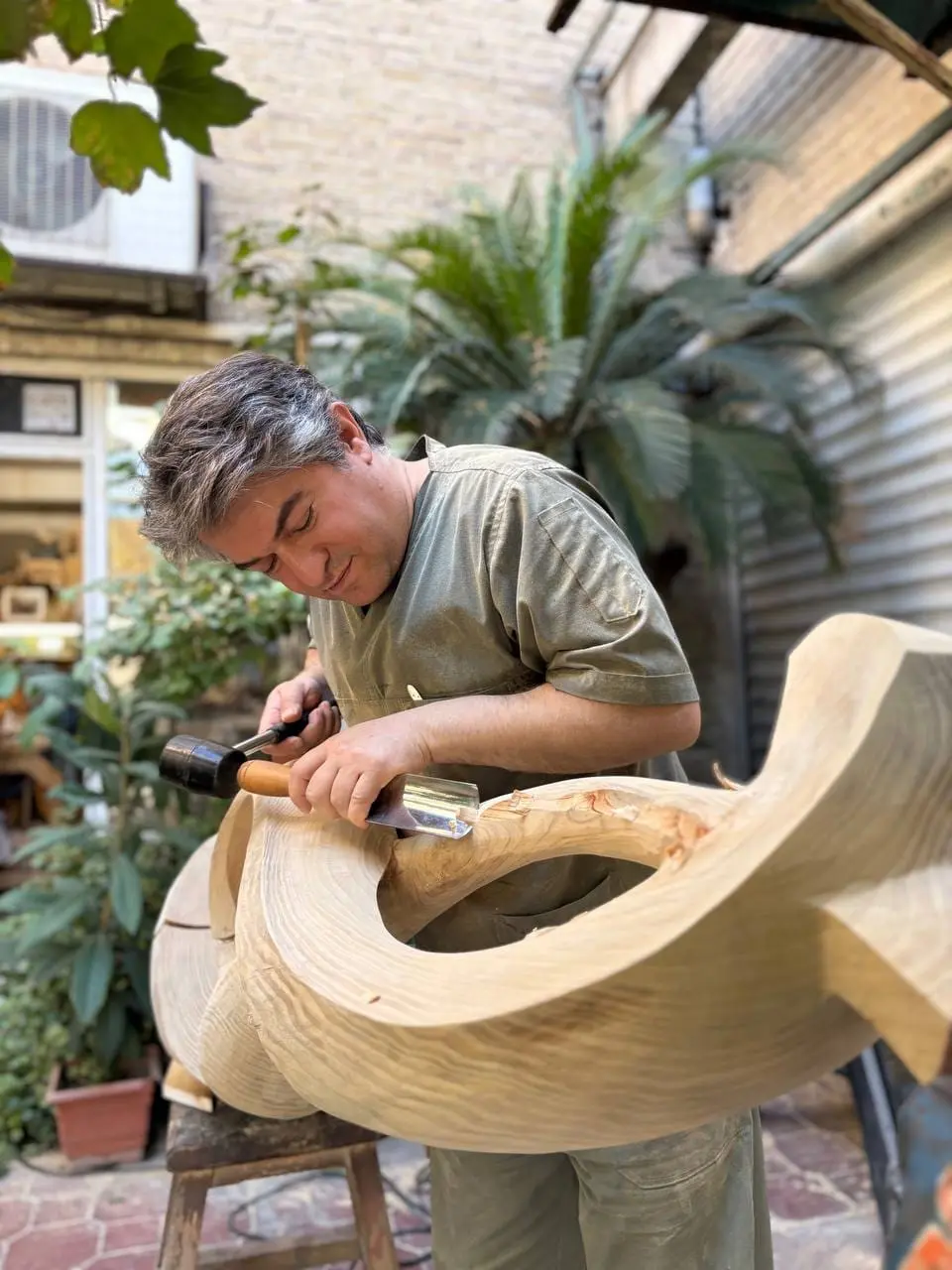
- A Sculpture Moving from Compression to Expansion
In the sculptural structure of this elegantly composed work, the twisting of surfaces, the transition from angularity to curvature, and the movement from compression to expansion generate a vortex-like quality, as though a force has emerged from the depths of the material and gradually reveals itself along a spiral trajectory.
This movement is neither linear nor unidirectional; rather, it results from continuous rotation, return and transformation.
As the form ascends and twists, it repeatedly encounters its own boundaries, moves beyond them and, despite its transformation, maintains its connection with its point of origin.
- Negative Space in Mohamadali Vadood’s Sculpture
The negative space between the surfaces also plays a fundamental role in this Vadood sculpture. It is not merely an absence of material, but an independent presence that defines the trajectory of movement, intensifies the tension between the components and makes their relationships perceptible.
The sculpture therefore acquires meaning not only through the space it occupies, but also through the space it creates and opens up.
- The Natural Tree Stump and the Artist’s Vision
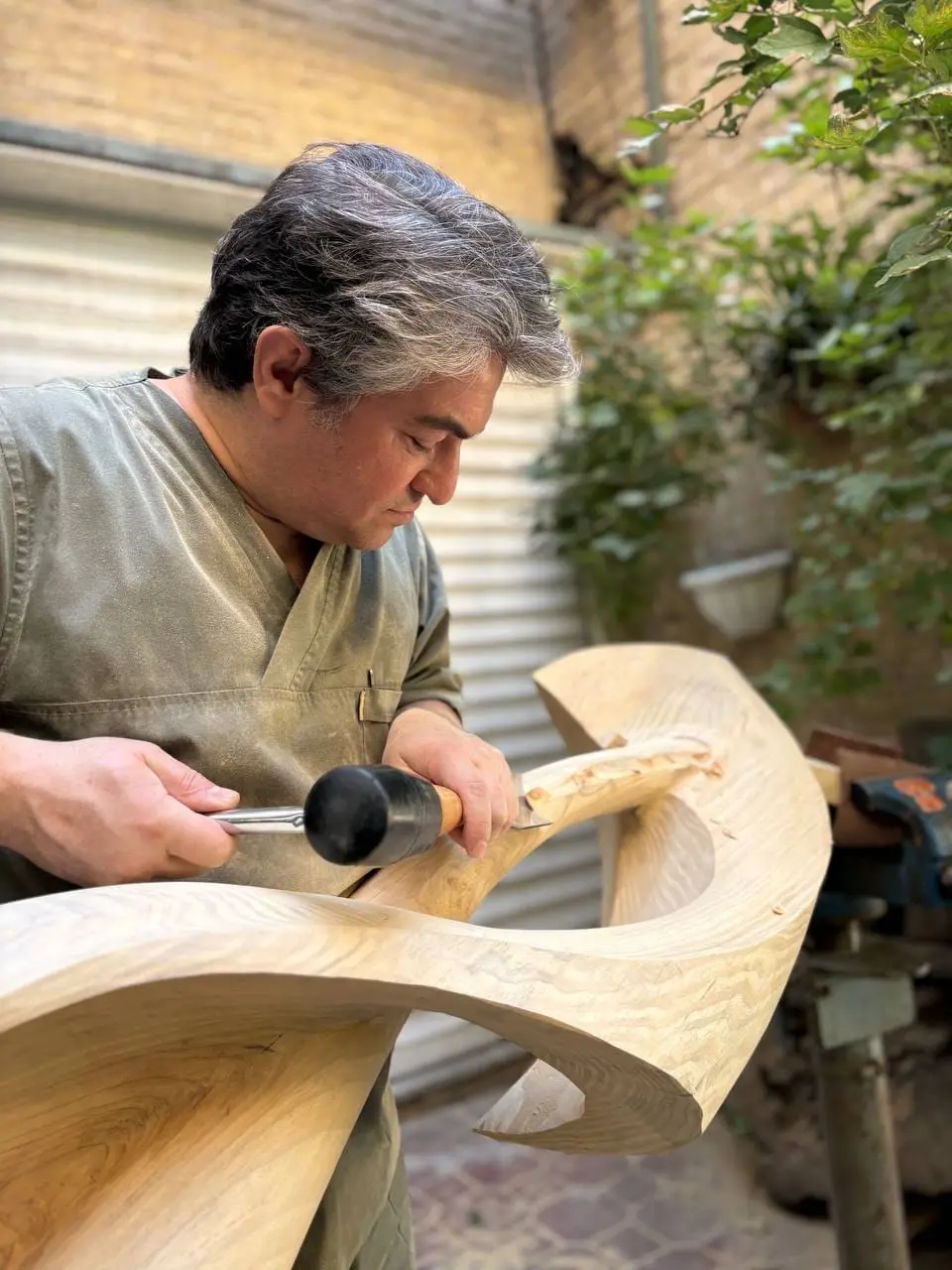
The natural tree stump that serves as the foundation and point of origin for this Vadood sculpture makes the connection between roots and movement even more apparent.
The annual growth rings, grain patterns and natural markings of the wood are traces of accumulated time: a material memory that existed before the artist's intervention and was transformed into a new visual language through the creative process.
Here, wood is neither a neutral nor a submissive material that merely yields to the artist's will. Rather, it is a living structure of differences, resistances and possibilities that, through a dialogue with the artist's hands and imagination, acquires an independent sculptural identity.
From this perspective, the sculpture is not the imposition of a predetermined form upon matter, but the outcome of a reciprocal encounter between the creative will and the latent capacities of nature.
- Human Experience and the Wounds of Trees
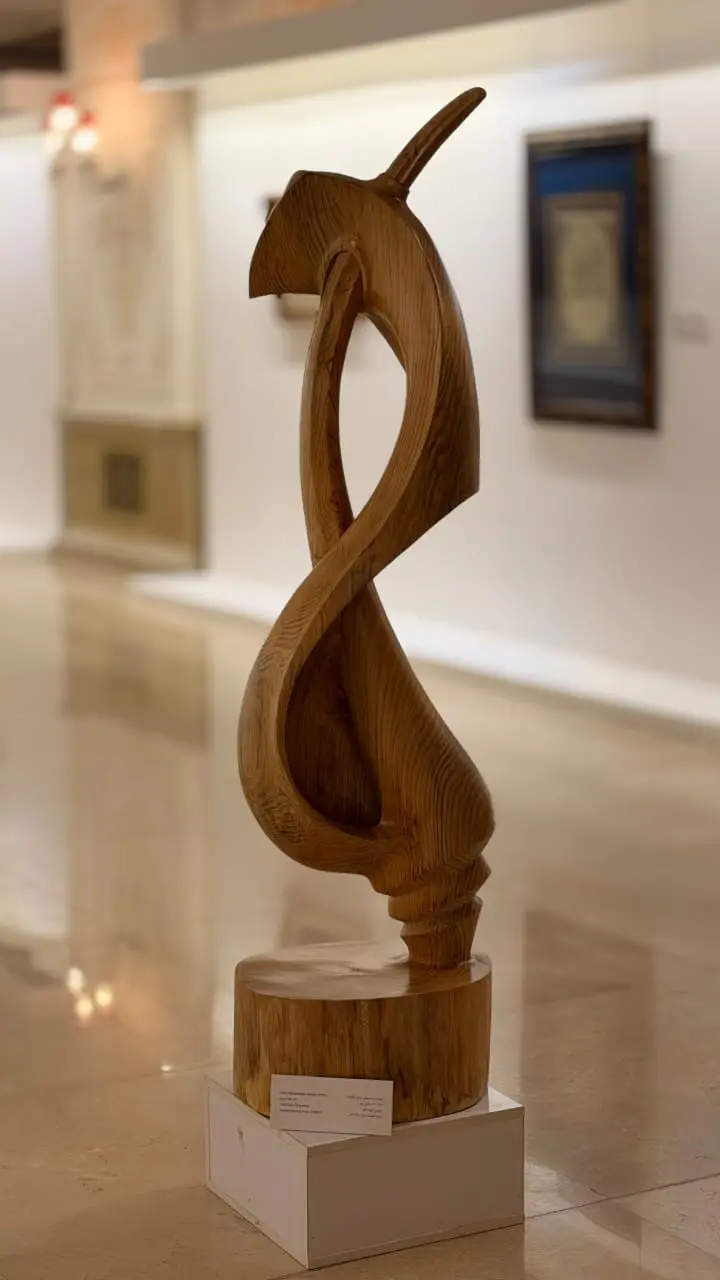
The cracks and repairs in the wood lend another dimension of meaning to this experience.
In this sculpture, a wound is not a sign of imperfection that must be erased from the material's memory; rather, it is part of its history, preserved within its new structure.
Healing does not mean returning to an immaculate, original condition. It means accepting what has happened and transforming the experience of damage into a possibility for continuation.
This meaning has a profound connection with human experience. What shapes us is not limited to life's peaceful and successful moments. Failures, ruptures and wounds also play a role in forming our identities.
At times, resilience arises not from being untouched by wounds, but from the ability to preserve continuity in the midst of rupture.
- A Sculpture About Coexistence
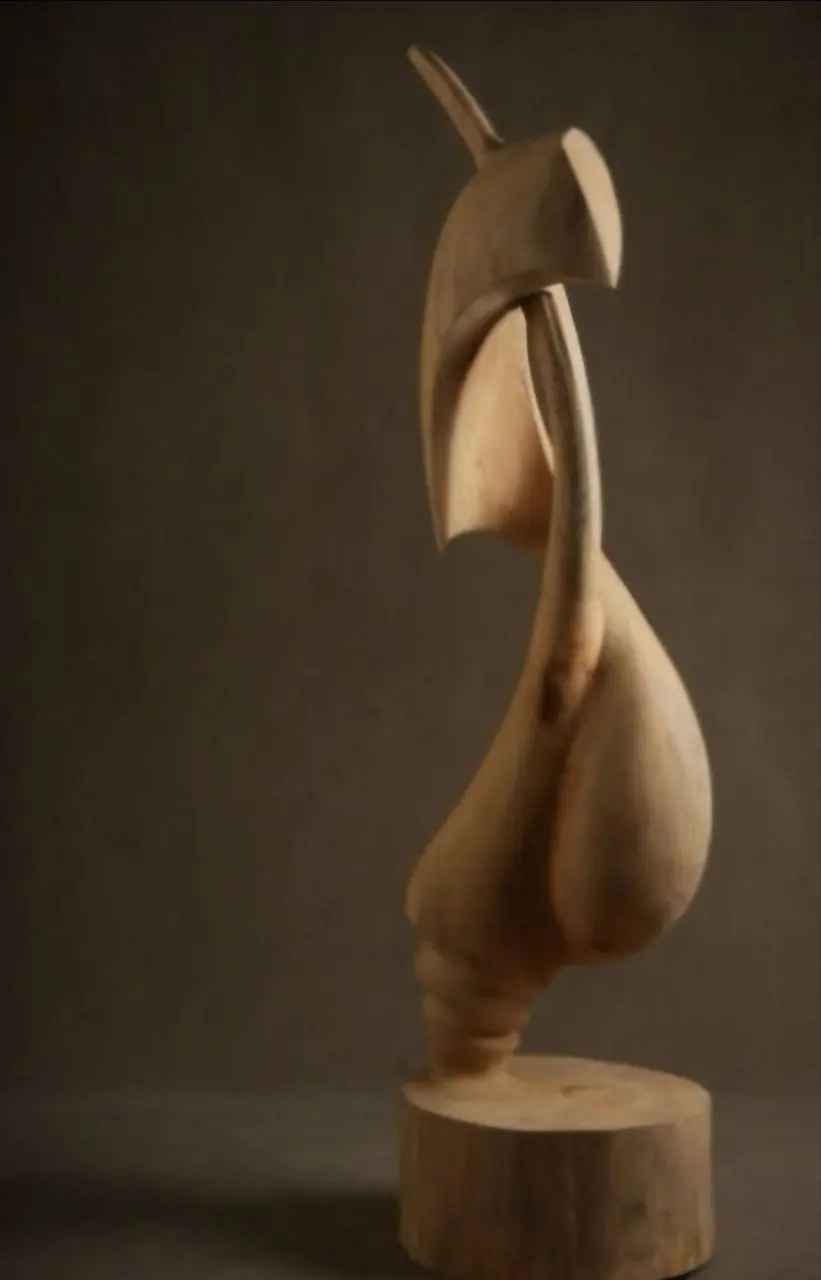
The juxtaposition of masculine and feminine forces, the contrast between hard and soft surfaces, and the unstable equilibrium between positive and negative spaces all reinforce the idea that creation does not emerge from the elimination of differences.
What gives form its vitality is the dynamic tension between elements that, while remaining distinct, complete one another and make one another possible.
In this reading, Amidst the Inner Turmoil speaks of a form of coexistence in which support does not mean domination, passage does not mean negation, and stillness does not signify the absence of movement.
Each element, while preserving its own identity, participates in the emergence of a whole that transcends it.
Mohamadali Vadood’s wooden sculpture Amidst the Inner Turmoil, from his renowned Forever a Tree series, points to a moment in which inner turmoil becomes a source of understanding and passage, rather than severing ties with one's roots, opens a path towards their continuity.
Perhaps inner turmoil is the voice of those parts of ourselves that have not yet been given the opportunity to emerge: forces whose internal struggles invite us to reconsider the boundaries of our being.
In such a state, peace is not absolute silence, but the discovery of a more conscious relationship with these voices. Maturity, likewise, is not reaching a point of complete tranquillity, but learning a new way of living amid turbulence.
Amidst the Inner Turmoil, from the Forever a Tree series, tells a story of precisely this continuity: of a tree that, while remaining rooted, nurtures the possibility of movement within itself; of a form that needs the presence of another in order to pass through; and of a human being who may discover a path towards deeper understanding only by embracing the turmoil within.
Within my weary heart, I know not who resides;
For I am silent, while someone within cries out in tumult.
- Mohamadali Vadood’s Artwork Prices
Over the years, Mohamadali Vadood has succeeded in cultivating an expanding audience and market for wood art through a distinctive and recognizable artistic language. Today, evidence of this trajectory can be found both in private collections and in auction records.
At the Kavian Auction 2026, a work executed using the Naqsh-Bandi technique, measuring 30 × 60 cm and selected in the Fine Arts category of Italy’s A’ Design Award, achieved a hammer price of $8,800.
Meanwhile, the wooden sculpture Bird of the Celestial Realm (Morgh-e Malakut), from the series The Assembly of Thirty Birds and That One Bird, created in collaboration with Shadi Habib and awarded the Bronze Medal among Italy’s Best Designs of 2019, was sold at the 25th Tehran Auction in 2026 for 1.65 billion tomans, equivalent to approximately $9,700.
These figures, alongside his record of receiving the International Creative Hand Award, the title of Man of the Year 2022 at the International Crafts Award in India, the title of Top Master of Wood Art in Asia-Pacific in 2026, several distinctions and selections at Italy’s A’ Design Award and the Kioskedia Awards, lifetime membership in the World Designers Consortium, membership of the Art Council of the National Elites Foundation and the Specialized Traditional Arts Group of the Academy of Arts, as well as the First-Degree Artistic Medal, collectively form part of the symbolic capital of the artistic brand Vadood has built over the years.
Another dimension of the significance of this artistic brand can be seen in the subsequent destinations of his works. His pieces are held in the digital treasury of Italy's MOOD Museum, the Museum of the Research Institute of National Arts affiliated with the Ministry of Cultural Heritage, and the Museum of Tabriz University of Art.
They are also represented in private collections belonging to Professor Giv Sharifi; Engineer Abbasi and Abbasi Gallery; Engineer Hassan Golchinpour and Mesnegar Gallery; Engineer Esmaeil Ghods; Dr. Farshid Bozorgi; and Engineer Meysam Moradimanesh, among others.
From a market perspective, what distinguishes Vadood is the simultaneous development of a personal artistic language, professional credibility, international recognition, collecting history and auction performance. Together, these elements transform an artist's individual signature into a recognizable artistic brand within the market.
LEAVE A RELPY