
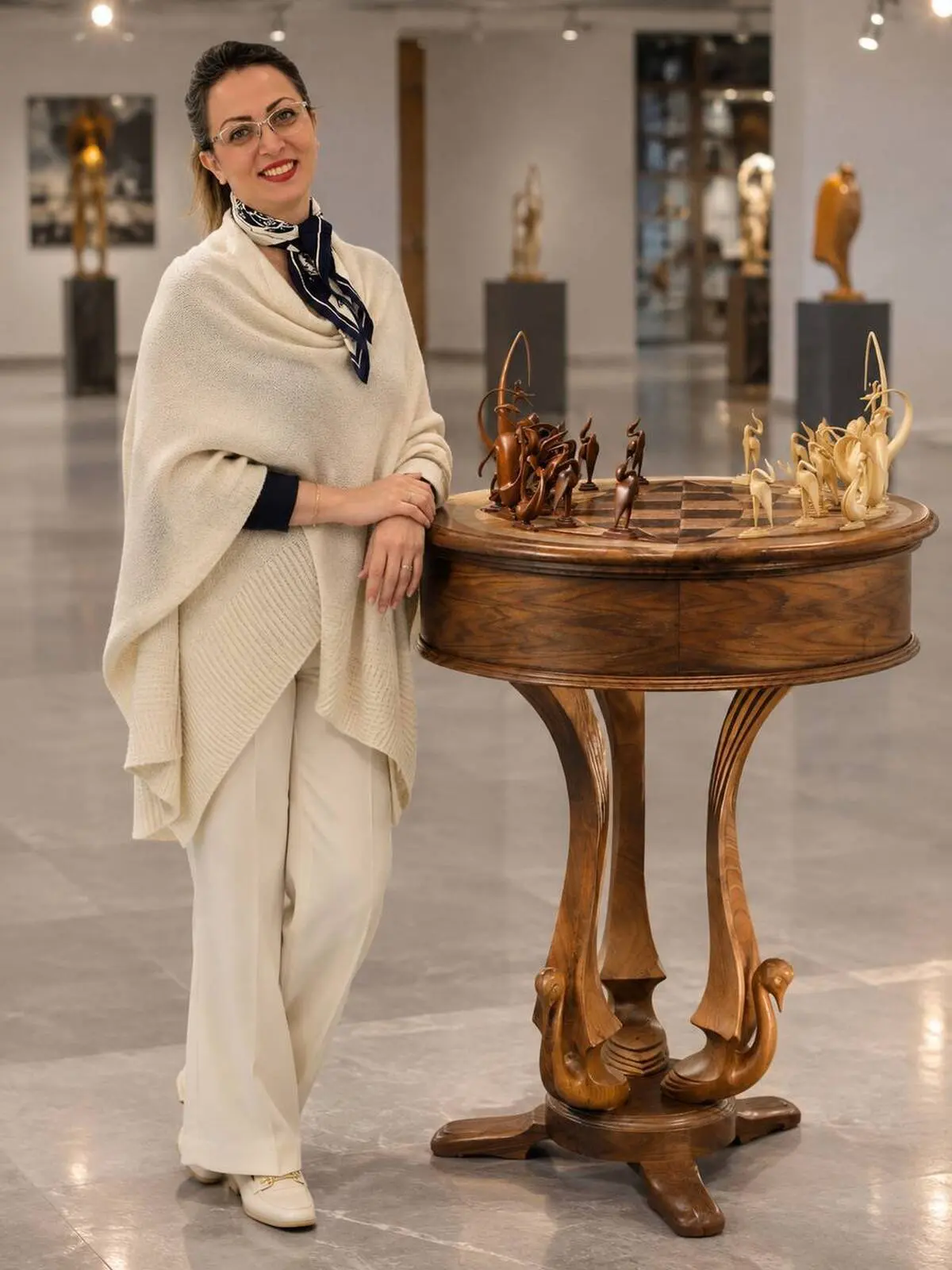
Shadi Habib and The Arena of Birds: A Chess Set with Two Layers of Meaning
A functional chess sculpture by Shadi Habib, an internationally award-winning artist, offers an intriguing exploration of both form and meaning, bringing together sculptural innovation, aesthetic sophistication and conceptual depth.
ArtDayMe: We turn our attention to The Arena of Birds, a work by Shadi Habib, a recognised artist in the field of wooden sculpture and recipient of six prestigious international awards. This examination comes just days after another work by the artist was sold at the second Kavian Private Auction in Tehran on 6 November 2026.
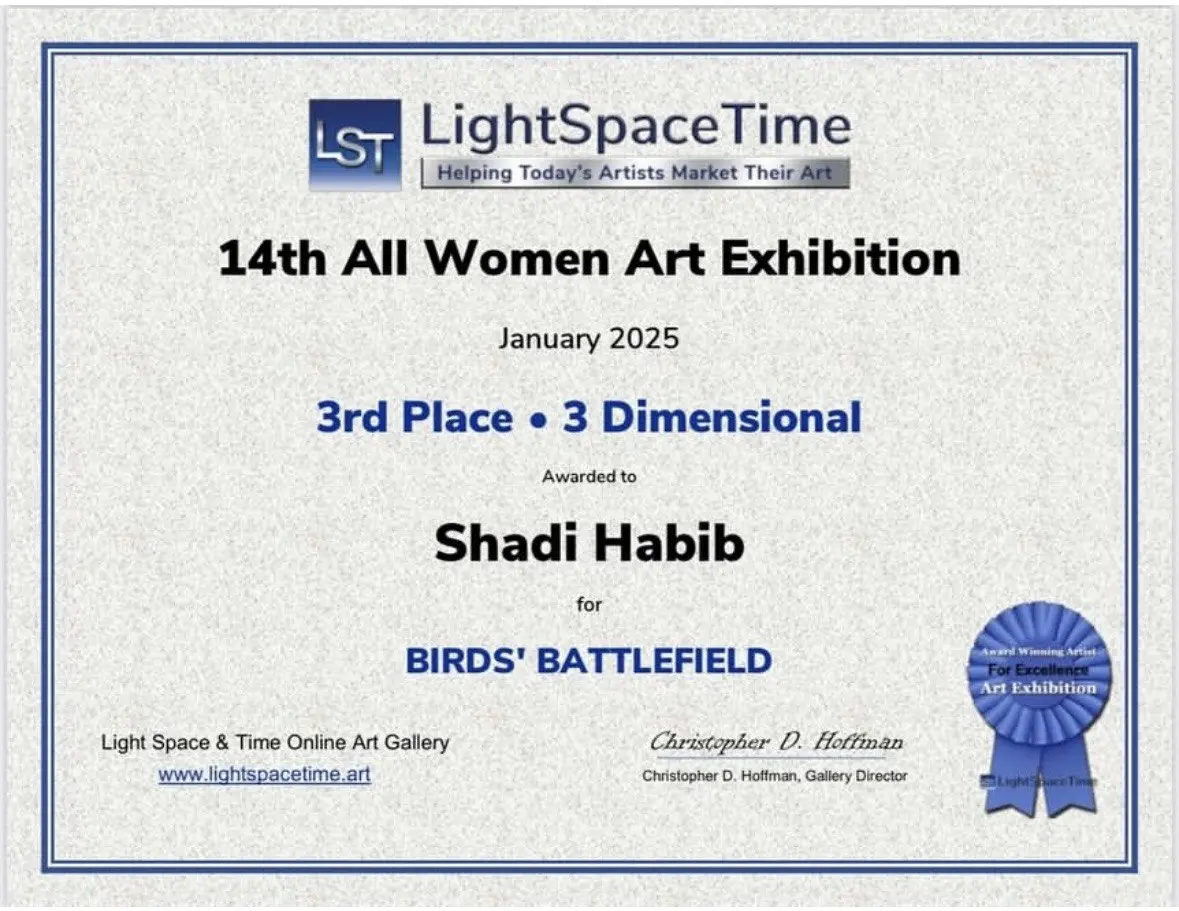
Interestingly, the functional wooden sculpture The Arena of Birds has itself received international recognition. In January 2025, it was awarded Third Place in the 3D Art category of the 14th Annual All Women Art Exhibition, organised by the American online gallery Light Space & Time. This achievement once again highlights Shadi Habib's simultaneous success in the art market and the artistic quality and international standing of her work.
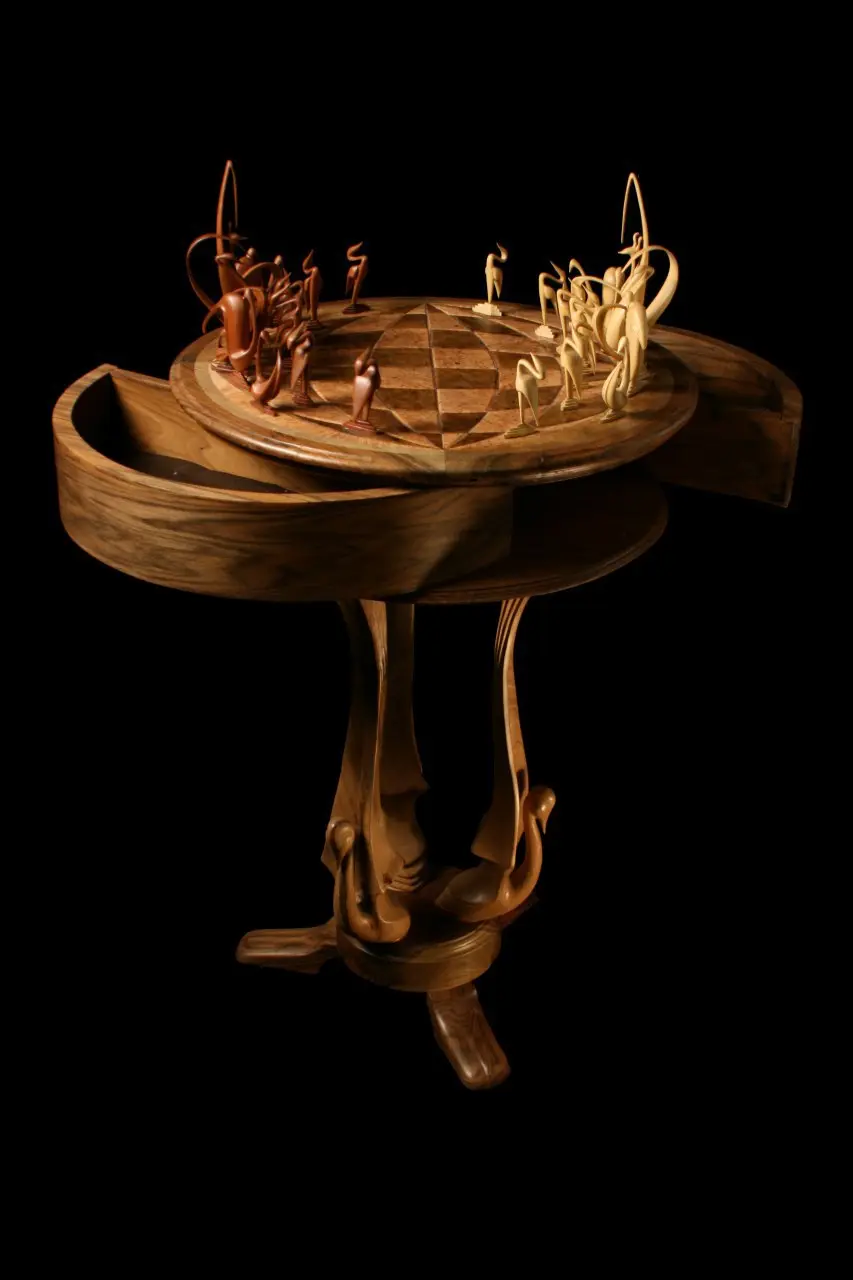
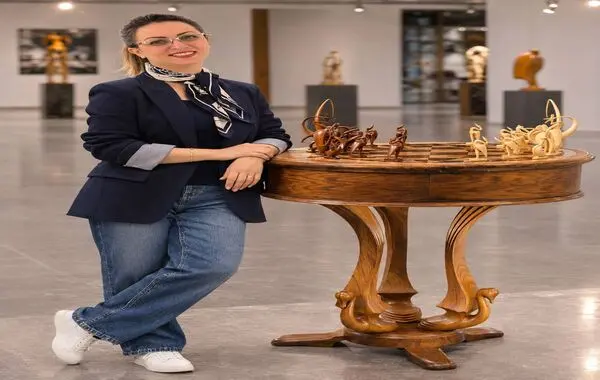
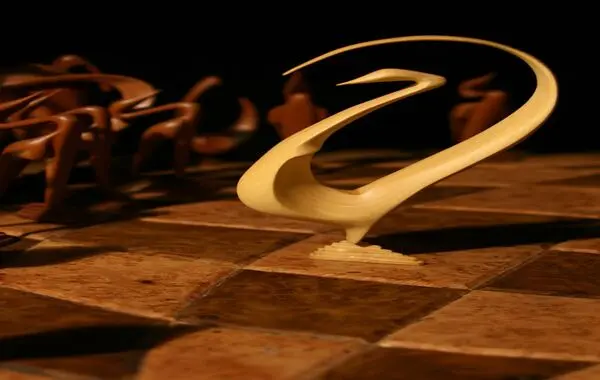
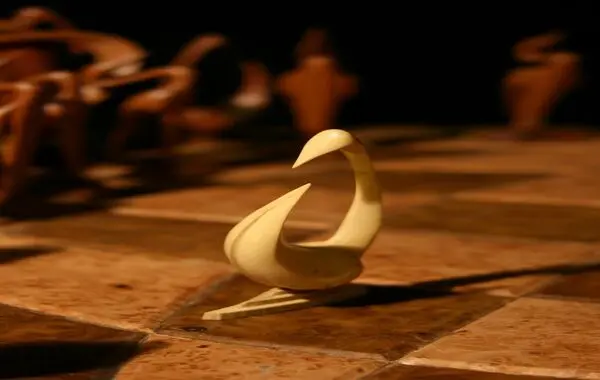
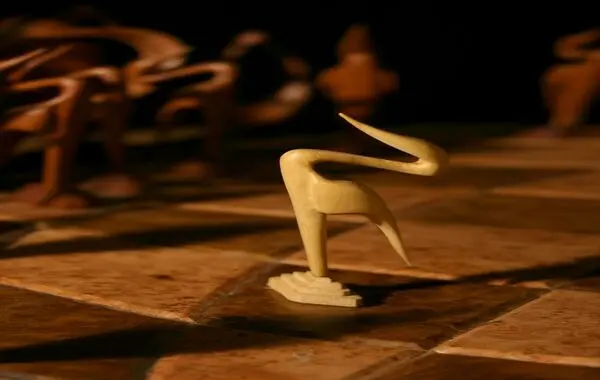
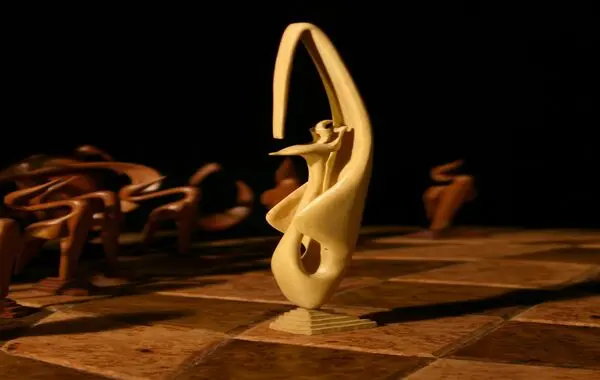
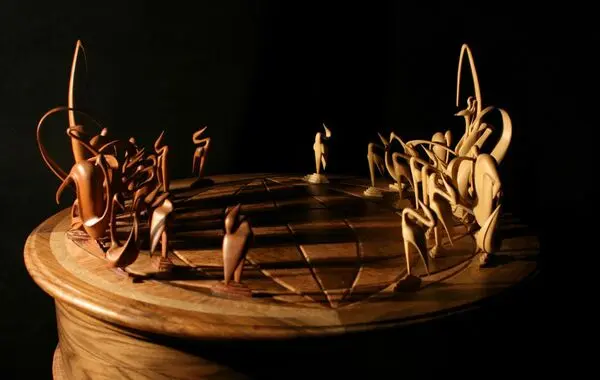
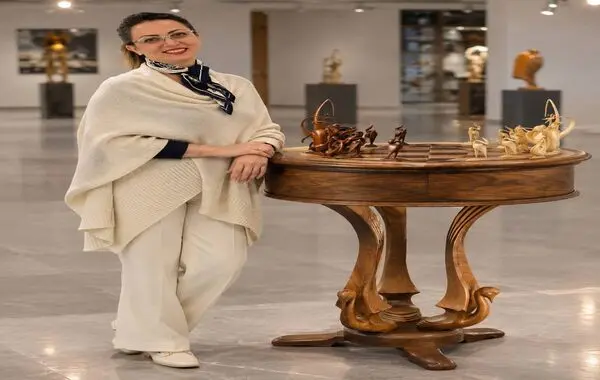
The functional chess sculpture The Arena of Birds stands 80 centimetres tall and is crafted from walnut, jujube, boxwood, field maple burl and oleaster burl.
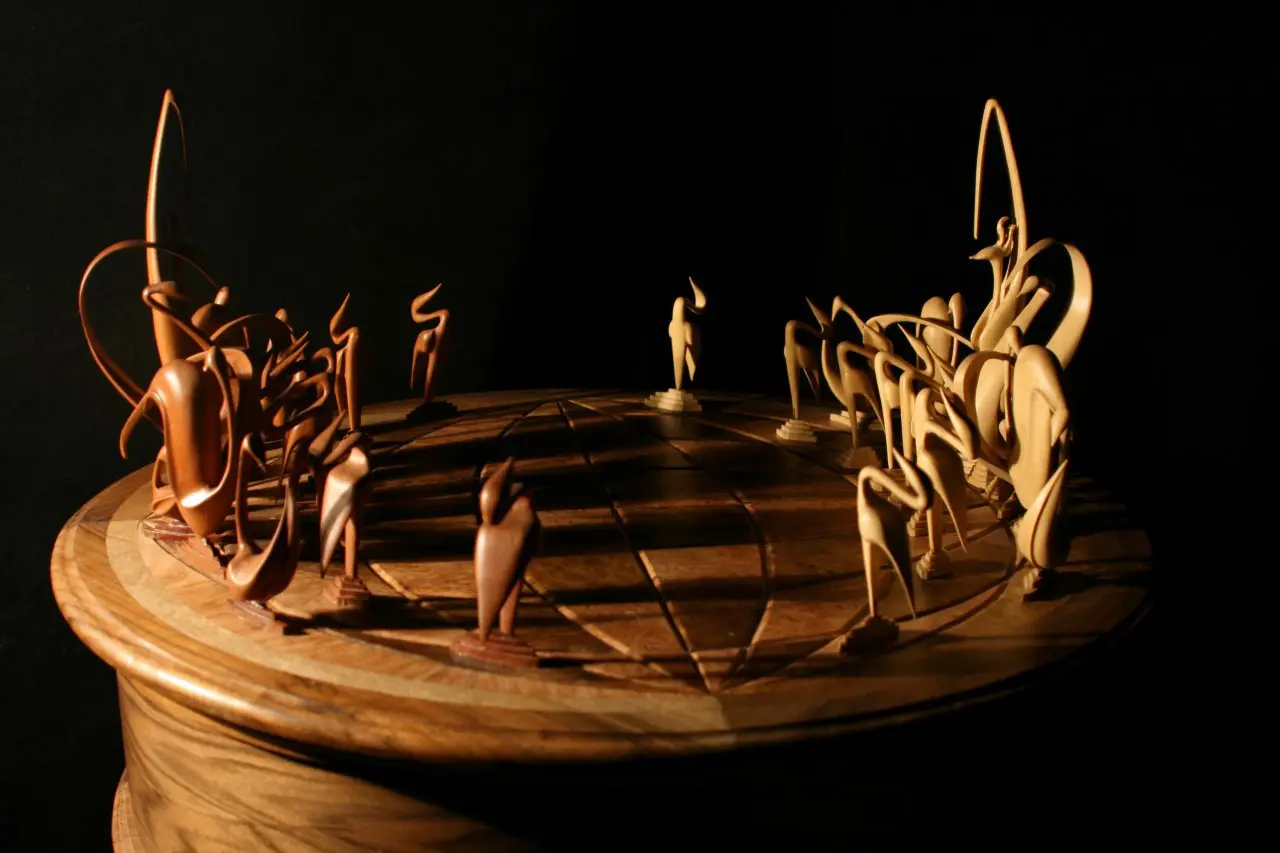
In The Arena of Birds, Shadi Habib brings together circular geometry, abstract form-making, the natural diversity of wood, rhythms created through repetition and variation, and sculptural volumes that evoke elements of ancient architecture. The result is a composition with a coherent structure and a distinctive visual identity. The work's aesthetic strength lies in the harmony achieved among these elements.
- A Sculpture in the Form of a Chess Set: Two Layers of Meaning
Conceived as a functional chess set, The Arena of Birds presents the world of the game not merely as a field of movement, competition and the struggle to occupy positions, but as a world open to contemplation. It is a world in which some struggle to gain a position, while others, beyond the boundaries of competition, carry the weight of the entire world on their shoulders.
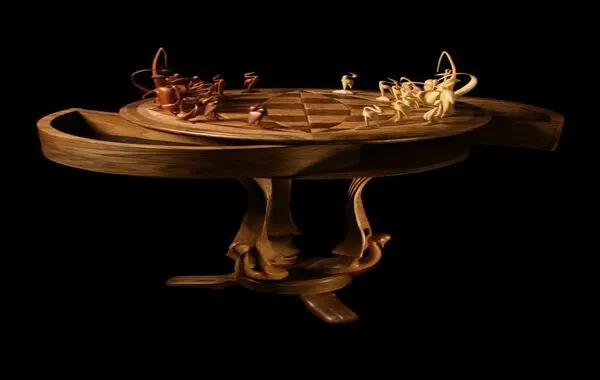
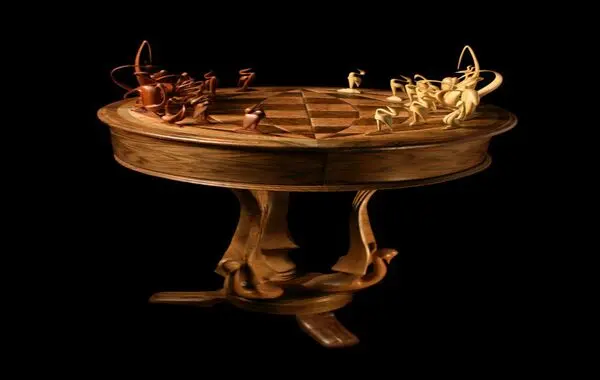
In this work, Shadi Habib has designed the chessboard around a circular structure, a form that evokes the Earth and the shared arena of existence. The chess pieces are conceived as abstract forms, each reflecting its particular role and position within the game. They stand on bases inspired by the architecture of temples and ziggurats in ancient Mesopotamia and Iran. This reference to ancient architecture connects the world of the game to historical and civilisational memory, as though the dynamics of power, confrontation and the shifting of positions have taken different forms throughout human history.
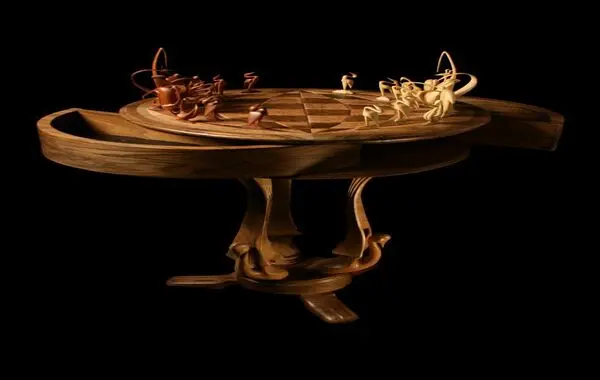
What takes Habib's conceptual structure beyond that of a conventional chess set, however, is the presence of three birds beneath the board. These birds belong to the same species as those represented on the playing surface, yet they have assumed an entirely different responsibility. They are no longer involved in the movement of pieces, the rules of the game or the logic of victory and defeat. They have transcended the world of competition and, in their role as guardians of the world above, carry the entire structure of the game on their wings.
In this composition, two worlds are brought into relation with one another: one in which the chess pieces confront each other in their pursuit of movement, survival and the acquisition of positions; and another, beneath this arena, in which the three birds are present not to win, but to sustain and carry the entire playing field.
Thus, the relationship between what is visible on the board and what lies beneath it becomes one of the central themes of the work. Those who move within the world of the game are visible on its surface; those who bear the weight of that world remain beneath it.
Ultimately, The Arena of Birds poses a question to its audience: Is significance to be found in visibility, competition and the acquisition of positions, or in the capacity to carry an entire world on one's shoulders while others remain absorbed in competing within it?
- An Aesthetic Analysis of The Arena of Birds
Shadi Habib's The Arena of Birds is an intriguing example of the intersection between sculpture and functional design. Taking the form of an 80-centimetre-high chess set, the work brings together the expressive possibilities of sculptural volume, material diversity, composition and spatial structure. One of its most notable achievements is the transformation of a game governed by rules and movement into a three-dimensional structure in which every chess piece possesses an individual identity while remaining part of a larger visual and geometric whole.
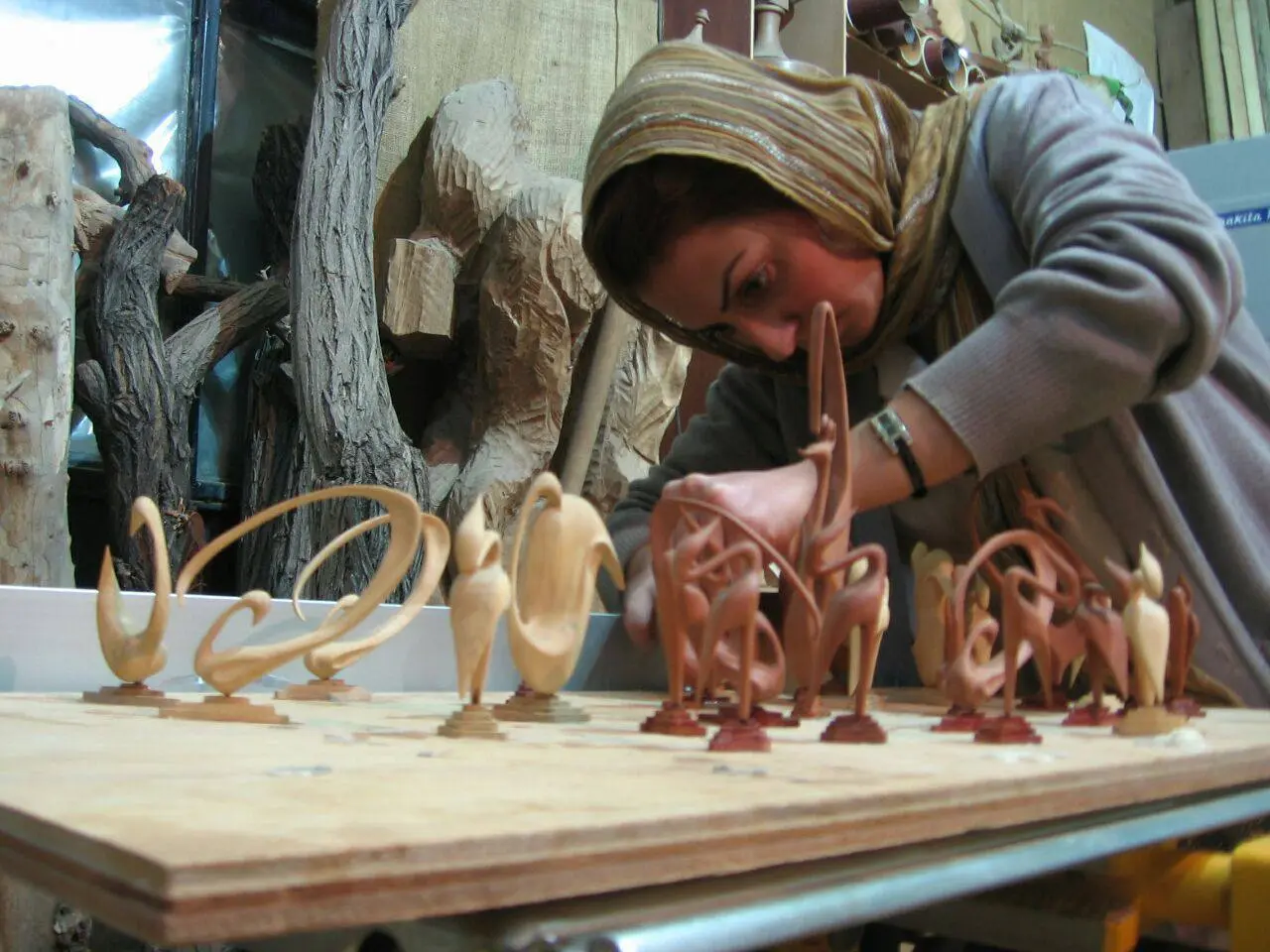
1. Composition and Circular Geometry
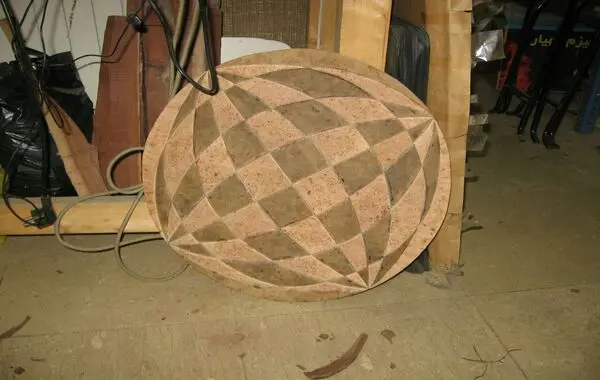
The decision to use a circular form for the chessboard represents Shadi Habib's first significant compositional choice. Unlike the conventional chessboard, which is based on square geometry and a regular grid, the circle becomes the principal organising element here. This geometric departure places the familiar rules of chess within a different visual framework, directing the viewer's gaze away from a linear, rectangular structure towards a continuous, rotational space.
The circle also possesses an inherent sense of centrality and equilibrium. The arrangement of the chess pieces around the perimeter and along the central space establishes a radial composition in which the relationships between the individual elements become more significant than their isolated positions. In this way, the work transcends the appearance of a collection of separate chess pieces and becomes a unified, coherent composition.
2. Form and Abstraction in the Design of the Chess Pieces
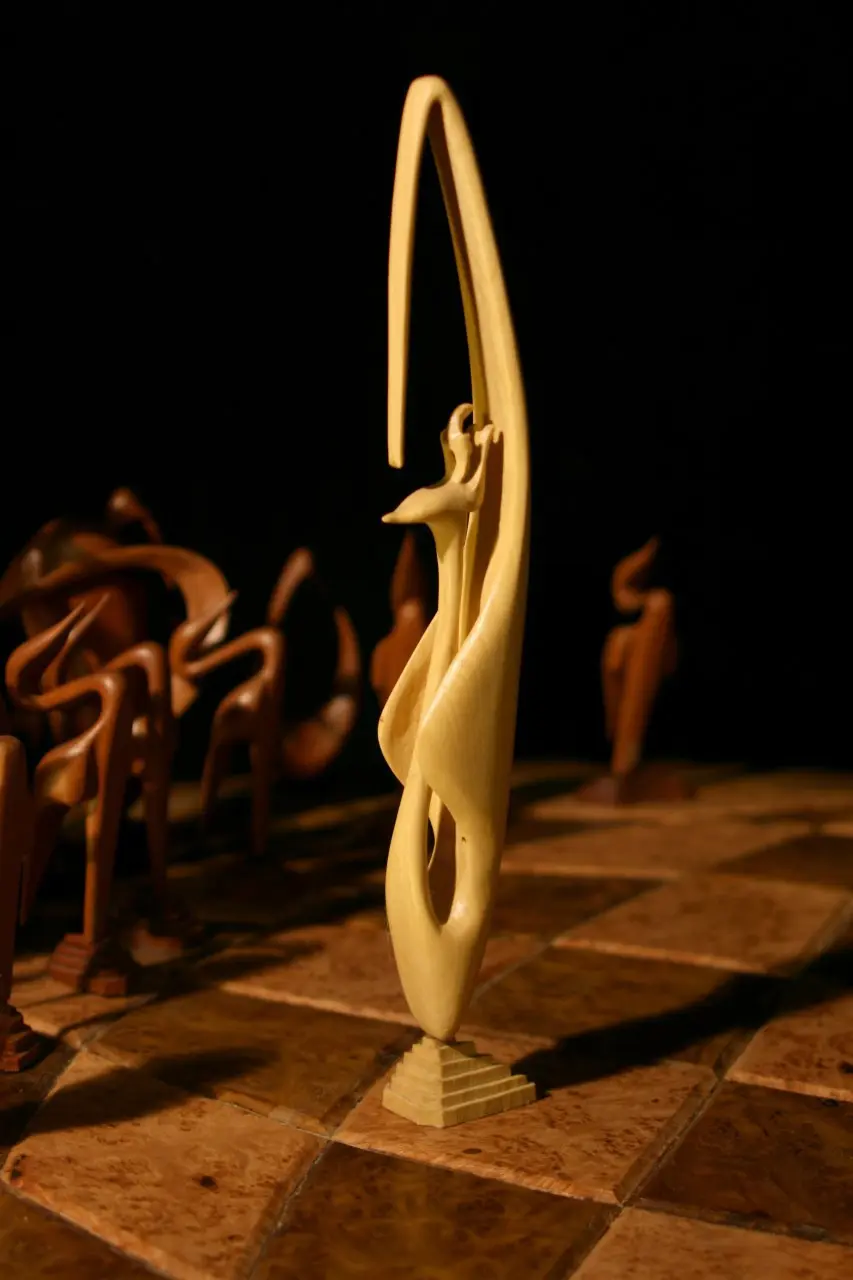
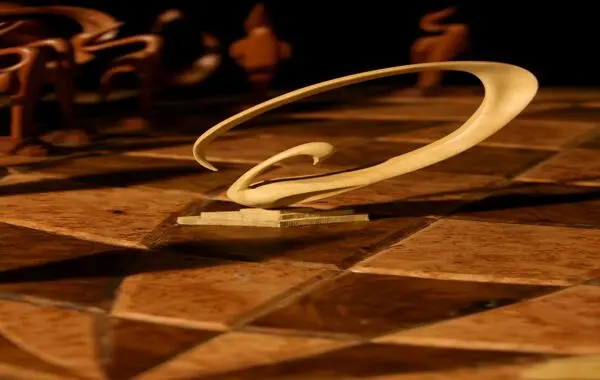
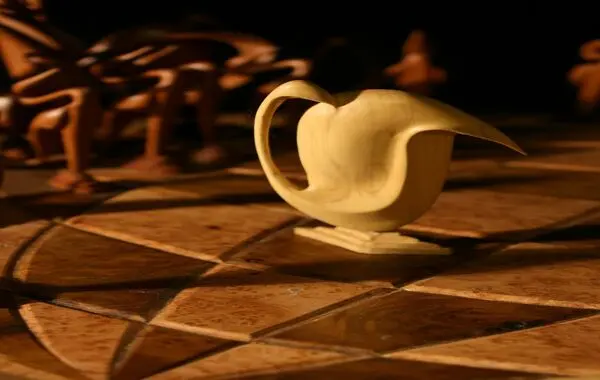
The chess pieces in this work are not direct reproductions of conventional chess forms. Instead, they have been conceived through an abstract and sculptural approach.
By moving away from the explicit and established representations of traditional chess pieces, Shadi Habib translates the formal characteristics of each element into a visual language of volume, curvature, extension and surface variation.
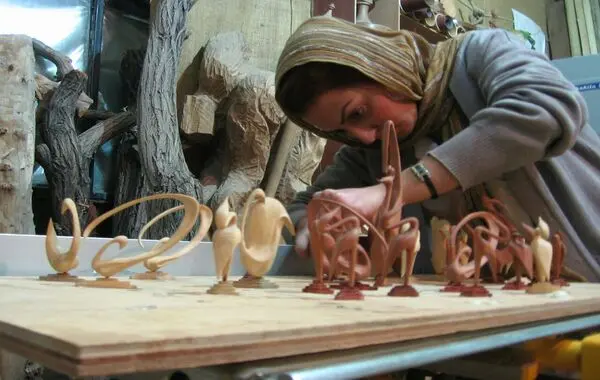
Curving and twisting lines, elongated forms and variations in height and proportion lend the sculptures an organic and dynamic quality. The interplay between soft, fluid contours and more compact, vertically structured elements creates a formal contrast. While preserving visual diversity, this contrast gives each piece an independent character. In effect, the identity of each sculpture derives not merely from its function within the game, but also from its distinctive formal qualities and its particular presence in space.
3. Rhythm, Repetition and Variation
One of the work's important aesthetic components is the relationship between repetition and difference. The chess pieces are organised according to a shared system and a unified compositional logic, yet they differ in size, orientation, height and formal details. This combination of repetition and variation creates a visual rhythm that guides the eye across the board and prevents the composition from becoming monotonous.
Differences in the density and spacing of the sculptures further influence this rhythm. Some areas appear visually denser, while others remain more open. These shifts in visual tempo lend the composition a sense of vitality and movement.
4. Material, Texture and the Chromatic Qualities of Wood
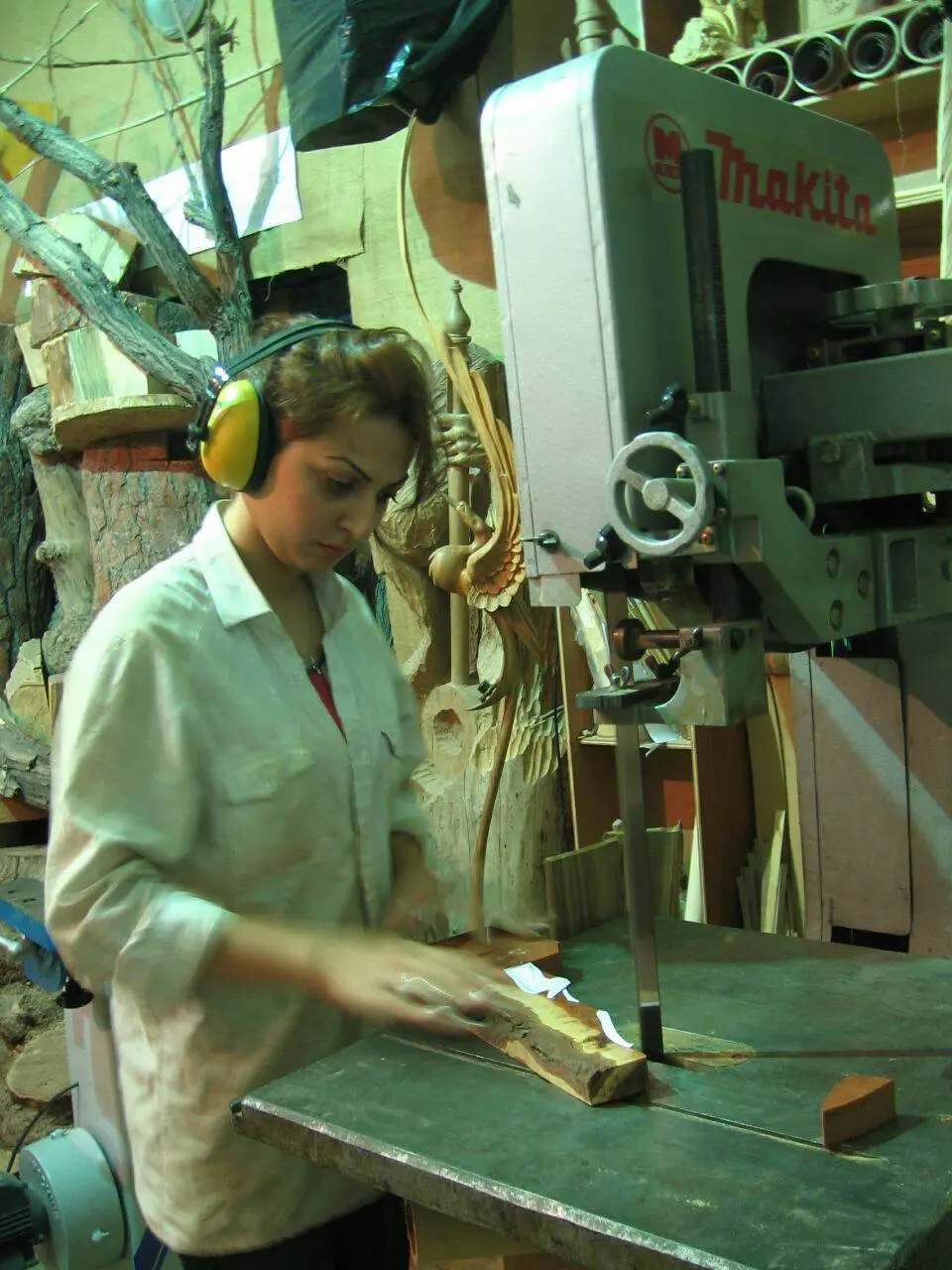
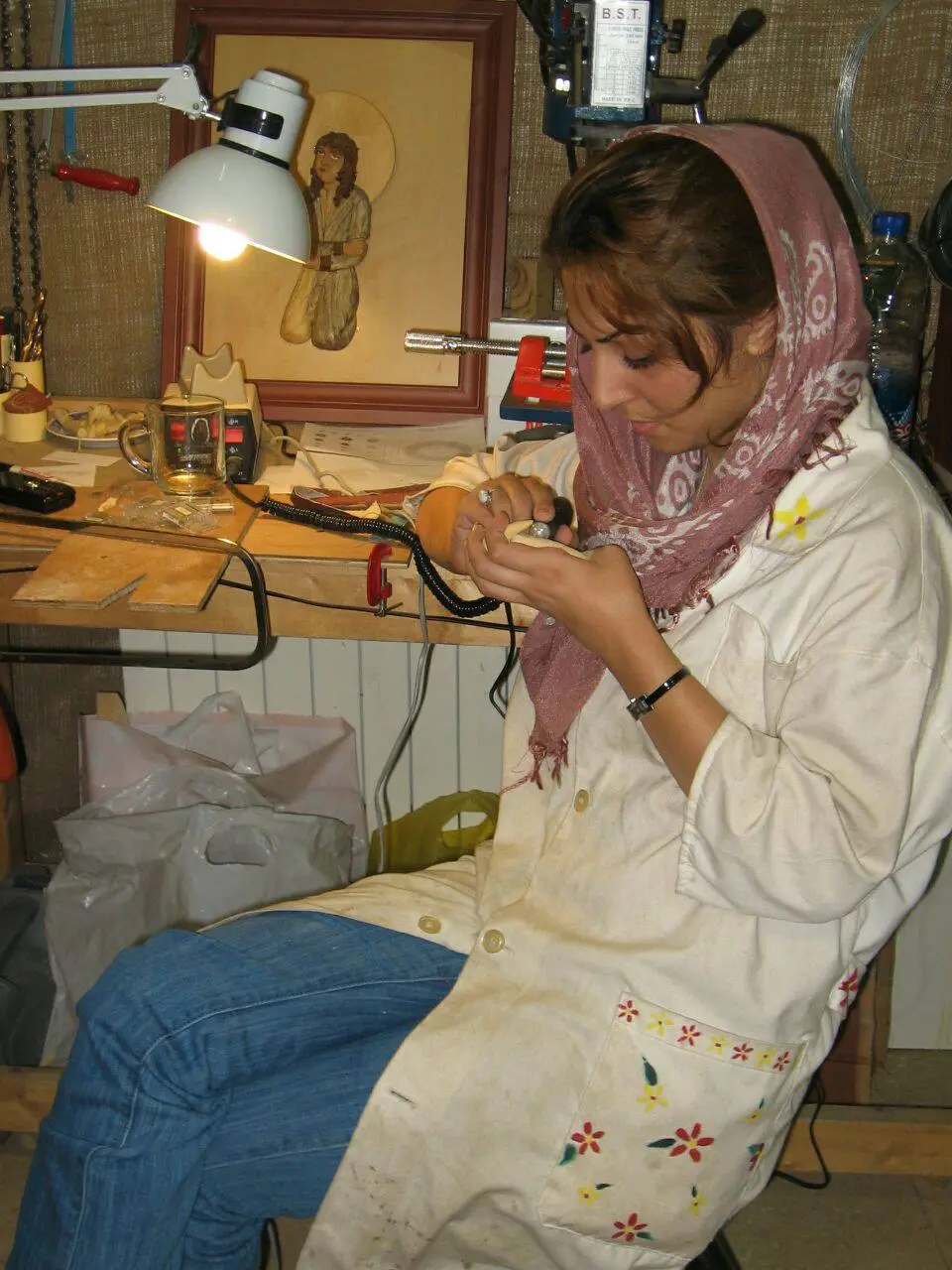
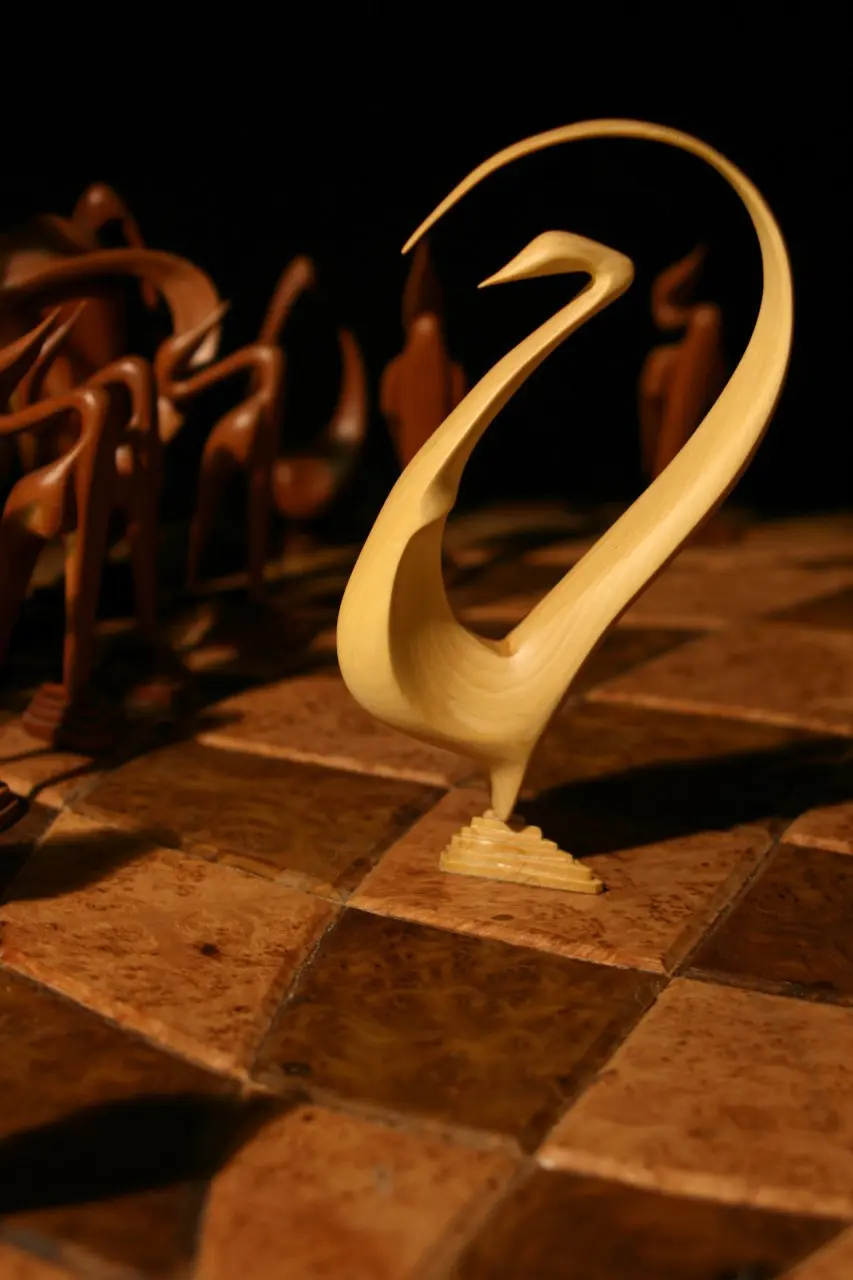
The diversity of the woods used is among the sculpture's most significant aesthetic assets, and the inventive use of different wood species is a recurring feature of Shadi Habib's artistic practice. Walnut, jujube, boxwood, field maple burl and oleaster burl each possess distinct natural characteristics in terms of colour, grain, density and texture. Their juxtaposition creates subtle variations in colour and surface without relying on artificial colouring.
The warm, natural spectrum of the wood, ranging from deep browns to lighter, golden hues, lends the work an organic unity. At the same time, differences in grain patterns and surface qualities prevent the individual sculptures from becoming visually uniform. Here, the material itself becomes an integral part of the work's aesthetic expression. The use of different woods also allows the artist to explore contrasts between hardness, delicacy and the possibilities of surface finishing in the construction of each element.
5. The Relationship Between Volume and Negative Space
In this work, the empty spaces between the chess pieces are as important as the volumes themselves. The intervals between the sculptures allow their formal boundaries to remain legible and make the overall structure easier to read. Particularly in the central section of the board, negative space functions as an active compositional element, preventing excessive visual density.
The vertical sculptures are set against the horizontal surface of the board, and this relationship between horizontal and vertical planes forms one of the principal foundations of the work's visual balance. The shadows cast by the forms across the board further contribute to the viewer's perception of their volume and spatial depth.
6. Architectural References and the Structure of the Bases
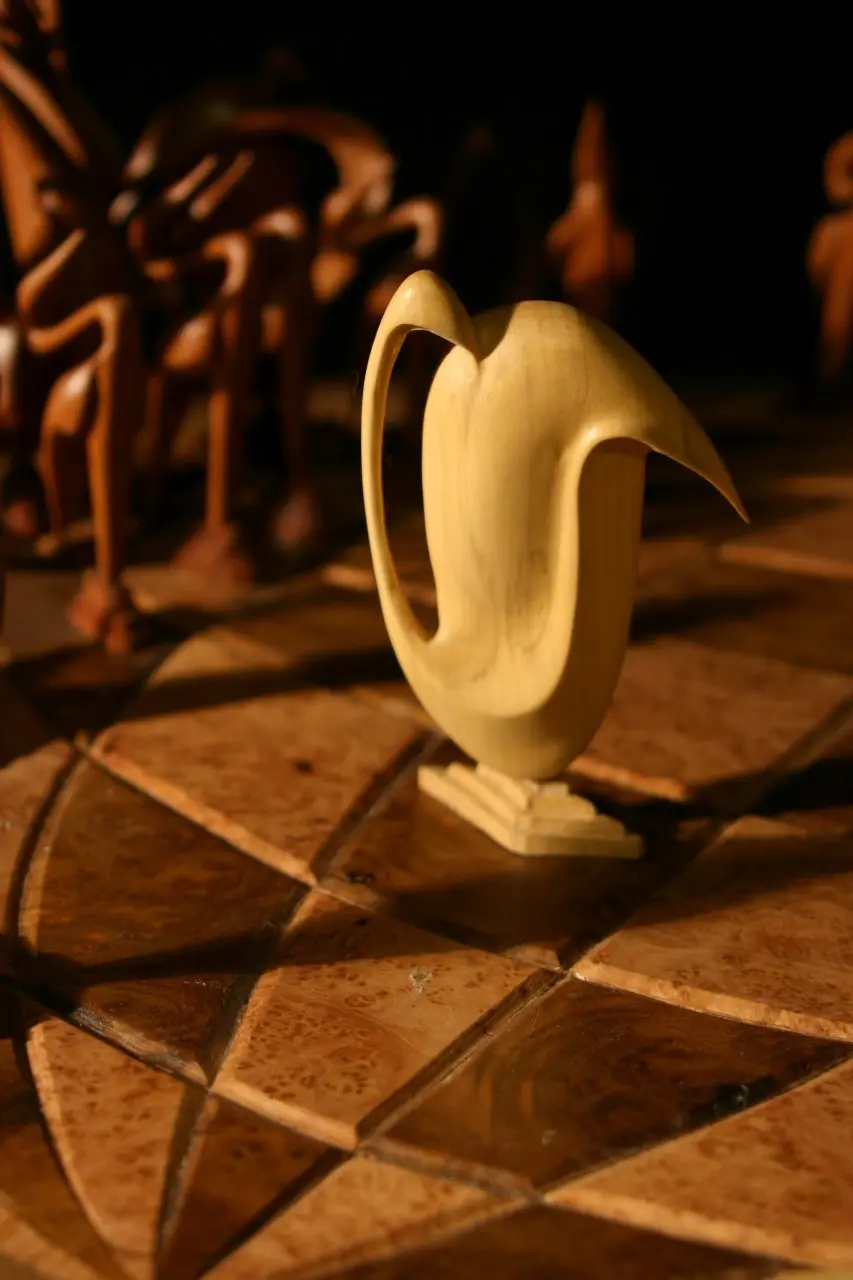
The bases of the chess pieces are inspired by the architecture of temples and ziggurats in ancient Mesopotamia and Iran. From an aesthetic perspective, this reference is particularly significant because it translates architectural structures into the scale of sculptural objects. The stepped forms and emphasis on verticality lend the chess pieces a monumental and enduring quality.
Here, Shadi Habib incorporates ancient architecture into her design through structural principles and volumetric proportions, elevating the work beyond purely visual considerations towards a deeper conceptual dimension. The connection between the abstract forms of the birds and the bases that recall ancient architecture brings two distinct visual languages together within a harmonious whole.
7. The Dual Stage of The Arena of Birds
From the perspective of the beautifully formed and captivating birds on the chessboard, the entire world seems to be contained within the arena of the game. Competition, survival and life itself appear rooted in this struggle. Yet the viewer understands that the entire game is sustained by the shoulders of three devoted birds.
These three birds, positioned beneath the board, carry the burden of existence. Removed from the noise and attractions of the game, they devote themselves to preserving the permanence of the entire scene, regardless of who wins and who loses.
For these symbols of devotion and self-sacrifice, there is no distinction between winners and losers, black and white, or women and men. The birds that protect existence care for everyone equally and offer their protection without discrimination.
The contrast between the strategic intelligence of the chess pieces and the all-encompassing wisdom embodied by the three supporting birds is among the work's most compelling conceptual and aesthetic achievements. It introduces a second level of meaning beneath the apparent logic of the game: while the pieces are occupied with strategy and competition, the birds represent a greater, more encompassing form of awareness, one concerned with the preservation of the whole rather than the outcome of individual struggles.
8. Light, Shadow and Surface Finishing
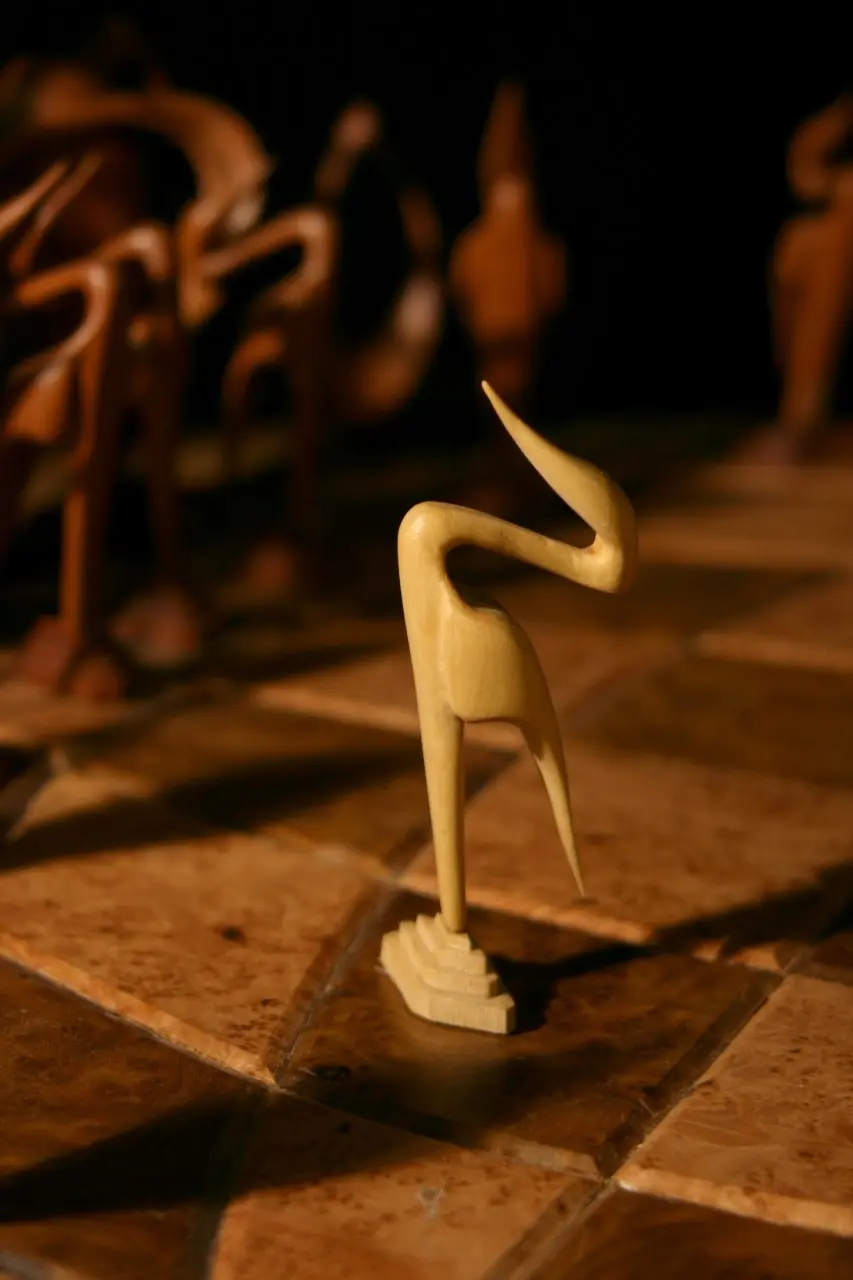
The curved and raised surfaces of the sculptures have a considerable capacity to receive and reflect light. Variations in illumination across their curves and recesses reveal the details of their volumes. Meanwhile, the shadows surrounding the chess pieces enhance the visual depth of the board.
The finishing of the wood also establishes a balance between polished surfaces and the preservation of the material's natural texture, allowing the inherent qualities of each wood species to remain visible.
9. Aesthetic Unity and the Relationship Between Art and Function
One of the principal achievements of Shadi Habib's The Arena of Birds is its successful integration of functionality and artistic expression. The work retains its identity as a functional chess set, yet the design of the pieces, the selection of materials, the circular geometry of the board and its architectural references elevate it beyond the category of an ordinary gaming object.
- Shadi Habib's Art Market and Auction Prices
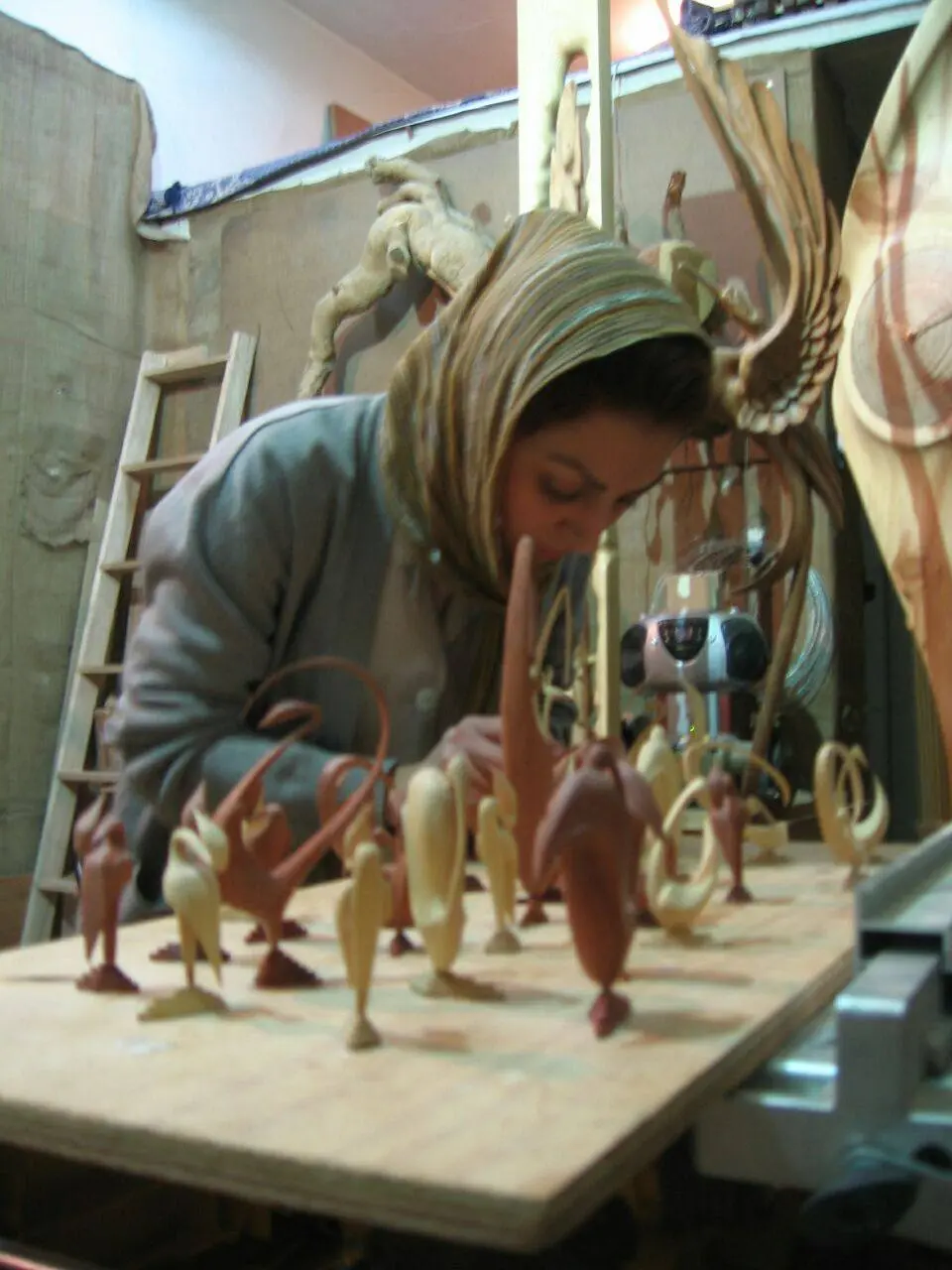
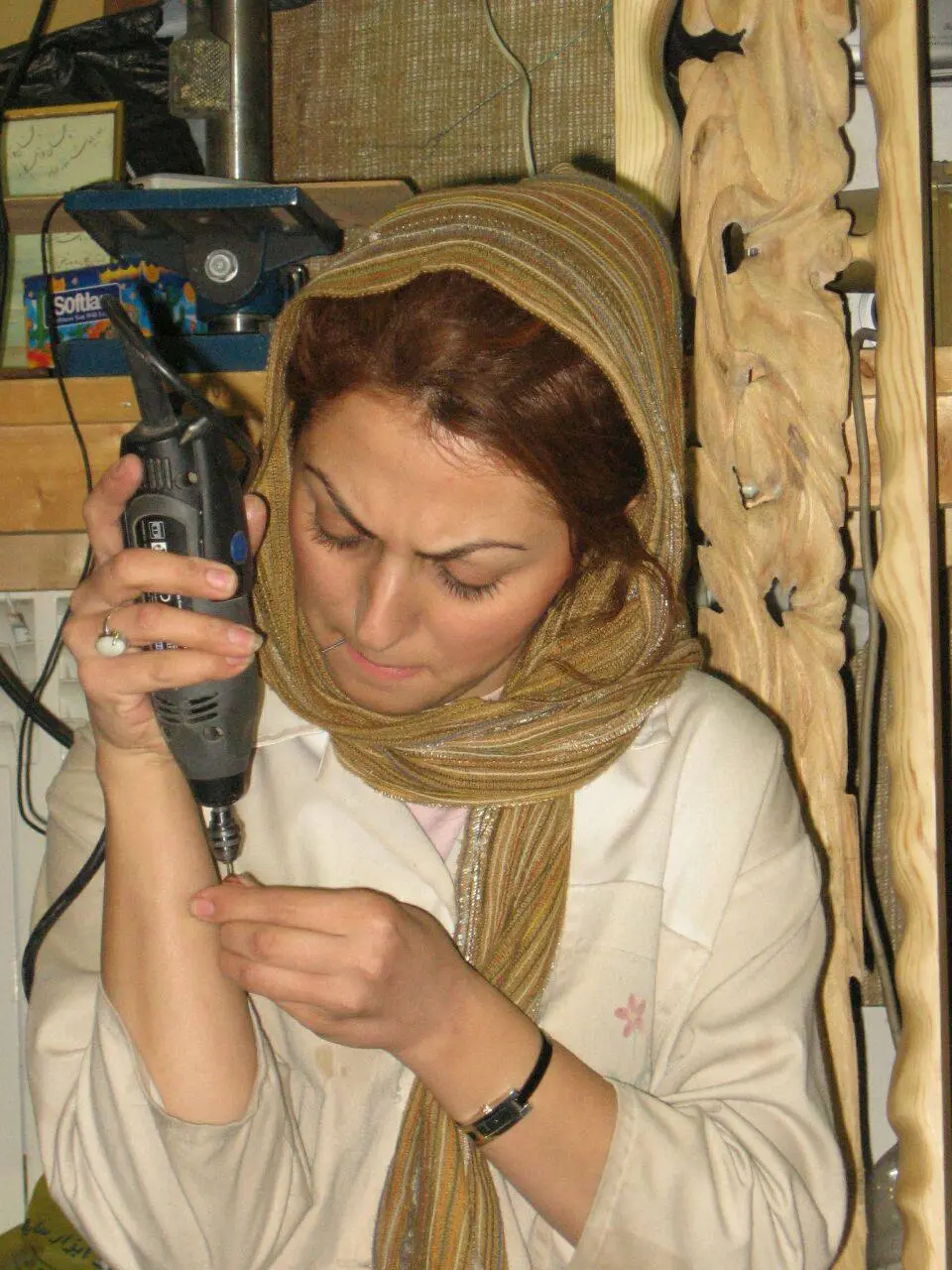
Shadi Habib (born 1986, Tehran) is an artist whose practice has emerged from an academic background and developed through the intersection of graphic design, handicrafts and wood-based art.
She holds a degree in Graphic Design from Shariati University, a bachelor's degree in Handicrafts from Alzahra University and a master's degree in Handicrafts from Isfahan University of Art. She also works as a university lecturer.

From the perspective of the art market, Shadi Habib's wooden sculptures have been attracting growing interest. The trajectory of her work can be followed through its presence in museum and private collections, as well as its appearances at auction.
On 6 November 2026 , her wooden sculpture Parnian was sold for a hammer price of $2,500 at the second Kavian Private Auction in Tehran. At the exchange rate prevailing on the day, this amounted to approximately 675 million tomans.
Another sculpture by Shadi Habib was presented at the 25th Tehran Auction in 2026. The Celestial Bird, a wooden sculpture created in collaboration with Mohammad-Ali Vadoud, achieved a hammer price of 1.65 billion tomans, equivalent to approximately $9,700. The work had previously received recognition in 2017 at the prestigious Italian A' Design Award. The Abbasi Museum Gallery in Arak also acquired one of Habib's works in 2023 and subsequently presented it in an exhibition.
In 2022, Shadi Habib's work Centaur received the Best in Show award at the international ALL Figurative/Portrait competition organised by Contemporary Art Gallery Online in the United States.
Beyond these auction results, Shadi Habib's works are held in several collections, including the digital collection of an Italian museum, the Museum of the Research Institute of National Arts affiliated with Iran's Ministry of Cultural Heritage, the Tabriz University of Art Museum and a number of private collections.
In recent years, Habib has received several international distinctions and awards at art events in the United States and Italy.
In January 2025, her work BIRDS' BATTLEFIELD received Third Place in the 3 Dimensional category at the 14th Annual All Women Art Exhibition organised by Light Space & Time Online Art Gallery in the United States.
Her achievement of Third Place in two consecutive years, 2018 and 2019, at Italy's international A' Design Award further reinforces the international recognition of her artistic practice.
Shadi Habib holds a First-Grade Artistic Qualification in Sculpture and is a member of the Policy Council of Iran's National Handicrafts Olympiad. Her professional record also includes First Place and the First-Grade Medal in Wood Arts at Iran's Shamse Festival.

LEAVE A RELPY