
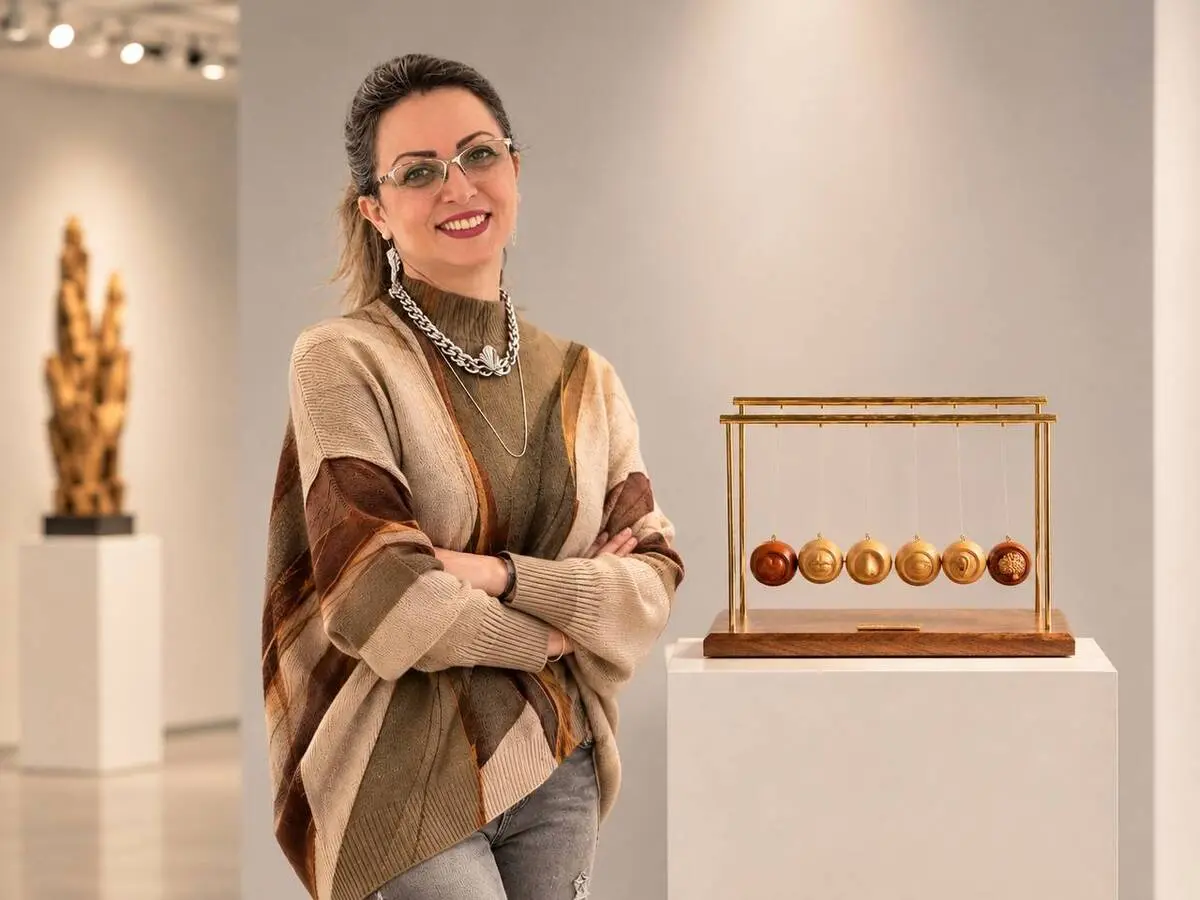
Shadi Habib and Her Interactive Wooden Sculpture, The Pendulum of Being
The interactive wooden sculpture The Pendulum of Being, by Shadi Habib, explores the intersection of sculpture, kinetic art, and conceptual expression. Through the movement of wooden spheres, the work translates the complex relationship between reason, emotion, and human senses into a tangible visual language.
ArtDayMe : We examine The Pendulum of Being, a thought-provoking interactive sculpture by Shadi Habib, a recognized artist in the field of wooden sculpture and recipient of six prestigious international awards. Depending on each viewer’s lived experience, the work invites entirely different interpretations.
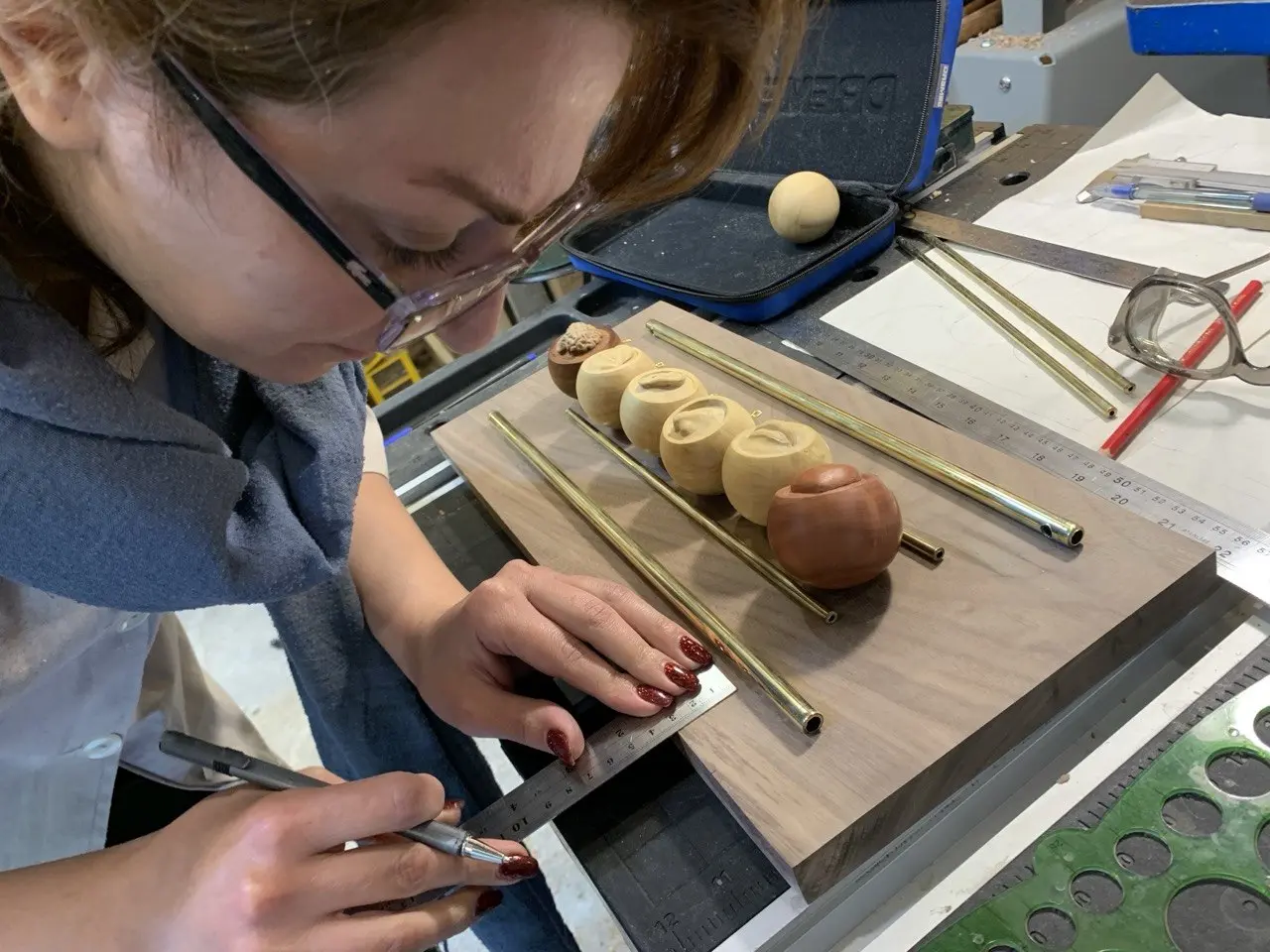
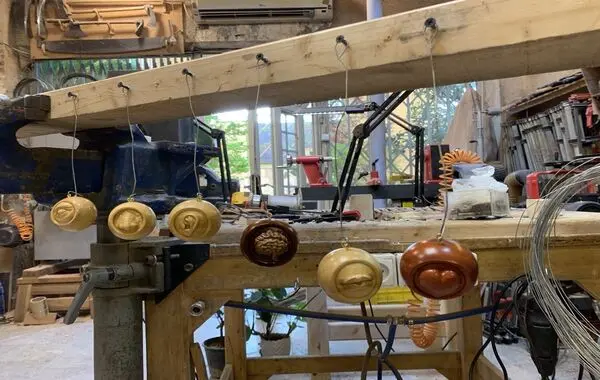
The wooden sculpture The Pendulum of Being, created by Shadi Habib in 2021 (1400 in the Iranian calendar), is made from boxwood, jujube wood, and walnut.
- Artist's Statement: The Pendulum of Being by Shadi Habib
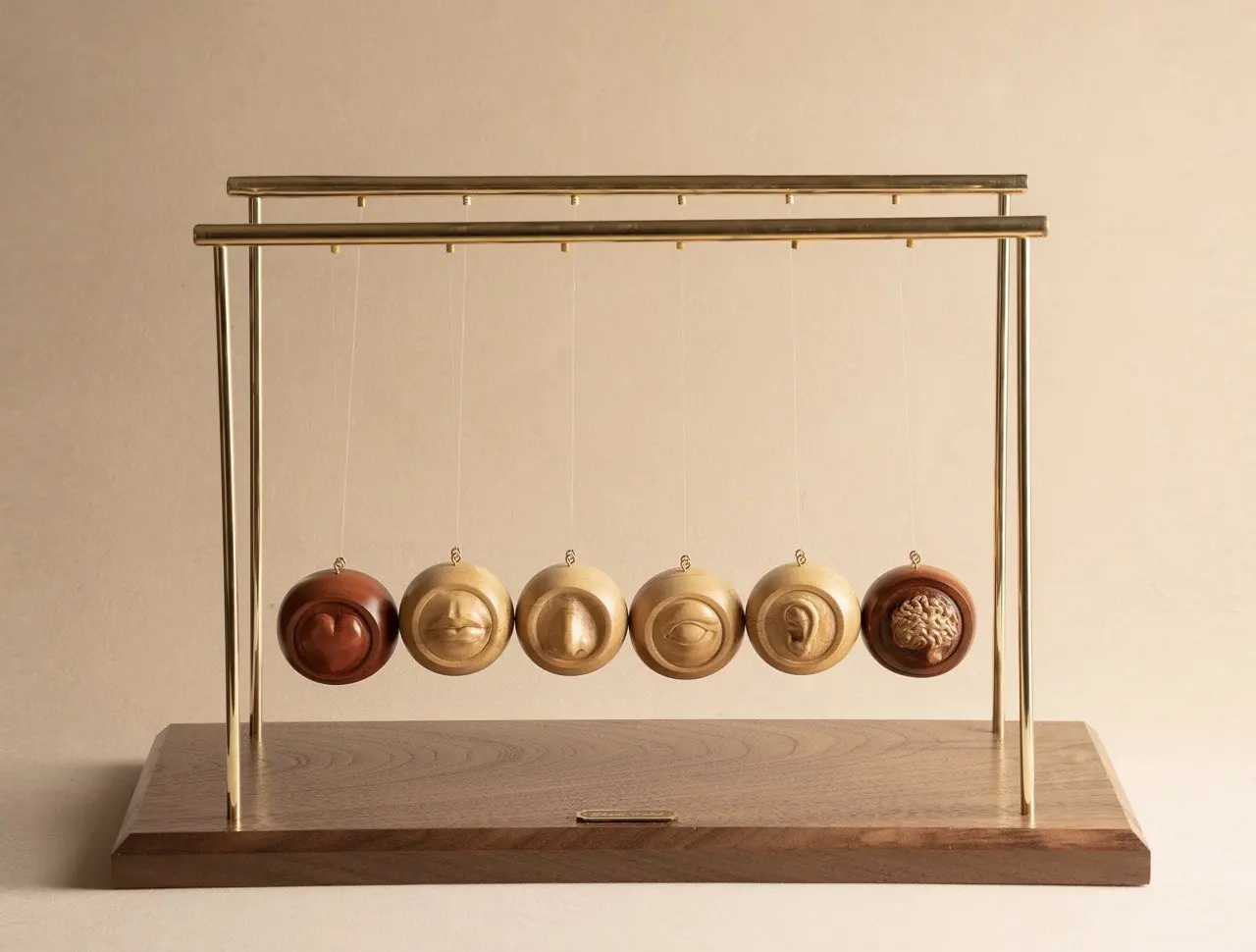
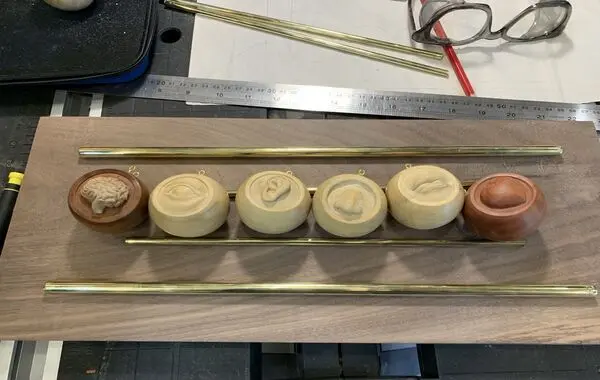
Human beings are multilayered entities whose lived experiences and identities emerge through the interaction of the senses, perception, thought, and emotion. In The Pendulum of Being, Shadi Habib explores the relationship between the constituent elements of human existence and the forces that guide them by representing the six human senses through suspended forms.
Human organs, considered individually, are merely components of a physical body. What transforms these components into a human being is the presence and guidance of two fundamental centres: the heart and the brain. These two forces give meaning to the body and direction to existence.
At either end of the structure created by Shadi Habib, the heart and brain appear as two fundamental centres of human guidance, each capable of influencing perception, decision-making, and the experience of living. The brain, through logic and analysis, and the heart, through affection and emotion, represent two distinct yet interconnected sources in the formation of human identity and action.
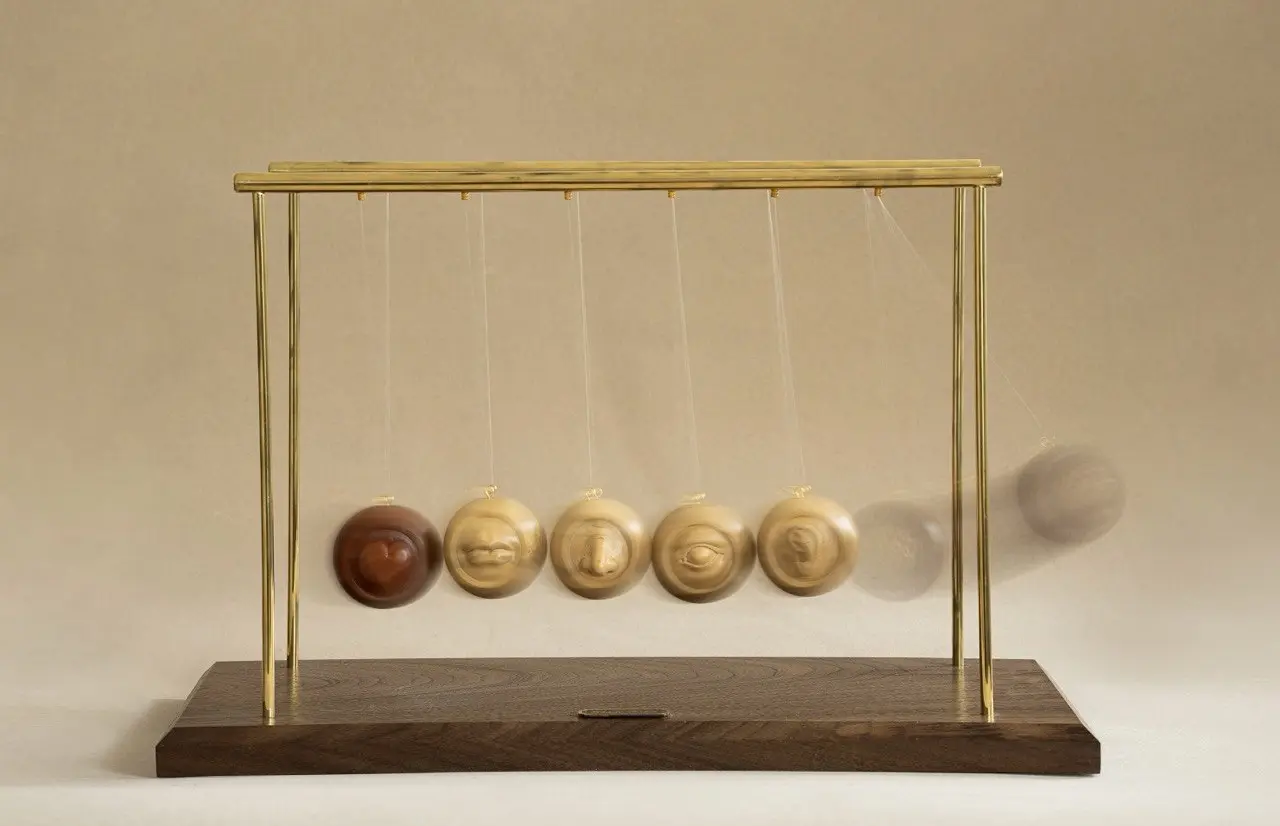
The pendular movement of the suspended elements forms the dynamic core of this work by Shadi Habib.
Setting any of the elements in motion from either end, whether from the heart or the brain, can initiate a different sequence of movement throughout the structure. It is as though a shift in the guiding centre also transforms the relationship between the senses and other dimensions of human existence.
In this structure, movement is more than physical displacement; it becomes a metaphor for the mutual influence of reason and emotion on the totality of human existence.
The work does not seek to establish the superiority of one force over the other. Instead, it emphasises the fluid and complex relationship between them. The Pendulum of Being confronts viewers with a fundamental question: What shapes the course of our lives—thought or emotion? And is it possible to achieve a lasting balance between the two?
Perhaps the fully realised human being finds meaning not in absolute stillness or perfect equilibrium, but in the continuous oscillation between the forces that constitute human existence.
- An Aesthetic Reading of Shadi Habib's The Pendulum of Being
The interactive wooden sculpture The Pendulum of Being, by Shadi Habib, is an exploration of the intersection between sculpture, kinetic art, and conceptual expression. Through the movement of wooden spheres, the work translates the complex relationship between reason, emotion, and human senses into a tangible visual language.
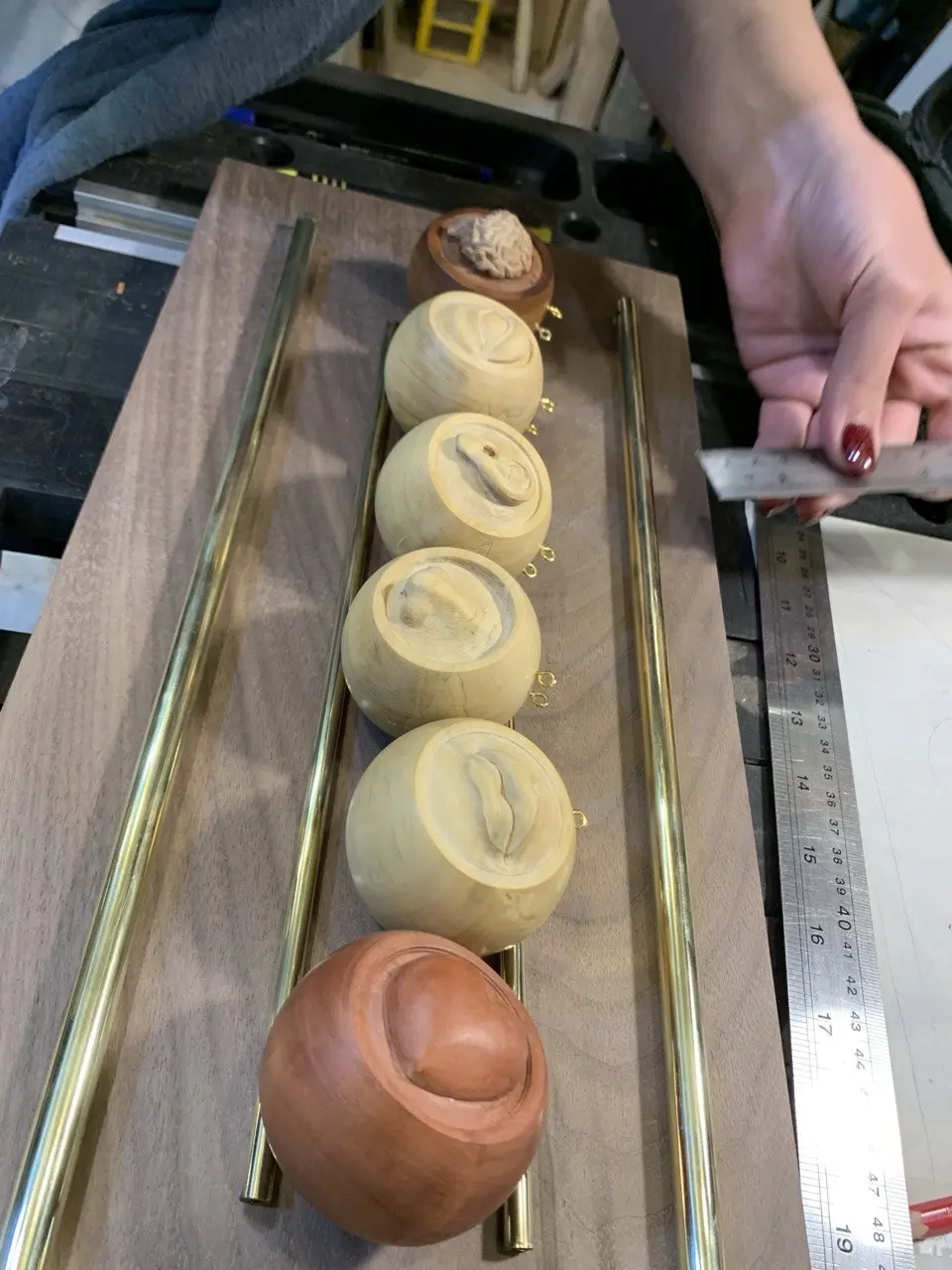
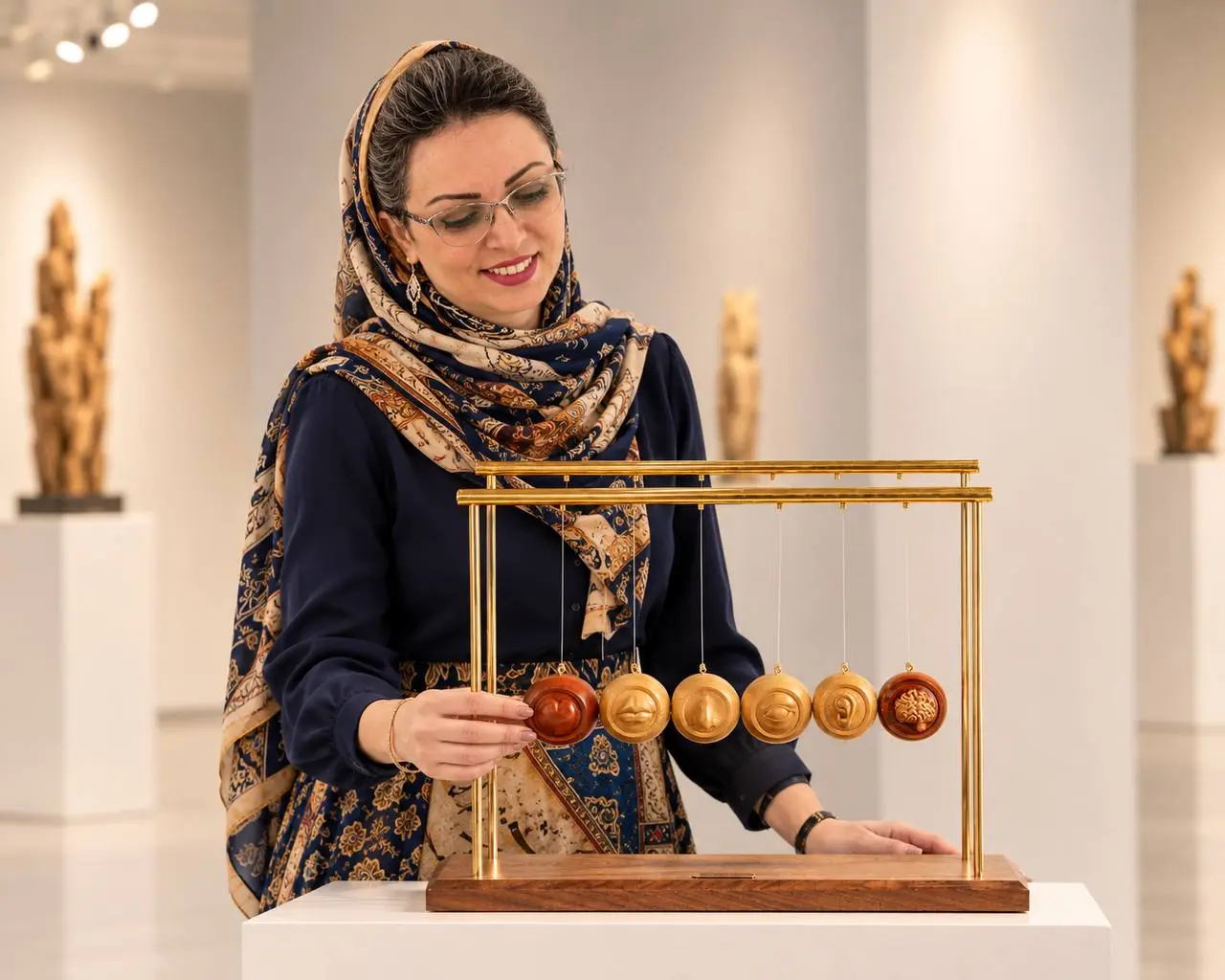
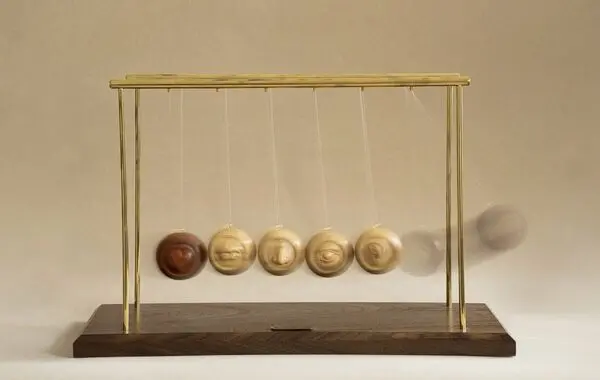
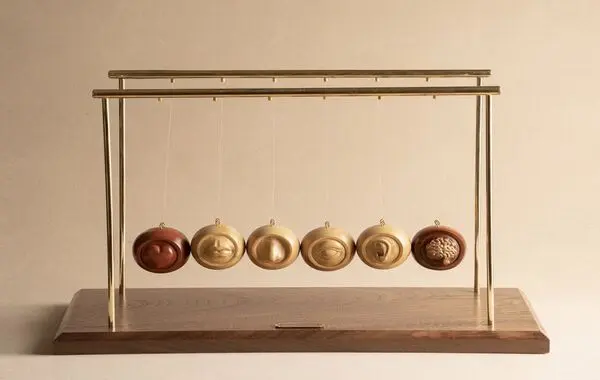
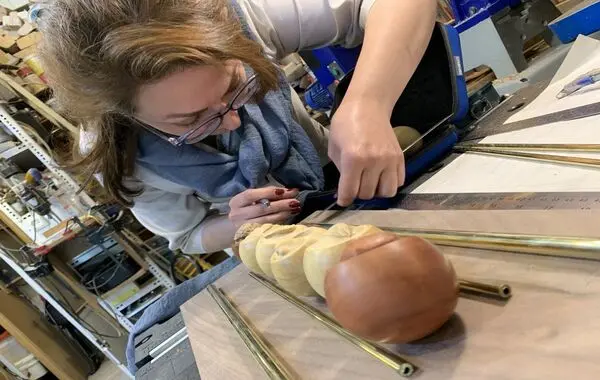
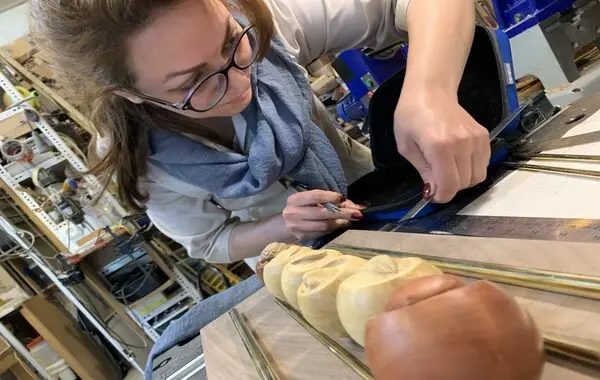
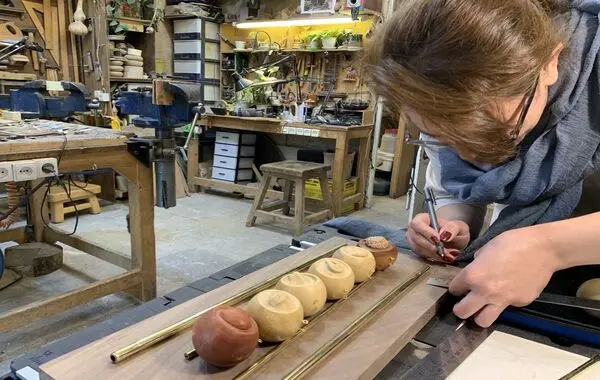
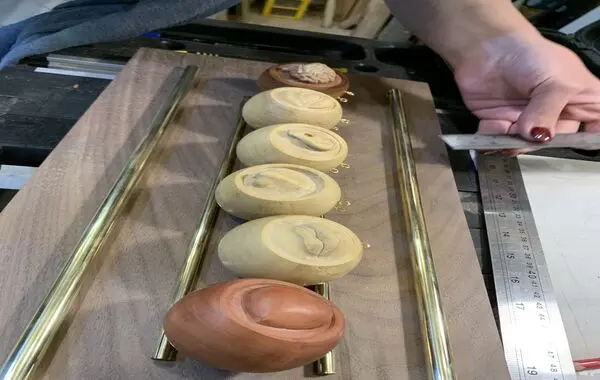
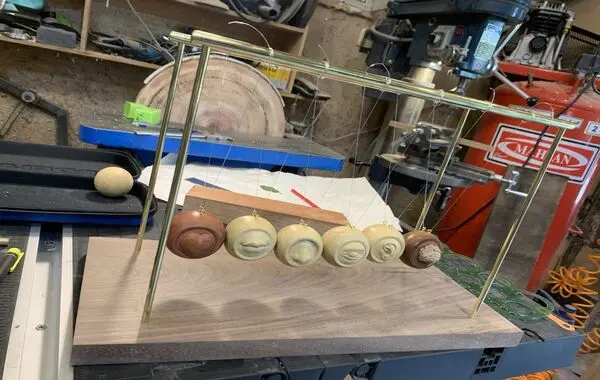
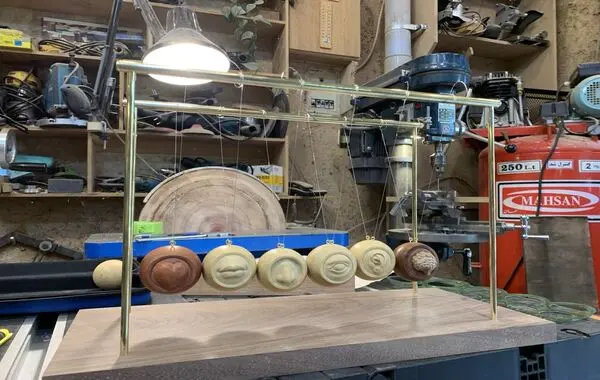
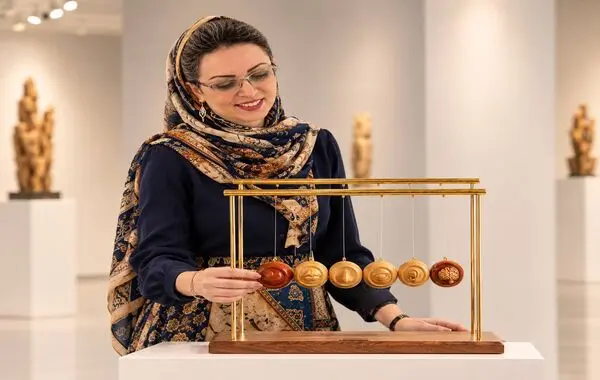
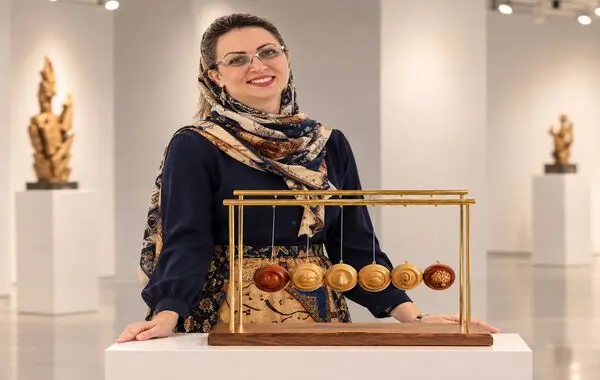
At first glance, viewers encounter a geometric construction comprising a wooden base, a metal framework, and six suspended spheres. Arranged along a horizontal axis, the spheres bear engraved representations of human organs and senses. At the two opposite ends of the structure are the heart and the brain: two fundamental symbols that, together with the six senses, form a system of interconnected dimensions within human existence.
To articulate this concept, Shadi Habib employs the language of geometry in a manner that is both simple and meaningful. The straight lines of the metal framework establish an architectural sense of order and stability, while the curved, continuous volumes of the wooden spheres introduce an organic and softer quality to the composition. The contrast between these two formal languages is one of the sculpture's defining visual characteristics: a geometric order that simultaneously accommodates the possibility of movement and transformation.
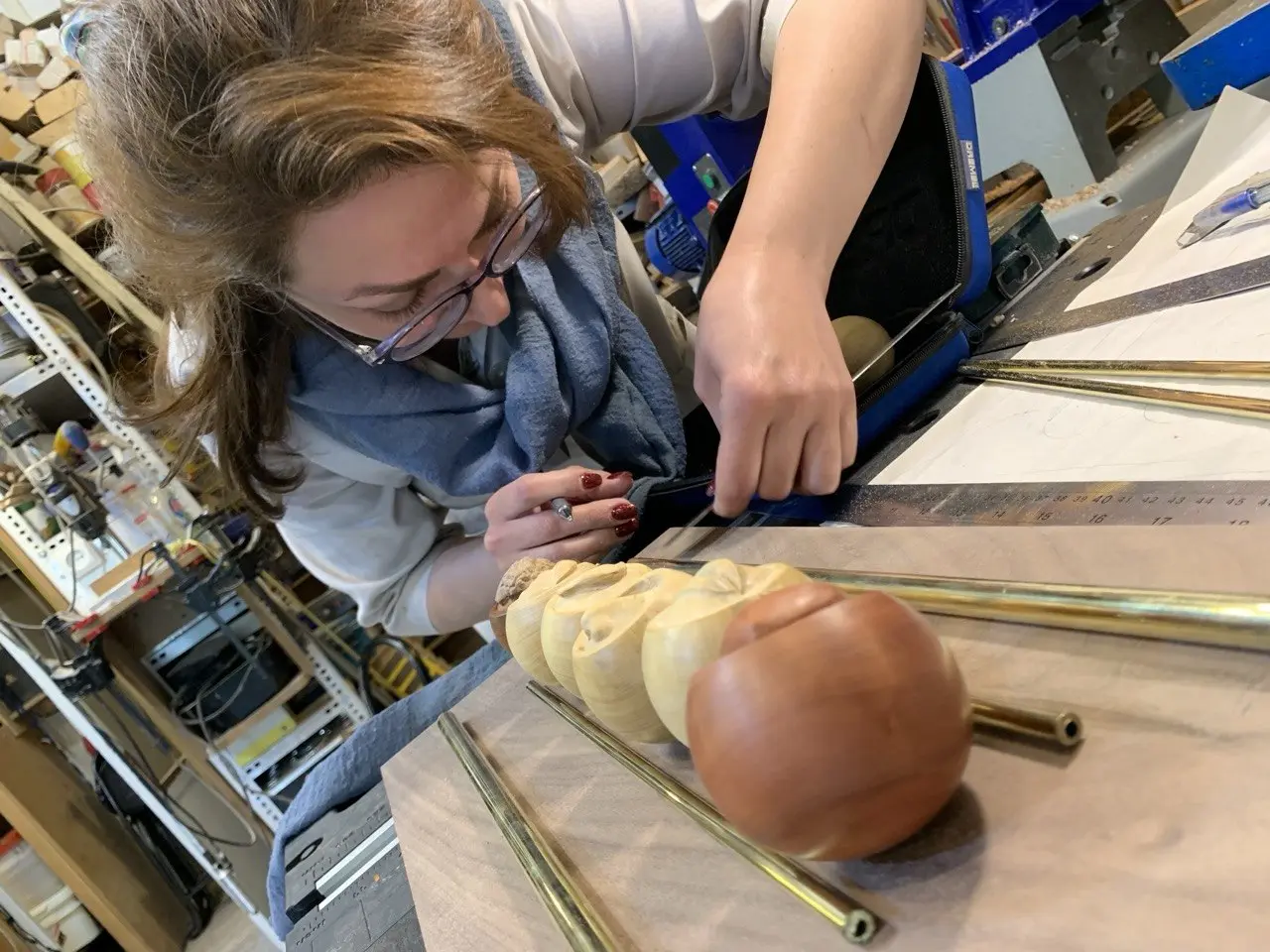
The choice of boxwood, jujube wood, and walnut further enriches the sculpture's material and visual vocabulary. Differences in the colours and textures of these three types of wood produce a spectrum ranging from light and honey-toned hues to brown and reddish shades. The contrast between the lighter central spheres and the darker volumes at either end creates visual equilibrium while guiding the viewer's gaze along the horizontal axis.
The delicate engravings on the spherical surfaces also give each volume an individual, signifying identity through the interplay of relief, recessed details, and light and shadow.
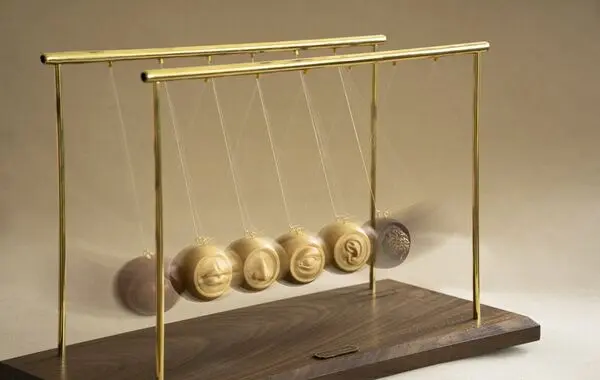
However, the most significant characteristic of The Pendulum of Being emerges through its kinetic mechanism. Viewers can set one of the spheres at either end in motion. The successive collisions between the spheres transfer energy from one element to another, setting the entire structure into a cycle of movement and response. This mechanism, reminiscent of Newton's cradle, transcends the boundaries of a physical phenomenon here, becoming a metaphor for the internal dynamics of human existence.
The movement of one sphere triggers a response in another, just as a shift in the centre of thought or emotion can influence other dimensions of human perception and behaviour. Within this structure, no component is entirely independent of the whole; every action produces consequences throughout the system.
The interactive dimension of the work also transforms the viewer's role. No longer merely an observer of a sculpture, the viewer becomes an active participant in the realisation of the artist's concept by touching and setting its elements in motion. Movement, sound, and the collision of wooden spheres create a multisensory experience in which the meaning of the work is not simply observed but physically experienced.
From the perspective of kinetic aesthetics, the significance of this sculpture lies in its relationship between stillness and dynamism. In its stationary state, the structure maintains a symmetrical and balanced order. Once movement begins, however, this equilibrium enters a cycle of oscillation and readjustment. In this way, time itself becomes one of the constitutive elements of the artistic experience.
Ultimately, The Pendulum of Being presents an image of the human being as a constellation of interconnected forces, an entity whose identity and life trajectory are continuously shaped through the interaction of thought, emotion, and perception.
By transforming this abstract relationship into a physical and participatory experience, Shadi Habib poses a fundamental question: In shaping the course of human life, does reason guide emotion, or does emotion give direction to thought? Perhaps the answer lies in movement itself—in a fluid equilibrium that can never be separated from the mutual influence of these two forces.
- Prices of Shadi Habib's Artworks
Shadi Habib (born 1986, Tehran) is an artist whose practice emerged from an academic background and has developed through the intersection of graphic design, handicrafts, and wood-based art.
She holds a bachelor's degree in Graphic Design from Shariaty University, a bachelor's degree in Handicrafts from Alzahra University, and a master's degree in Handicrafts from the University of Art in Isfahan. She is also active as a university lecturer.
From the perspective of the art market, Shadi Habib's wooden sculptures have been attracting growing interest. The trajectory of her work can be traced through its presence in museum and private collections, as well as its appearance at auction.
On November 6, 2026 , her wooden sculpture Parnian achieved a hammer price of $2,500 at the second Kavian Private Auction in Tehran, equivalent to 675 million Iranian tomans at the exchange rate on that day.
Another sculpture by Shadi Habib was presented at the 25th Tehran Auction in 2026. Bird of the Celestial Realm, a wooden sculpture created in collaboration with Mohamadali Vadood, achieved a hammer price of 1.65 billion Iranian tomans, approximately $9,700.
The work had previously received recognition in 2017 at the prestigious Italian A' Design Award competition. The Abbasi Museum Gallery in Arak also acquired one of Habib's works in 2023 (1402 in the Iranian calendar) and subsequently put it on display.
In 2022, Shadi Habib's sculpture Centaur received the Best in Show award at the international ALL Figurative/Portrait competition, organised by Contemporary Art Gallery Online in the United States.
Furthermore, in January 2025, her work BIRDS' BATTLEFIELD won third place in the 3 Dimensional category at the 14th All Women Art Exhibition, organised by the US-based Light Space & Time Online Art Gallery.
Shadi Habib's third-place awards in two consecutive years, 2018 and 2019, at Italy's international A' Design Award further underscore the international recognition of her artistic practice.
Alongside these auction results and international achievements, Shadi Habib's works are held in several collections, including the Digital Collection of an Italian museum, the Museum of the National Arts Research Institute affiliated with Iran's Ministry of Cultural Heritage, the Tabriz University of Art Museum, and various private collections.
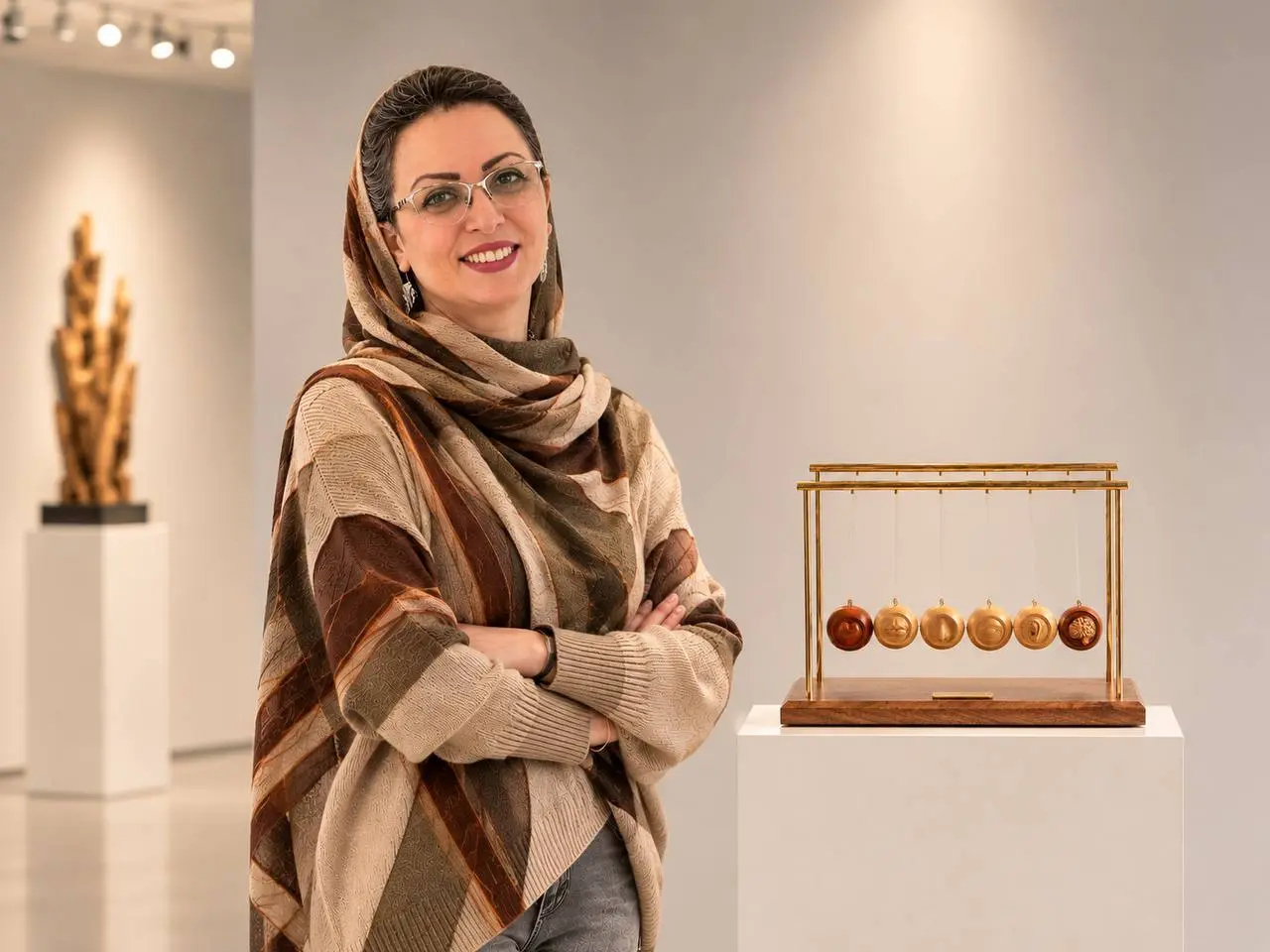
In recent years, Shadi Habib has received several international titles and distinctions at art events in the United States and Italy.
She holds a First-Degree Artistic Qualification in Sculpture and is a member of the Policy Council of the National Handicrafts Olympiad. Her achievements in Iran also include first place and the First-Degree Wood Arts Medal at the Shamseh Festival.


LEAVE A RELPY