

Maryam Delavar: Why Do Some Children Give Up at the Slightest Setback? / Resilience Is a Skill That Must Be Nurtured at Home and at School
Maryam Delavar, Founder and Director of Nikoo International School in Tehran: “According to the latest research, resilience ranks as the third form of intelligence associated with the developed citizen of the third millennium and is one of the essential skills for life today. Children encounter situations throughout their development that do not always unfold as they expect. What matters is their ability to draw on their full potential to solve problems while maintaining their psychological well-being. Although succeeding in different challenges is certainly desirable, the ability to respond to them constructively is equally important.”
ArtDayMe : Why might a child who enjoys access to excellent educational and recreational facilities become deeply discouraged by a low grade, losing a competition, being excluded from a friendship group, or even struggling to complete a seemingly simple exercise? Why do some children, when faced with the slightest setback, abandon their efforts instead of trying again?
Dr. Maryam Delavar, Founder and Director of Nikoo International School, emphasizes the importance of nurturing resilience in children. She believes that the ability to cope with failure, regulate emotions, and return to the path of perseverance is among the essential life skills that must begin to develop in the early years of childhood, both at home and at school.
According to this pioneering figure in Iran's educational and child-development sector, one of the major challenges of contemporary parenting is that adults, in their efforts to create a comfortable environment free of difficulties, sometimes unintentionally deprive children of opportunities to encounter the realities of life. Yet, becoming capable and responsible individuals requires children to experience challenging situations, learn how to manage disappointment, and discover their own abilities.
- What Is Resilience, and Why Do Children Need It?
Highlighting the importance of resilience in children's personality development, Maryam Delavar explains:

“Resilience does not mean ignoring distress, concealing emotions, or enduring every difficult circumstance. Rather, it is the ability to face challenges, regulate emotions, draw on available support systems, and find a way forward after experiencing a setback.”
She adds:
“A child who learns resilience does not necessarily stop feeling upset when things go wrong, nor does that child remain calm in the face of every difficulty. Instead, the child gradually learns that the distress caused by an unpleasant experience does not mark the end of their abilities or opportunities. After experiencing failure, such a child can reflect on what happened, seek help from others, identify a new approach, and try again.”
According to Delavar, resilience is one of the fundamental skills required for life today, because children encounter situations throughout their development that do not always unfold as they expect. What matters is not simply whether they succeed in these situations, but also whether they can respond constructively when the outcome is unfavorable.
_ When Parental Support Becomes an Effort to Eliminate Every Experience of Failure
The Founder and Director of Nikoo International School points to one of the challenges facing contemporary families:
“Out of love and concern, many parents try to ensure that their children never experience anything unpleasant. If a child loses a competition, parents may look for reasons to justify the outcome. If the child struggles with an assignment, they immediately intervene to solve it. And when a disagreement arises with a friend, adults sometimes step in before the child has had an opportunity to communicate or work through the problem independently.”
Dr. Maryam Delavar emphasizes:
“Supporting a child is essential, but support should not mean removing every obstacle from their path. When adults constantly rearrange circumstances to ensure that children never encounter disappointment, they also deprive them of the opportunity to develop the skills needed to cope with difficulties.”
The Director of Nikoo School in Tehran adds:
“Sometimes the best way to support a child is not to solve the problem for them, but to remain by their side, acknowledge their feelings, and help them discover their own way through the situation. Children need to know that they are not alone when circumstances become difficult, while also understanding that others will not always solve problems on their behalf.”
We should remember that many adult habits and patterns of behavior take shape during childhood and adolescence.

_ Frustration Tolerance: A Skill That Must Be Gradually Learned from an Early Age
Discussing the concept of frustration tolerance, Dr. Maryam Delavar explains:
“One of the foundations of resilience is the ability to cope with situations in which a child's wishes or expectations are not fulfilled. This skill does not develop overnight. It requires practice through experiences appropriate to the child's age and developmental stage.”
For example, when a student cannot solve a problem on the first attempt, they may experience feelings of inadequacy or anger. If an adult immediately provides the answer, the child loses the opportunity to experience perseverance, examine mistakes, and discover alternative solutions.
She adds:
“Instead of immediately giving the answer, we can ask the child: ‘Which part of the problem do you think you are finding difficult?’ ‘Can you think of another way to solve it?’ or ‘If you tried again, what would you do differently?’ Questions like these help children learn the process of problem-solving rather than focusing exclusively on the final result.”
According to Maryam Delavar, the objective is not to place children in situations beyond their capabilities. Rather, challenges should be appropriately selected so that children can experience effort and progress while maintaining a sense of security.
A Low Grade Does Not Define the Limits of a Child's Abilities
The Director of Nikoo International School discusses the role of academic performance in shaping students' sense of competence:
“One situation that can significantly affect children's resilience is receiving a low grade or an unsatisfactory examination result. In some families, grades become a measure of a child's worth and abilities. This can increase anxiety, fear of making mistakes, and avoidance of challenging experiences.”
She continues:
“When students are met with criticism, comparison, or parental disappointment after receiving a low grade, they may gradually begin to associate academic failure with personal inadequacy. Instead of viewing a mistake as an opportunity to identify areas for improvement, they begin avoiding situations in which failure is possible.”

Delavar emphasizes:
“Rather than asking, ‘Why did you get such a low grade?’, it is better to talk with children about their learning process. For example, we can ask which part of the subject they found difficult, what they did not fully understand, and what changes they could make to their study methods before the next examination.”
She adds:
“A child's worth and identity should never be tied to their performance in a single examination or the outcome of one competition. We should teach children that an examination result provides information about the learning journey they have undertaken; it is not a definitive judgment on their abilities or their future.”
How Should Parents Respond When Their Child Feels Discouraged or Angry?
Emphasizing the role of emotional regulation in developing resilience, Maryam Delavar explains:
“Before children can manage their emotions independently, they need adults to help them recognize and name those feelings. When a child cries after losing a competition or becomes angry because something they wanted has not happened, the parents' first response should not be to dismiss those feelings or demand that the child calm down.”
She adds:
“Statements such as ‘There's no reason to be upset,’ ‘Don't be so sensitive,’ or ‘You have to be strong’ may convey the message that a child's feelings are unacceptable. Instead, parents can say: ‘I understand that you're disappointed with the result,’ ‘I know how hard you worked for this competition,’ or ‘Would you like to talk about what happened?’”

In Delavar's view, acknowledging a child's feelings does not mean approving of every behavior. Parents can understand a child's anger while simultaneously teaching them that anger does not give them permission to hurt others or damage belongings. Children need to learn the difference between what they feel and how they choose to behave in response.
This experienced figure in Iran's educational and child-development sector points out:
“Once a child has regained a degree of emotional calm, it becomes possible to discuss solutions. Teaching problem-solving skills in the middle of an emotional outburst rarely produces the desired outcome. First, we need to help children recognize their feelings; then we can work with them to find a way to address the situation.”
_ How Can Schools Turn Failure into a Learning Experience?
Highlighting the responsibility of educational institutions in fostering resilience, the Founder and Director of Nikoo International School states:
“School is one of the most important environments in which students encounter competition, assessment, teamwork, differences of opinion, and unexpected situations. Therefore, schools should not focus exclusively on final results and measurable achievements. They must also pay attention to the learning process and the way students respond to difficulties.”
She adds:
“When only correct answers are rewarded in the classroom, students may come to believe that making mistakes is a sign of weakness. However, when teachers also value effort, curiosity, correcting mistakes, and discovering different solutions, the classroom becomes a safer environment for experimentation and learning.”
According to Dr. Delavar, group activities, collaborative projects, and problem-solving exercises can provide valuable opportunities to develop resilience. Through these experiences, students learn that things do not always go according to their wishes; sometimes they must accept other people's perspectives, reconsider their initial approach, and find new ways to achieve a shared objective.
She emphasizes:
“Teachers, too, should go beyond evaluating the final outcome and help students examine the process through which they reached it. This approach teaches children that their abilities are not fixed or unchangeable, and that they can improve through practice, feedback, and deliberate effort.”
_ Setbacks in Friendships: An Opportunity to Develop Social Skills
Dr. Maryam Delavar points out that children's experiences of disappointment are not limited to academic matters:
“Friendships are among the most important arenas for emotional and social experiences during childhood. A child may be excluded from a game by a friend, feel overlooked within a peer group, or experience a disagreement with someone close to them.”
She adds:
“In such situations, immediate adult intervention and attempts to change everyone's behavior are not always the best solutions. Children need opportunities to express their feelings, consider the situation from other people's perspectives, learn to communicate, and, whenever possible, make an effort to resolve disagreements.”
The Director of Nikoo International School further explains:
“Of course, this does not mean remaining indifferent to bullying, humiliation, harassment, or the repeated exclusion of a student. In such circumstances, the school and family have a responsibility to provide serious support and ensure a safe environment for the child. It is essential to distinguish between ordinary, manageable disagreements among peers and harmful behavior.”
In her view, developing social resilience does not mean teaching children to tolerate every form of inappropriate behavior. Rather, they should learn to recognize healthy relationships, stand up for their rights, ask for help when necessary, and make decisions that protect their psychological and social well-being.
_How Can We Encourage Children to Try Again?
Emphasizing the importance of translating educational principles into everyday family practices, Maryam Delavar says:
“Nurturing resilience does not necessarily require complicated educational programs. Many ordinary situations in daily life can become valuable opportunities to practice this skill.”
She offers several practical recommendations for parents and educators:
1. Give children opportunities to make independent efforts: When a child encounters difficulty completing a task, do not intervene immediately. First, allow them to find their own solution and offer guidance gradually when necessary.
2. Take their feelings seriously: Instead of minimizing a child's sadness or anger, help them recognize their emotions and talk about what they are experiencing.
3. Separate mistakes from a child's identity: Rather than using statements such as ‘You are careless’ or ‘You always fail,’ focus on the specific behavior or aspect of the task that needs improvement.
4. Recognize effort and progress: Do not reward only the final outcome. Perseverance, changing one's approach, asking questions, and trying again all deserve recognition.
5. Involve children in finding solutions: After an unsuccessful experience, ask what they have learned and what alternative approach they might try in a similar situation.
6. Be a role model in responding to setbacks: Children learn a great deal from adult behavior. When parents remain calm after making mistakes, take responsibility, and make an effort to improve the situation, children experience a valuable example that they can apply in their own daily lives.
Maryam Delavar emphasizes:
“It is important for children to understand that making mistakes, feeling upset, and even needing help are natural parts of life. What we should strengthen in them is the ability to understand a situation and find a constructive way to move forward.”
Resilience Does Not Mean Being Strong on Your Own
The Founder and Director of Nikoo International School addresses one of the common misconceptions surrounding resilience:
“Sometimes people assume that a resilient child must be able to overcome every difficulty without anyone's help, conceal their emotions, and never show vulnerability. In reality, the ability to ask for help, trust others, and draw on support from family and school is also an essential part of resilience.”
She adds:
“A child who turns to a teacher, parent, or trusted person when facing a problem is actually making use of one of the most important resources for adaptation. The purpose of education is not to create an individual who needs no one. Rather, we should help children develop the ability to manage challenges and make appropriate decisions while benefiting from healthy, supportive relationships.”
According to Dr. Maryam Delavar, the balance between personal independence and access to social support is one of the essential elements of healthy personality development.
Raising Children Who Know How to Begin Again After Failure
Continuing her discussion on the need to reconsider the expectations placed on children by families and schools, Maryam Delavar says:
“Today's world is experiencing rapid change, both healthy and unhealthy forms of competition, and an increasing number of unpredictable situations. Under these circumstances, academic knowledge and educational skills alone are not enough to ensure success. Children must learn how to adapt to change, make decisions in difficult circumstances, learn from their mistakes, and move forward again after experiencing setbacks.”
She emphasizes:
“If we want to raise capable, creative, responsible, and happy children, we must not reduce success to high grades, winning competitions, or achieving the desired outcome. Sometimes the most valuable educational experience occurs when a child, despite having failed, can examine the reasons, discover another approach, and make another attempt.”

Nikoo International School's Approach: Creating a Safe Environment for Experience and Growth
Concluding her remarks, Maryam Delavar, Founder and Director of Nikoo International School, discusses the school's educational philosophy:
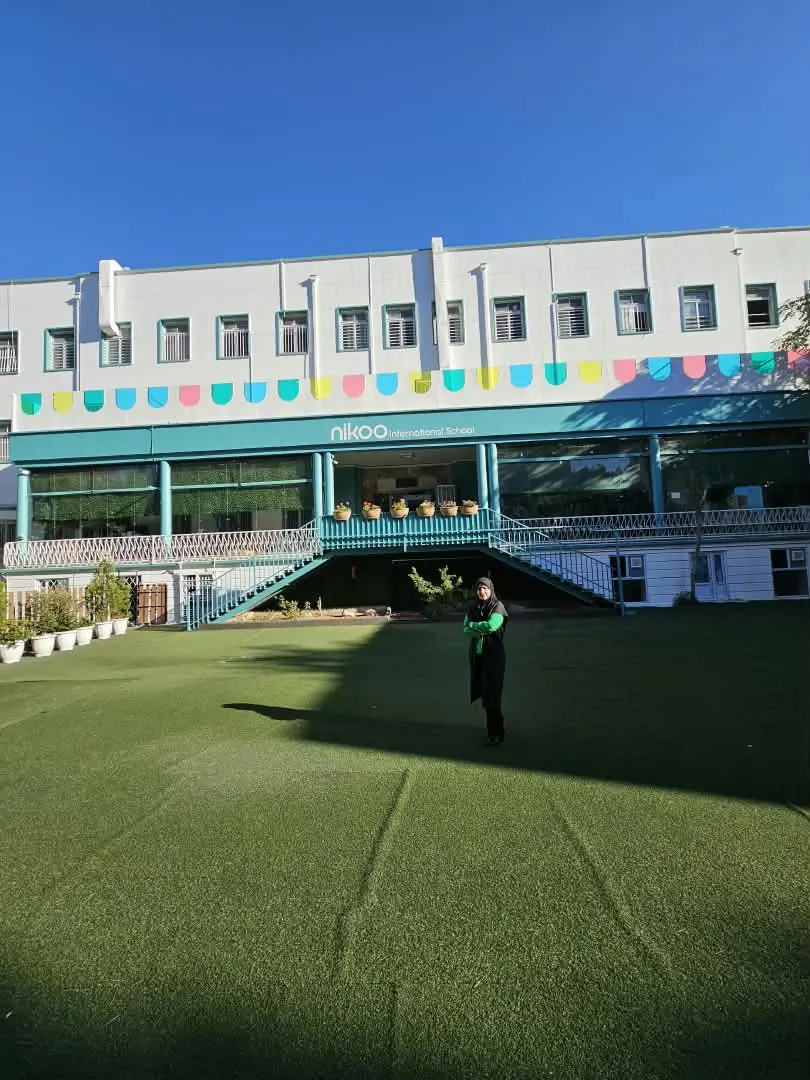
“At Nikoo School, we strive to provide students with a safe and supportive environment in which they can face challenges and experience a wide range of situations. We believe that a school should be more than a place for transferring knowledge and assessing academic performance. It should also provide an environment where children can practice essential life skills.”
The Director of Nikoo Schools in Tehran adds:
“Across all Nikoo schools, it is important to us that when students encounter a problem, they do not simply wait for their teacher to provide the answer. Instead, they should be able to think, ask questions, suggest solutions, and try an alternative approach when one method does not work. We also work closely with families to emphasize the importance of emotional support, avoiding comparisons, and providing children with opportunities for independent experience.”
Dr. Maryam Delavar concludes:
“Our goal is not to ensure that children never fail or never feel upset. Rather, we want them to understand that failure and disappointment are natural parts of life's experiences, and that they can navigate such situations by recognizing their emotions, drawing on the support of others, and making conscious efforts to move forward.
After all, a child who is given the opportunity today to experience, make mistakes, and rise again will be better equipped tomorrow to face the complexities of life.”
LEAVE A RELPY