
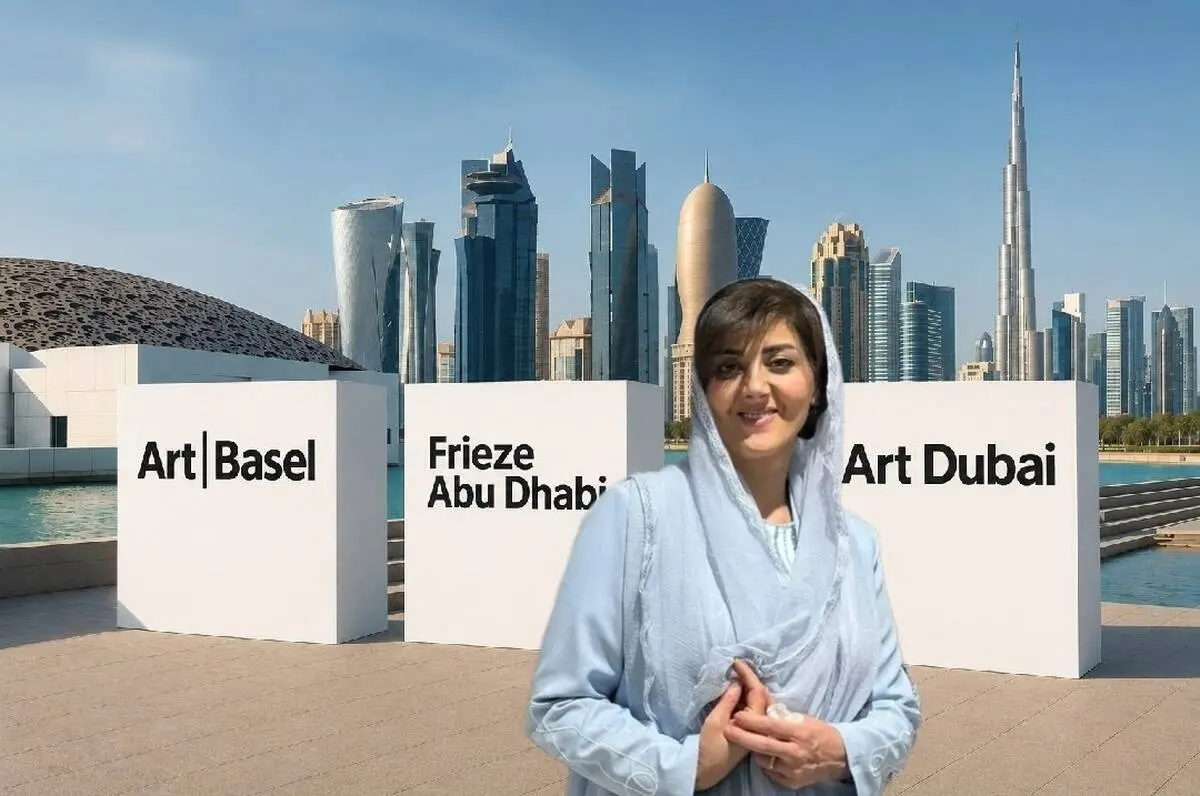
Zohreh Mehraban: Frieze Abu Dhabi, Art Basel Qatar, and Art Dubai — Three Events, One New Art Circuit | Video
Zohreh Mehraban said: “We must be able to present our artists to international standards, translate local narratives into a global language, and demonstrate that art from the region is not a ‘special subject’ for a global audience, but part of the contemporary conversation of world art.”
ArtDayME: Zohreh Mehraban, Founder and Director of Maad Gallery, examines the growing presence of global brands including Frieze, Art Basel, the Guggenheim, and the Louvre in the Middle East in an analytical article published by the Middle East art media outlet ArtDayMe.news. Excerpts from the article include:
One:
Sometimes, the arrival of a brand in a city is not simply the arrival of a new name; it is a sign that the city’s position is changing on a larger map.
That is why I do not see the presence of Frieze Abu Dhabi merely as a new art fair added to the region’s calendar of cultural events. What is taking shape in Abu Dhabi could be part of a much more significant transformation: a shift in the Middle East’s position within the global economy, culture, and circulation of art.
Two:
I see the future of art in the region not in competition among Middle Eastern cities, but in their synergy.
In recent years, Dubai, through Art Dubai, has become one of the most important points of connection between the Middle Eastern art market and the global art world.
Doha, through Art Basel Qatar, is creating a new center of gravity for art in the region, while Abu Dhabi is now entering a new phase with Frieze Abu Dhabi.
Although these three events each have their own distinct identities and structures, together they have the potential to create something much larger:
the formation of a new art circuit in the Middle East.
Three:
The significance of Frieze Abu Dhabi — as well as Art Basel Qatar and Art Dubai — will multiply when the presence of global brands can also contribute to the growth of regional artists, galleries, and institutions; in other words, when capital and attention do not simply flow into the region, but also flow outward from the region to the world.
Four:
For us, as regional galleries, this is an opportunity; but it is also a responsibility.
We must be able to present our artists to international standards, translate local narratives into a global language, and demonstrate that art from the region is not a “special subject” for a global audience, but part of the contemporary conversation of world art.
LEAVE A RELPY