
Mohammad Ehsai and the Qur’an in Muhaqqaq Script: Revisiting Pure Aesthetics, Where the Fragrance of Tradition Meets the Brilliance of a Contemporary Artist’s Vision
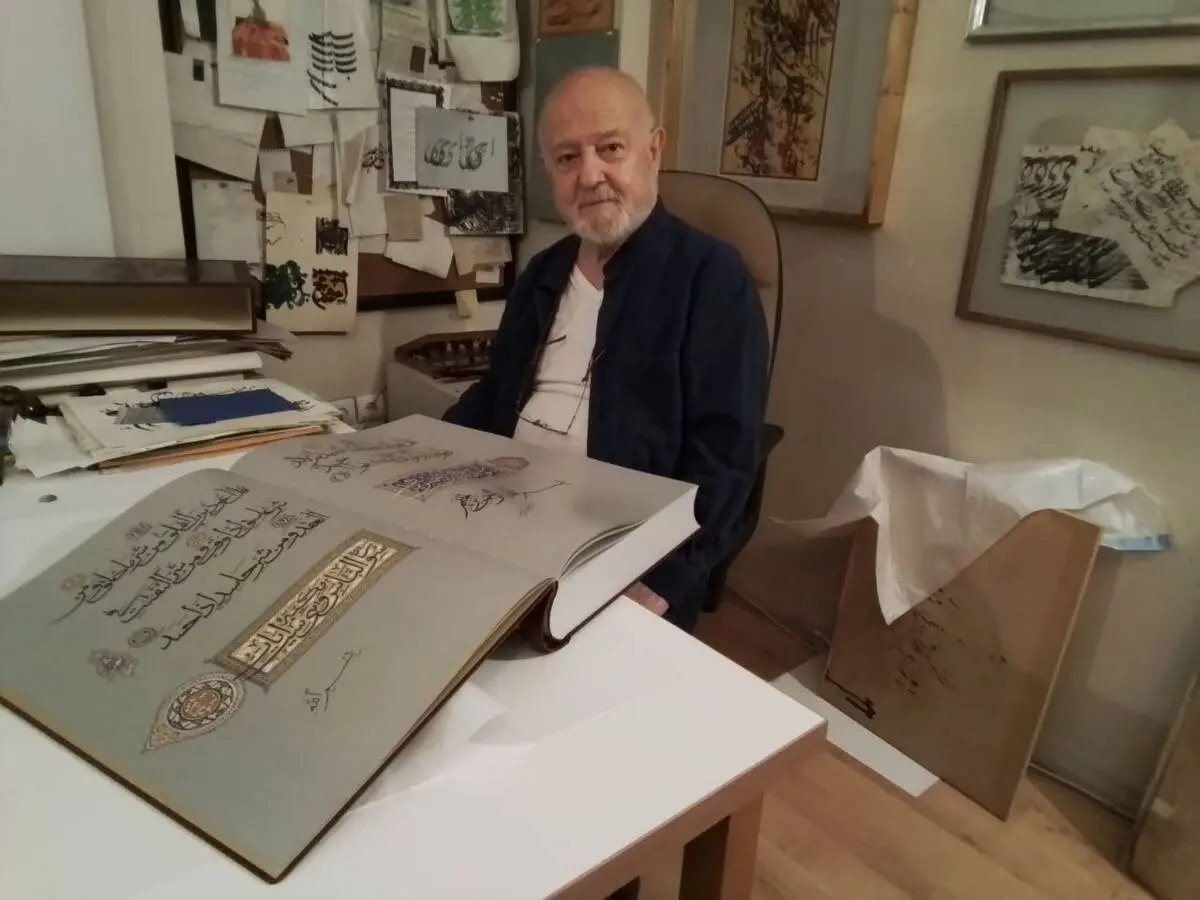
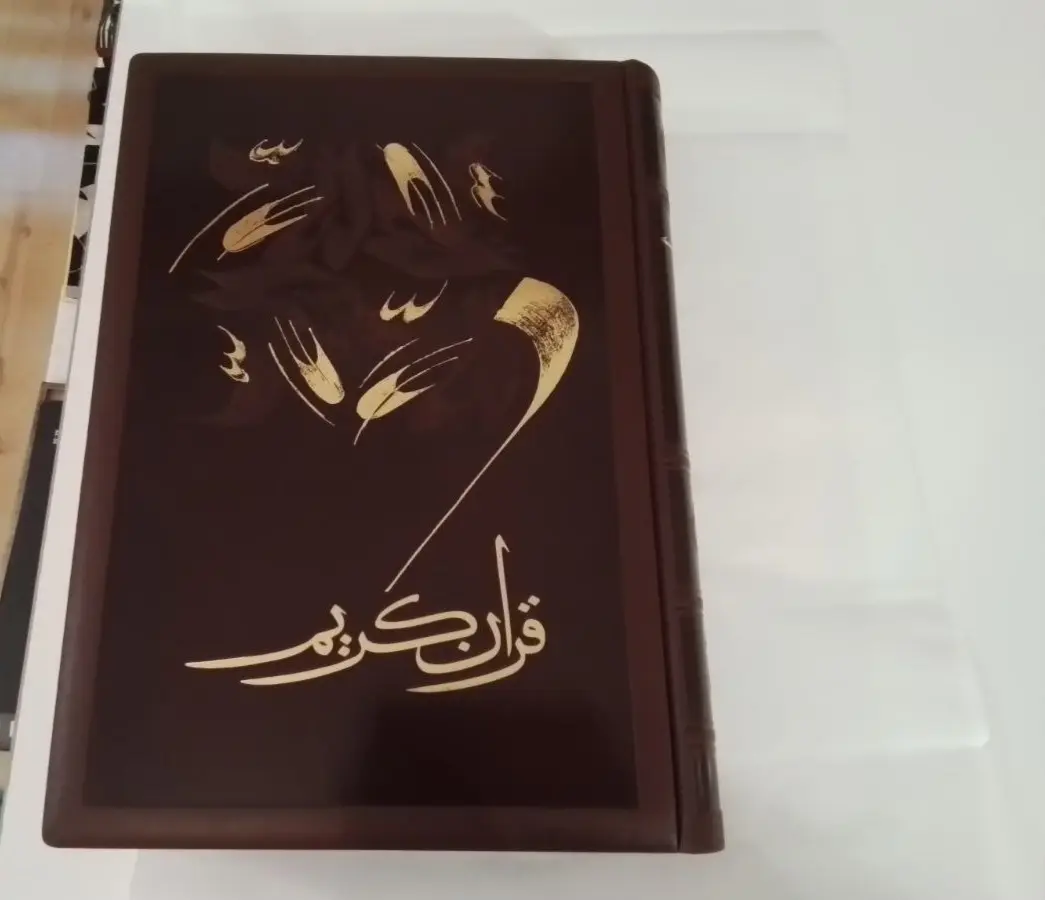
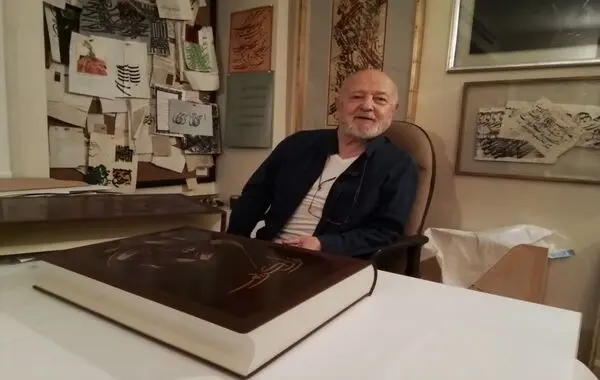
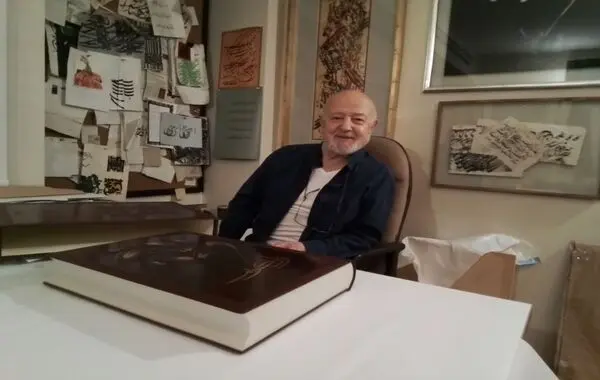
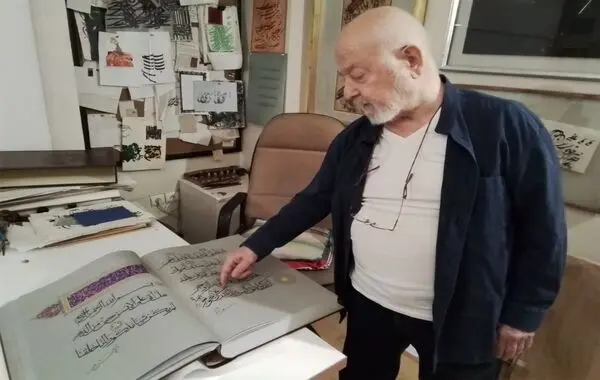
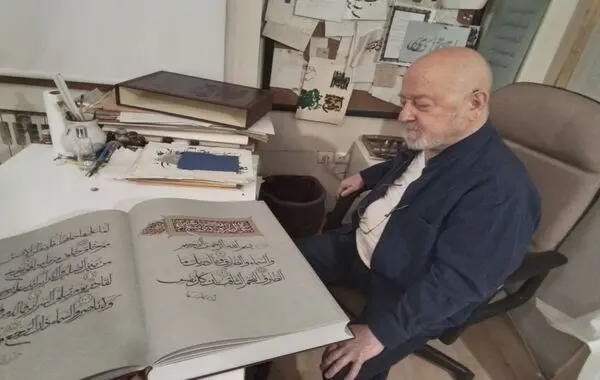
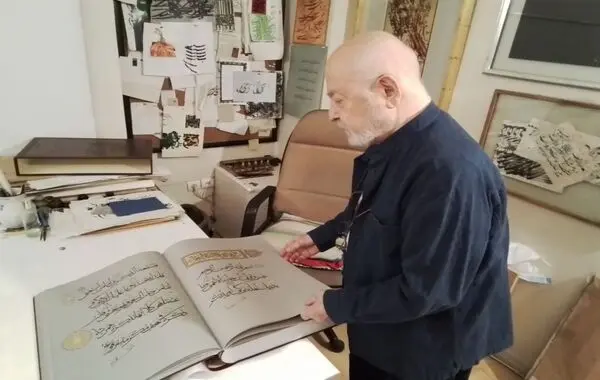
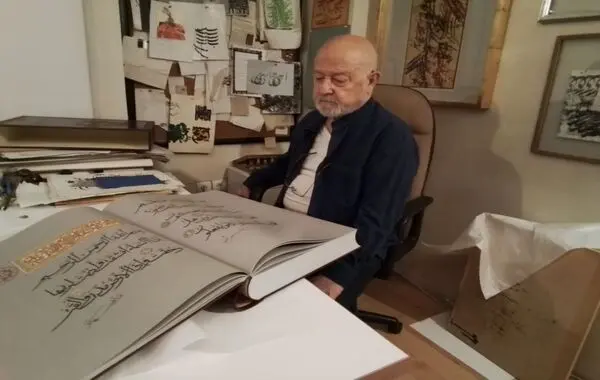
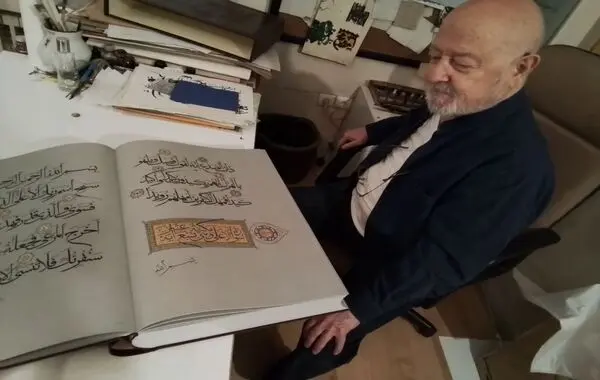
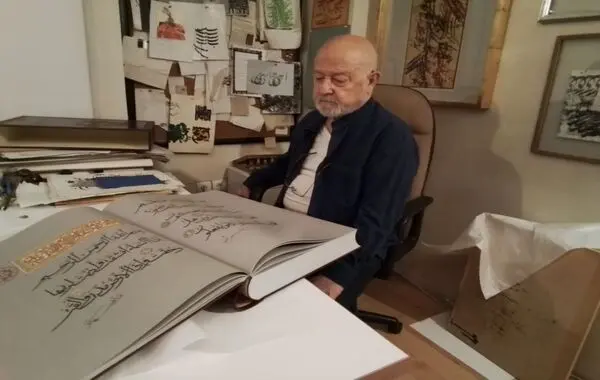
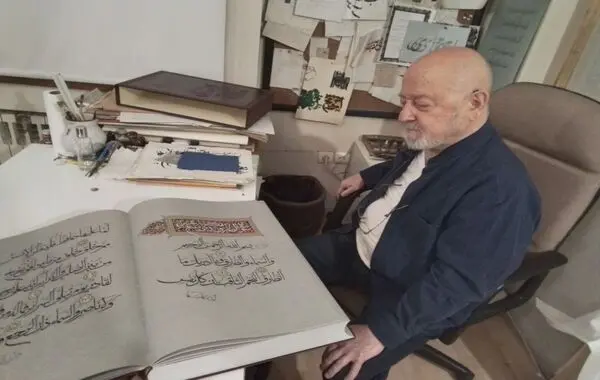
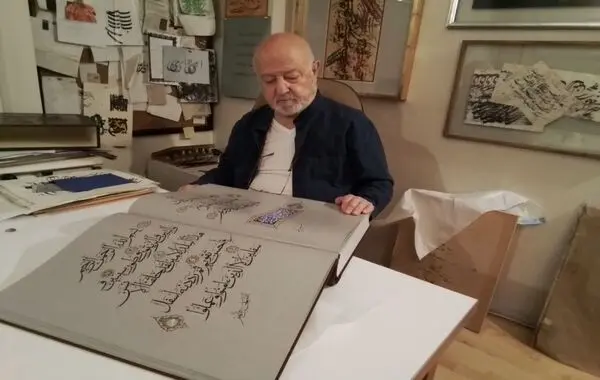
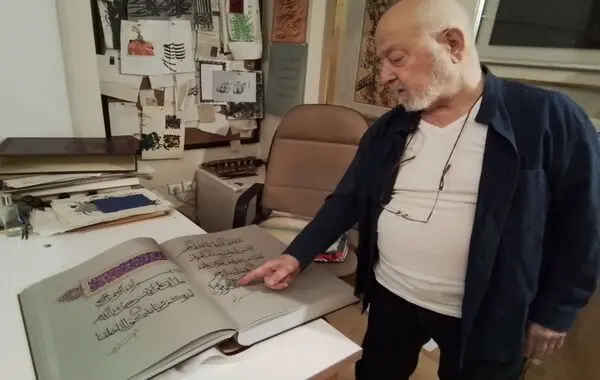
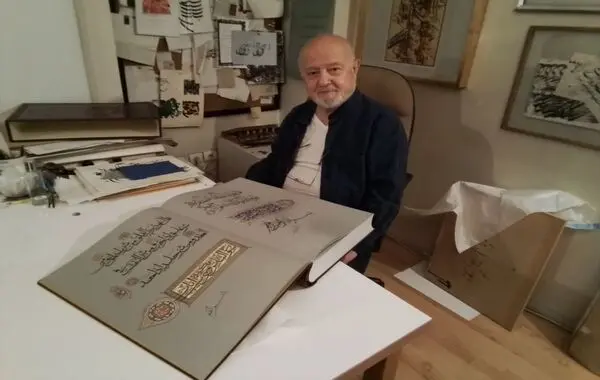
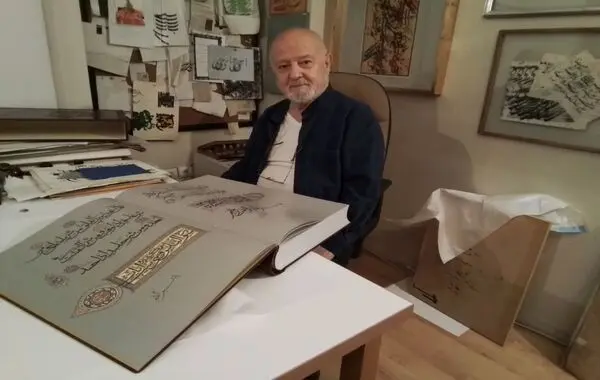
The Holy Qur’an transcribed in Muhaqqaq script by Master Seyyed Mohammad Ehsai embodies a remarkable convergence of aesthetic qualities. On the one hand, it reveals the grandeur and carefully measured proportions of one of the most authentic traditions of Islamic calligraphy; on the other, it reflects Ehsai’s distinctive artistic identity and aesthetic sensibility throughout its pages. In this manuscript, the enduring principles and historical conventions of Muhaqqaq remain firmly intact, while the visual imagination, technical mastery of the pen, and personal artistic vision of a contemporary calligrapher find room for expression within this historical framework. Ehsai’s Qur’an
ArtDayMe : Master Seyyed Mohammad Ehsai recounts the inspiration behind embarking on this project in a deeply personal manner:
“For many years, perhaps forty years, I had dreamed of transcribing the Qur’an. But the day I finally felt that I should begin was the day my mother said, ‘My eyesight is no longer good enough to read these Qur’ans.’
My mother’s eyesight had deteriorated, and large-print Qur’ans were not readily available, so she could no longer read the text. I told her that I would write a Qur’an she would be able to read. I knew that Qur’ans written in Muhaqqaq script possessed this capacity, but I had neither the knowledge nor the skill required to write in Muhaqqaq. Therefore, I began practising the script, initially transcribing Surahs Al-Baqarah and Al-Imran...”
These heartfelt words recount the moment when one of the enduring figures of Iranian calligraphy and contemporary art decided to undertake the transcription of the Divine Word. What began as a personal family concern ultimately led to the creation of a magnificent four-volume Qur’anic manuscript.
In describing this experience, Ehsai speaks with characteristic humility:
“When it came to transcribing the Word of God, I was nothing. I say this without the slightest false modesty or formality: I was nothing in the creation of this work. The Owner of this Word made the entire journey possible, from the writing to the printing. Everything was arranged and carried out in such a way that all I can do is marvel at it...”
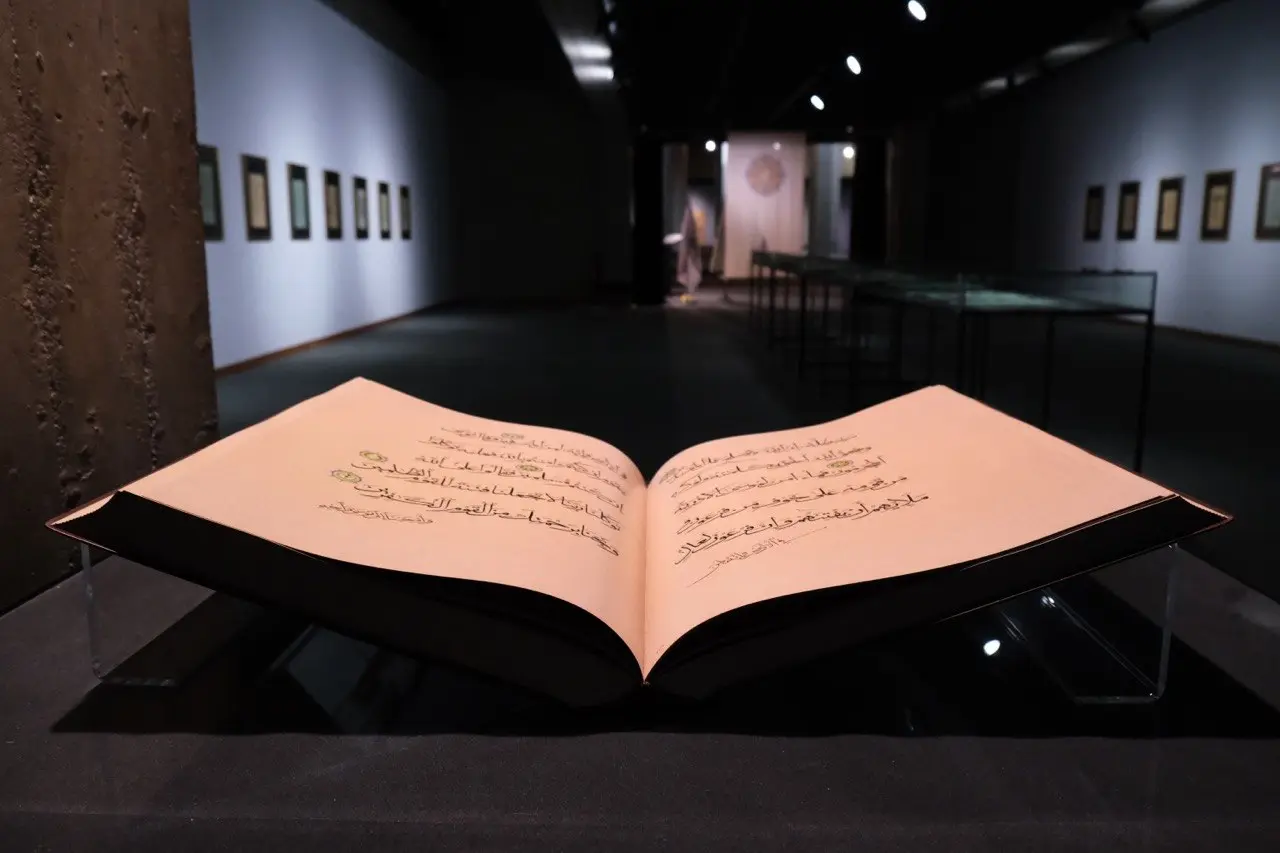
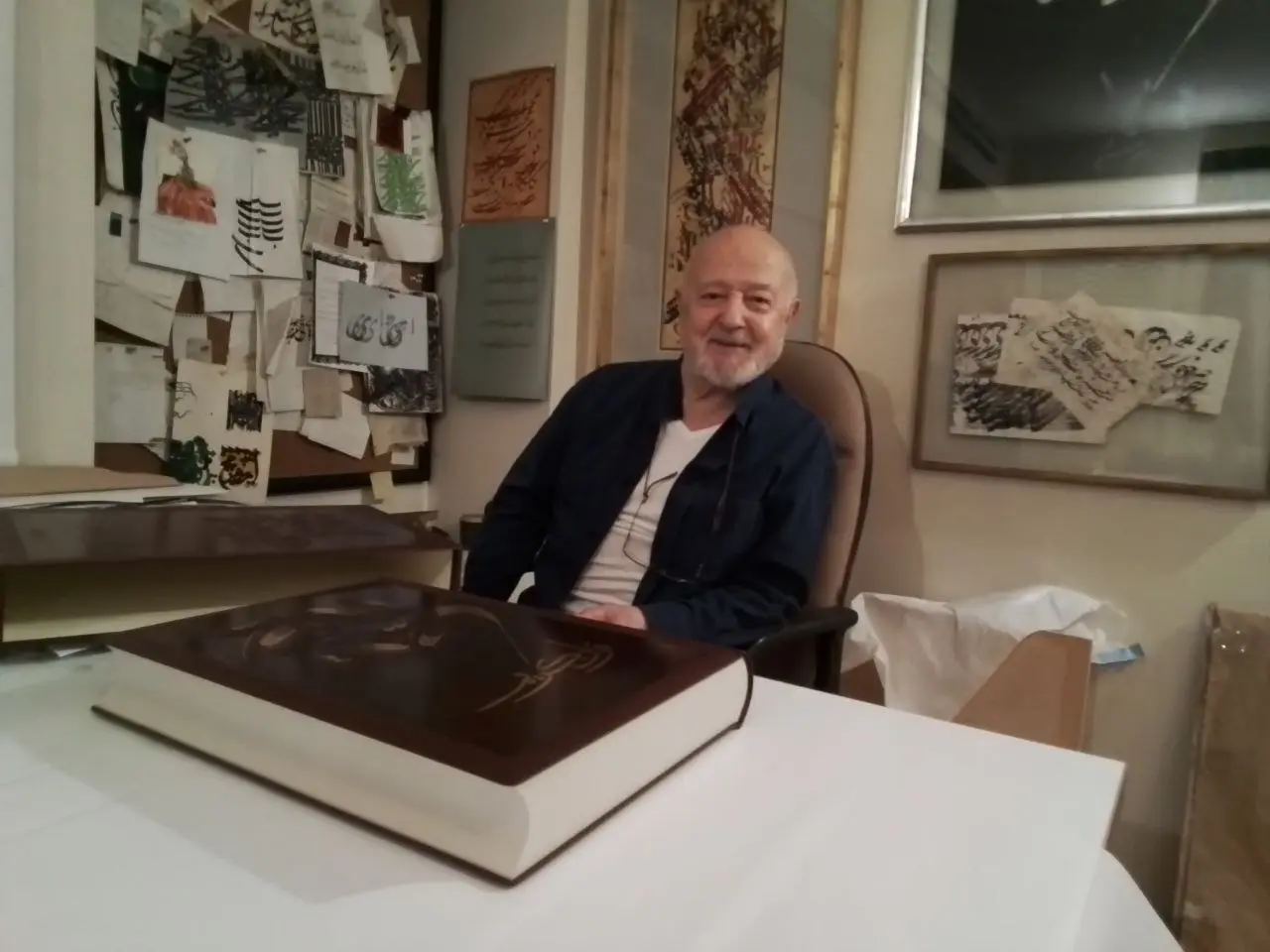
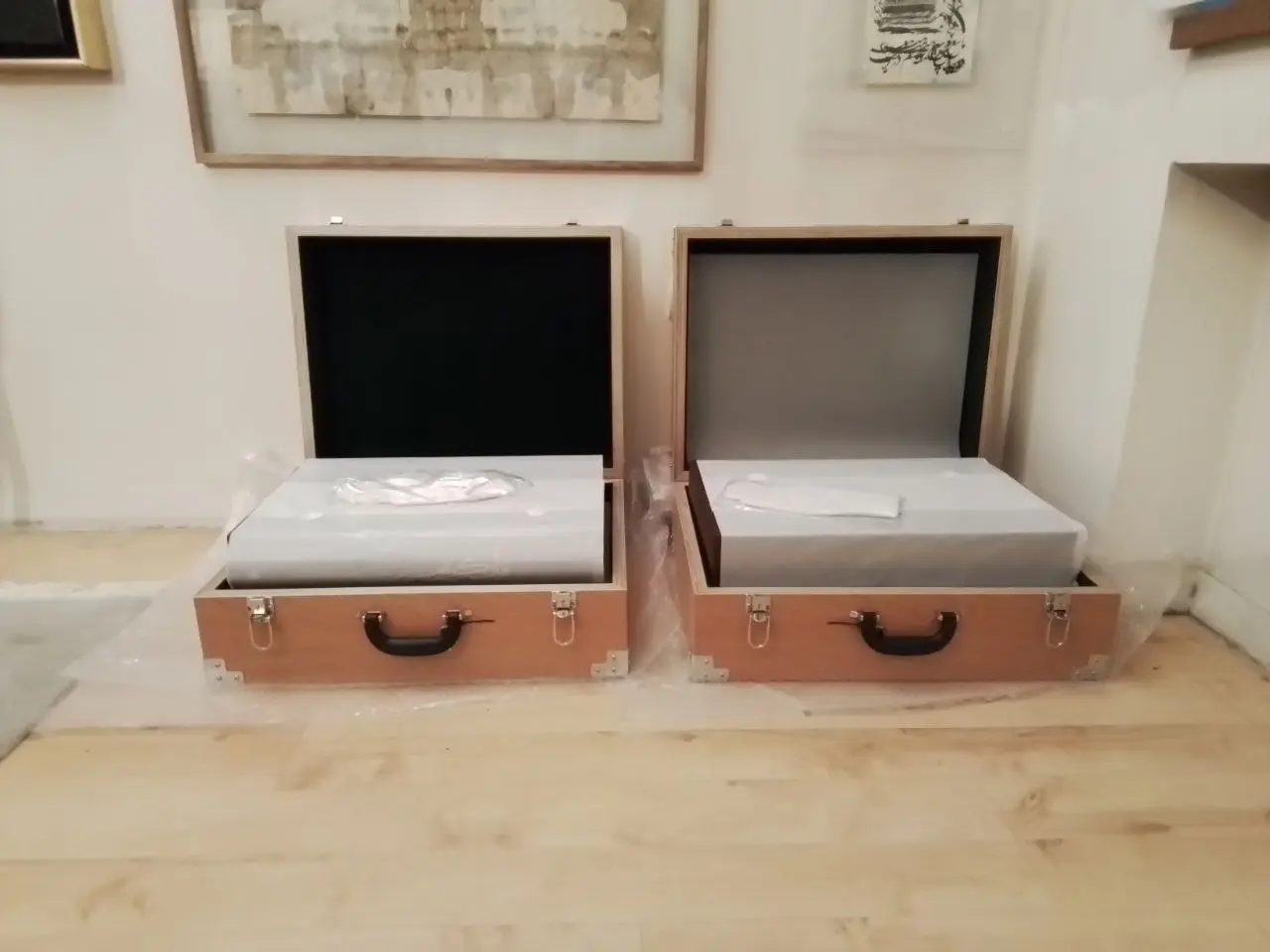
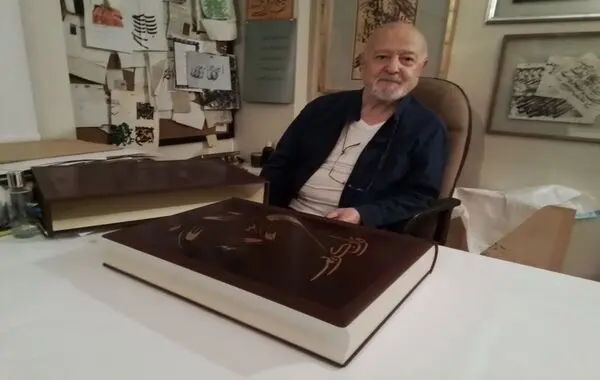
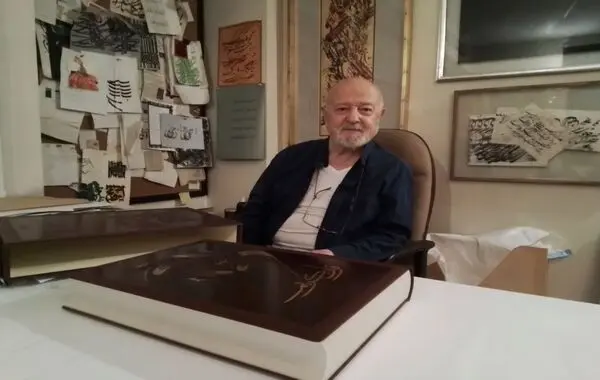
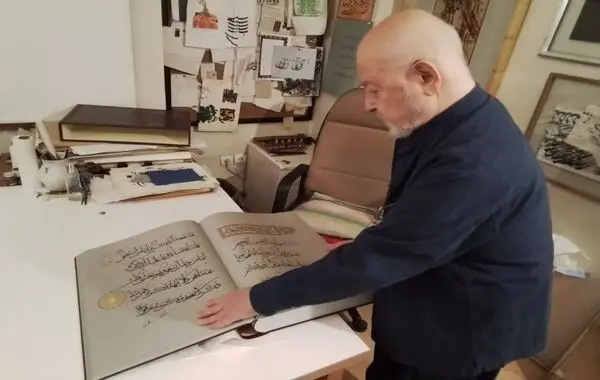
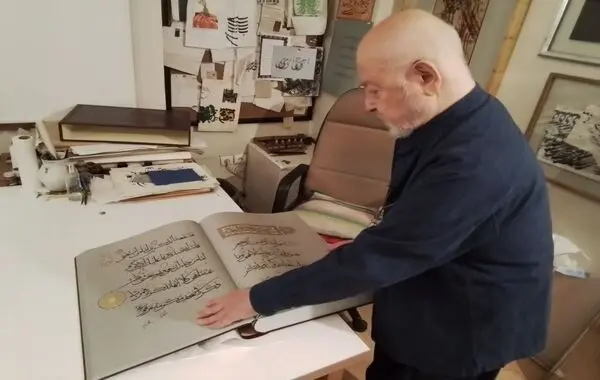
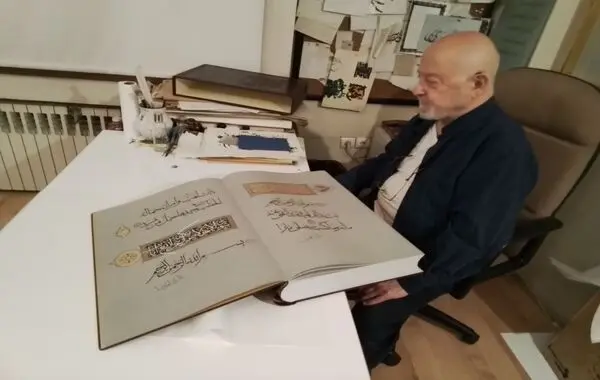
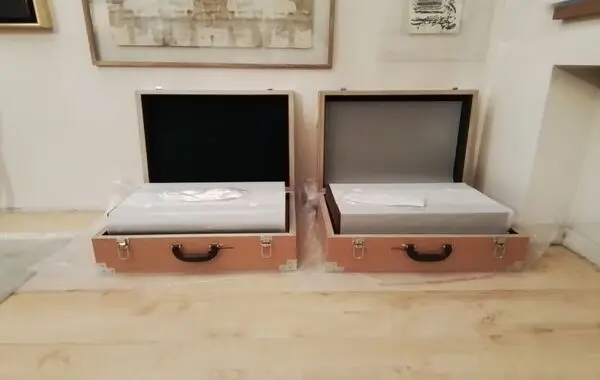
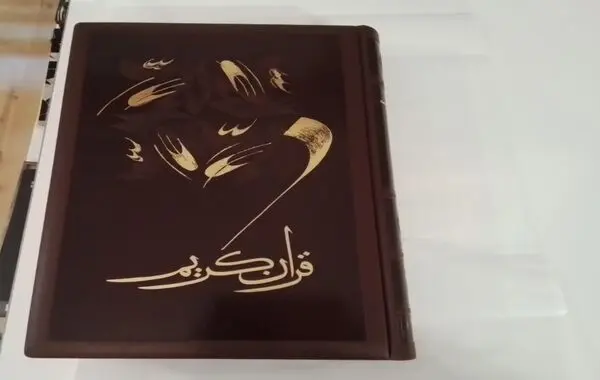
This precious four-volume Qur’an comprises 2,650 pages, with five lines of calligraphy on each page. It was transcribed by Master Mohammad Ehsai and published with the support of Karafarin Bank.
_ The Transcription of the Qur’an: The Convergence of Art, Faith and Aesthetics
Throughout the history of Islamic civilisation, the Holy Qur’an has represented one of the highest expressions of the arts of the illuminated manuscript. From calligraphy and illumination to bookbinding, decorative marginal ornamentation, ruling and ornamental design, Muslim artists have, over centuries, sought to employ the finest technical skills and artistic sensibilities to create the most fitting visual form for the Divine Word.
Within this longstanding tradition, transcribing the Qur’an is far more than transferring words onto paper. It constitutes an artistic encounter with sacred scripture, in which the proportions of letters, precision of pen movements, arrangement of lines, observance of orthographic conventions and subtleties of page design all contribute to an experience of legibility, dignity and beauty.
In this tradition, the calligrapher is not merely a transcriber of text. Through an understanding of the geometry of letters, visual proportions, compositional principles and expressive possibilities of the pen, the calligrapher gives the Divine Word a visual form that, while remaining faithful to its meaning, possesses a distinct artistic identity and an independent aesthetic value. From this perspective, the history of Qur’anic manuscripts can also be understood as the history of the evolution of calligraphy and the art of the book in Islamic civilisation.
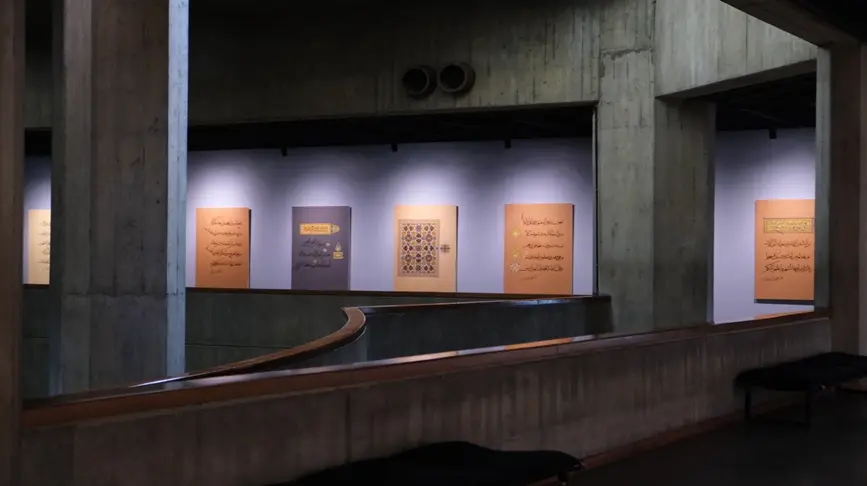
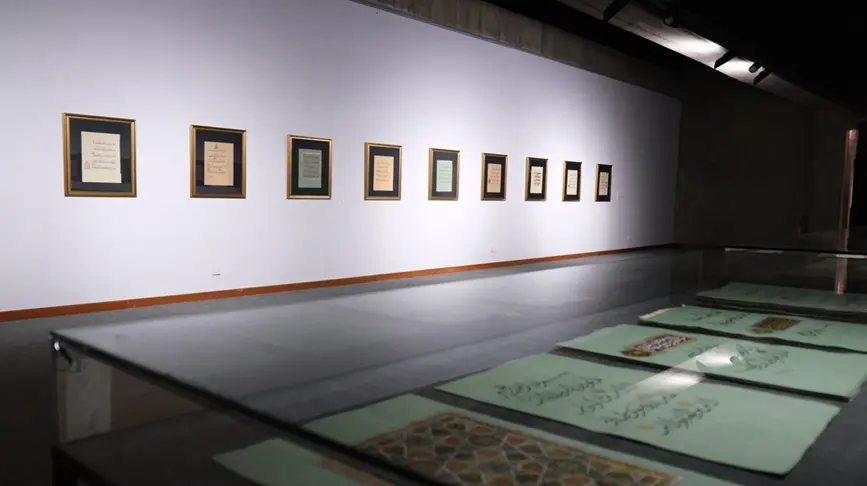
One compelling contemporary example of this longstanding endeavour is the Holy Qur’an transcribed by Master Seyyed Mohammad Ehsai, which was unveiled at the Tehran Museum of Contemporary Art on Wednesday, 21 October 2026.
This manuscript represents a noteworthy encounter between contemporary Iranian calligraphy and one of the oldest and most majestic traditions of Qur’anic transcription. Here, the revival of a historical tradition is intertwined with the aesthetic sensibilities and artistic experience of a contemporary calligrapher.
Indeed, what is central to the transcription of the Holy Qur’an is not simply the ability to execute the rules of a particular script, but rather the transformation of its structural potential into a coherent visual system suited to the nature of the text. Within this system, the geometry of letters, the rhythm of lines, the relationship between black and white, the extension of the pen strokes, compositional proportions and the arrangement of ornamental elements all contribute to an experience that engages both reading and seeing.
In transcribing the Holy Qur’an, Master Seyyed Mohammad Ehsai preserves the historical identity and discipline of Muhaqqaq script while subtly reflecting his own established artistic approaches through its aesthetic and expressive possibilities. From this perspective, every page of this sacred manuscript possesses a lasting significance through its artistic engagement with the heritage of Islamic calligraphy.
1. The Structure of Muhaqqaq Script: Geometric Grandeur and Visual Discipline
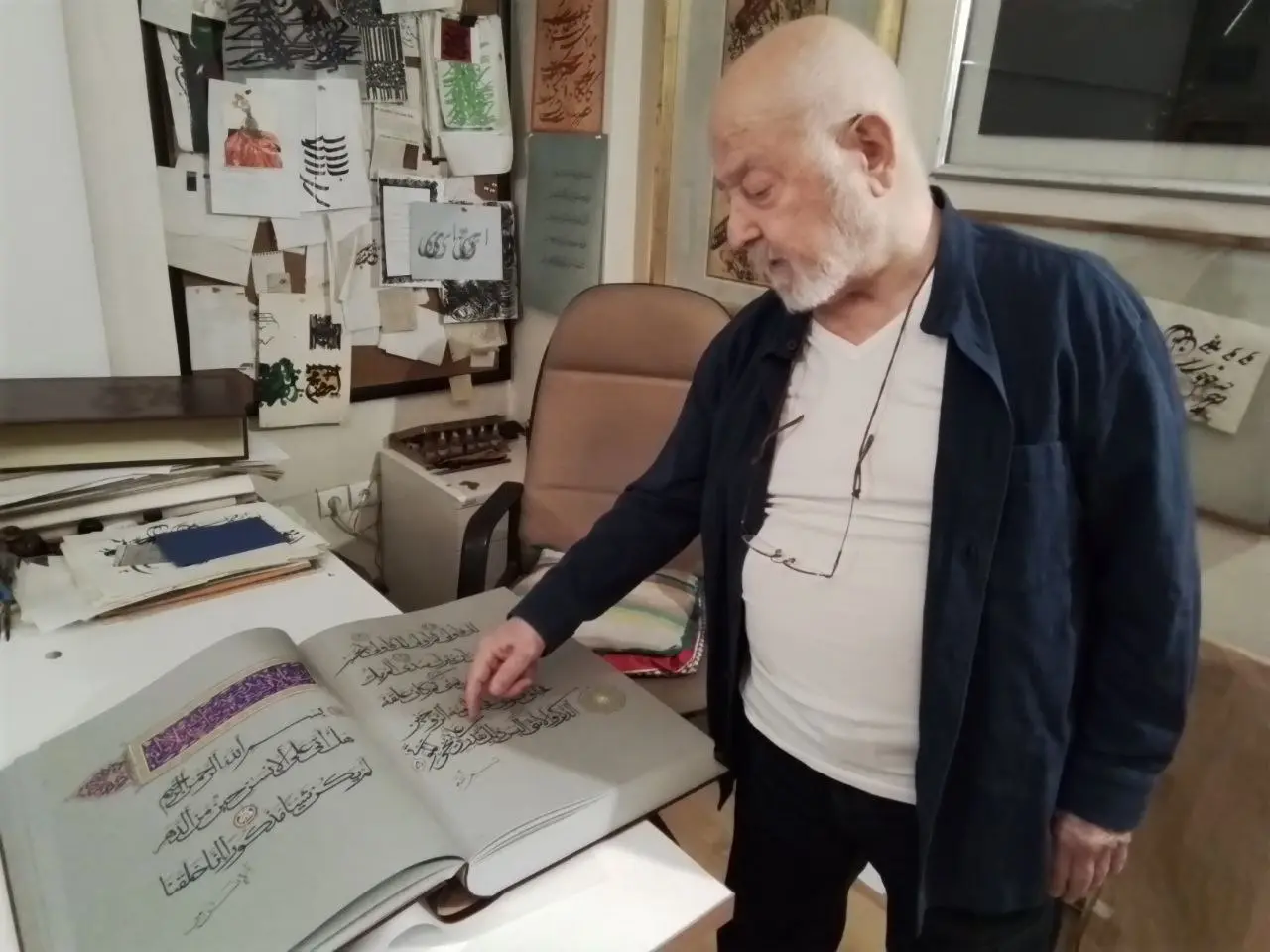
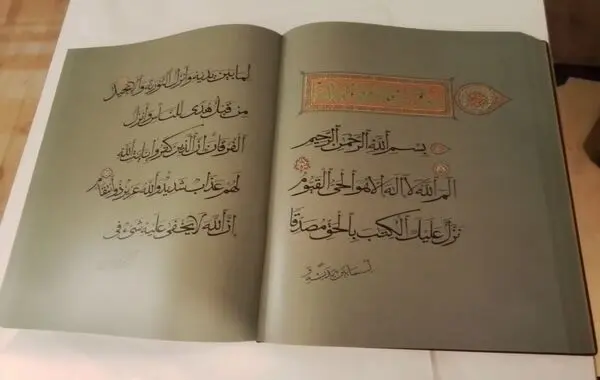
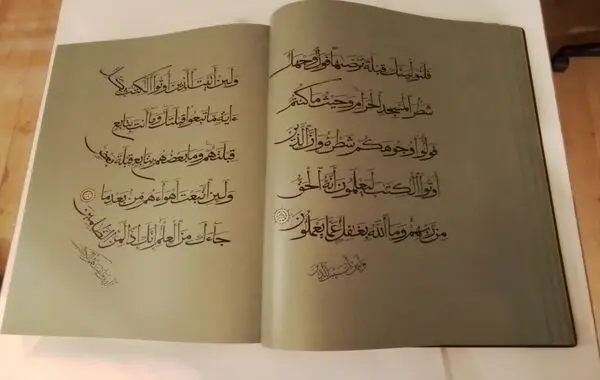
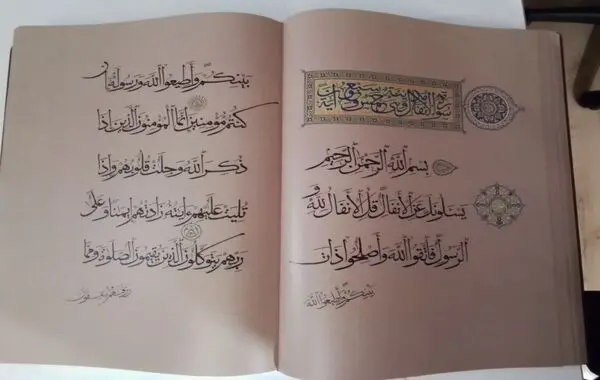
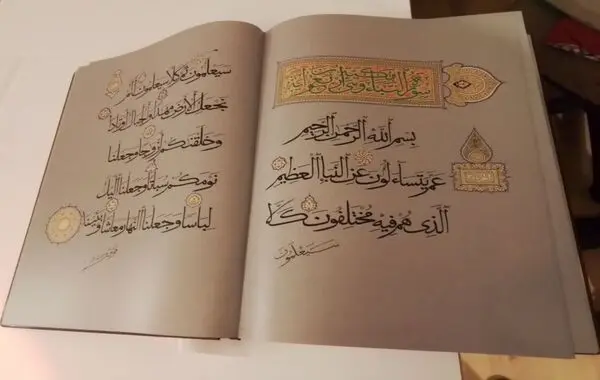
The first notable characteristic of this transcription is the structural solidity of Muhaqqaq script. Counted among the Six Classical Scripts (Al-Aqlam al-Sittah) of Islamic calligraphy, Muhaqqaq occupies a distinguished position in the history of Qur’anic transcription, owing to its precise proportions, elongated letterforms, clarity of composition and distinct articulation of written elements.
Muhaqqaq is among the calligraphic styles in which the proportions between the components of letters, the observance of measurements and pen-based ratios, and the structural stability of writing are of particular importance. These characteristics have given the script an exceptional status and a majestic presence in the history of luxury Qur’anic manuscripts.
In Ehsai’s execution, the letters possess both geometric strength and solidity while avoiding rigidity and stillness through their curves and the fluid movements of the pen. This coexistence of formal discipline and flexibility gives the script a quality that may be understood as a balance between architecture and movement.
Here, letters are not merely carriers of text. Through their individual shapes, dimensions, angles, extensions and positions, they each contribute to the organisation of the page.
Another important aspect is the observance of proportional relationships in the formation of letterforms. In traditional calligraphy, the dimensions and proportions of each letter are measured according to a defined system based on the nuqta (the rhomboid dot produced by the nib of the pen). This proportional system gives Muhaqqaq letters their structural identity and, in Ehsai’s execution, provides the foundation for a harmonious and visually compelling composition.
2.When Calligraphy Transcends Writing and Becomes Visual Architecture
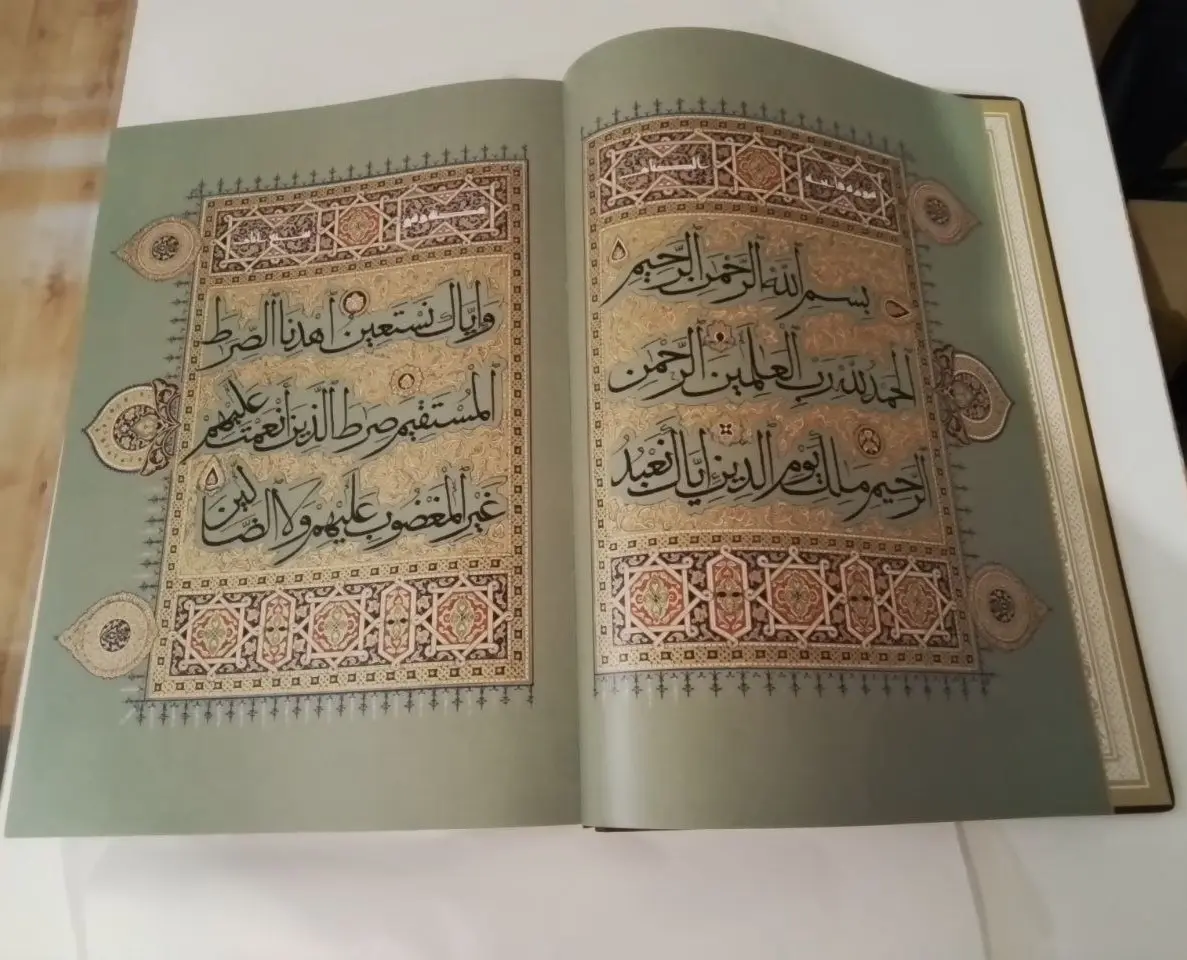
Master Mohammad Ehsai’s Qur’an in Muhaqqaq script exemplifies the relationship between the discipline of classical calligraphy and the aesthetic sensibilities of a contemporary artist. In this manuscript, the geometry of letters, their proportions and elongations, the rhythm of lines, the relationship between black and white, and the organisation of the page come together to form a visual system in which no significant element functions in isolation.
The significance of Ehsai’s achievement lies in his ability to establish a balance between several aesthetic polarities: order and movement, density and emptiness, legibility and visual impact, and fidelity to tradition and individual artistic identity.
In this Qur’an, transcribed in Muhaqqaq script by Master Ehsai, a visual structure emerges in which letters acquire meaning and identity through their relationships with one another, much like the components of a refined architectural composition.
Perhaps the defining quality of this approach is that Ehsai sees no need to break with the past in order to make calligraphy contemporary. He demonstrates that the deepest form of innovation sometimes lies not in abandoning established principles, but in rediscovering the possibilities concealed within those very principles.
In this precious and enduring manuscript, tradition is not confined to the past. In the hands of an artist such as Mohammad Ehsai, it becomes a living possibility for the creation of beauty in the present.
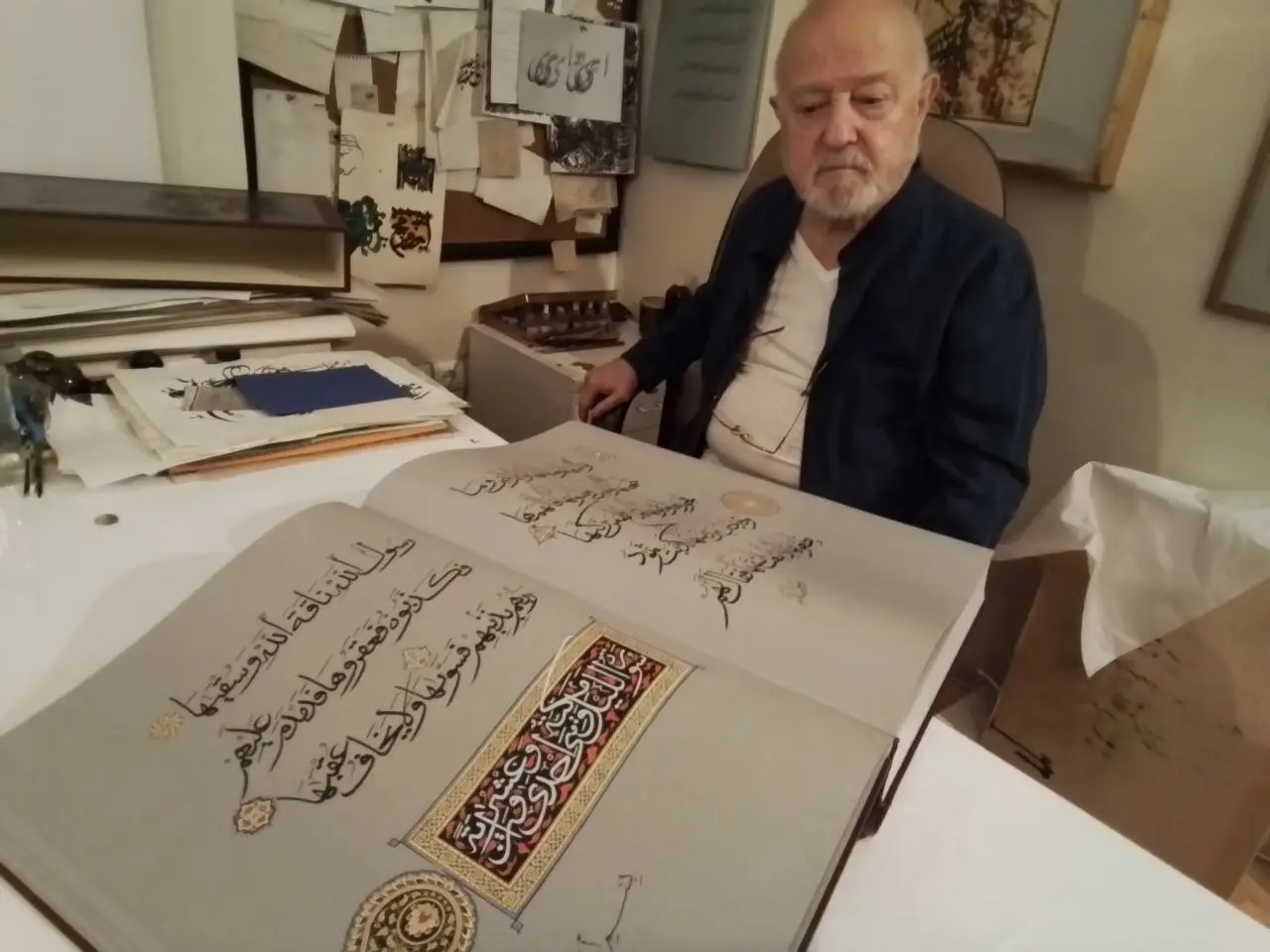
3.The Geometry of Letters and the Relationship Between Vertical and Horizontal Axes
One of the most important aesthetic characteristics of this transcription is the interaction and dialogue between vertical and horizontal lines.
The vertical extensions of alifs and the elongated stature of certain letters create a sense of visual stability and authority. In contrast, the horizontal extension of words and carefully measured elongations guide the eye along the length of each line.
These two visual forces establish a balanced structure: the vertical strokes function as supporting columns within the composition, while the horizontal extensions act as continuous pathways connecting the written elements.
Within this relationship, kashidehs (intentional elongations of letters) play a particularly significant role. In Muhaqqaq, elongation serves both as a means of regulating the length of a phrase and as an active element in the design of the composition. Ehsai makes effective use of this capacity to balance the density of letters with the surrounding empty spaces, allowing the lines to avoid visual monotony.
In this manuscript, elongations perform a function that extends beyond the mere extension of individual letters. They help regulate the visual weight of each line, establish continuity between written elements and guide the viewer’s gaze. It is precisely this attention to the internal relationships between letters that transforms calligraphy from a purely mechanical act of writing into a deliberate and carefully considered form of visual design.
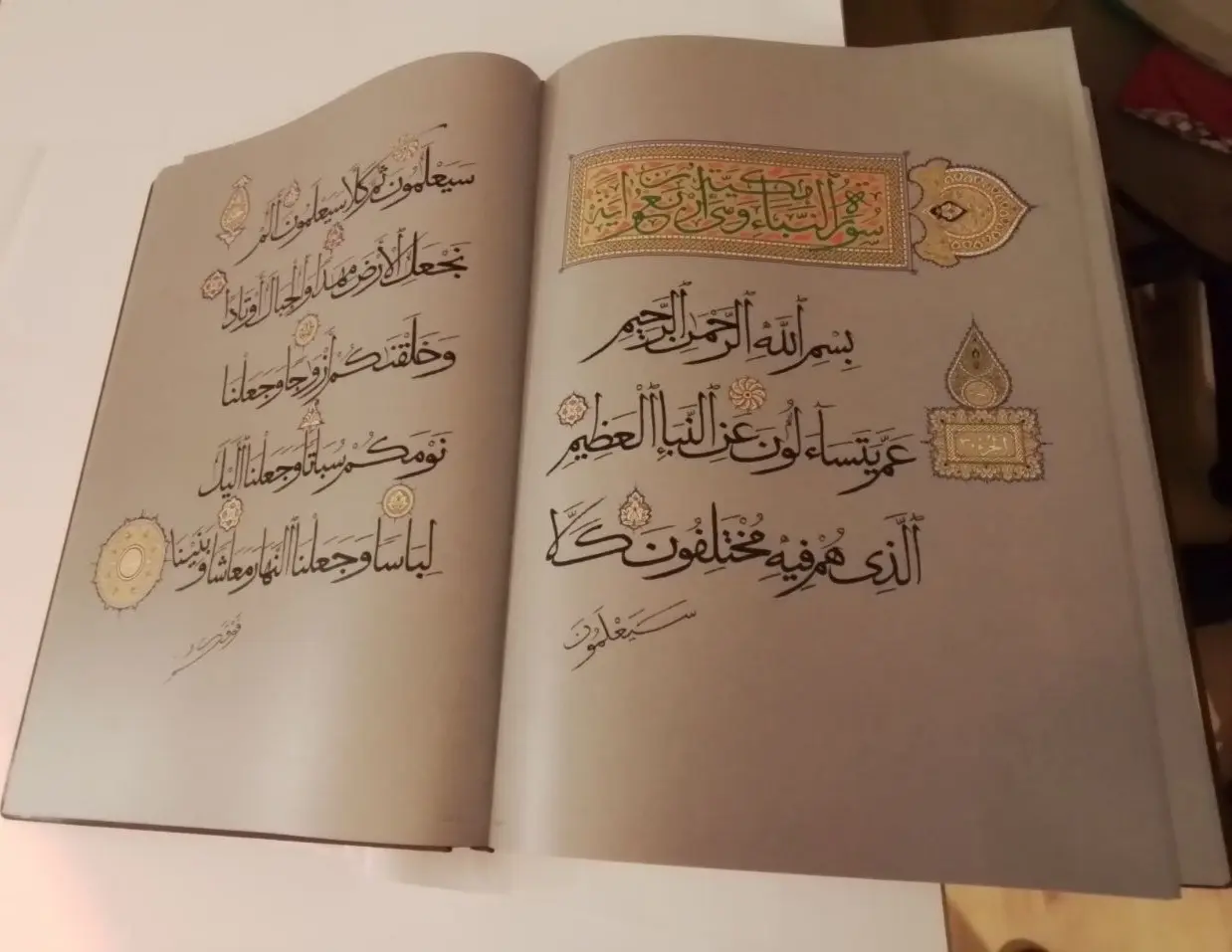
4.Visual Rhythm and the Cadence of the Lines
At first glance, the lines on these pages may appear to follow a regular and repetitive structure. A closer examination, however, reveals that variations in word length, letter height, elongations, spacing and the density of marks create a changing visual cadence.
This quality may be described as the visual music of calligraphy.
Just as repetition and pauses, continuity and interruption, stillness and movement contribute to the formation of rhythm in music, the sequence of letters and words, the extensions of pen strokes and the spaces between lines generate a rhythmic experience across these pages.
Importantly, this rhythm does not result in mechanical uniformity. Each line maintains its relationship with the overall structure of the page while retaining its own visual character. From this perspective, Ehsai’s calligraphy possesses a form of controlled dynamism, one that unfolds within the disciplined framework of Muhaqqaq.
In fact, when encountering these pages, the viewer’s eye does not simply move from one line to the next. Rather, it experiences a visual journey through the rises and falls of letterforms, the extensions of elongated strokes and the pauses created by spacing. This quality also lends the reading of the text a cadence that corresponds to its calligraphic structure.
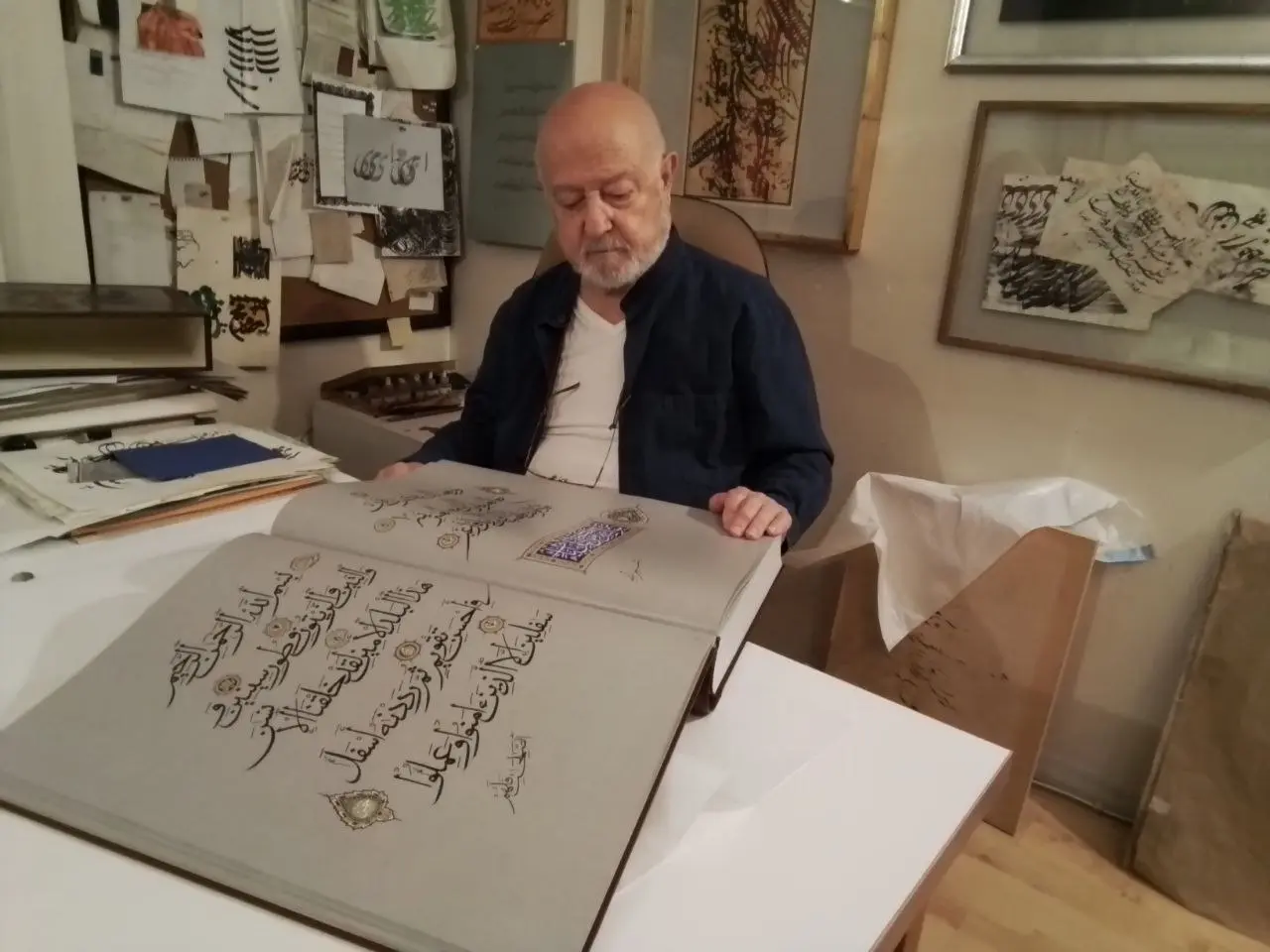
5.Composition and the Organisation of the Page
An examination of the Holy Qur’an transcribed by Master Seyyed Mohammad Ehsai must also take into account the relationship between calligraphy and the space allocated to writing. Page design constitutes an integral part of the manuscript’s aesthetic logic.
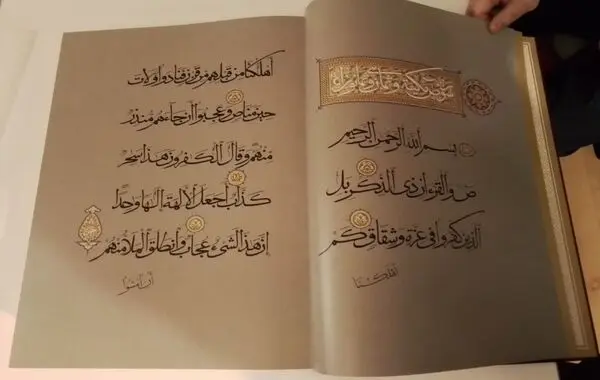
On some pages, the lines possess greater visual extension and density, yet the overall composition retains its coherence despite variations in line length. On other pages, the positioning of phrases and the spacing between them create a different visual atmosphere.
These variations produce a sense of diversity within unity. Ehsai’s achievement lies in maintaining a balanced and visually distinctive overall style despite differences in the number of letters and words across various verses and surahs.
The empty spaces between lines also play an essential role. These intervals are neither lost nor unused portions of the page; rather, they are active components of the composition. They function as visual pauses, allowing for readability, visual breathing space and contemplation.
In the tradition of Islamic book arts, the relationship between text and its surrounding space has always been significant. In a luxury Qur’anic manuscript, the page is not a neutral surface upon which words are simply recorded. It is a carefully organised visual field in which the text, margins, ruling, opening panels and ornamental elements are arranged in a considered relationship with one another.
In this Qur’an, too, the whiteness of the paper, alongside the blackness of the ink, contributes as much as the letters themselves to the work’s visual identity. This is where the negative space of the page becomes an effective element in both beauty and legibility.
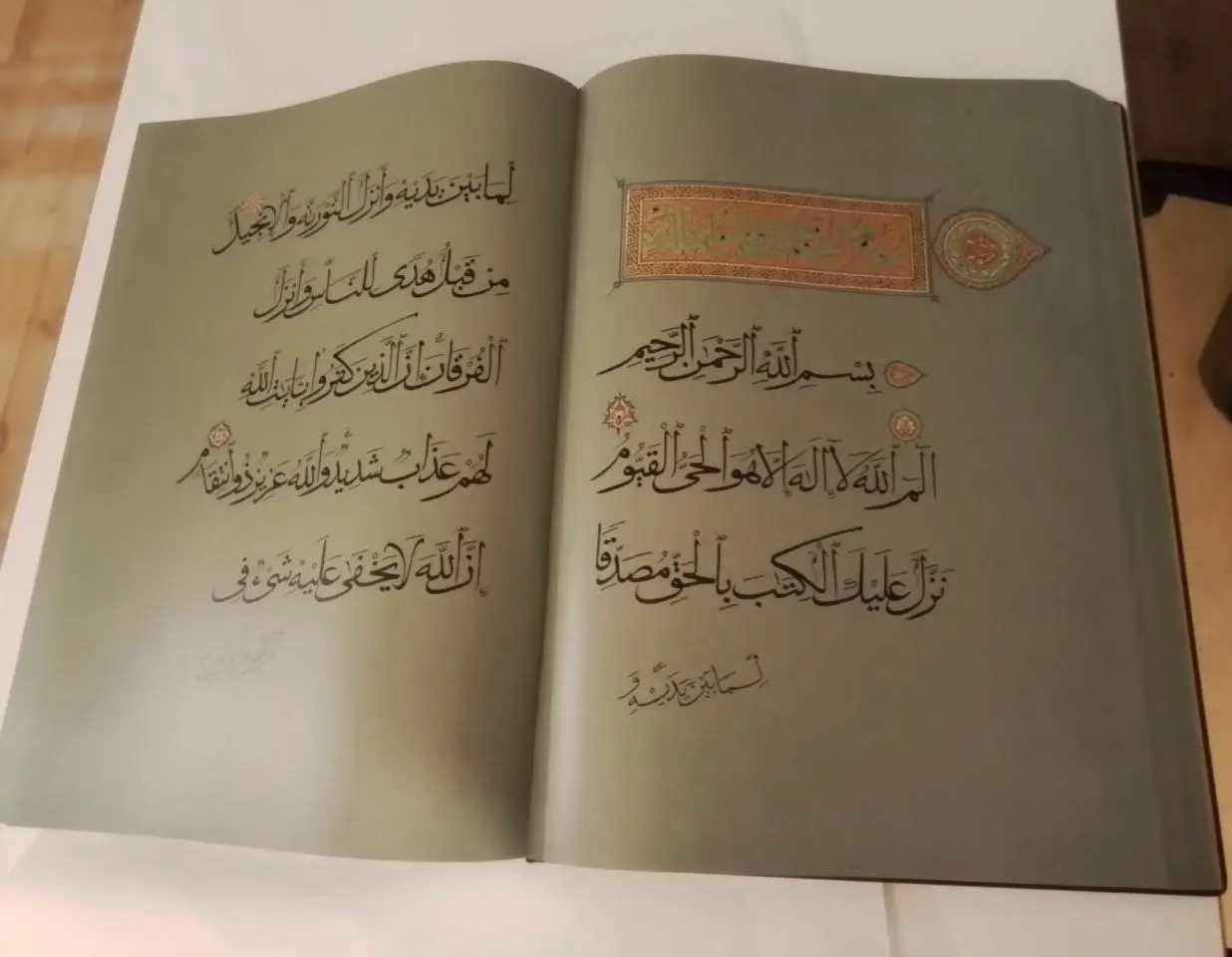
6.The Colour Palette and the Primacy of the Written Word
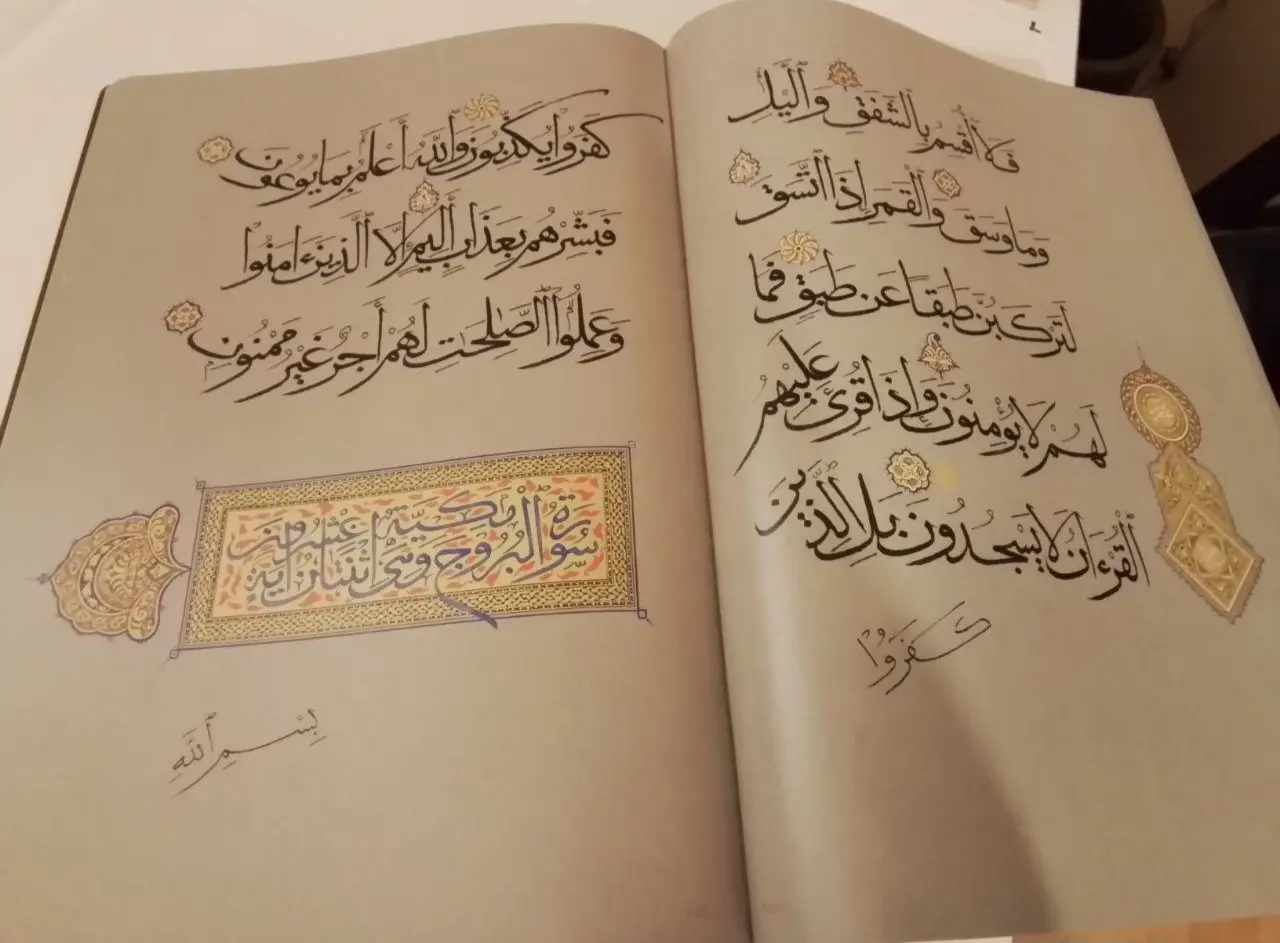
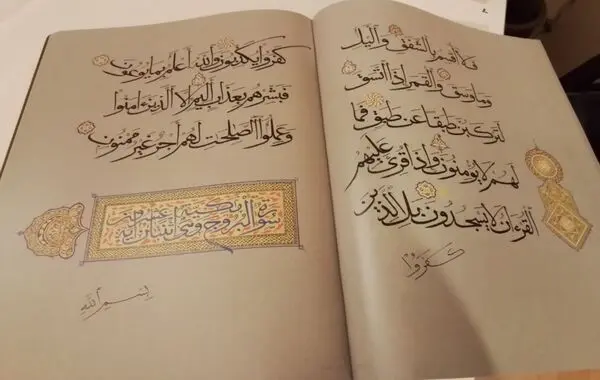
One of the distinctive aspects of this transcription is the deliberate restraint of the colour palette in the main text. The dominance of dark ink against the paper creates a fundamental contrast that enhances the clarity, concentration and authority of the writing.
There is no extensive variety of colours within the main body of the text, as the principal burden of visual expression rests upon the script itself, its proportions and the quality of the calligraphic execution.
This economy of colour may be understood as a form of aesthetic restraint. Rather than introducing numerous additional colours, the artist has made the inherent potential of the script the primary field of expression.
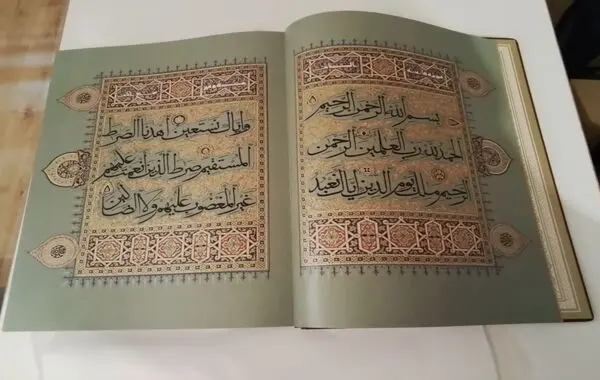
Another noteworthy feature is that each volume of this four-volume manuscript is printed on paper of a distinct and specific colour. These carefully selected backgrounds, in combination with the dark ink, give each volume its own visual character. Consequently, the blackness of the ink acquires a different appearance against each coloured surface, creating subtle variations in the viewer’s visual experience while preserving the unity of the complete collection.
This choice demonstrates an awareness of the relationship between the material and colour of the writing surface and the visual quality of the ink. In the production of a luxury manuscript, this relationship is not merely a technical consideration; it forms part of the overall design of the Qur’an.
7.The Movement of the Pen: Between Restraint and Freedom
One of the most compelling aspects of this transcription is the quality of the pen’s movement. Owing to its precise rules, Muhaqqaq does not permit unrestricted freedom. Yet these very limitations provide the foundation for the emergence of the calligrapher’s skill and individual artistic identity.
In Seyyed Mohammad Ehsai’s execution, the extensions of the strokes, variations in line thickness, and the manner in which letters are connected or separated all reveal the artist’s mastery of these possibilities.
In certain passages, the pen moves with strength and decisiveness; in others, it follows its course with greater delicacy and control. These variations in execution lend the script an inner expressiveness, as though each letter, while adhering to structural conventions, also possesses an independent kinetic character.
In calligraphy, the quality of the pen’s movement is not limited to the final shape of a letter. The angle of the nib, the pressure of the hand, the speed of movement, the degree of rotation and the manner in which ink is released onto the paper all contribute to the visual character of the letters.
Here, we encounter a balance between restraint and freedom: restraint in observing the proportions and principles of the script, and freedom in the personal execution and adjustment of relationships between letters.
8. Legibility, Meaning and Spiritual Experience
In Qur’anic calligraphy, the beauty of form cannot be separated from the meaning of the text. Letters and words possess not only visual value but also semantic and sacred significance. Consequently, the viewer’s experience of these pages operates on two simultaneous levels: reading the text and appreciating its visual qualities.
In this manuscript, the clear and recognisable structure of Muhaqqaq preserves the possibility of engaging with the text. At the same time, the proportions of the letters, the movement of the lines and the order of the composition invite the viewer to engage in a form of contemplation that extends beyond the act of reading alone.
Within the tradition of Qur’anic transcription, calligraphic beauty approaches its fullest expression when a considered balance is established between the semantic dignity of the Divine Word, the clarity of the writing and its visual arrangement. The calligrapher must master the principles of the pen and composition to such an extent that the visual presence of the letters becomes not an obstacle to reading, but a means of encouraging deeper familiarity with and contemplation of the text.
This is the point at which calligraphy transcends a writing skill and becomes an aesthetic experience: one in which meaning is also apprehended through form.
From this perspective, the beauty of these pages is not simply the result of ornamental letter arrangements. Rather, it emerges from the convergence of meaning, structure, technical mastery and the viewer’s perceptual experience.
9.Tradition and Contemporaneity: Ehsai’s Position in Relation to the Heritage of Calligraphy
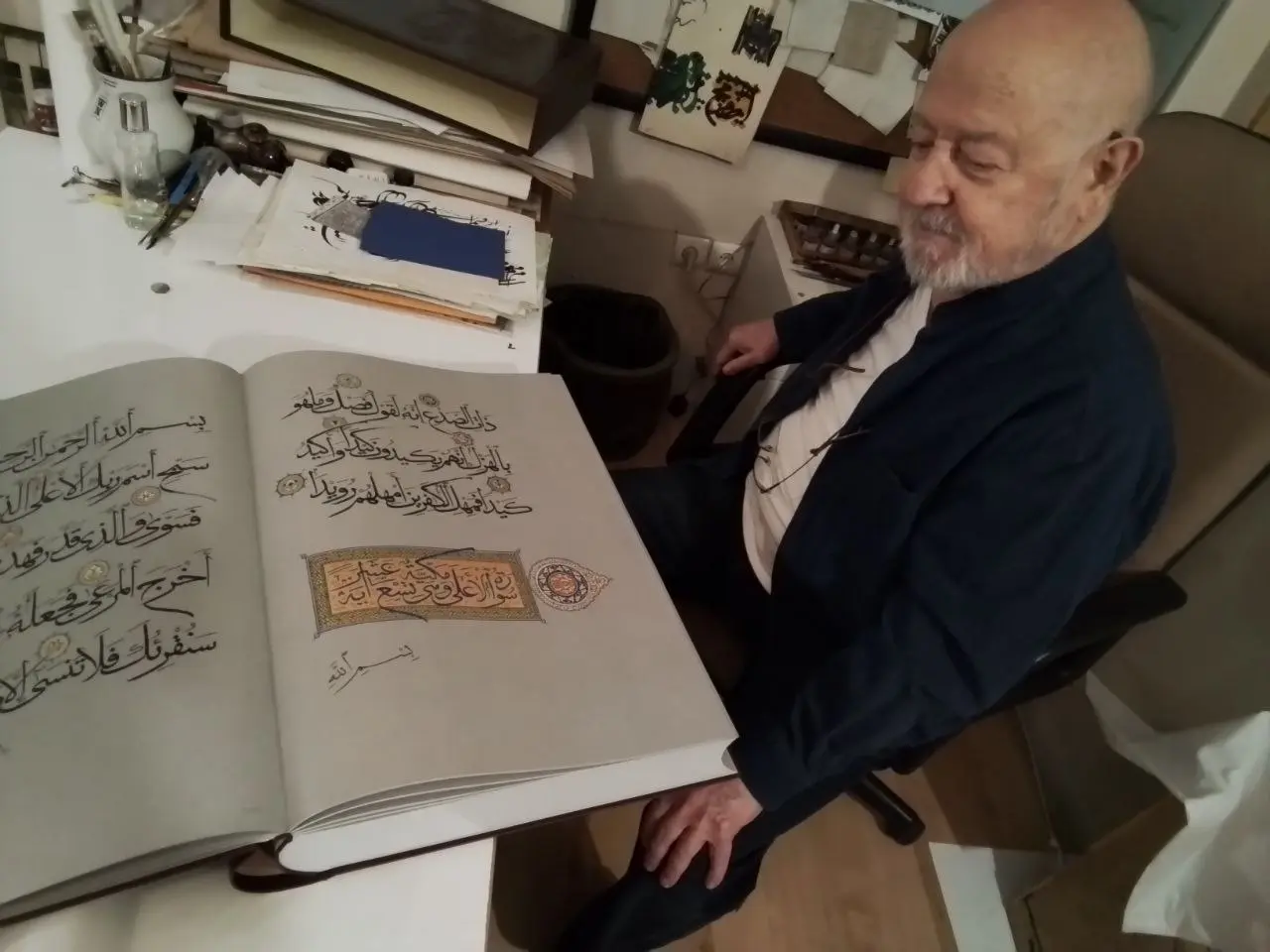
Perhaps the most significant aspect of this manuscript is its relationship with the question of tradition and contemporaneity. Mohammad Ehsai is an artist whose career reflects both a profound command of the principles of classical calligraphy and a pioneering role in shaping a modern visual language based on letters.
What is particularly interesting about these pages, however, is that the artist’s contemporary identity does not necessarily translate into a departure from traditional principles. Rather than dismantling the structure of Muhaqqaq, Ehsai explores its expressive possibilities from within.
In an interview about his Qur’an, he explained that he had chosen Muhaqqaq because of its visual potential and structural discipline. He also emphasised that, in order to preserve the formal and Qur’anic character of the work, he had committed himself to observing the rules of this script, although, as he noted, he had introduced subtle modifications to certain letters and the composition of the lines.
This point is particularly significant. Ehsai does not appear here simply as an artist reproducing a historical model, but as a practitioner who revisits the heritage of calligraphy through an in-depth understanding of its underlying principles.
From this perspective, contemporaneity in his work is expressed less through outward alterations than through his approach to form, his understanding of structure and his awareness of the visual possibilities inherent in the script.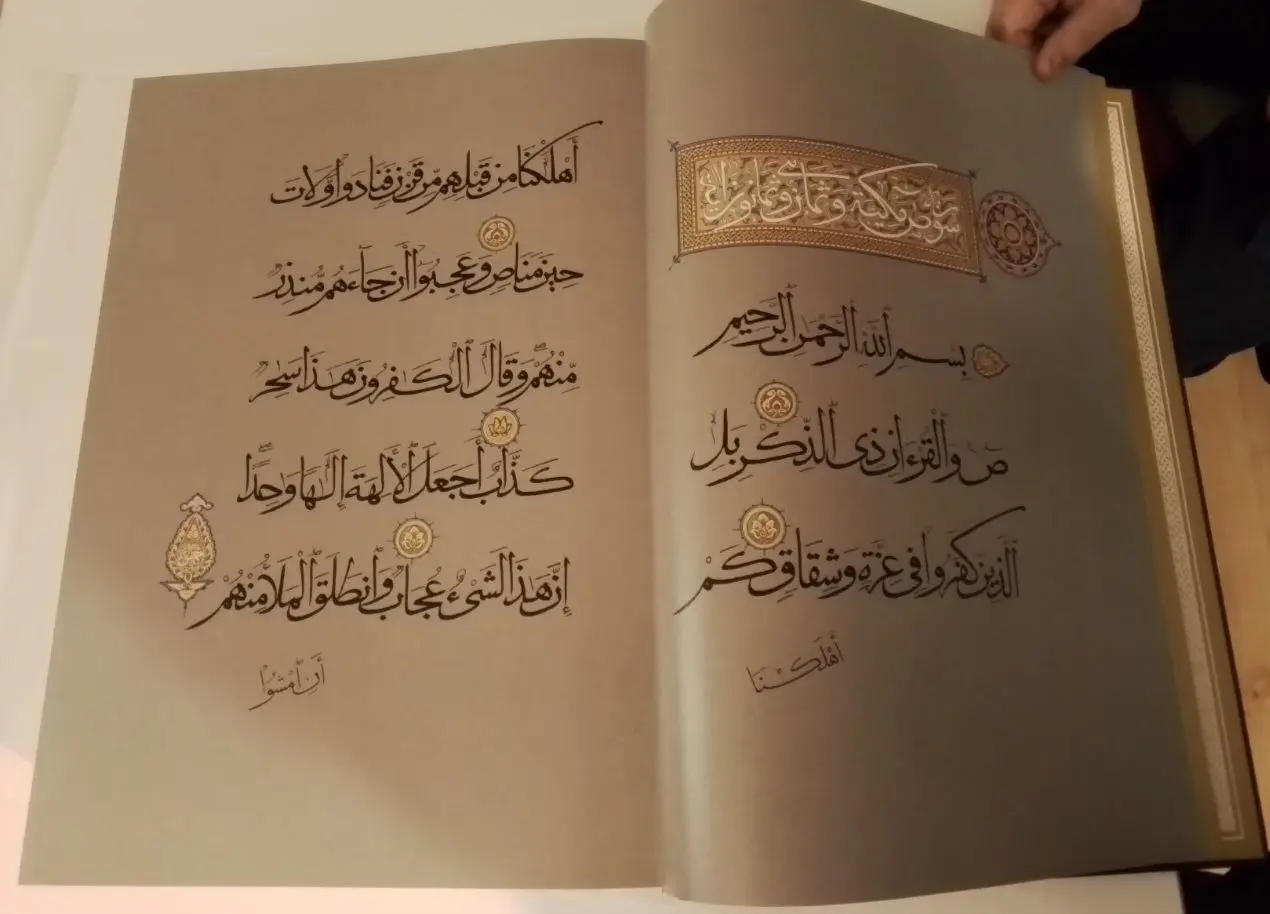
10.Inscriptions in Ta‘liq Script: A Dialogue Between Two Calligraphic Traditions Within a Single Qur’an
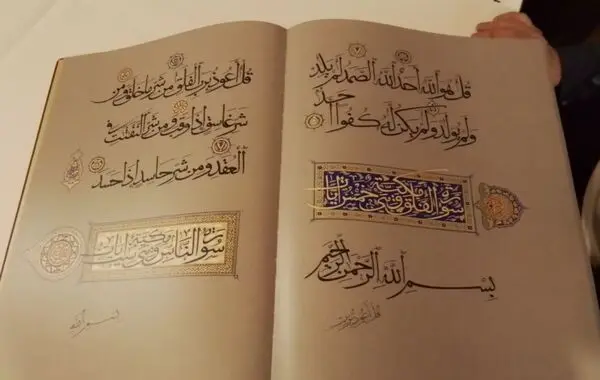
One could genuinely publish an entirely separate book from this Qur’an, devoted exclusively to its inscriptions: a collection of inscriptions, all written by Master Seyyed Mohammad Ehsai in Ta‘liq script.
One of the defining visual characteristics of Master Mohammad Ehsai’s four-volume Qur’an is precisely the presence of these inscriptions. Alongside the main Qur’anic text, they serve both decorative and complementary functions while, through the structural and aesthetic differences of the script, introducing an independent visual quality into the composition of the pages.
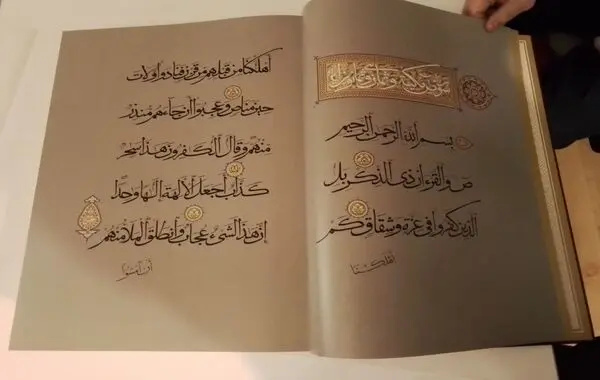
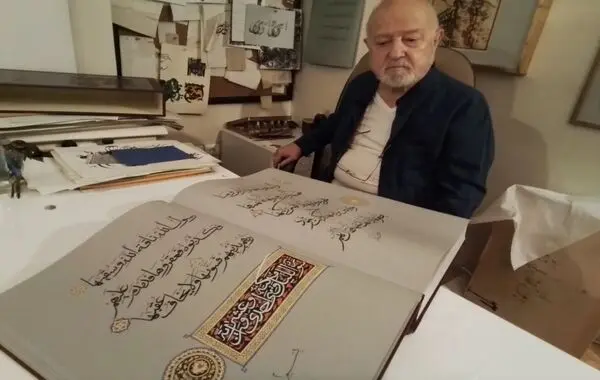
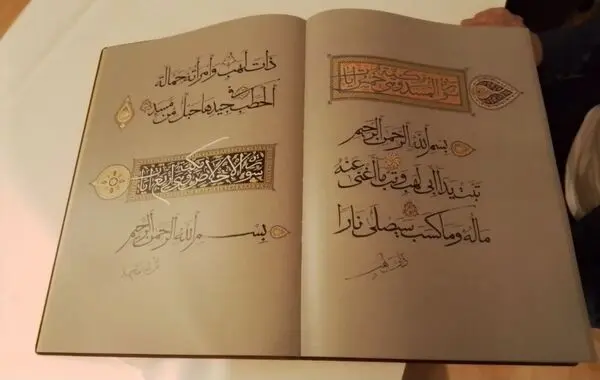
The surah headings, or opening inscriptions, appear against coloured backgrounds and within frames of varying designs. Visually, they function as points of emphasis within the architecture of the pages.
The choice of Ta‘liq for these sections establishes a carefully considered dialogue with the Muhaqqaq script of the main text, creating rhythmic and expressive diversity. It is as though two distinct calligraphic languages have entered into a visual conversation within a unified structure.
Above all, the fluidity and dynamism of Ta‘liq are striking in these inscriptions. Horizontal extensions, carefully measured elongations, curves, the smooth connections between letters, and subtle variations in density and spacing create a composition that combines movement with coherence. While retaining their individual formal identities, the letters connect within a continuous rhythmic sequence, generating a flowing, wave-like movement across the surface of each inscription.
This characteristic is particularly important within the limited, rectangular space of the inscription panels, where the calligrapher must establish a precise balance between the geometric limitations of the frame and the freedom of movement inherent in the letters. The result is not simply an accumulation of words within an enclosed space, but a living organisation of form, movement and proportion.
In Ta‘liq, the softness of connections and horizontal extensions allows for the creation of fluid and continuous compositions. Ehsai has made effective use of these qualities to give the inscriptions a distinctive calligraphic dynamism while preserving their legibility. This dynamism, set alongside the solidity and grandeur of Muhaqqaq, introduces remarkable diversity into the visual language of the manuscript.
The purple backgrounds and golden frames, meanwhile, create colour contrasts and visual distinctions that enhance the legibility and prominence of the calligraphic compositions. It is important to note, however, that these illuminated and decorative elements were produced by other artists and must be distinguished from Ehsai’s own calligraphic work.
The significance of these striking and varied inscriptions within the overall structure of the Qur’an also lies in their creation of a visual hierarchy. Muhaqqaq, with its strength, solidity and carefully measured proportions, forms the principal body of the text, while Ta‘liq, through its fluidity, flexibility and horizontal movement, introduces moments of visual diversity and freedom into this structure.
In this way, Ehsai draws upon the potential of two calligraphic systems to establish a balance between solidity and dynamism. The inscriptions are integral to the visual identity and aesthetic organisation of the Qur’an. They demonstrate that, in this project, calligraphy is not merely a means of conveying the Divine Word; it also becomes an independent language for creating beauty, regulating the rhythm of the page and establishing a relationship between the text and its visual surroundings.
11. The Relationship Between Calligraphy and Illumination: A Dialogue Between Text and Ornament
One of the important dimensions of Qur’anic book arts is the relationship between the calligraphic text and its illuminated ornamentation. In this manuscript, too, illumination and decorative elements, despite their limited dimensions and complementary position, play an important role in completing the visual structure of the pages.
The artistic and illumination work for this Qur’an began in 2019 under the supervision of Majid Fadaeian, with the collaboration of several groups of artists and specialists in the field. The work proceeded with considerable precision and refinement. The contributions of Master Esrafilian and Alireza Akbari Javid can also be seen throughout various sections of the volumes.
One particularly noteworthy aspect is the relationship between the visual weight of the calligraphy and the ornamentation. Calligraphy remains the dominant element, while illumination occupies a supporting and complementary position. In other words, the ornamental elements do not compete with the letters for attention; instead, they serve to complete the visual system and articulate the structure of the Qur’anic pages.
In the art of illumination, the considered use of Islimi (arabesque) and Khataei motifs, medallions, headpieces, abstract floral patterns and geometric compositions provides a framework for decorating the pages. Within the tradition of Islamic book arts, these elements possess not only decorative value but also a geometric order and a profound connection with the visual universe of Islamic art.
In this manuscript, the relationship between text and ornament is likewise established through the preservation of the distinctive identity of each. Calligraphy remains the focal point through its inherent strength, while illumination, with its independent visual language, lends the manuscript additional grandeur and richness.
_ Twelve Years of Transcription: The Story Behind the Creation of a Precious Qur’anic Manuscript
On Wednesday, 21 October 2026, during the unveiling ceremony of the Holy Qur’an at the Tehran Museum of Contemporary Art , Omrallah Farhadi, a renowned Iranian graphic designer and professor, and the project director responsible for printing and production of the manuscript, shared fascinating details about the process through which this work came into being.
Speaking about the duration of the transcription and the origins of the project, Farhadi explained:
“The transcription of the Qur’an by Master Seyyed Mohammad Ehsai took approximately twelve years. The earliest annotation by the Master indicating his intention to transcribe the Holy Qur’an is dated December 2009. On average, he wrote four pages of the Qur’an each day, noting the place and time of writing alongside every page. This has provided us with fascinating documentary records of the manuscript’s creation. For example, we can identify whether a particular page was written at his home, in his studio, or during his travels to Paris, Venice or Vancouver. This is particularly interesting.
“We all know that the Master specialises in Nasta‘liq script. To acquire proficiency in Muhaqqaq, he needed to practise, and part of these ten to twelve years was devoted to that practice. It is certainly interesting to know that, in order to master the intricacies of Muhaqqaq, he first transcribed Surahs Al-Baqarah and Al-Imran as exercises. Once he felt that he had grasped the essence and spirit of the script, he began transcribing the Qur’an itself, and, interestingly, he wrote Surahs Al-Baqarah and Al-Imran all over again. We therefore have an additional practice copy of these two surahs, which remains in the Master’s possession.
“The artistic production of the Qur’an began in 2019 under the supervision of Mr Majid Fadaeian, when the Master entrusted him with substantial portions of the manuscript for all the ornamental and illumination work. Fadaeian, together with three groups of specialists in these fields, carried out the work with remarkable precision and refinement. You can see the artistry of Masters Esrafilian and Alireza Akbari Javid throughout these volumes.
“Andisheh Bartar was responsible for the lithography and printing. Master Shahab Matin-Reza undertook the bookbinding, the Toranj group handled the cover-making, and Mani Nouraei supervised colour management and printing. On 13 August 2023, with the support of Karafarin Bank, I joined the project as its printing and production director. The finest materials were selected for the creation of this book. For instance, we imported gold ink from Germany and Mont Blanc paper to ensure that everything was produced to the highest possible standard.”
This account reveals further dimensions of the manuscript’s significance. A work that took more than a decade to complete is not merely the outcome of manual skill and calligraphic experience. It is also the product of sustained practice, a gradual understanding of a calligraphic tradition, meticulous documentation of the creative process and the collective contribution of specialists in various fields of book arts and luxury book production.
The recording of the time and location at which each page was written also lends the project a documentary and historical dimension. These annotations go beyond practical production records: they preserve traces of the artist’s life throughout the creative journey and make it possible to revisit part of the history behind the making of this Qur’an.
Furthermore, the use of high-quality paper and ink, together with meticulous attention to lithography, printing, bookbinding and cover production, demonstrates that the creation of such a work requires care at every stage of the bookmaking process. In a luxury Qur’anic manuscript, the final quality is not determined by calligraphy alone; every component contributes to preserving the dignity and longevity of the complete work.
_ Mohammad Ehsai: Reviving Muhaqqaq Script and a Longstanding Aspiration to Transcribe the Qur’an
At the conclusion of this article, it is worth returning once again to Master Seyyed Mohammad Ehsai’s own words about this transcription. These remarks were made five years ago in an interview with IranArt, the Iranian art media outlet, and reveal a forty-year aspiration to transcribe the Qur’an and revive Muhaqqaq script.
On 30 November 2021, Master Mohammad Ehsai told IranArt.news :
“I asked the Creator and the Owner of this Revelation to provide the means for this book Himself, and He did. I asked Him to grant me the strength, and that is exactly what happened... For forty years, I have carried the aspiration to transcribe the Noble Qur’an, and I wanted to revive the Muhaqqaq script alongside this important undertaking.
“I have heard that this script is known in Arab countries as Iranian Naskh. When it bears such a name and is recognised as such, it is all the more appropriate for us to feel a sense of responsibility and devote our efforts to it. I was interested in Muhaqqaq, and because nobody seemed to be working with this script, I became eager to explore it and revive it through my own contemporary interpretation.
“Bear in mind that this script already existed, and I was obliged to observe its established rules. For example, I could not add to or take away anything from the style of Yaqut al-Musta'simi, whose work is well established and recognised. Nevertheless, my personal interpretation and my habitual inclination towards painting inevitably had an influence. At the same time, it is self-evident that I was writing the Qur’an for publication and reading. In other words, this was not an entirely personal work or an exercise in art for art’s sake. The Qur’an is a functional book, and others must be able to read it...”
These words perhaps provide the most precise key to understanding the position of this manuscript within Ehsai’s artistic career. On the one hand, he considers himself committed to the principles and historical heritage of Muhaqqaq; on the other, drawing upon his personal experience and painterly sensibility, he seeks to discover new possibilities within this calligraphic tradition.
The value of this transcription lies precisely in this coexistence: respect for tradition, an in-depth understanding of its principles, mastery of the pen, attention to the legibility of the Divine Word and, at the same time, the vision of an artist who recognises letters not merely as written signs, but as living elements endowed with expressive and aesthetic potential.
The Holy Qur’an transcribed by Master Seyyed Mohammad Ehsai represents an endeavour to bring Muhaqqaq script back into the contemporary visual landscape, demonstrating once again that a profound engagement with tradition need not stand in opposition to innovation. Rather, through a creative and informed encounter with its historical foundations, tradition can become a renewed source of artistic expression and enduring beauty.
LEAVE A RELPY