
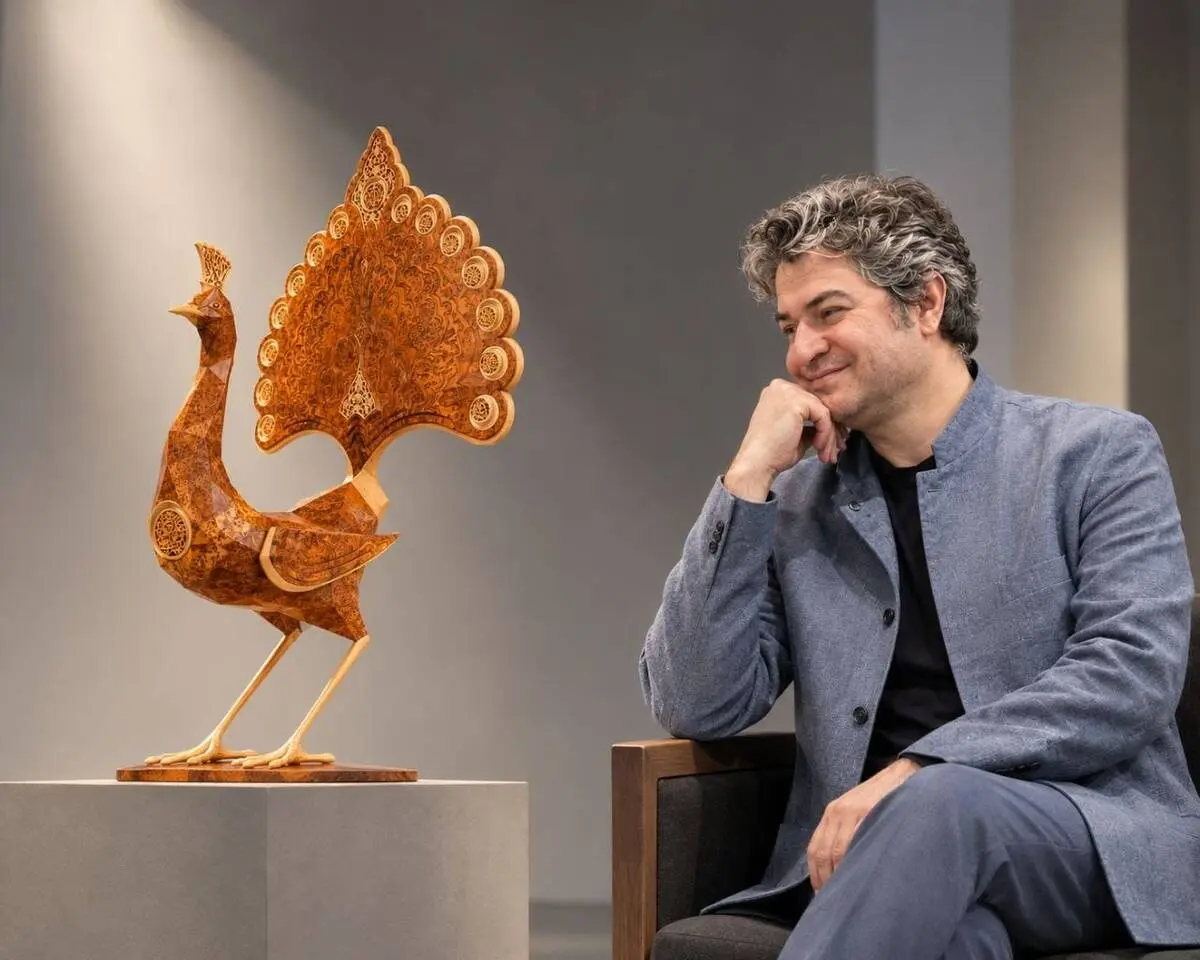
Mohamadali Vadood and The Bird of Truth: Creating Wooden Sculptures on the Foundation of a 7,000-Year Legacy of Woodcraft
Mohamadali Vadood’s wooden sculptures represent a reinterpretation of the heritage of woodcraft through the language of contemporary art. His sculpture The Bird of Truth can be examined within this approach: a work that moves at the intersection of nature, geometry, and artistic imagination
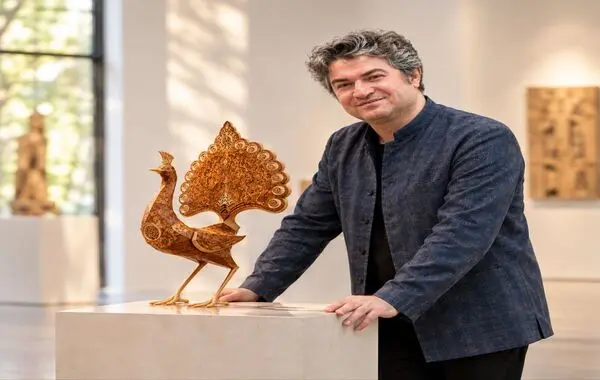
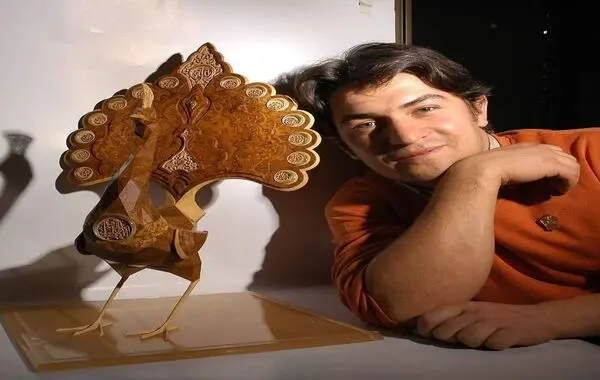
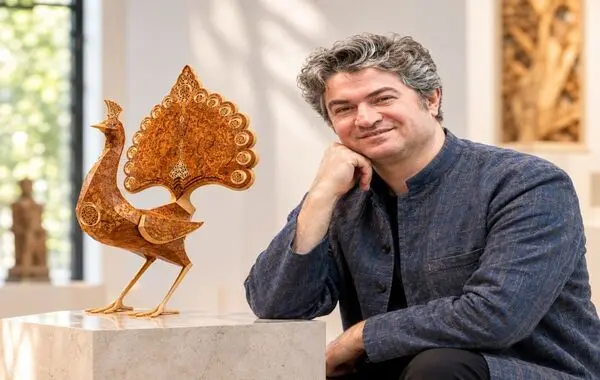
ArtDayMe : We examine a beautiful and thought-provoking bird sculpture by Mohamadali Vadood (Kermanshah, 1978), a prominent figure in Middle Eastern woodcraft. Over the past decade, Vadood has received several distinguished international awards and recognitions, including the International Creative Hands Award (2022), the title of Man of the Year 2022 in India, and the title of Outstanding Master of Woodcraft in Asia and the Pacific (2026).
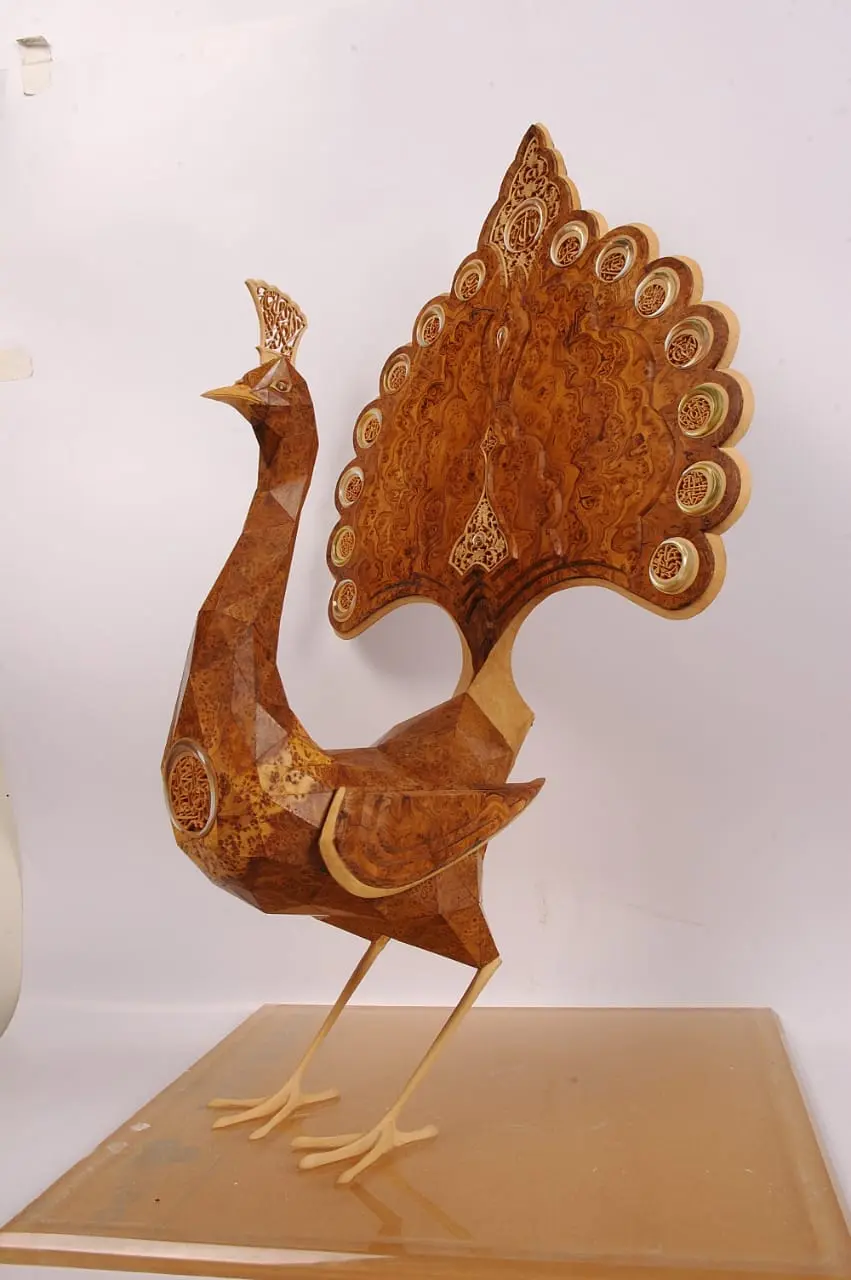
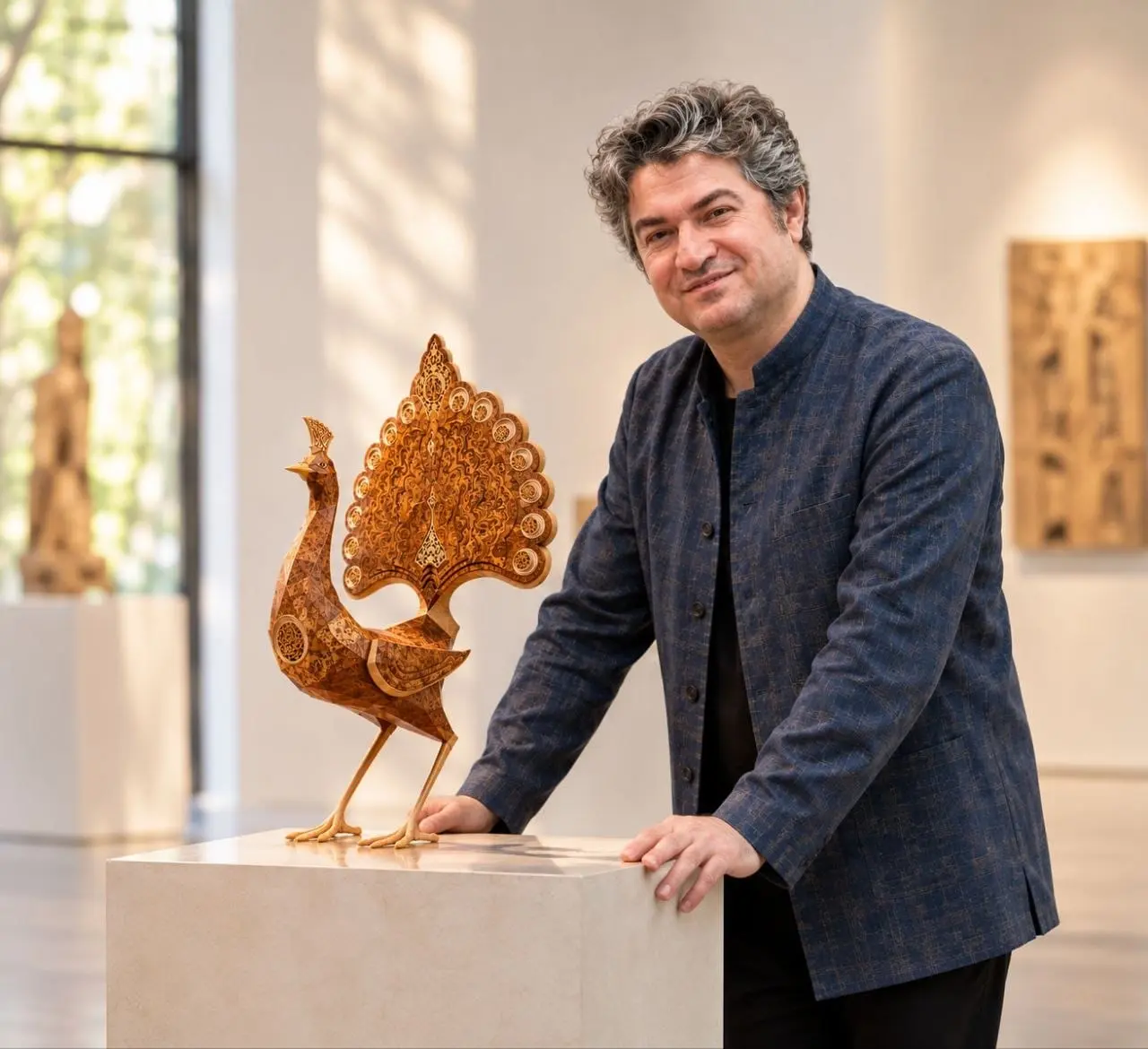
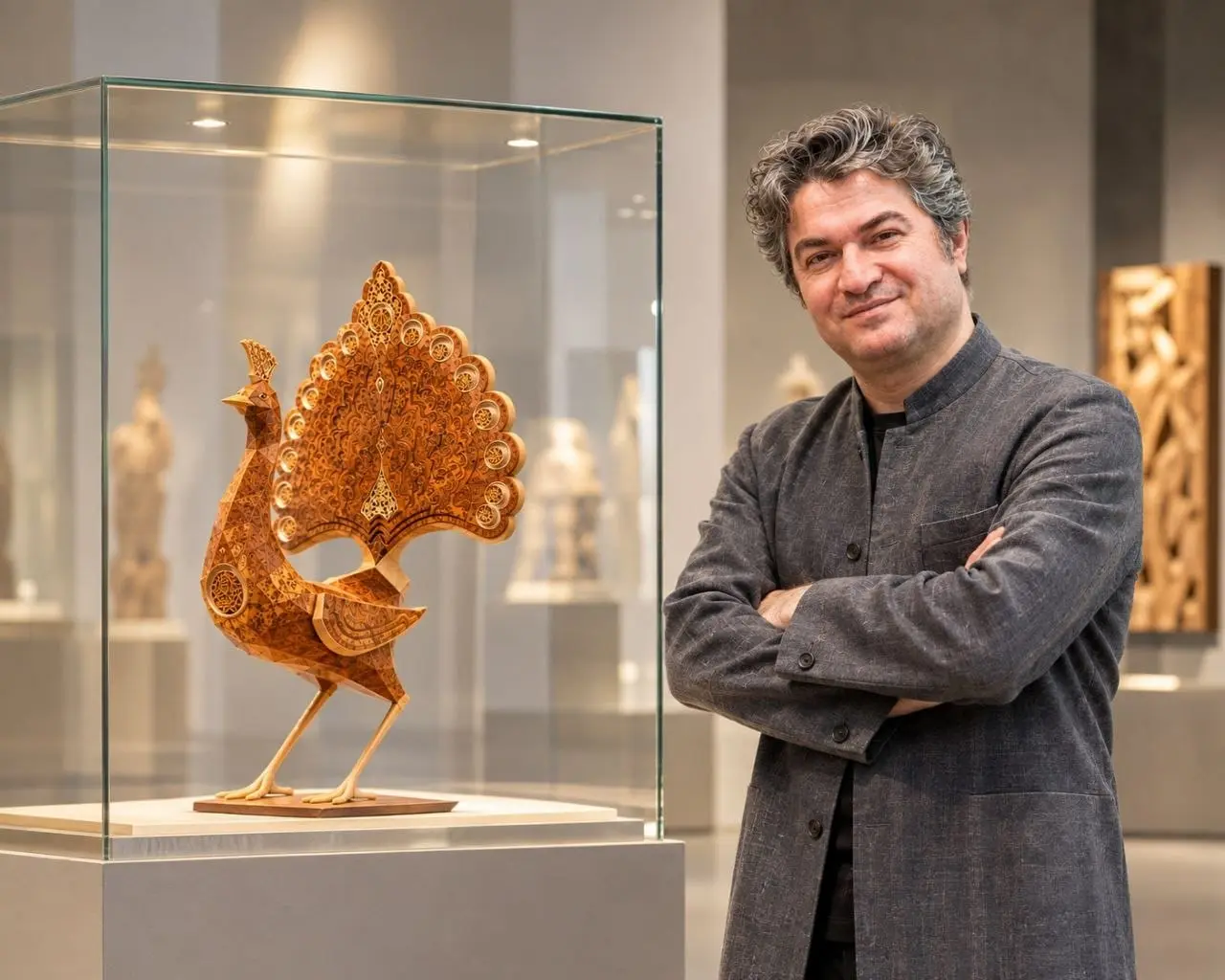
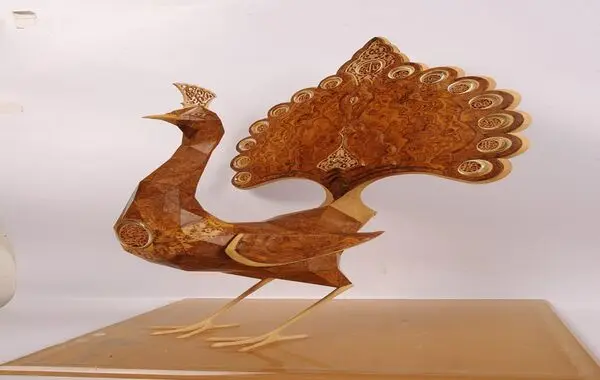
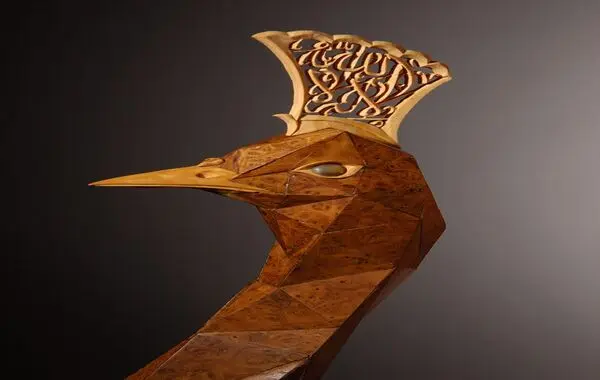
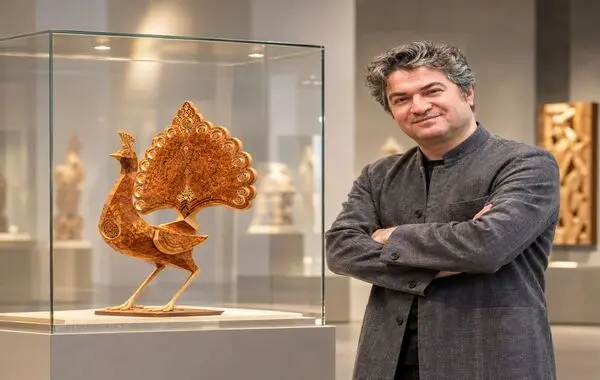
The wooden sculpture The Bird of Truth, created in 2003 as part of the Thirty-One Birds series, stands 40 centimetres tall. It consists of approximately 750 triangular wooden pieces, each four millimetres thick, made from two types of wood: burr olive (Elaeagnus angustifolia) and boxwood.
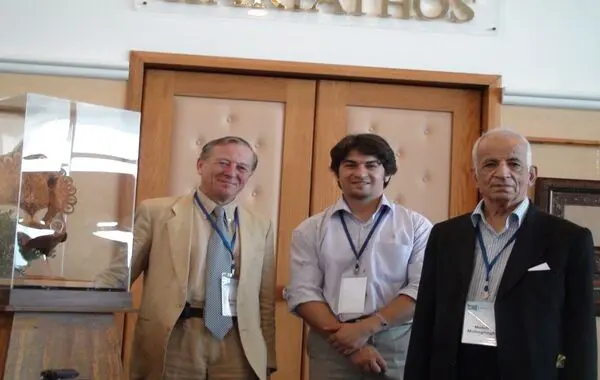
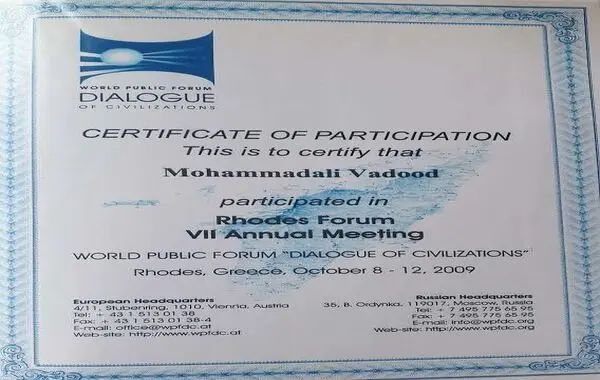
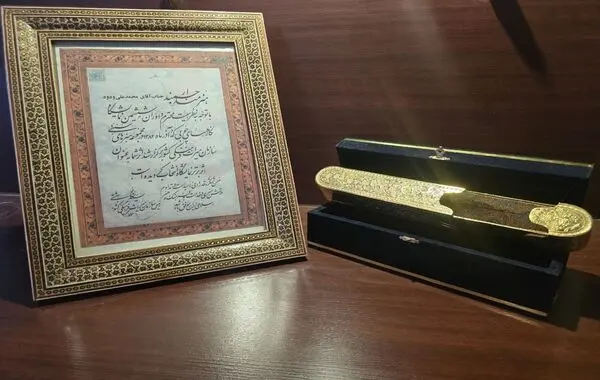
In 2009, The Bird of Truth was exhibited at the World Congress on Dialogue Among Civilizations on the Greek island of Rhodes. The work was selected in the artistic category of the 14th Quran Exhibition in 2005 and received the Golden Pen Case Award at the 8th National Exhibition of Wood Inlay Artworks in 2006. The sculpture is currently held at the Museum of Tabriz University of Art.
-The Bird of Truth by Mohamadali Vadood: A New Reading of Cultural Heritage and Woodcraft
Mohamadali Vadood’s The Bird of Truth is more than a wooden sculpture; it is a narrative of the artist’s encounter with cultural heritage and his exploration of new possibilities within woodcraft.
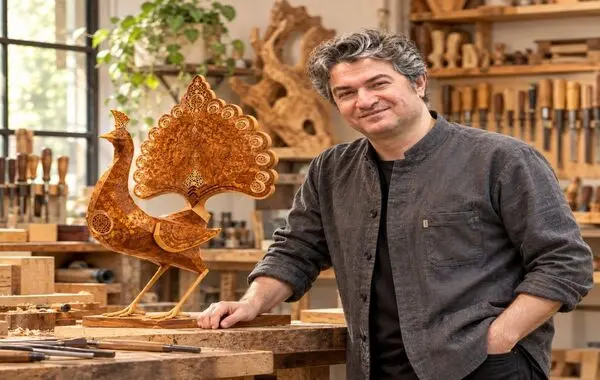
Choosing the peacock as a symbol of beauty and splendour in Iranian and wider Middle Eastern culture, Mohamadali Vadood combines cultural references, calligraphy, and geometric structures to offer a multilayered interpretation of humanity’s relationship with truth and the beliefs embedded in collective memory.
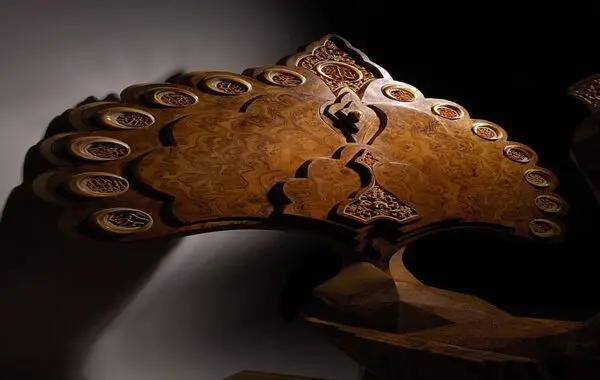
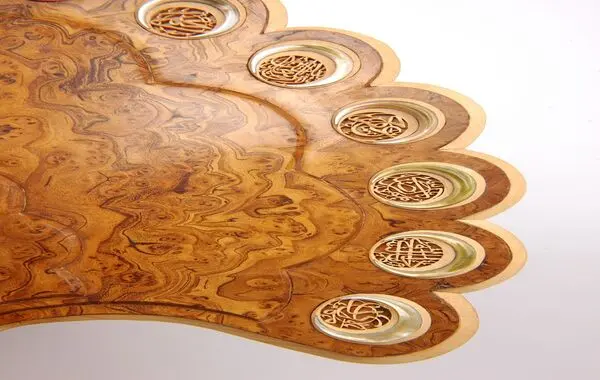
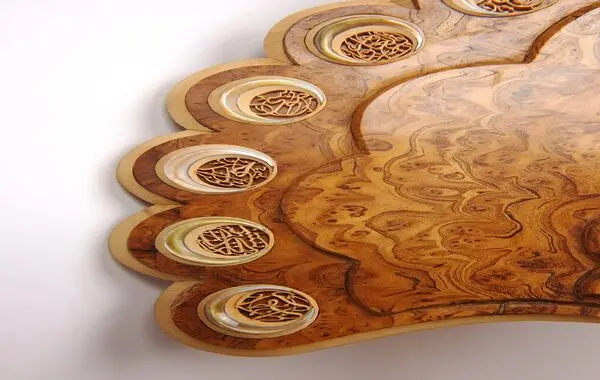
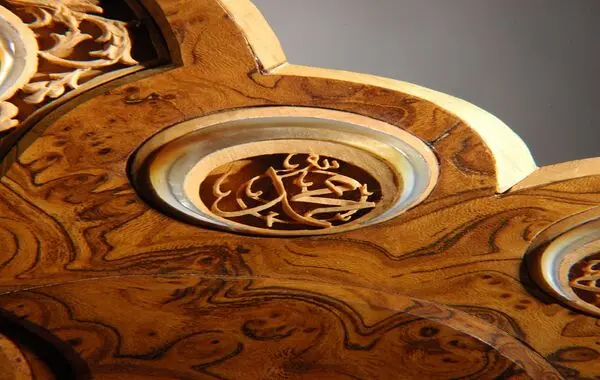
The peacock’s expansive fan of feathers becomes a visual field for displaying the names of the Prophet Muhammad’s family around the name of God, Allah.
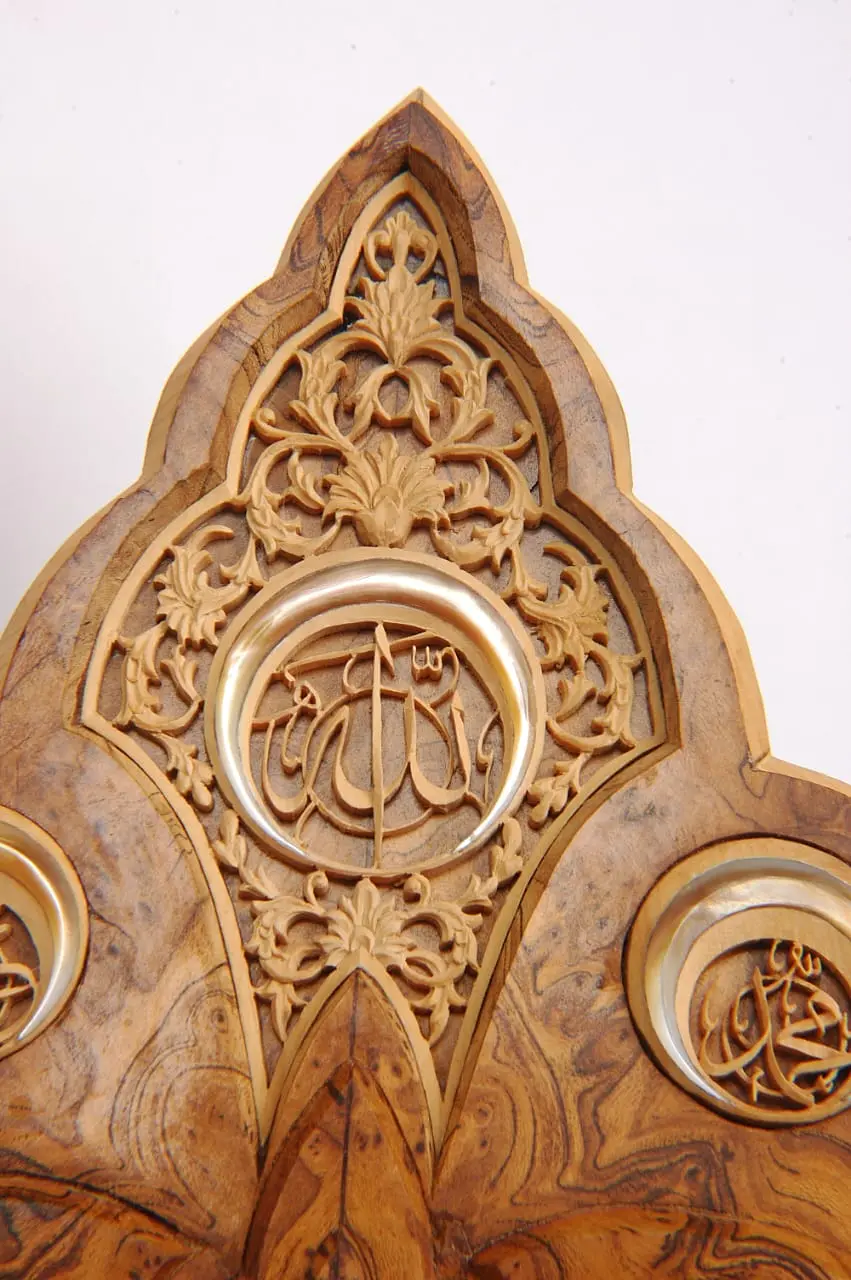
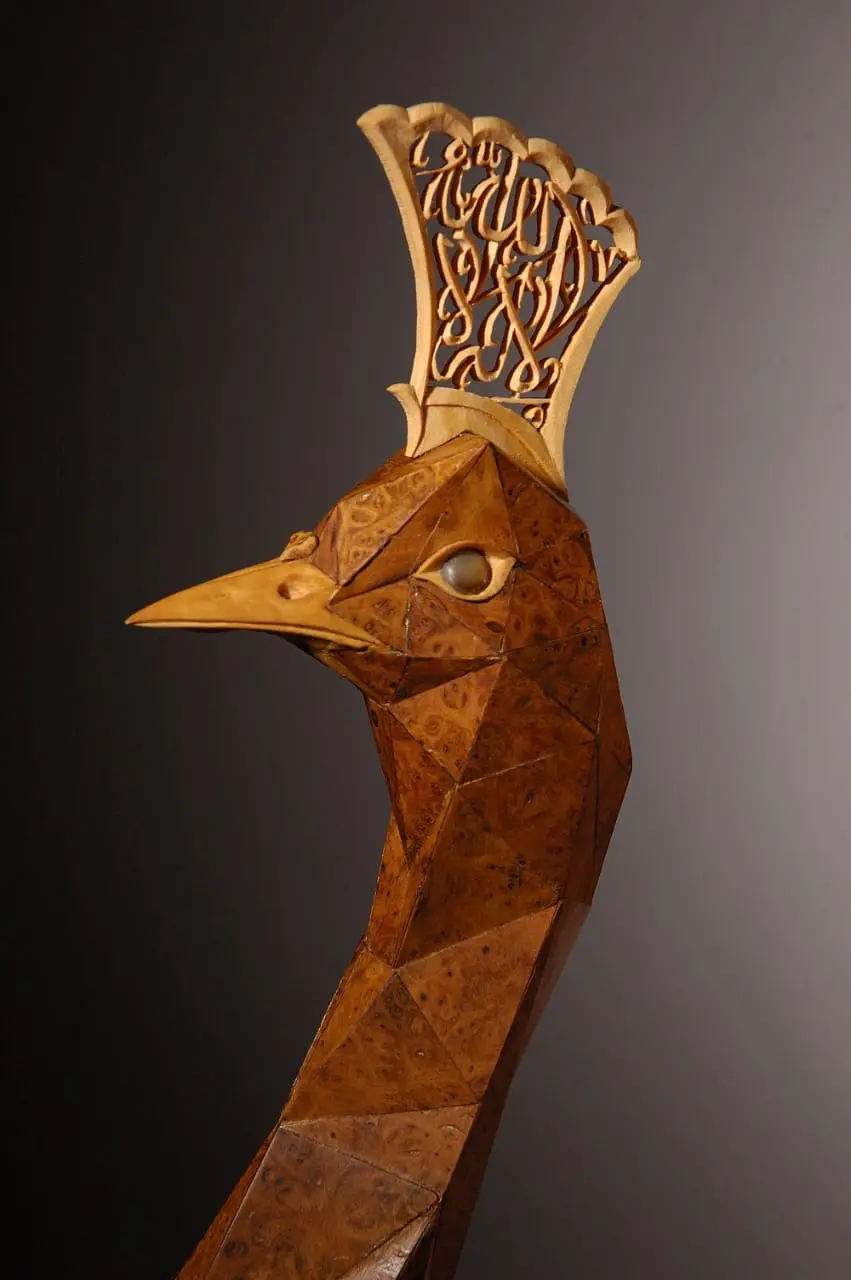
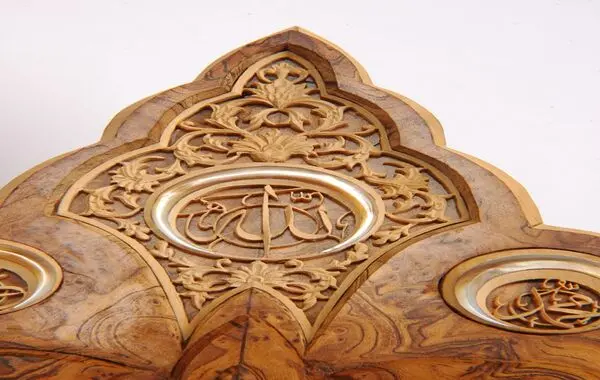
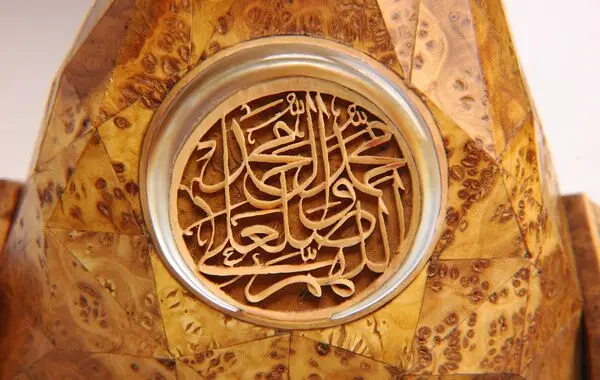
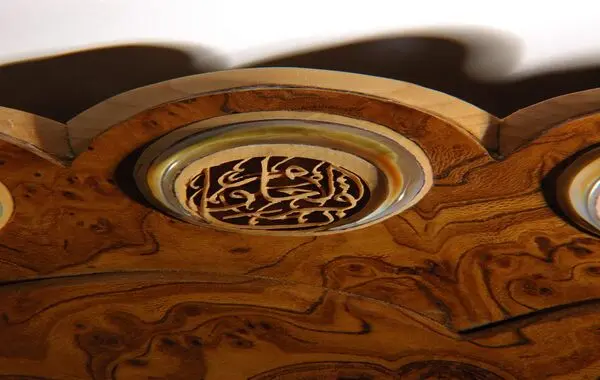
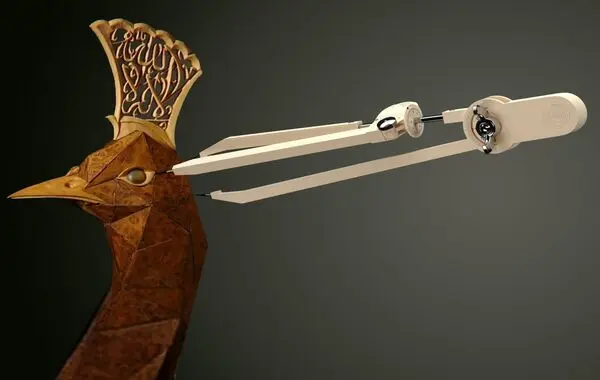
The inscription Allahumma Salli Ala Muhammad wa Aali Muhammad (O God, bless Muhammad and the family of Muhammad) appears on the breast panel, while La Ilaha Illallah (There is no god but God) is placed on the bird’s crown.
Together, these elements form a symbolic structure that invites viewers to contemplate the relationship between truth and the forms and signs human beings have created to represent their beliefs.
From this perspective, The Bird of Truth is not merely a representation of a religious concept, but a platform for a reflective encounter with the nature of symbols and their role in shaping human perception.
Technically, one of the work’s most distinctive features is its use of burr olive wood and Vadood’s innovative technique of layered surface marquetry, a method that makes it possible to preserve and harmoniously distribute the wood’s natural grain patterns across the entire structure, particularly around the sculpture’s neck collar.
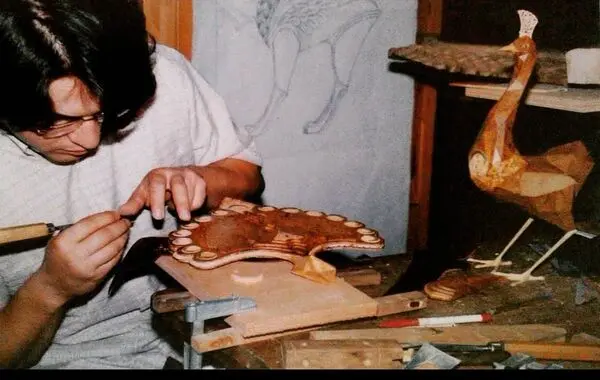
The hollow structure is composed of approximately 750 triangular wooden pieces, each four millimetres thick.
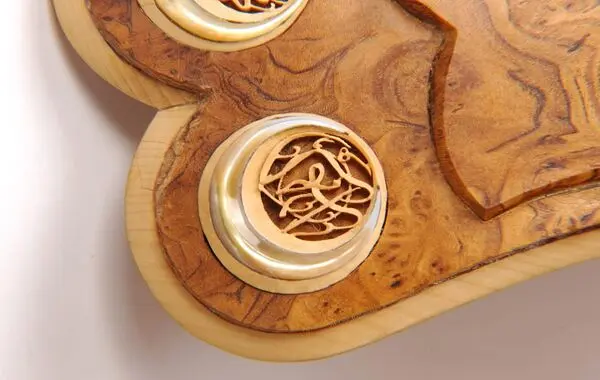
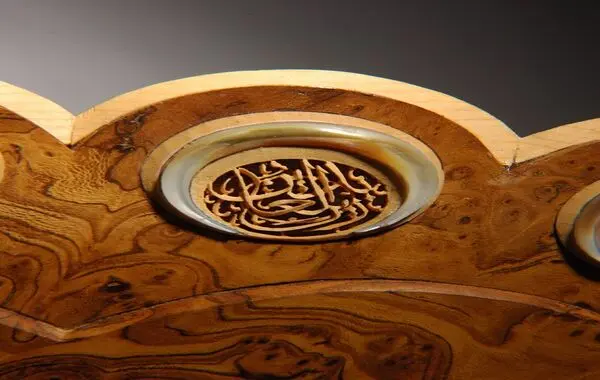
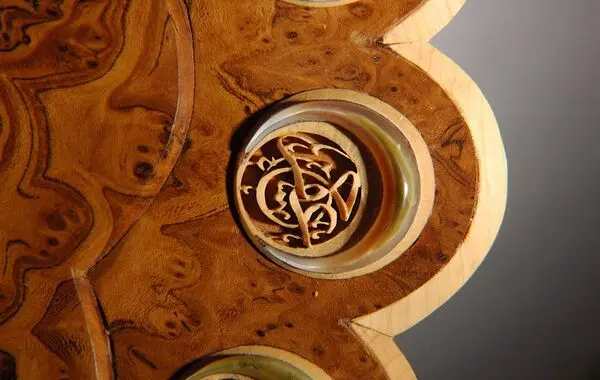
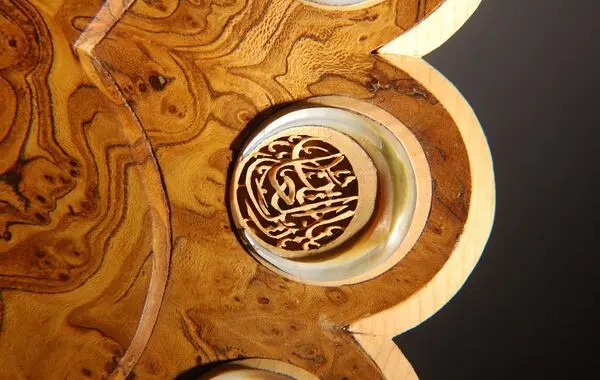
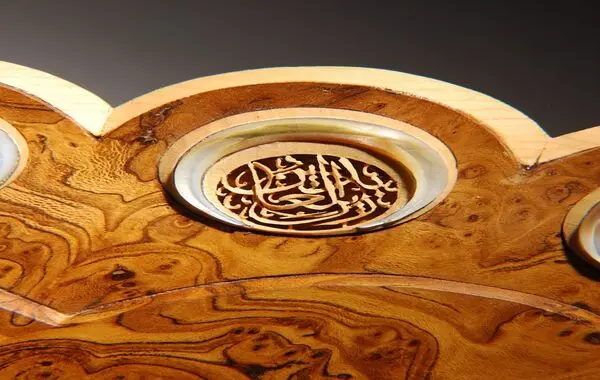
The calligraphic inscriptions, executed in Thuluth script, are made from boxwood using an intricate combination of pierced woodwork and carved relief techniques. Natural shell from the Middle Eastern region has also been used to create the bird’s eye.
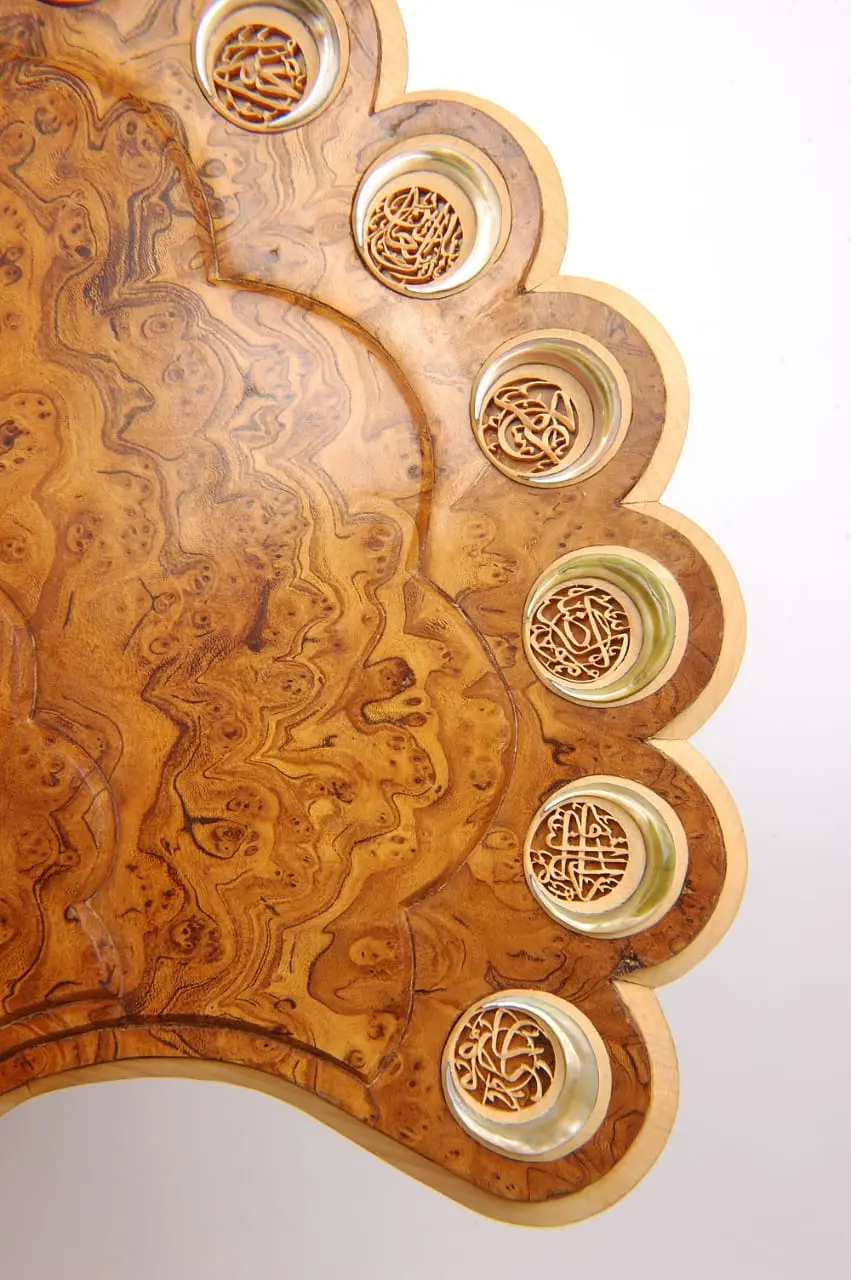
It is worth noting that the calligraphic compositions were specially created for this sculpture by Maryam Norouzi.
- The Invention of the Bermuda Compass (Sagushiyab) by Mohamadali Vadood During the Creation of The Bird of Truth
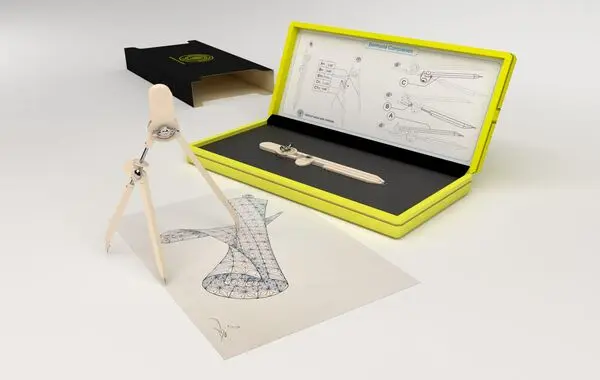
The geometric complexity of this structure gave rise to one of the artist’s independent achievements: the Bermuda Compass.
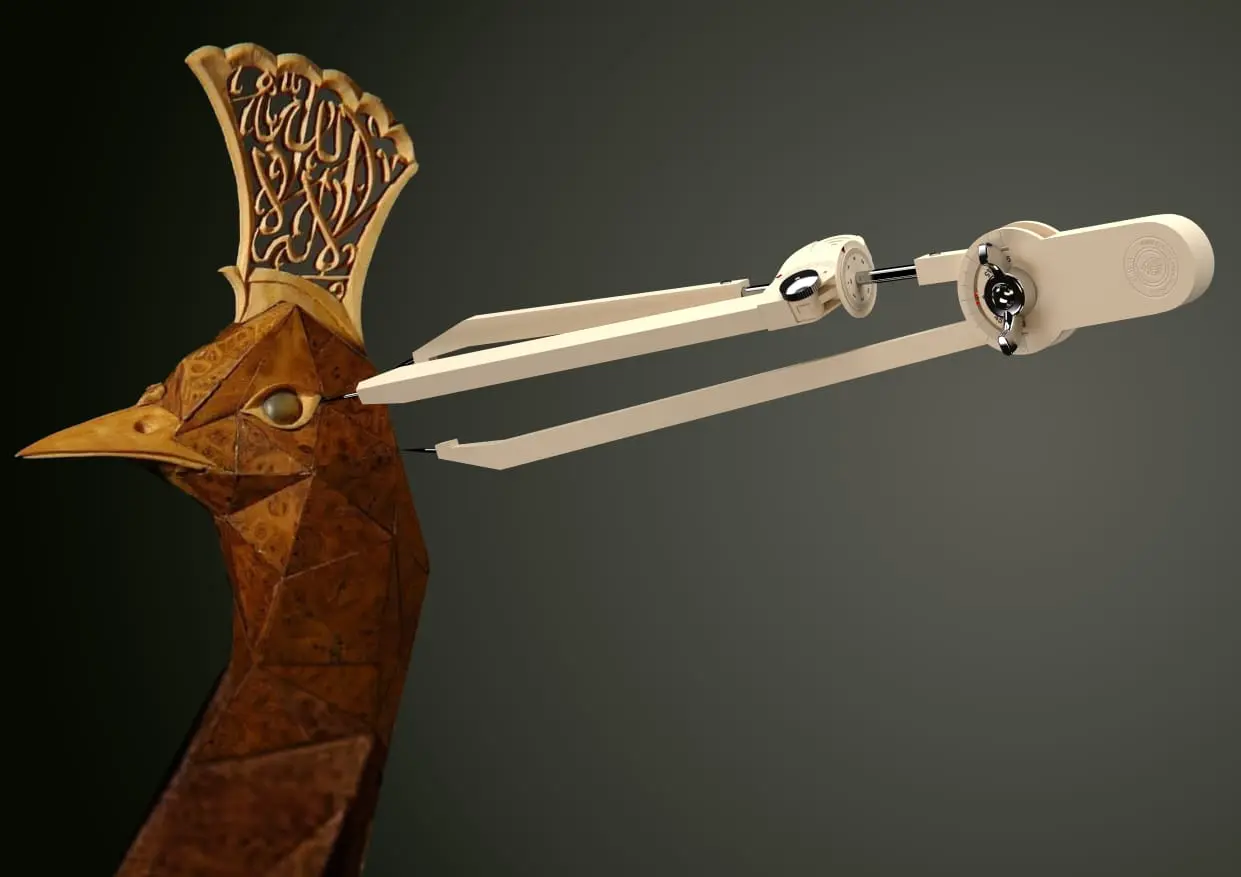
While creating the sculpture, Vadood sought a way to design three-dimensional forms directly through triangular components, without relying on complicated preliminary drawings or demanding geometric calculations. This challenge led him to develop a specialised instrument.
He constructed its first prototype from boxwood and used it in the making of The Bird of Truth.
The instrument was initially presented to the management of the Research Institute of Traditional Arts, where it received official approval. It was subsequently patented under the name Sagushiyab and also obtained scientific certification from the Scientific and Industrial Research Organisation of Iran’s Ministry of Science.
In 2023, the Bermuda Compass, under its commercial name Bermuda Compasses, was selected in the Industrial Design category of the International Kioskedia Academy Awards.
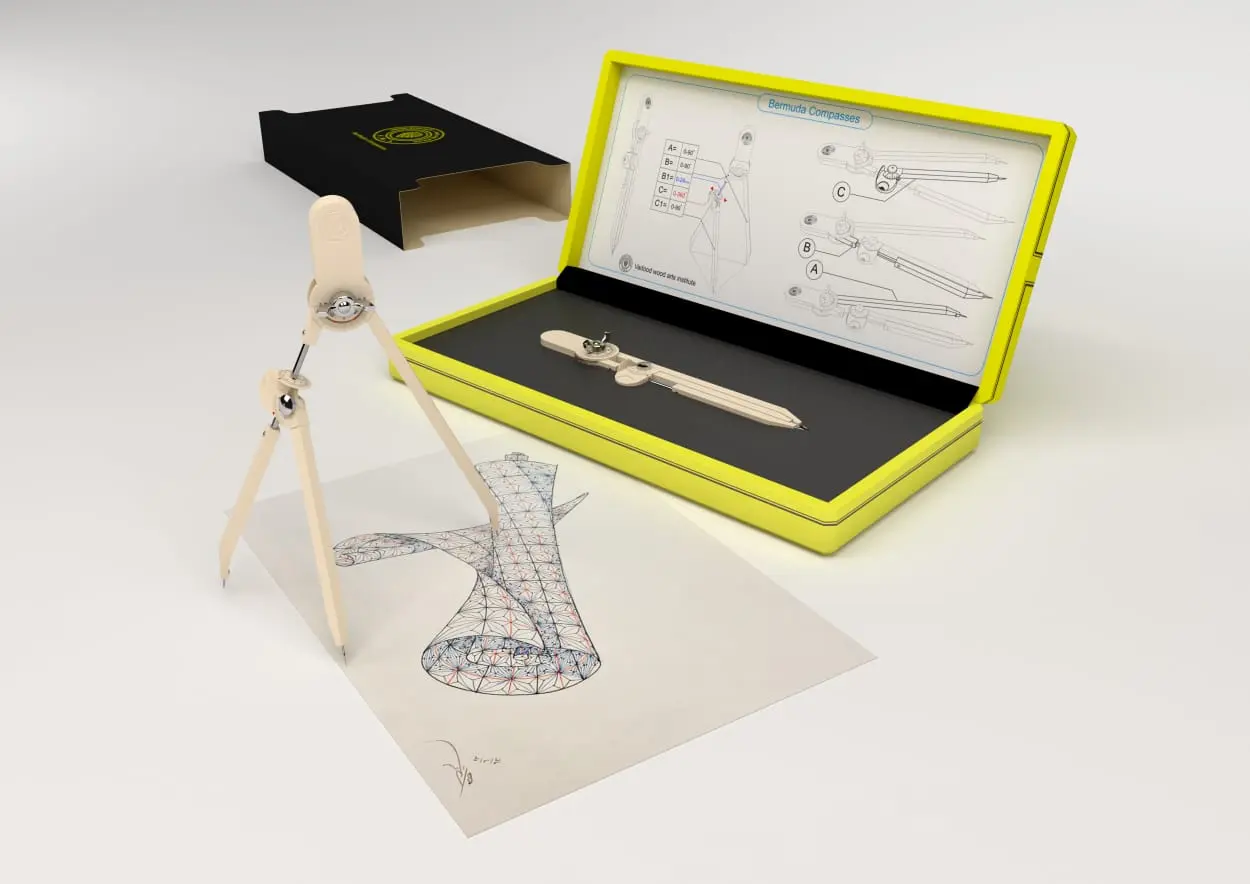
This achievement demonstrates how a practical need arising from artistic experience can lead to innovation in tool design and the advancement of technical knowledge.
- Mohamadali Vadood’s Artistic Worldview and the Thirty-One Birds Sculpture Collection
The significance of The Bird of Truth, however, is not limited to its individual characteristics. The work is the first bird in Vadood’s long-term project, Thirty-One Birds, which the artist describes as an inward journey grounded in the essence of Iran’s national and traditional arts.
The intellectual foundation of this project rests on a three-stage philosophy: theoretical practice, practical practice, and finally, imaginative practice.
In theoretical practice, the artist develops the ability to compare and recognise authenticity through extensive observation and the study of the works of previous generations.
In practical practice, by meticulously recreating earlier works and experiencing traditional techniques firsthand, the artist gains an intimate understanding of the logic of construction and the methods of artistic creation.
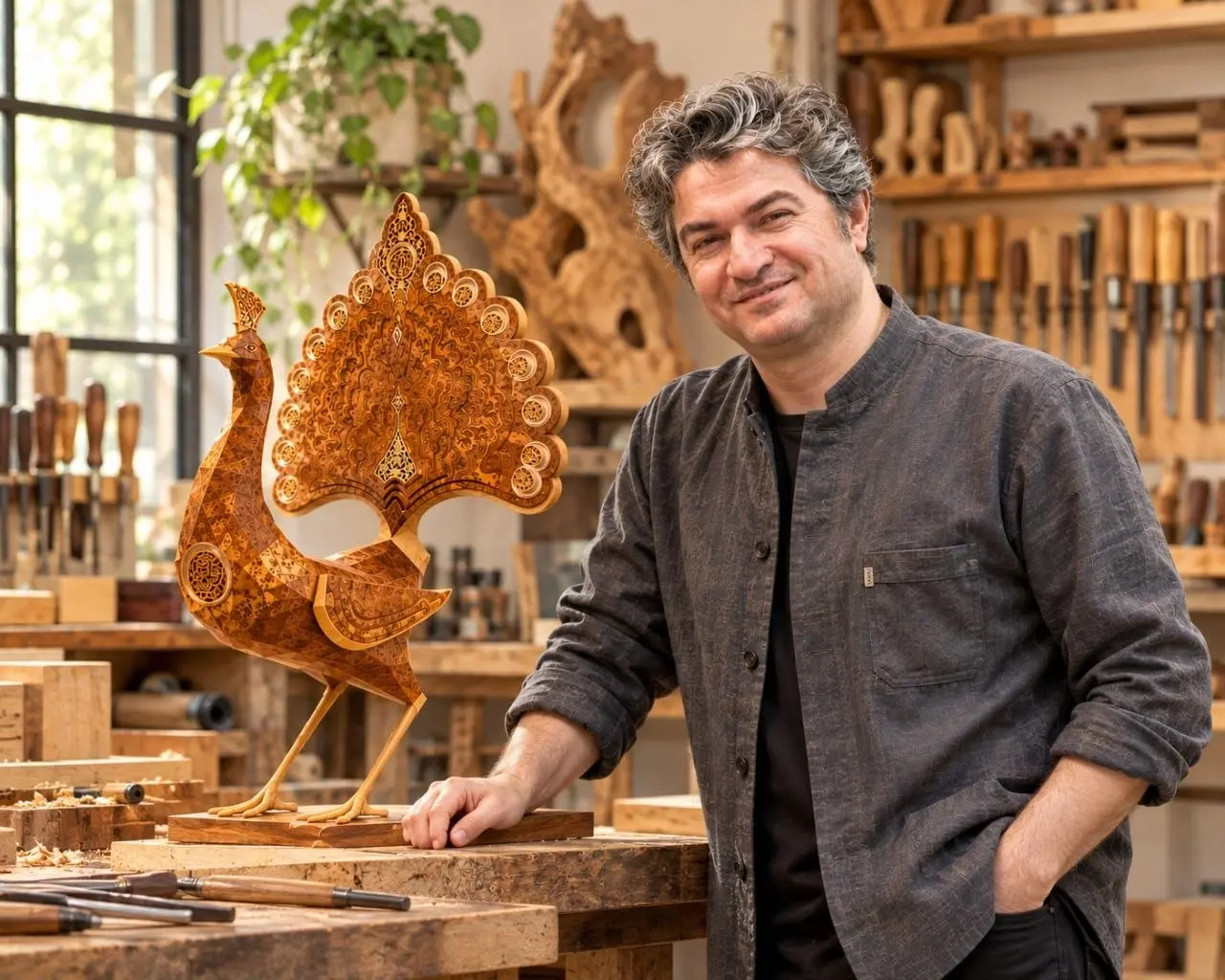
Finally, in imaginative practice, accumulated knowledge and experience are transformed into the power of imagination. At this stage, by understanding the possibilities and limitations of previously explored methods, the artist discovers overlooked opportunities and develops an individual artistic language.
In Vadood’s worldview, tradition is not an ultimate destination. Rather, it is a living and productive body of knowledge, and creatively moving beyond it is impossible without first understanding it deeply.
Drawing upon the 7,000-year heritage of woodcraft, he seeks to reach the outermost boundaries of what has already been achieved, thereby creating the conditions for new artistic experiences to emerge.
This approach transforms Thirty-One Birds into an endeavour to advance contemporary art through the foundations of national and traditional artistic heritage.
Perhaps Vadood’s artistic philosophy can be summarised in the following statement:
“To achieve what has never been experienced, we must draw upon everything that has been experienced and everything that continues to be experienced. In this way, what has never been experienced may come into being.”
- Five Aesthetic Highlights of Mohamadali Vadood’s Wooden Sculpture The Bird of Truth
1. Geometric Abstraction and the Transformation of Natural Forms
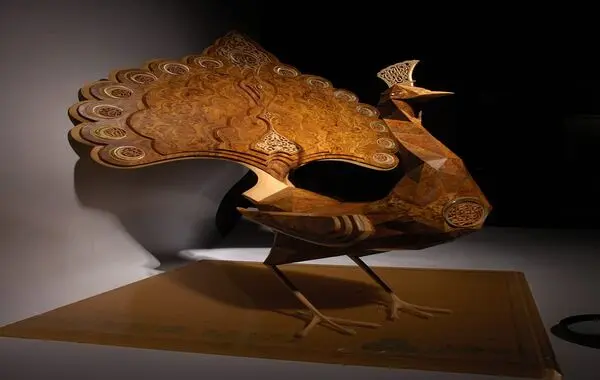
The first striking feature of Mohamadali Vadood’s The Bird of Truth is its departure from naturalistic representation in favour of a geometric and imaginative interpretation of the bird’s figure.
Rather than imitating the peacock’s anatomy, the artist has organised its body, neck, and head through polygonal surfaces and angular planes. This approach brings the sculpture closer to a structure situated between figurative sculpture and abstract geometry. It is as though the bird has been assembled from individual components, yet despite its geometric solidity, it retains the fluidity and dignity of a living creature.
The elongated neck and upward orientation of the head further lend the composition a dynamic quality and a sense of elevation.
2. The Peacock’s Tail as the Central Visual Focus
The most significant visual focal point of the work is the magnificent, fan-shaped expanse of the peacock’s tail. This element disrupts the bird’s conventional bodily proportions and becomes an independent surface for expressing decorative and conceptual possibilities.
Through the repetition of circular forms along the outer edges of the tail, combined with calligraphic motifs and pierced inscriptions, Mohamadali Vadood creates a radial and rhythmic arrangement that guides the viewer’s gaze. The eye moves from the surrounding area towards the centre and then follows the ornamental patterns along the periphery.
The contrast between the relatively dense centre and the orderly, repetitive outer sections establishes a balance between unity and multiplicity.
3. The Aesthetics of Material, Colour, and Natural Texture
From the perspective of colour and material, burr olive wood is one of the principal elements shaping the aesthetics of Mohamadali Vadood’s The Bird of Truth.
Its warm shades of brown, honey, and amber, together with the wood’s natural grain patterns and intricate swirls, create a distinctive organic visual richness.
Through his innovative layered surface marquetry technique and the use of approximately 750 triangular wooden pieces, the artist has created a structure in which the natural texture of the material enters into dialogue with human-designed geometry.
A subtle yet important aspect is that, despite their orderly and carefully calculated appearance, the geometric components retain the natural variations of the wood’s colours and grain. Consequently, the sculpture’s surface moves between designed order and the beautiful irregularity of nature.
4. Calligraphy as an Integral Element of Form and Visual Identity
In Mohamadali Vadood’s The Bird of Truth, calligraphy becomes a formative element of the sculpture’s structure and visual identity.
The placement of the names of the Prophet Muhammad’s family across the expansive tail, the inscription Allahumma Salli Ala Muhammad wa Aali Muhammad on the breast panel, and La Ilaha Illallah on the bird’s crown establish a connection between woodcraft, calligraphy, and a system of religious symbols.
Executed in Thuluth script, using boxwood and pierced relief techniques, these inscriptions create an opportunity to experience surface, depth, and negative space simultaneously.
Particularly in the pierced sections, empty space becomes as important as the material itself in shaping the work’s aesthetic character. Meaning seems to emerge not only through the presence of the forms, but also through the spaces between the lines.
5. The Interplay of Nature, Geometry, and the Sacred
At the level of meaning and symbolism, The Bird of Truth emerges from the intersection of three realms: nature, geometry, and the sacred.
The peacock, with its established symbolic significance in Iranian and wider Middle Eastern culture, embodies concepts such as beauty, splendour, and perfection. Mohamadali Vadood, however, reinterprets this symbol through his personal artistic language, transforming it into a platform for exploring the relationship between material beauty and spiritual truth.
The contrast between the bird’s multifaceted, relatively rigid structure and the delicacy of its pierced patterns, together with the complexity of the wood’s natural grain, gives the work a dual character: structural solidity and expressive refinement.
The aesthetic value of this sculpture lies precisely in this coexistence, where the heritage of marquetry, woodcarving, and calligraphy moves beyond the boundaries of traditional handicrafts to become an independent language of contemporary artistic expression.
- Mohamadali Vadood’s Artwork Prices
Over the years, Mohamadali Vadood has succeeded in developing an expanding audience and market for wood art through a distinctive and recognisable artistic language. Today, evidence of this trajectory can be found both in private collections and in auction records.
At the first Kavian Auction in 2026, a work measuring 30 × 60 centimetres, executed using the Naqshbandi technique and selected in the Fine Arts category of Italy’s A' Design Award, achieved a hammer price of $8,800.
Meanwhile, the wooden sculpture The Celestial Bird, from the Thirty-One Birds series, created in collaboration with Shadi Habib and awarded the Bronze Medal among the Best Designs of 2019 in Italy, was sold at the 25th Tehran Auction in 2026 for 1.65 billion Iranian tomans, equivalent to approximately $9,700.
These figures, alongside Vadood’s record of receiving the International Creative Hands Award, the title of Man of the Year 2022 at India's International Crafts Award, the title of Outstanding Master of Woodcraft in Asia and the Pacific in 2026, several distinctions and selections at Italy’s A' Design Award and the Kioskedia Awards, lifetime membership in the World Design Consortium, membership in the Arts Council of the National Elites Foundation and the Traditional Arts Specialised Group of the Academy of Arts, as well as the First-Degree National Arts Medal, contribute to the symbolic capital of the artistic brand he has built over the years.
Another aspect of this brand’s significance can be seen in the institutional and private destinations of his works following their creation.
His works are held in the digital collection of Italy’s MOOD Museum, the Museum of the Research Institute of National Arts under Iran’s Ministry of Cultural Heritage, and the Museum of Tabriz University of Art. They are also represented in private collections belonging to Professor Giv Sharifi; Engineer Abbasi and Abbasi Gallery; Engineer Hassan Golchinpour and Mesnegar Gallery; Engineer Esmail Ghods; Dr Farshid Bozorgi; Engineer Meysam Moradi-Manesh; and others.
From a market perspective, what makes Mohamadali Vadood’s position particularly significant is the simultaneous development of a distinctive artistic language, professional recognition, international credentials, collector interest, and an established auction sales record.
Together, these elements have helped transform an artist’s personal signature into a recognisable artistic brand within the art market.
LEAVE A RELPY