
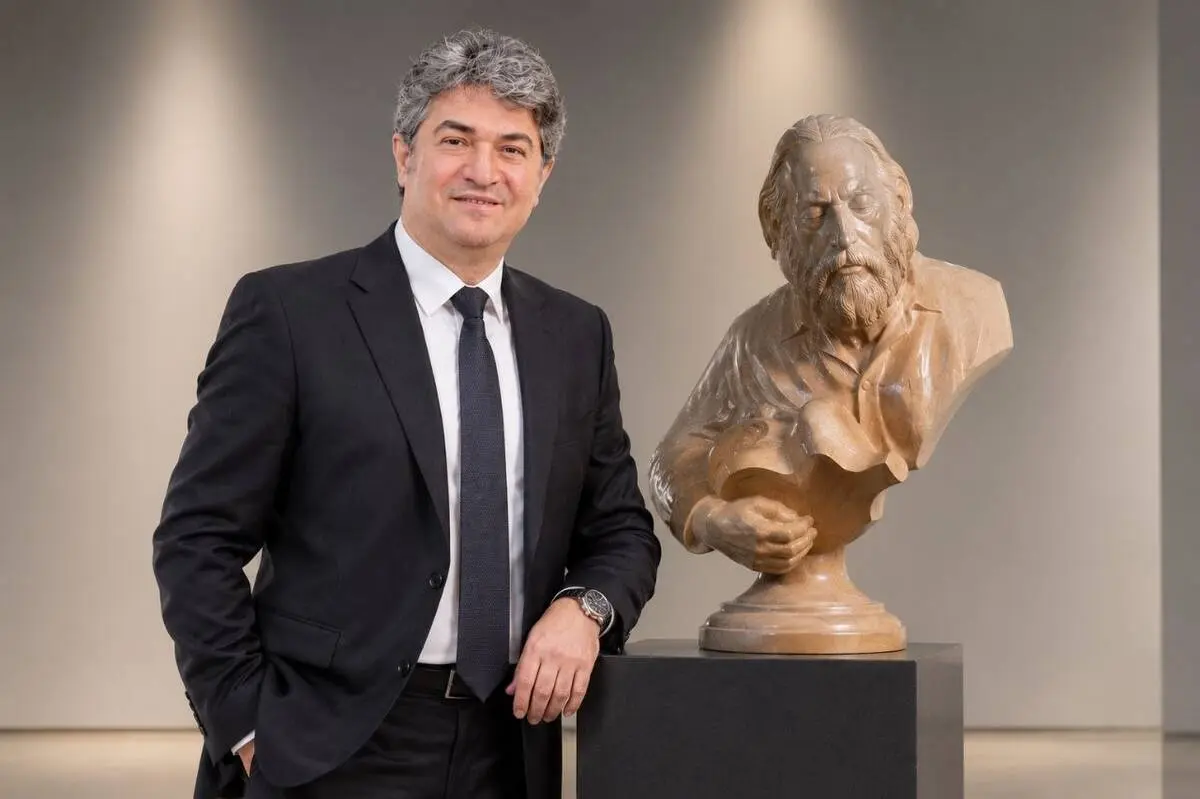
Mohamadali Vadood and His Sculpture The Sound of Silence: The Narrative of Absence in Music and Sculpture
Mohamadali Vadood’s wooden sculpture The Sound of Silence reminds us that restricting art does not necessarily mean silencing creativity. At times, art creates its most eloquent narrative precisely through absence.
ArtDayMe : We introduce a beautiful, conceptually driven sculpture with a critical dimension by Mohamadali Vadood (born 1978, Kermanshah), a prominent figure in Middle Eastern wood art who has received several prestigious international awards over the past decade. His distinctions include the International Creative Hands Award and the title of Man of the Year 2022 in India, both in 2022, as well as the title of Asia-Pacific Top Master in Wood Art in 2026.
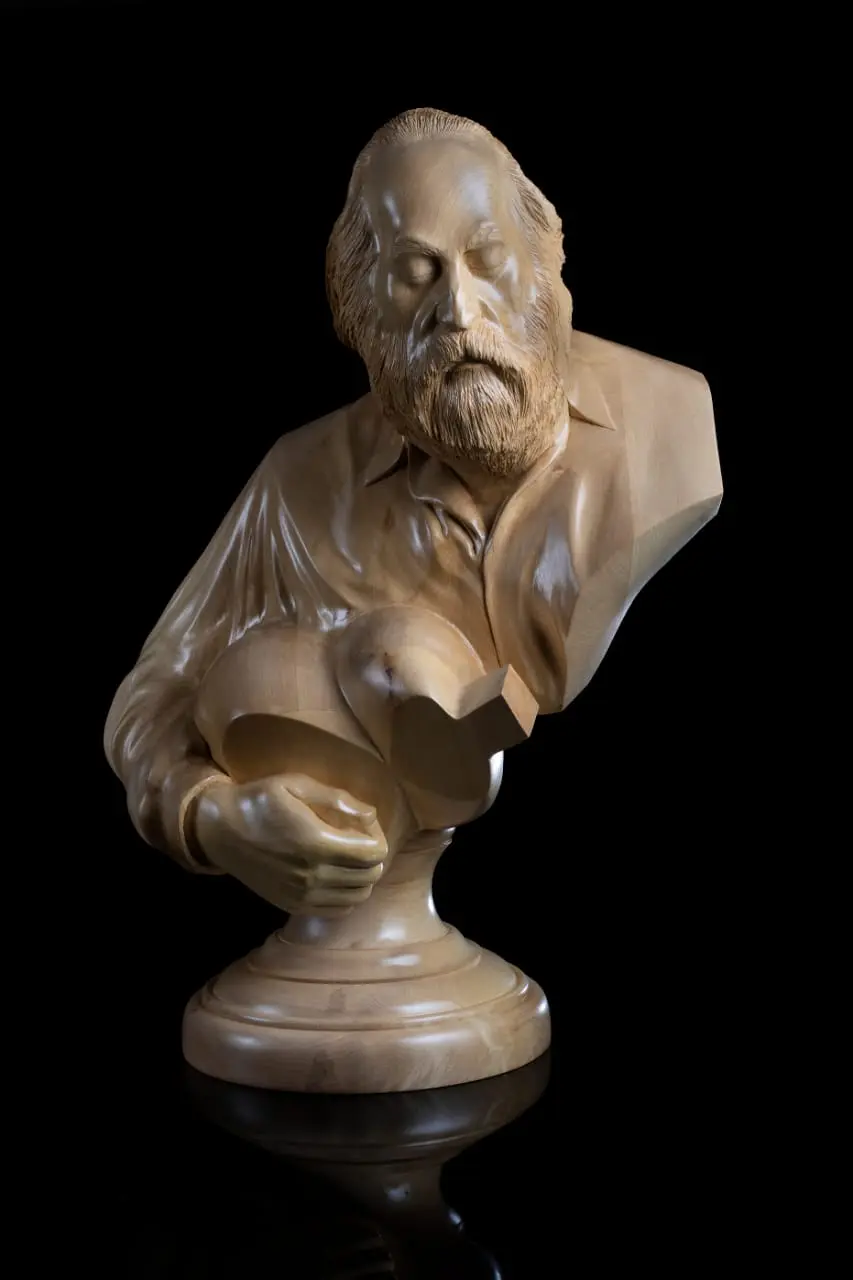
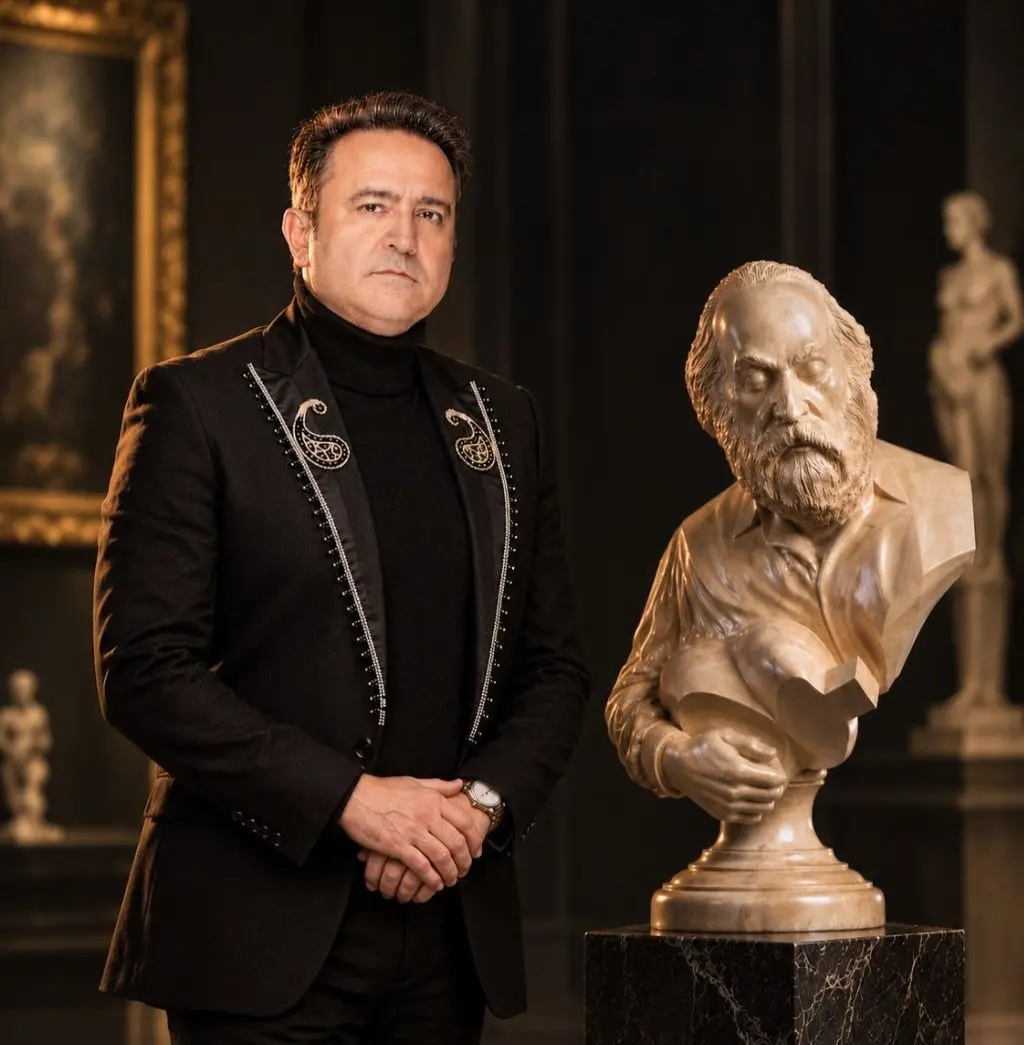
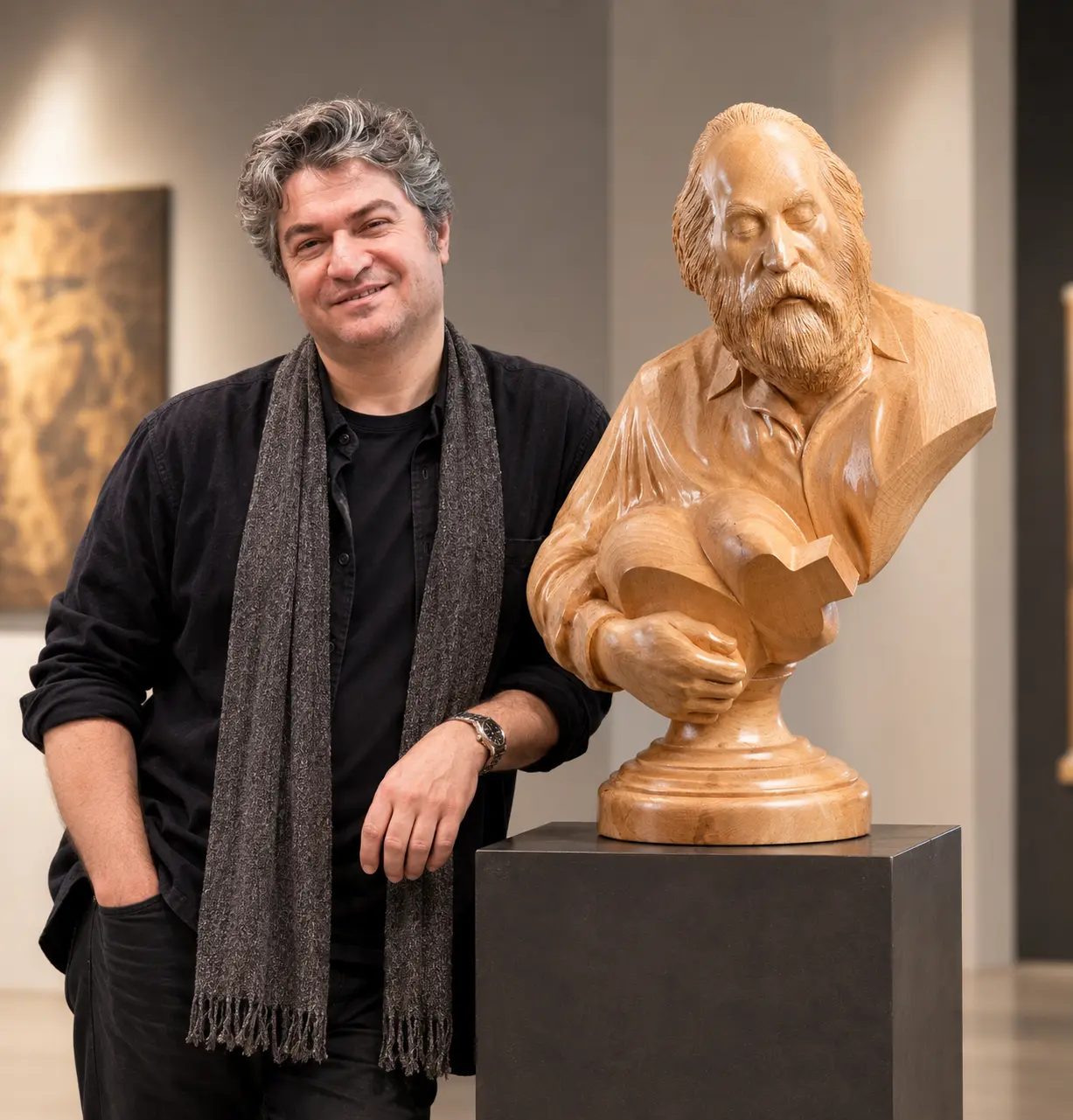
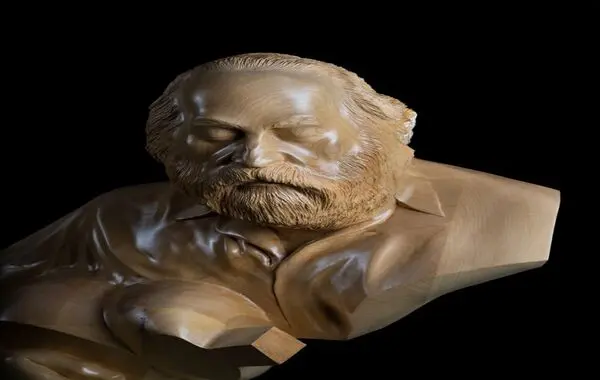
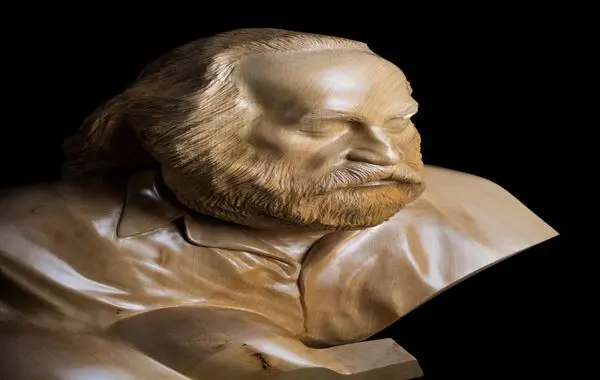
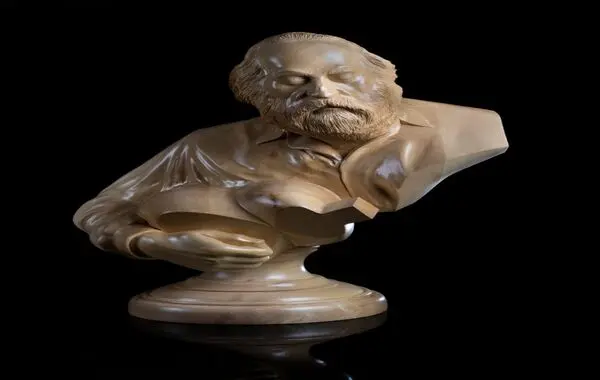
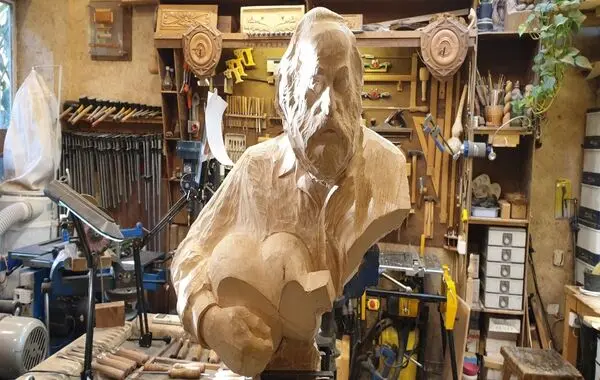
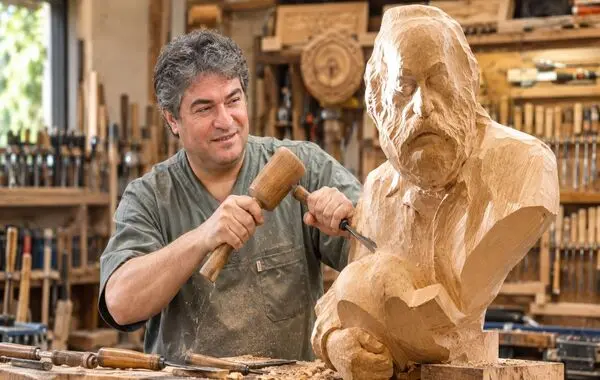
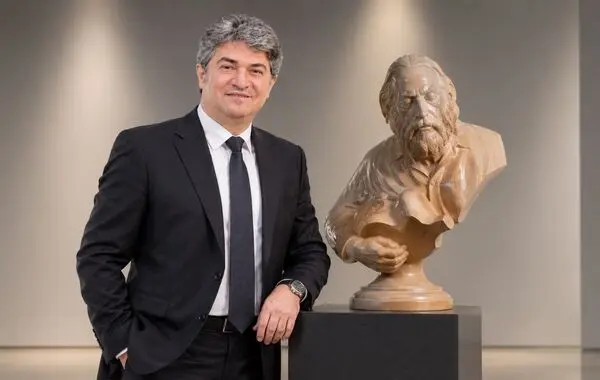
The work is a wooden bust of Master Mohammad Reza Lotfi, the influential Iranian composer and musician. Carved from maple wood sourced from Kelardasht, it stands 90 centimetres tall.
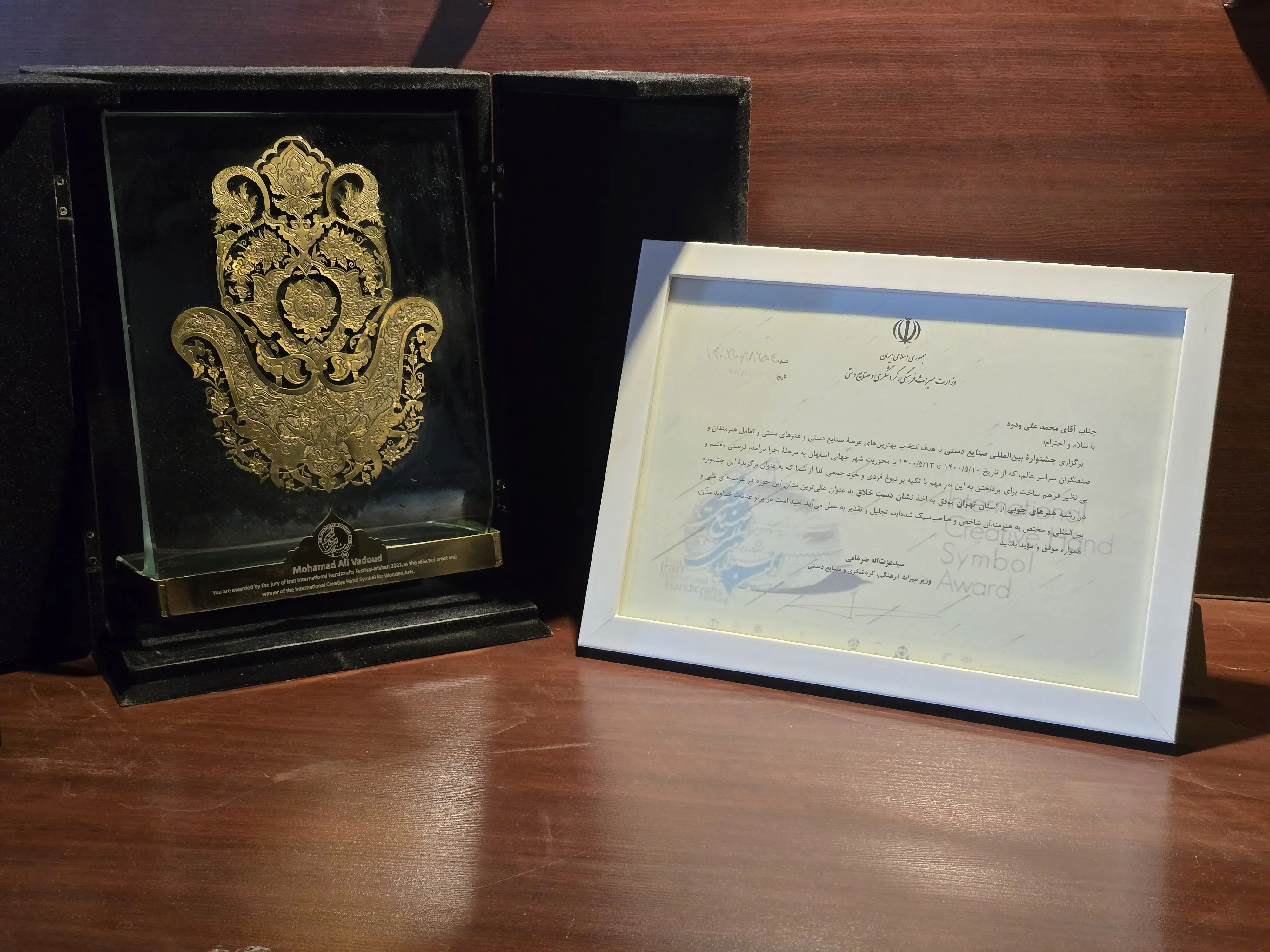
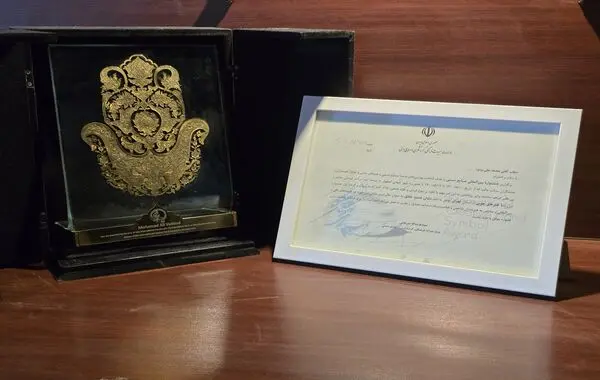
For creating this sculpture, Mohamadali Vadood received the Creative Hands Award from Iran’s Ministry of Cultural Heritage, Tourism and Handicrafts.
The work is held in the private collection of Dr. Farshid Bozorgi, one of Master Mohammad Reza Lotfi’s students.
- Mohamadali Vadood, the Bust of Master Mohammad Reza Lotfi, and a Critical Perspective on the Restrictions Facing Art and Artists
Mohamadali Vadood’s The Sound of Silence offers a conceptual reading of a period marked by restrictions on artistic expression in Iran, extending from the 1980s to the mid-1990s. In this work, absence is not merely an abstract idea; it becomes a tangible element of the sculpture’s very structure.
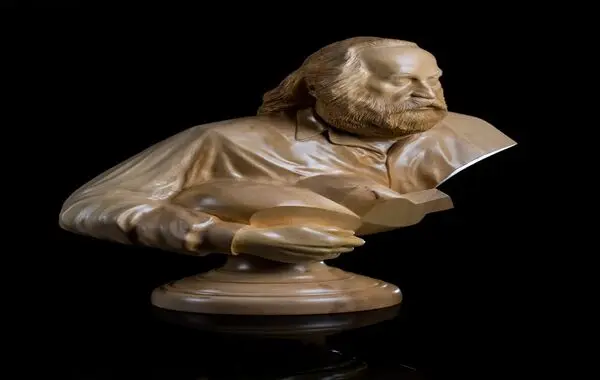
The piece is a wooden bust of Master Mohammad Reza Lotfi, the influential Iranian composer and musician. Carved from Kelardasht maple, the sculpture stands 90 centimetres tall. Vadood portrays the musician in a state of musical rapture and contemplation, as though, within a profound silence, he can still hear the sound of an instrument whose physical presence remains incomplete.
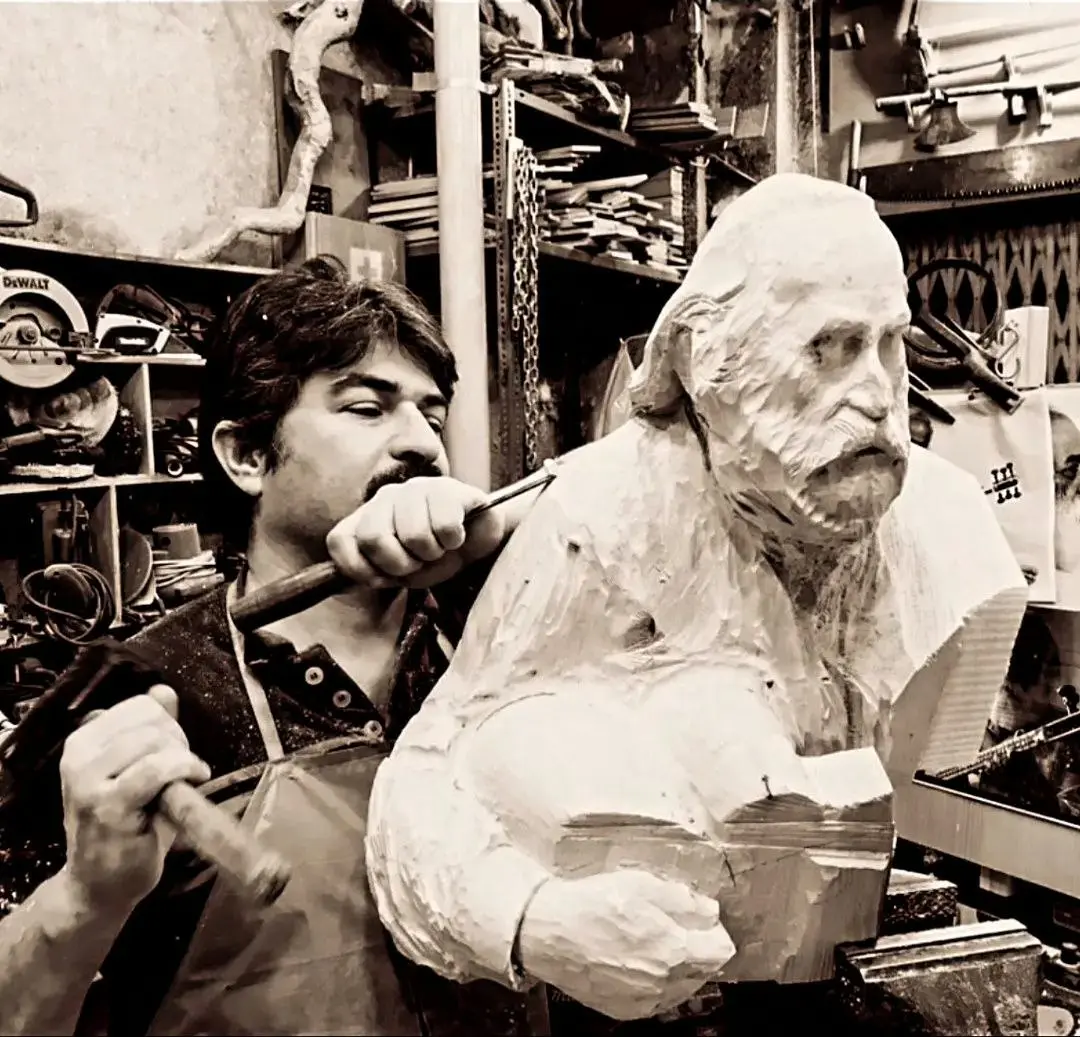
Within the composition, the removal of a substantial part of the instrument, together with the musician’s left hand and the extension of the instrument’s neck and headstock, represents a decision that goes beyond aesthetic choice. It extends Vadood’s conceptual framework into a broader field of symbolic interpretation.
The empty space to the left of the figure, set against the carefully modelled volume of the bust and the musician’s hand, creates an open-ended void. This space invites viewers to complete the missing elements through their own imagination.
This absence connects two historical narratives. During the years when restrictions on music led to the cancellation of valuable programmes such as Golha (Flowers of Radio) and deprived many artists of the opportunity to work freely, sculpture and figurative representation in the visual arts also faced serious restrictions and prohibitions. In this context, the removal of part of the instrument becomes a metaphor both for the silencing of music and for the suppression of the possibility of representing the human figure in the visual arts.
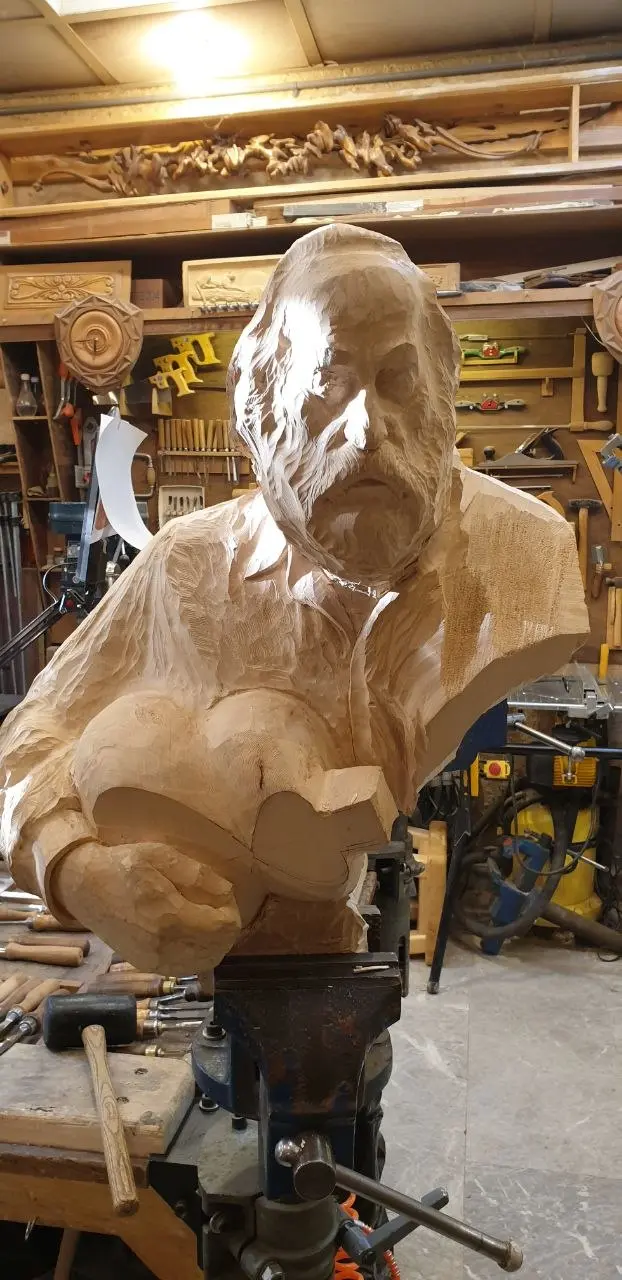
Here, Mohamadali Vadood’s sculpture does not merely speak about absence; by eliminating part of its own physical presence, it embodies and displays that absence. This is precisely where form and meaning converge, giving the work its distinctive identity.
The paradox of the title The Sound of Silence emerges from this very point: the hand positioned as if playing an instrument evokes a sound that has never been allowed to be heard in its entirety. It is as though what has been removed speaks more eloquently than what remains.
Mohamadali Vadood’s wooden sculpture The Sound of Silence reminds us that restricting art does not necessarily mean silencing creativity. At times, art creates its most eloquent narrative precisely through absence.
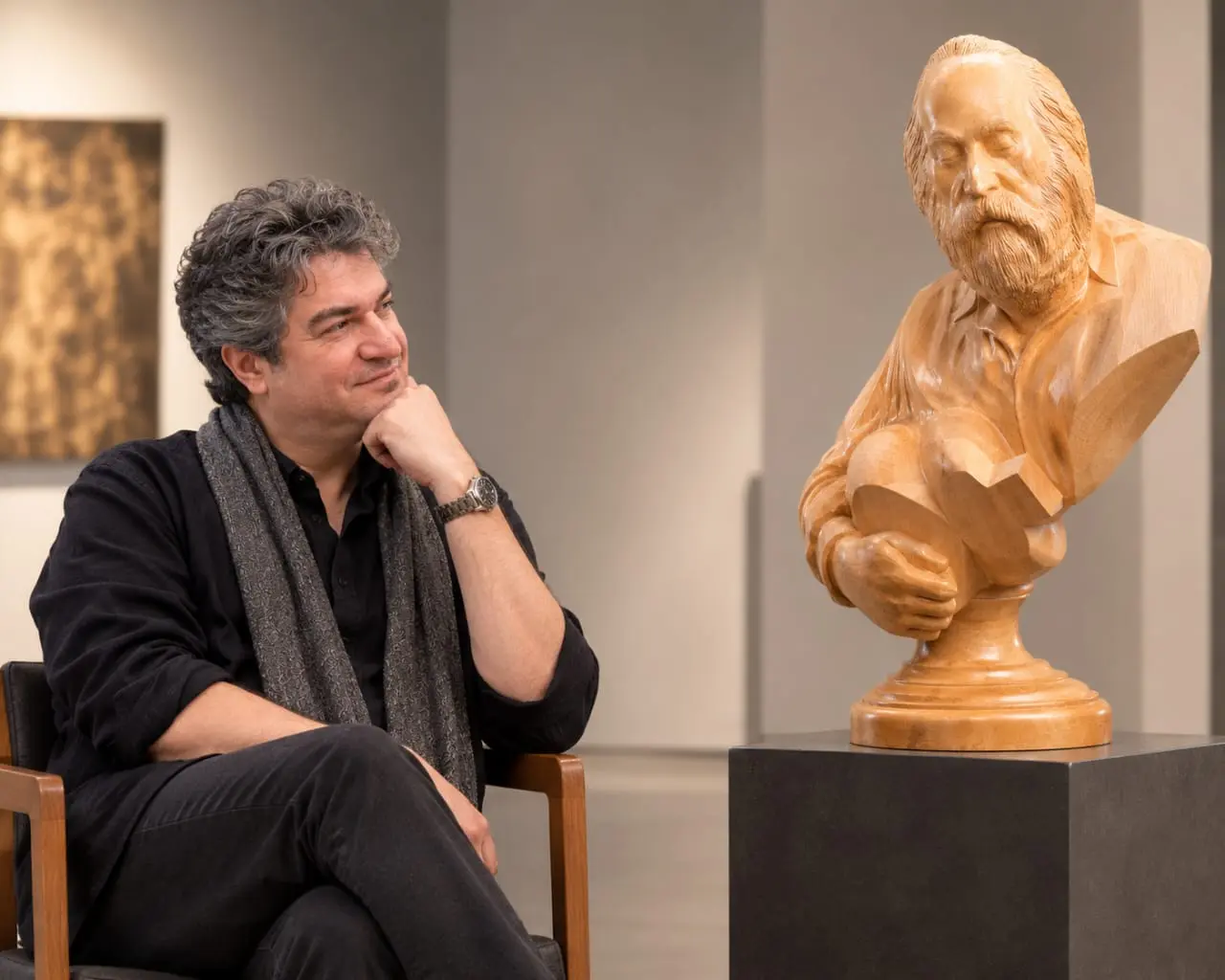
- A Formal and Technical Analysis of Mohamadali Vadood’s The Sound of Silence
Mohamadali Vadood’s wooden sculpture establishes a distinctive balance between figurative realism and volumetric expression. In creating this work, the artist has gone beyond simply reproducing the likeness of a particular individual. Through the organisation of the sculptural elements, the relationships between the anatomical forms, and the integration of the figure with the instrument held in his arms, he has achieved a cohesive and unified sculptural composition.
The half-length figure is structured around relatively broad shoulders and a forward-leaning posture. Together with the extension of the arms and the central volume, this arrangement creates a visual trajectory that guides the viewer’s gaze from the face downwards.
One particularly notable feature is the way the volumes connect and intersect. The hands, torso and the element held within the figure’s arms do not appear as independent components; rather, they function as interconnected parts of a continuous volumetric composition. Combined with the geometric breaks and clearly defined cuts in the lower section, this continuity gives the work a formal language that extends beyond conventional representational sculpture.
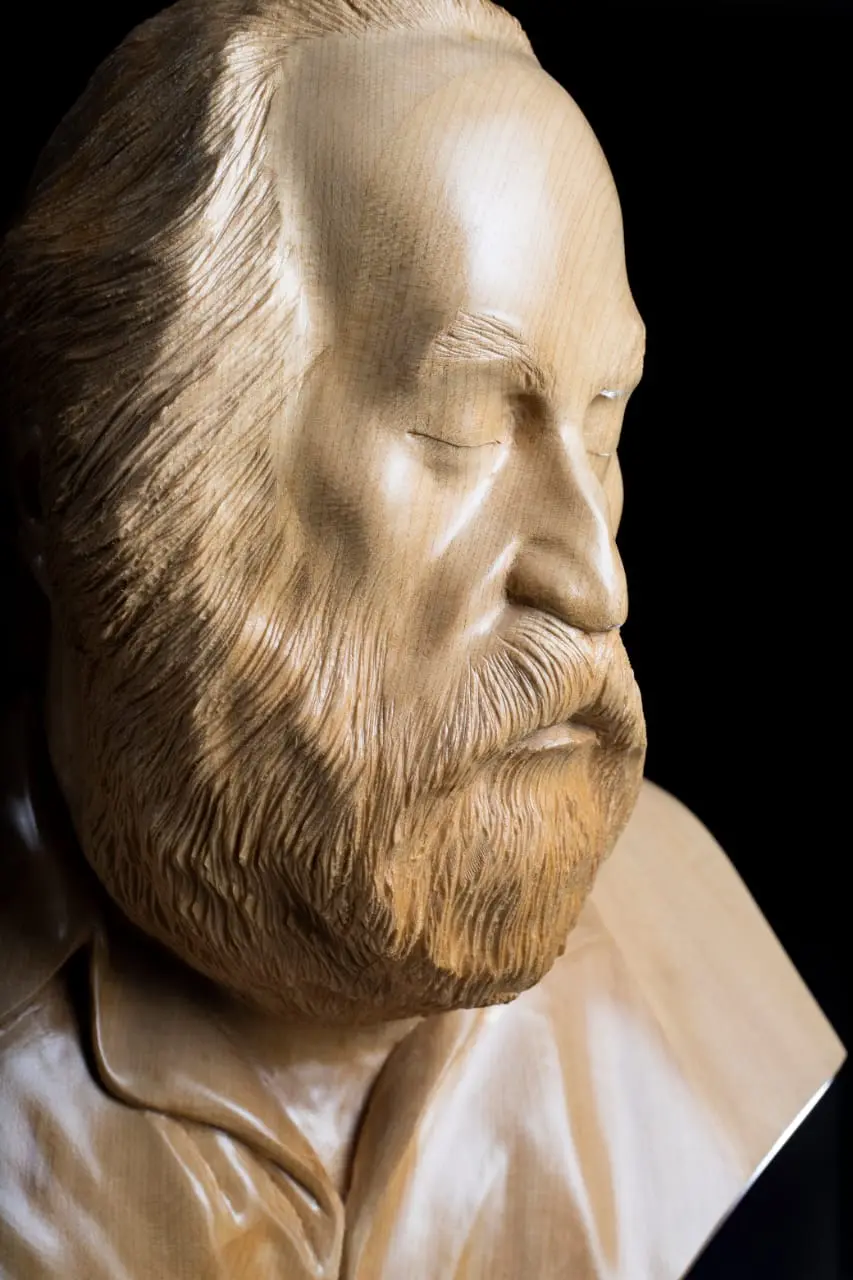
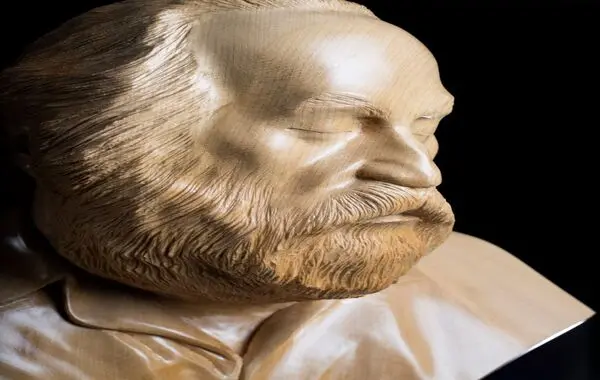
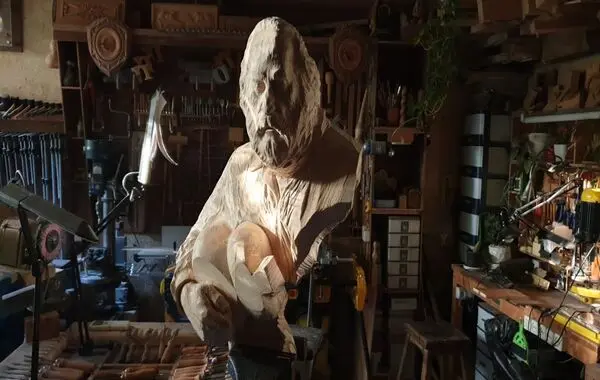
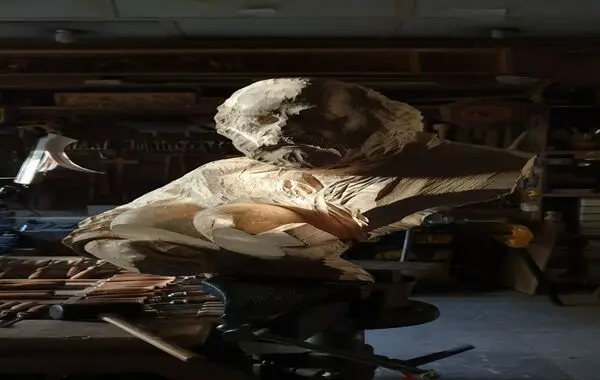
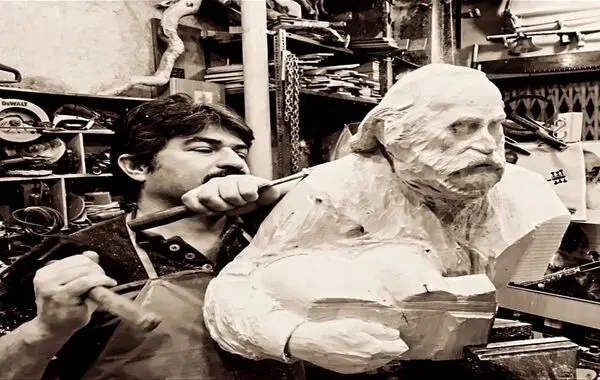
From a technical perspective, Mohamadali Vadood’s command of wood as a material, particularly his ability to refine surfaces and extract intricate details, is among the sculpture’s defining qualities. The contrast between the polished, carefully finished textures of the face, beard and hair and the pronounced folds of the clothing demonstrates a sophisticated variety of surface treatments and precise control of carving tools.
The facial features are carved with considerable anatomical precision and a commitment to realism. By contrast, the folds of the clothing are shaped through fluid rhythms and successive movements of the carving tools, creating a visual tension between the stillness of the face and the dynamism of the surfaces covering the body.
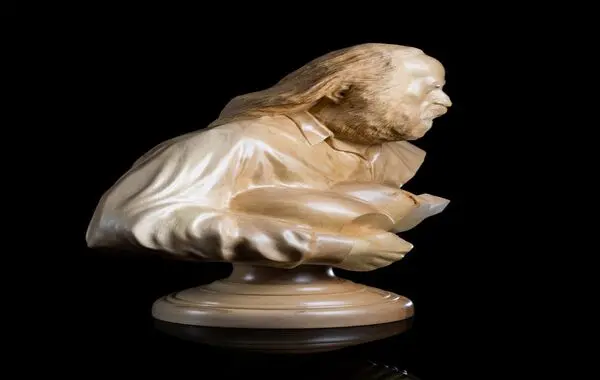
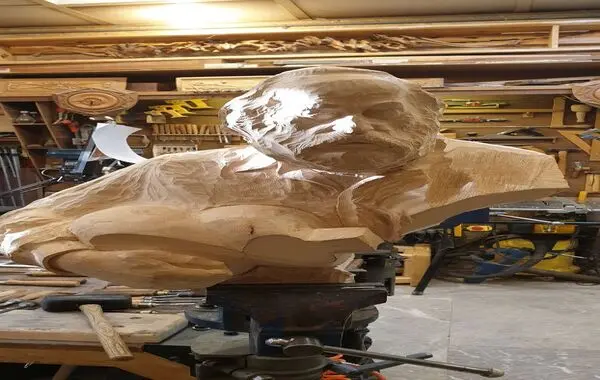
The interplay of light across the wood’s curves and recesses further enhances the visual depth of the volumes, accentuating the distinction between convex and concave surfaces. The choice of a glossy finish also reveals the natural grain patterns and tonal variations of the wood, while reinforcing the work’s tactile and material qualities.
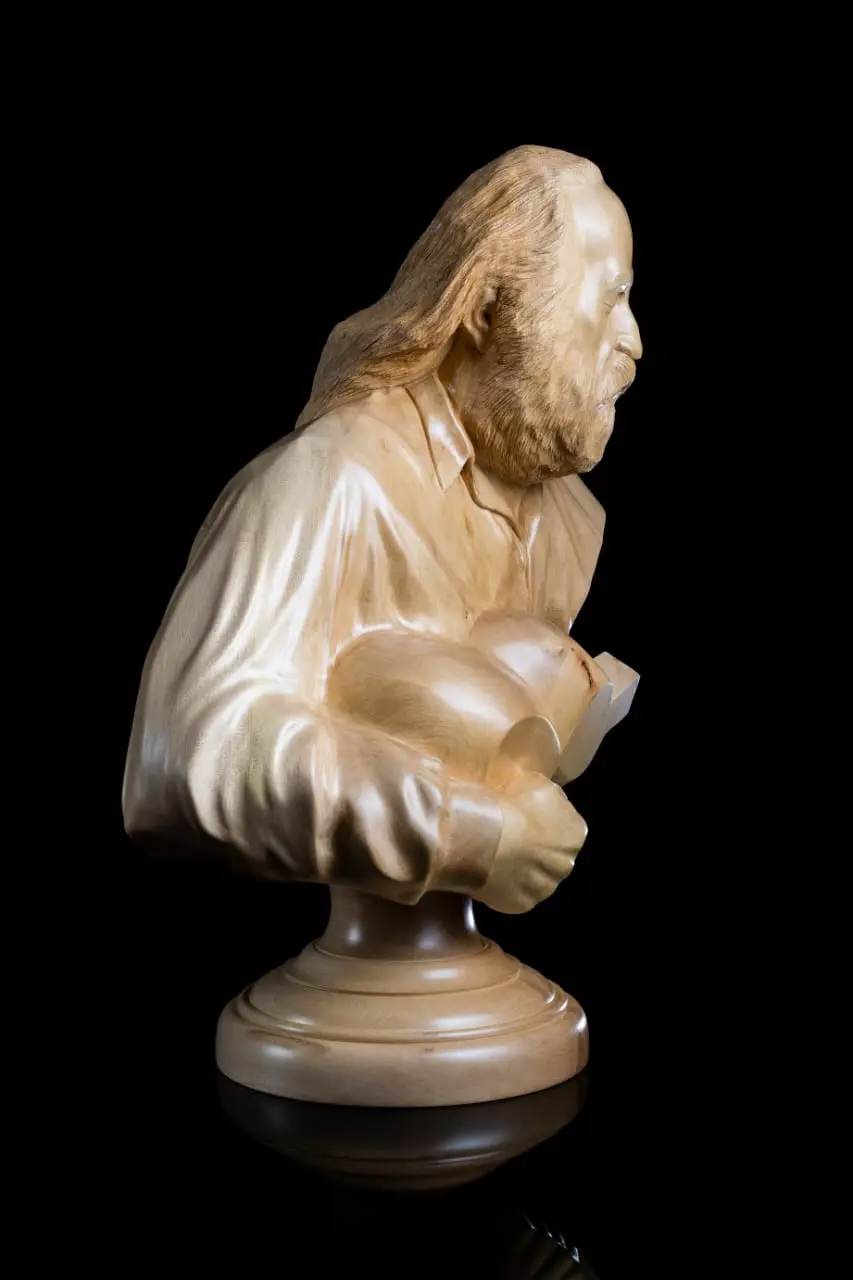
One of the sculpture’s formal strengths lies in the way it changes when viewed from different angles. From the front, the composition is anchored by the face and the concentrated volume of the hands. From the side, however, the extension of the hair, the projection of the shoulder, the mass of the arms and the forward extension of the central section reveal a layered structure with a distinct sense of spatial depth. This variation in perspective demonstrates that Vadood has not conceived the work merely as a frontal image, but has designed the figure as a three-dimensional volume intended to be experienced from multiple viewpoints.
The Sound of Silence is the result of combining realistic sculptural craftsmanship, an understanding of wood’s volumetric possibilities, and a sensitivity to the rhythm of lines and the expressive qualities of surfaces. It is a sculpture in which meticulous attention to detail is matched by the coherence of the overall form, transforming raw wood into a figure with weight, depth and a compelling spatial presence.
The work is held in the private collection of Dr. Farshid Bozorgi, one of Master Mohammad Reza Lotfi’s students.
- Mohamadali Vadood’s Artwork Prices
Over the years, Mohamadali Vadood has succeeded in developing a growing audience and market for wood art through a distinctive and recognisable artistic language. Today, evidence of this trajectory can be found both in private collections and in auction records.
At the inaugural Kavian Auction in 2026, a work executed using the Naqshbandi technique, measuring 30 × 60 cm and selected in the Fine Arts category of Italy’s A’ Design Award, achieved a hammer price of $8,800.
Meanwhile, the wooden sculpture The Celestial Bird, from the series The Gathering of the Thirty Birds and the One, created in collaboration with Shadi Habib and awarded the Bronze Medal for Best Selected Designs in Italy in 2019, was sold for 1.65 billion tomans, equivalent to approximately $9,700, at the 25th Tehran Auction in 2026.
These figures, alongside Vadood’s professional distinctions, contribute to the symbolic capital of the artistic brand he has built over the years. These achievements include the International Creative Hands Award; the title of Man of the Year 2022 at the International Crafts Award in India; the title of Asia-Pacific Top Master in Wood Art in 2026; several distinctions and selections at Italy’s A’ Design Award and the Kioskedia Awards; lifetime membership in the World Design Consortium; membership of the Arts Council of Iran’s National Elites Foundation and the Traditional Arts Specialised Group of the Academy of Arts; and the First Grade Artistic Certificate.
Another dimension of the significance of Mohamadali Vadood’s artistic brand can be seen in the institutional and private destinations of his works following their creation. His pieces are held in the digital treasury section of Italy’s MOOD Museum, the Museum of the Research Institute of National Arts affiliated with Iran’s Ministry of Cultural Heritage, and the Tabriz University of Art Museum. They are also represented in private collections, including those of Professor Giv Sharifi, Engineer Abbasi and Abbasi Gallery, Engineer Hassan Golchinpour and Mesnegar Gallery, Engineer Esmaeil Ghods, Dr. Farshid Bozorgi, and Engineer Meysam Moradimanesh, among others.
From a market perspective, what makes Mohamadali Vadood particularly significant is the simultaneous development of a distinctive artistic language, professional credibility, international recognition, private collecting networks and an established auction record. Together, these elements have helped transform an artist’s personal signature into a recognisable artistic brand within the market.
LEAVE A RELPY