
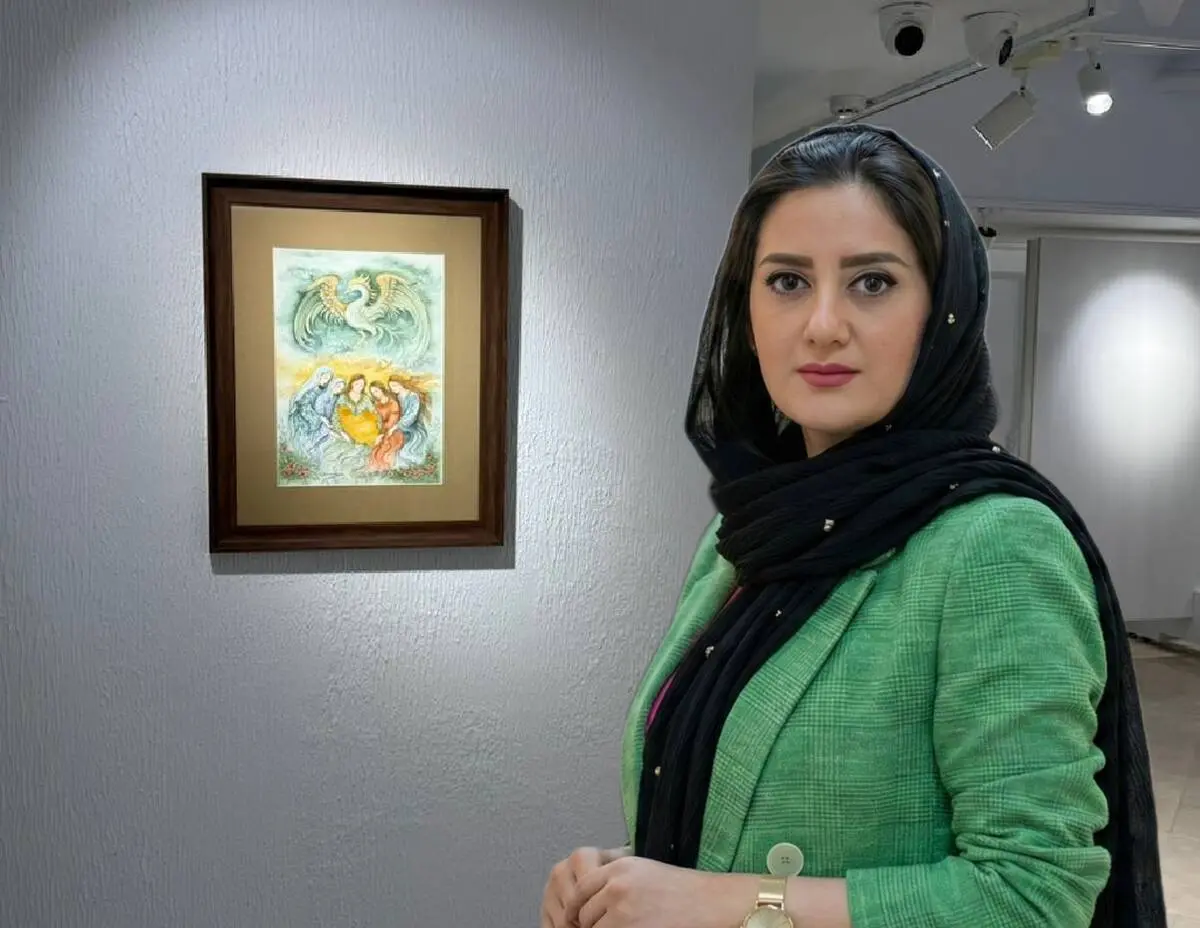
Sanaz Zolfaghari with a Tribute to the Homeland in the Raha Gallery Middle East Collection / Video
This miniature painting is a distinguished example of a thoughtful synthesis between the tradition of Iranian miniature painting and contemporary sensibilities and interpretations. The work neither remains confined to a mere imitation of the past nor becomes detached from its cultural and identity-based roots; rather, through a redefinition of visual language, meaning, and form, it achieves a narrative that belongs firmly to the present.
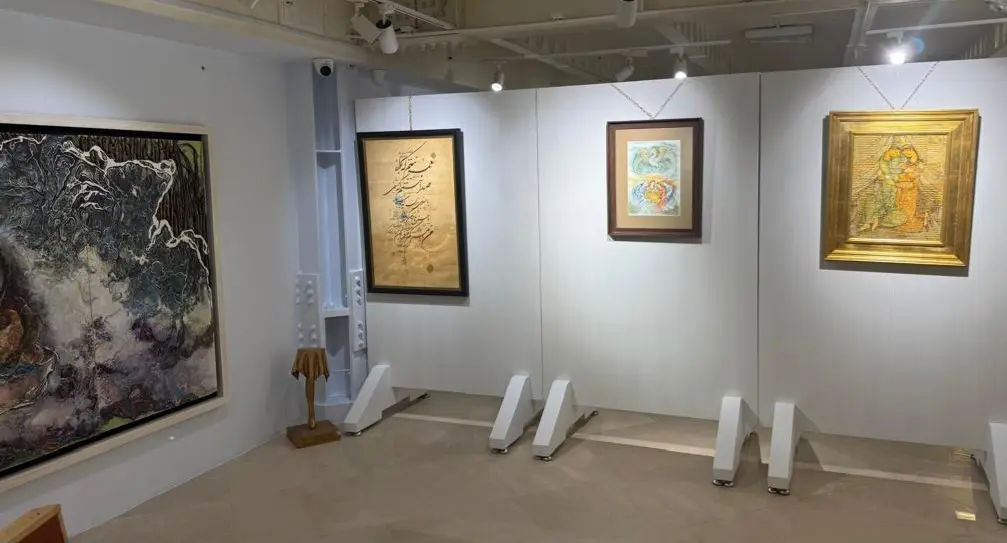
ArtDayMe: The Raha Gallery Collection, founded and directed by Engineer Mohammadreza Ghaem-Maghami, has been engaged for more than two decades in continuous cultural activity with a focus on promoting regional art. The collection preserves a wide range of modernist and contemporary masterpieces by Iranian and Arab artists.
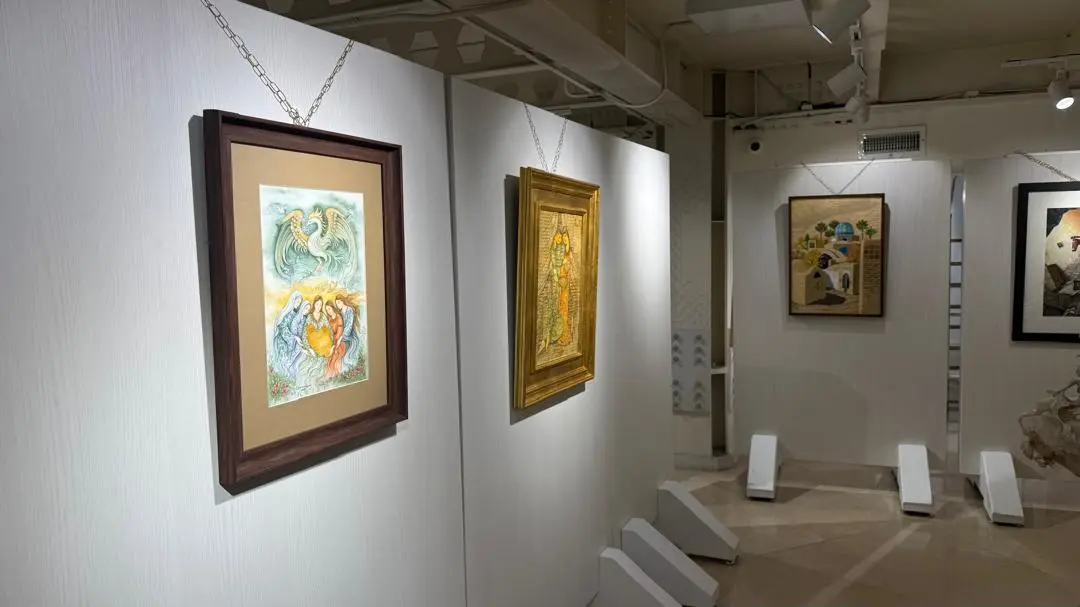
Among these works is a miniature painting by Sanaz Zolfaghari, created in November 2025, measuring 30 × 40 cm, and centered on a tribute to the homeland.
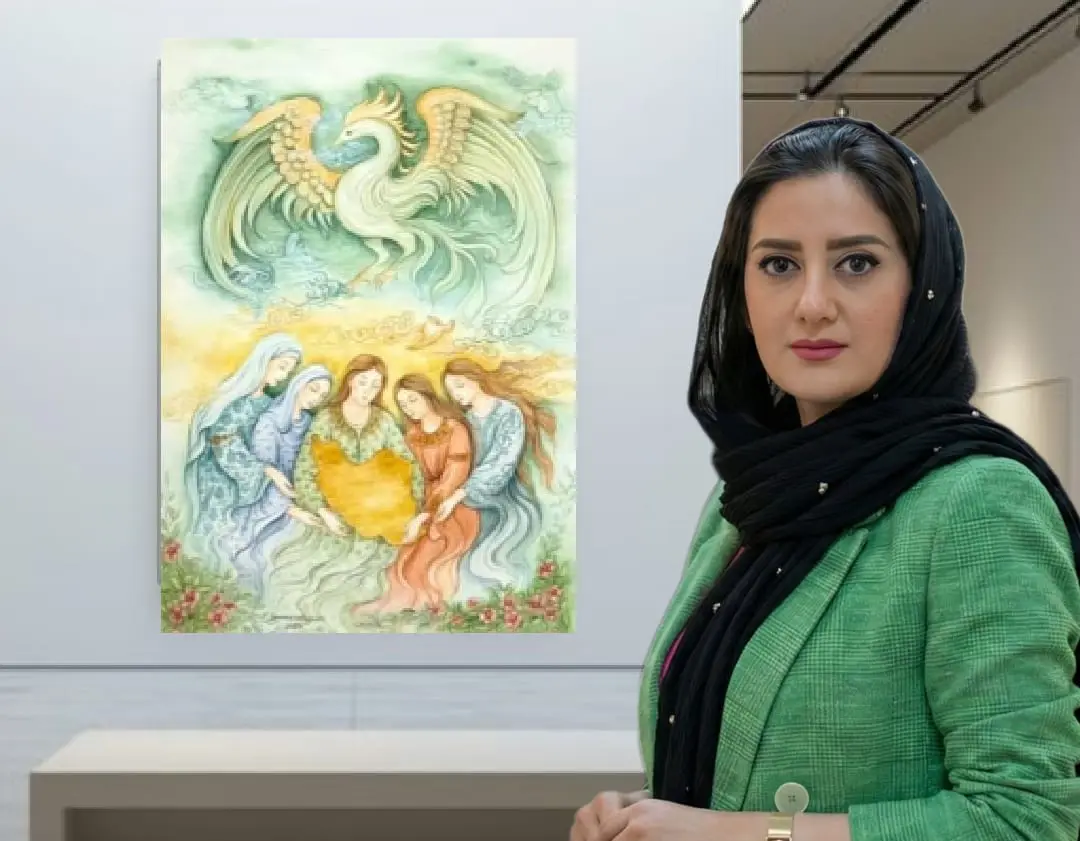
Sanaz Zolfaghari (born Tehran, 1987) holds a bachelor’s degree in graphic design and has, for many years, dedicated her artistic practice primarily to miniature painting. Her works combine the authentic techniques of Persian miniature with contemporary social concerns.
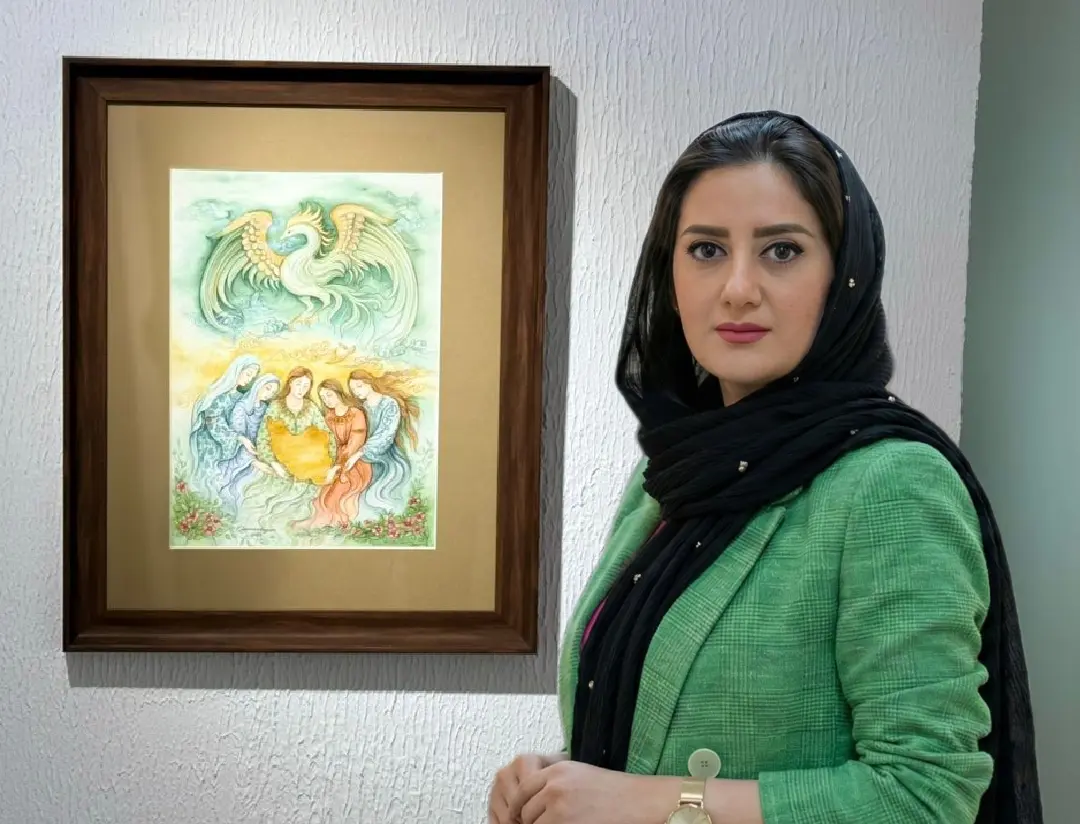
This miniature painting by Sanaz Zolfaghari, held in the Raha Gallery Middle East Collection, stands as a notable example of a measured connection between the Iranian miniature tradition and contemporary readings and sensitivities. It neither halts at a simple replication of the past nor severs its ties with identity-based roots; instead, by redefining visual language, meaning, and form, it arrives at a distinctly contemporary narrative.
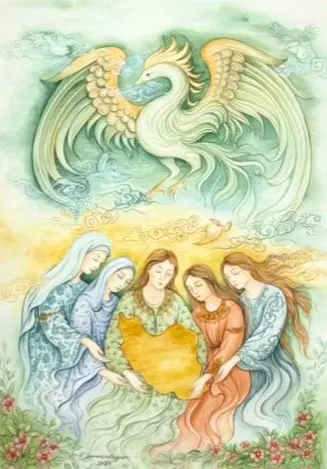
The work presents a depiction of women from diverse cultural backgrounds and perspectives who, regardless of their differences, come together and lovingly embrace the map of Iran. Their portrayal beneath the protective presence of the Simurgh symbolizes national solidarity and a maternal guardianship over the land and its heritage.
From a compositional perspective, the overall structure of the work is organized around a vertical axis with a soft symmetry. The presence of the mythological bird in the upper section and the gathering of five women in the lower section suggests a duality of sky and earth, or meaning and matter. This arrangement recalls the narrative logic of classical miniature painting, in which different realms of existence coexist on a single plane without reliance on Western linear perspective. At the same time, the visual connection between these two sections—achieved through the movement of clouds and the flow of color—creates a contemporary sense of spatial and conceptual continuity that prevents fragmentation.
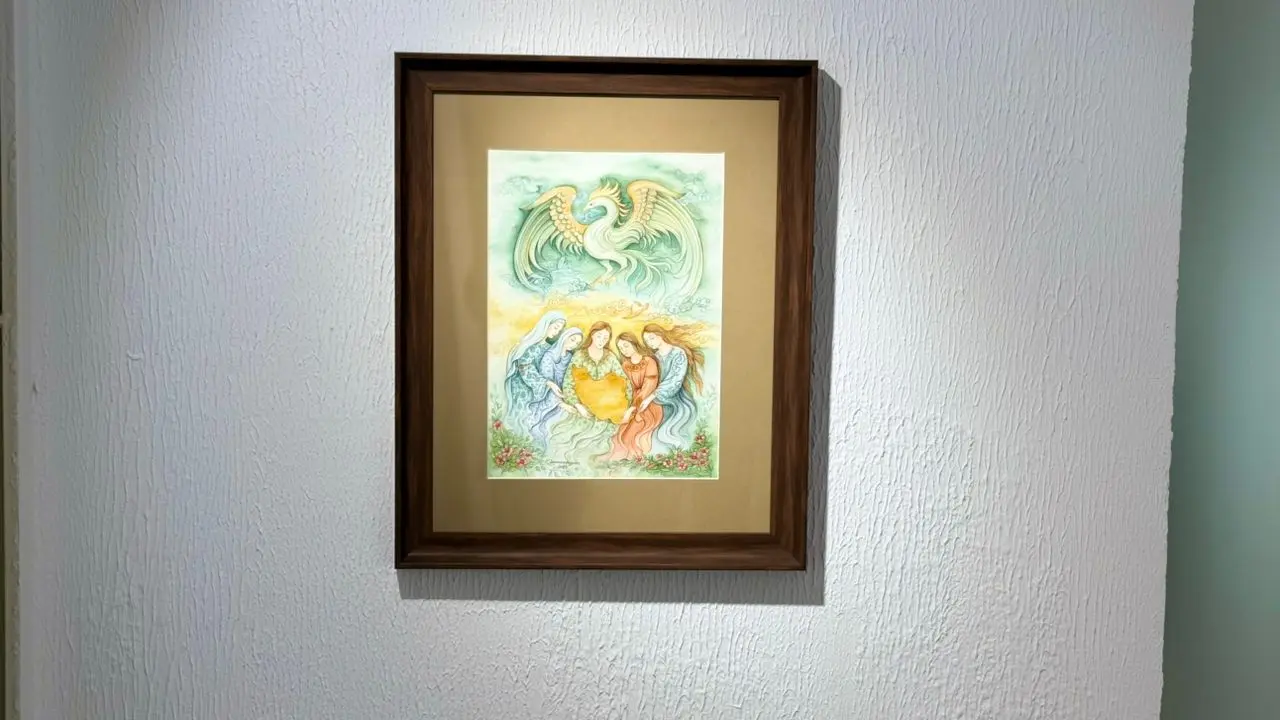
In terms of color, Zolfaghari has consciously employed soft, pastel ranges of green, blue, gold, and beige. These hues not only evoke nature, tranquility, and spirituality, but also carry symbolic meaning. The luminous golden form at the center of the image—held in the women’s hands—serves as the visual and conceptual focal point of the composition. This gold refers simultaneously to light, earth, and the notions of “homeland” and “collective identity.” The gentle execution and the absence of harsh contrasts further enhance a sense of care, empathy, and a feminine, ritualistic atmosphere.
Regarding line and form, fluid, curved, and wave-like lines—visible in the women’s bodies, the bird’s feathers, and the clouds—create a soft and continuous rhythm. While this fluidity is rooted in the miniature tradition, it is accompanied here by a process of formal simplification and refinement that brings the work closer to contemporary visual sensibilities. The faces are calm, with closed or half-closed eyes, and devoid of exaggerated individualization—an intentional choice that transforms the figures from specific individuals into collective, timeless symbols.
On a symbolic and conceptual level, the mythological bird at the top of the composition can be interpreted as a reference to the Simurgh, the phoenix, or a broader notion of wisdom and cosmic protection—a being that watches over and supports the human world. The women at the bottom of the image, by embracing and safeguarding the golden geographical shape of Iran, assume the role of guardians of identity and homeland. This reading lends the work a contemporary, woman-centered dimension, in which women are not merely decorative subjects, but active agents of meaning and bearers of collective responsibility.
In terms of time and narrative, the work exists in a suspended state: it is neither fully narrative nor entirely abstract. This suspension is a key characteristic of contemporary art, allowing for multiple interpretations. The viewer may read the image as a new myth, a poetic expression of feminine solidarity, or a metaphor for the care and preservation of land and cultural identity.
The aesthetics of Sanaz Zolfaghari’s work lie in her ability to balance fidelity to the spirit of Iranian miniature painting with the expressive needs of the present day. By avoiding excessive ornamentation, simplifying forms, and embedding contemporary human concerns, she has created a work that resonates both with audiences familiar with tradition and with today’s viewers—demonstrating that miniature painting can remain a living and dynamic language for articulating the concerns of our time.
In the video presentation of this work, the musical piece “Khooneh-ye Bahar” performed by "Alireza Pourostad" has been selected as an emotional complement to the visual narrative. The choice of this song underscores themes of hope and transition through hardship, resonating closely with the atmosphere of empathy present in the painting.
This miniature painting belongs to the Raha Gallery Middle East Collection.
LEAVE A RELPY