
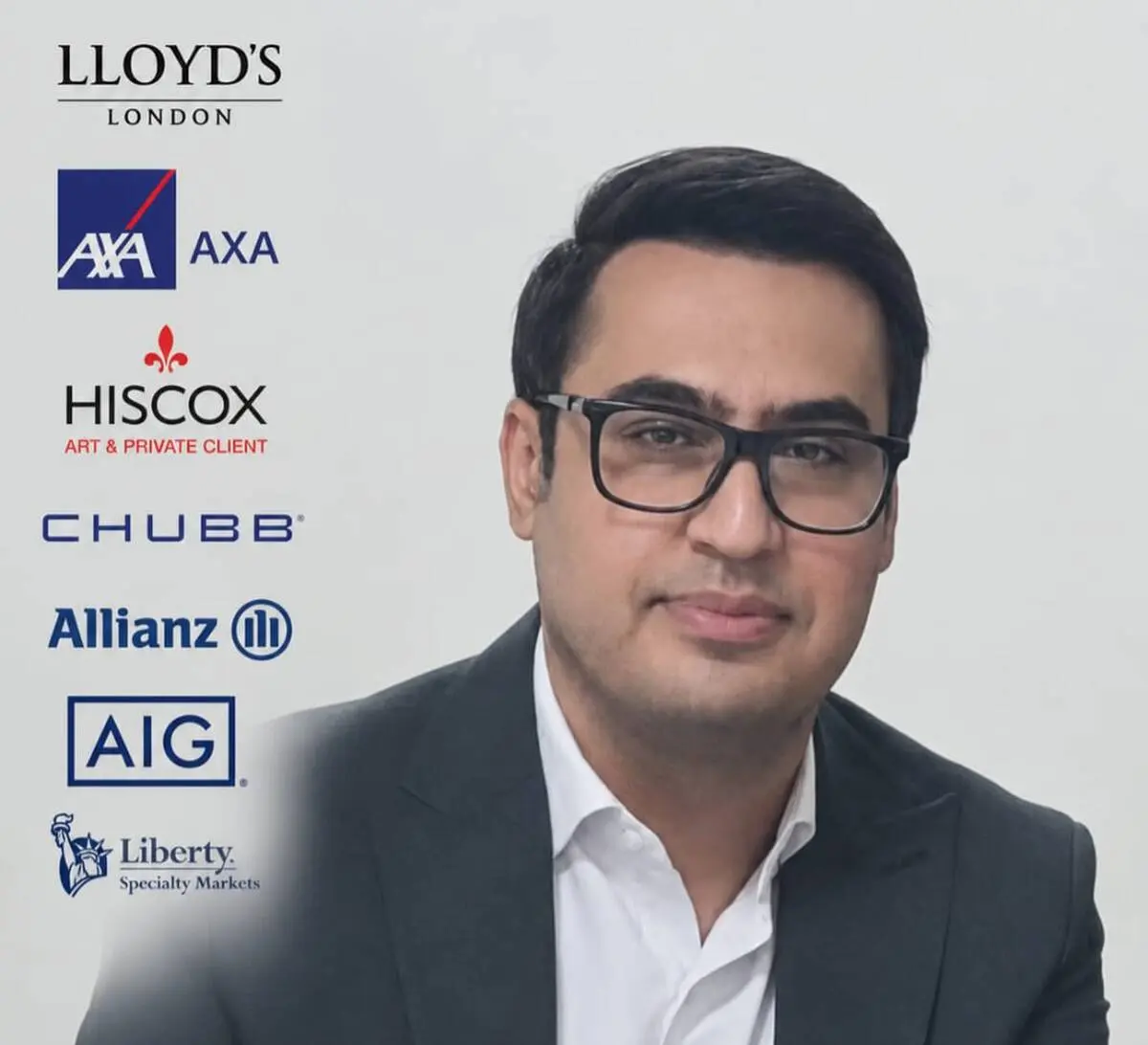
Seyedmohammad Omrany: The Insurance Industry: The Hidden Player in the Global Art Economy
In today’s world, fine art insurance is no longer a supplementary service; it is a strategic pillar of the global art market. Just as financial markets cannot function without robust financial institutions, the art market cannot become a secure, sustainable, and truly global marketplace without a sophisticated insurance ecosystem.
ArtDayME | Seyedmohammad Omrany – Art Economy Expert
When discussing the global art economy, attention is usually drawn to record-breaking auction sales, blockbuster exhibitions, world-renowned museums, or prestigious international art fairs. Yet behind this dazzling showcase lies an industry that often remains invisible—one without which a significant portion of the global art market simply could not function: the fine art insurance industry.
Today, no major museum, international art fair, or leading auction house operates without comprehensive specialist insurance. The transportation of a painting by Vincent van Gogh, Pablo Picasso, or Mark Rothko from one museum to another is far more than a logistics operation; it involves a sophisticated framework of risk assessment, insurance coverage, security, climate-controlled transportation, environmental monitoring, and legal liability—sometimes protecting artworks valued at hundreds of millions of dollars.
Within the art economy, insurance is no longer merely a mechanism for compensating losses. It has become one of the market's most important instruments for generating confidence. Investors, collectors, museums, and galleries engage in high-value transactions only when they are confident that their cultural assets are protected against a wide range of risks. For this reason, insurance has evolved into one of the fundamental pillars supporting the global art market.
Over the past two decades, the fine art insurance sector has experienced remarkable growth and is now regarded as one of the most specialized branches of the insurance industry. Beyond issuing policies, international insurers provide services such as artwork valuation, risk management, conservation standards, transportation supervision, exhibition security, specialized storage solutions, and advisory services for collectors. In other words, they have become strategic partners of the art market rather than simply providers of financial compensation.
Among the industry's leading players, AXA XL is widely recognized as one of the world's foremost fine art insurers. With decades of experience in the sector, the company serves museums, galleries, auction houses, private collectors, and international exhibitions. Many of Europe's and North America's most important museum exhibitions have been supported by AXA XL's specialist insurance programs.
The UK-based Hiscox is another pioneer in Fine Art Insurance. Beyond insuring artworks, the company provides advisory services to private collectors, galleries, and museums, while also publishing influential research and analytical reports on the international art market that are widely respected throughout the industry.
Other major participants include Chubb, Allianz Commercial, Liberty Specialty Markets, and AIG. These companies insure major museum projects, international exhibitions, and the transportation of exceptionally valuable artworks. In many cases, the value of a single shipment is so substantial that the associated risk is shared among several insurers through co-insurance and reinsurance arrangements.
Perhaps the most distinguished name in this field is Lloyd's of London. Rather than being a conventional insurance company, Lloyd's is the world's leading specialist insurance marketplace, with more than three centuries of expertise in underwriting complex and high-value risks. Many of the world's greatest masterpieces traveling between museums or appearing in international exhibitions are insured through syndicates operating within the Lloyd's market. Its unique capacity to pool capital and distribute risk enables the insurance of artworks valued at hundreds of millions of dollars—a capability matched by very few institutions worldwide.
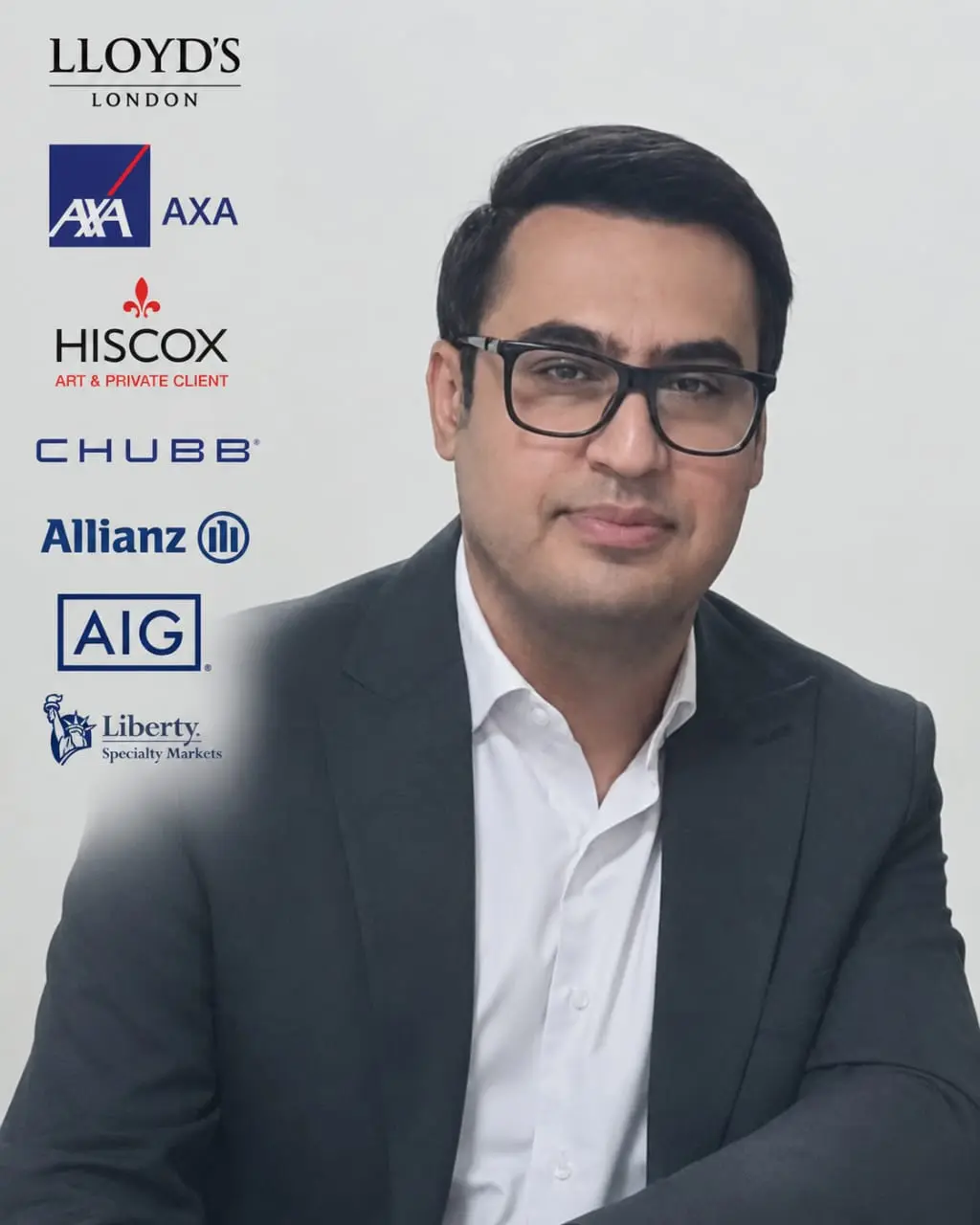
_Leading Global Players in Fine Art Insurance
_Lloyd's of London – The world's leading marketplace for insuring high-value and complex art risks.
_AXA XL – One of the largest providers of specialist insurance for museums, galleries, exhibitions, and private collections.
_Hiscox – A leading Fine Art insurer, particularly renowned for serving private collectors and galleries.
_Chubb – Provides specialist coverage for museums, galleries, private collections, and international art transportation.
_AIG – Offers comprehensive insurance solutions for artworks, exhibitions, and high-value collections.
_Allianz Commercial – Specializes in museum exhibitions, fine art logistics, and international cultural assets.
_Liberty Specialty Markets – Provides bespoke insurance solutions for museums, collectors, and cultural institutions worldwide.
One of the clearest examples of the industry's importance is its collaboration with institutions such as the Louvre Museum, Tate Modern, The Metropolitan Museum of Art, and the Solomon R. Guggenheim Museum. Whenever these museums borrow masterpieces from international collections, cultural assets worth billions of dollars are placed under specialist insurance protection. Without such infrastructure, many institutions would simply refuse to lend their works, severely limiting global cultural exchange.
Auction houses are equally dependent on specialist insurance. At Christie's, Sotheby's, and Phillips, artworks are insured from the moment they leave the consignor's possession until the completion of the sale. This protection not only safeguards the financial value of transactions but also strengthens buyer confidence and enhances market liquidity.
In recent years, the Middle East has also recognized the strategic importance of this sector. The expansion of institutions such as Louvre Abu Dhabi, the growth of international art fairs in Dubai and Doha, and the arrival of global brands such as Art Basel Qatar and Frieze Abu Dhabi have significantly increased demand for specialist fine art insurance. In many of these projects, international insurers work alongside regional insurance providers.
In the United Arab Emirates, companies including Sukoon Insurance (formerly Oman Insurance) and Orient Insurance, working in partnership with international brokers, now provide insurance solutions for artworks, exhibitions, and private collections. Meanwhile, the Dubai International Financial Centre (DIFC) has emerged as a regional hub for insurers and reinsurers specializing in fine art and other high-value assets. In Qatar, the expansion of national museums and international exhibitions has likewise made specialist art insurance an integral component of the country's cultural infrastructure.
The essential point is that insurance protects far more than individual artworks—it safeguards the circulation of the art economy itself. When collectors know their works can travel safely, they are more willing to lend them to museums and exhibitions. When museums have comprehensive insurance protection, they can organize more ambitious international exhibitions. As investment security increases, new capital enters the market, benefiting artists, galleries, logistics providers, conservators, specialized storage facilities, and numerous supporting industries.
For this reason, art economists increasingly regard insurance as one of the fundamental pillars of the creative economy. Although it does not produce artworks directly, it creates the conditions that allow art to move freely across borders, be exhibited internationally, traded confidently, and ultimately become both a cultural and economic asset.
Experience across the world's leading art markets demonstrates that a thriving art economy cannot be built solely through museums or auction houses. Sustainable growth requires a complete professional ecosystem—banking, logistics, conservation, valuation, insurance, legal services, and financial expertise. Countries capable of developing this integrated infrastructure will secure a greater share of the global art economy.
Today, fine art insurance is no longer an auxiliary service; it is a strategic component of the global art market's infrastructure. Just as stock exchanges depend upon strong financial institutions, the art market depends upon sophisticated insurance systems to remain secure, transparent, and sustainable. Ultimately, the future of the global art economy will be shaped not only by the creation of extraordinary artworks but also by the institutions that protect cultural heritage and enable the free movement of art, capital, and trust across the world.
LEAVE A RELPY