
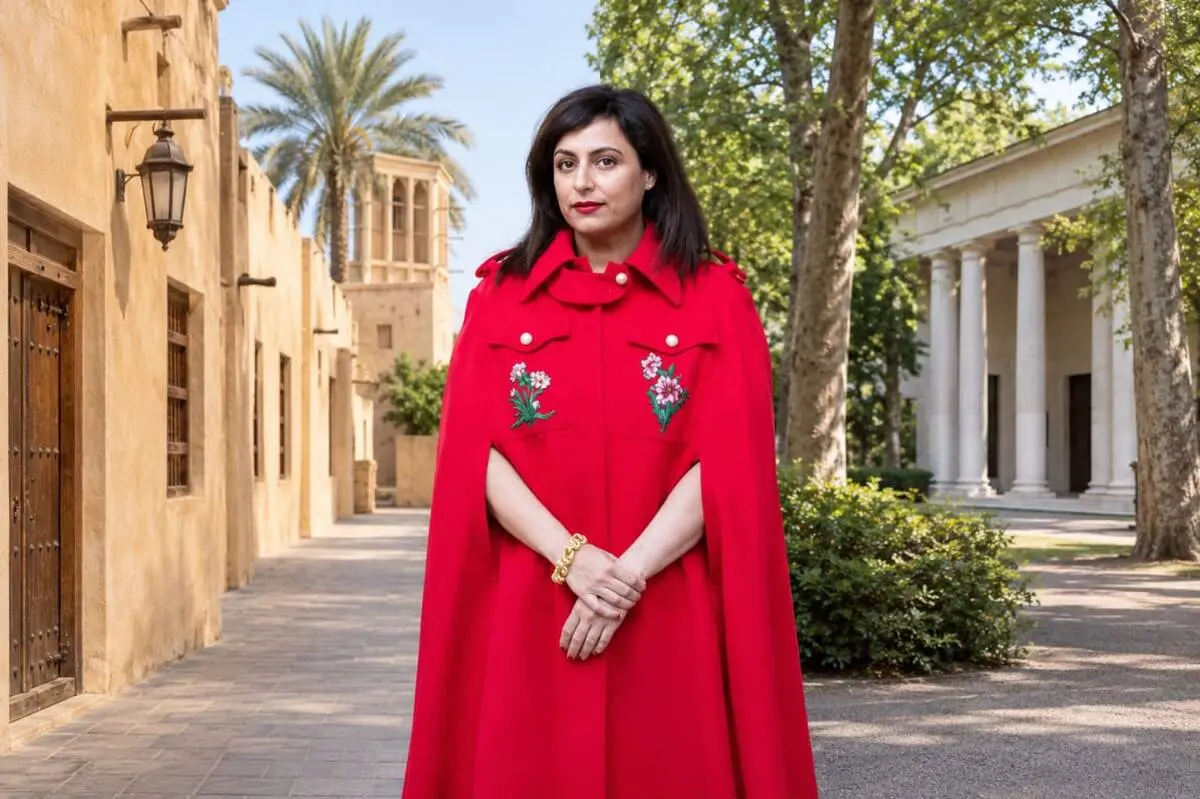
Hoor Al Qasimi: From the Sharjah Biennial to the Venice Biennale | Hossein Hashempoor: Reimagining the Architecture of Contemporary Art from the Heart of Europe to the Heart of the Middle East
Hoor Al Qasimi: The Woman Who Changed the Geography of Contemporary Art. From Sharjah to Venice: The Historic Appointment of a Cultural Architect as Curator of the 2028 Venice Biennale
ArtDayMe : By Hossein Hashempoor : The appointment of Hoor Al Qasimi as curator of the 62nd International Art Exhibition of the Venice Biennale goes beyond a professional appointment or an individual achievement. It should be understood as recognition of a journey that began in Sharjah more than two decades ago and has helped redefine the place of the Middle East, Asia and Africa on the global contemporary art map. Al Qasimi is the first Arab woman to take on the curatorship of the Venice Biennale’s main exhibition, a position previously held by only six women.
The significance of this appointment lies in the fact that Venice, one of the world's most prestigious and influential contemporary art events, has entrusted the artistic direction of its main exhibition to someone who has devoted a substantial part of her professional career to creating opportunities for voices, artists and narratives that have historically received limited recognition in the established accounts of global art history. Her appointment can be seen as a sign of the gradual expansion of cultural authority in the art world: a geography that can no longer be defined exclusively through the traditional centres of Europe and North America.
- From Al Mureijah to St Mark’s Square
The first time I travelled to Sharjah and stepped into the Al Mureijah district with Azadeh Jafarian, Sharjah was hosting its 15th edition of the Sharjah Biennial. In other words, this small city in the Middle East had already been organising an international art event for 30 years—a history that has now extended beyond 34 years.
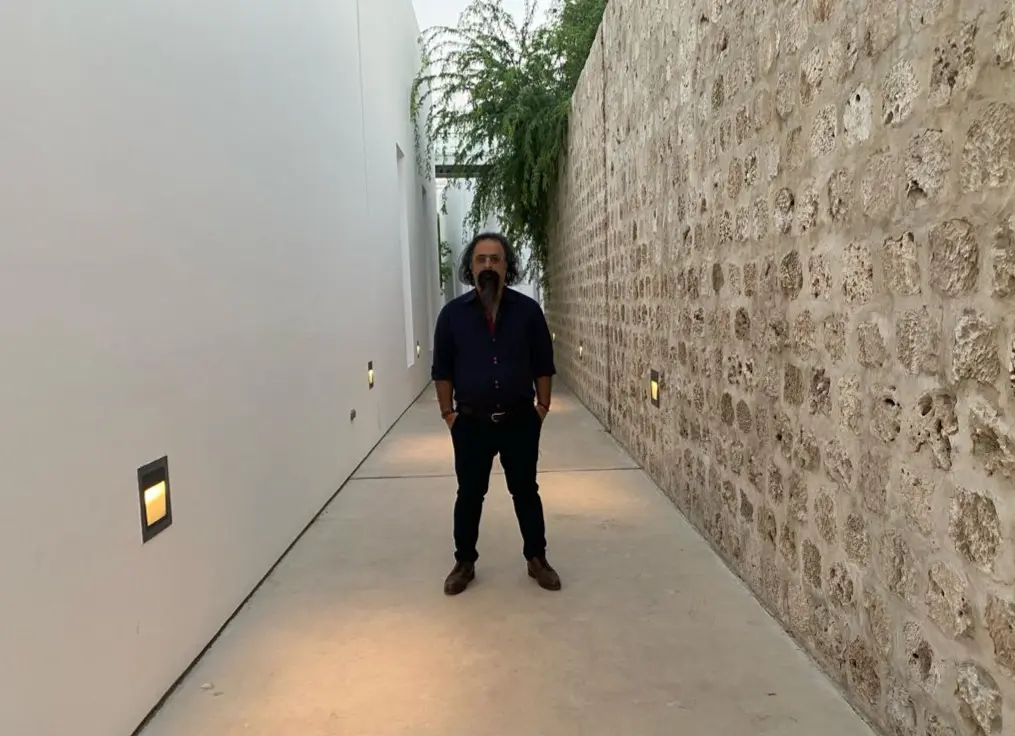
Al Mureijah possesses an unspoiled, nostalgic atmosphere and an artistic fabric that connects the Sharjah Art Foundation’s buildings with the Sharjah Art Museum of Contemporary Art.
Its narrow, shaded alleyways, tall textured walls, small courtyards and open spaces between buildings form a continuous route, guiding visitors from a gallery to a historic house, from an artwork to a peaceful courtyard, and from traditional architecture into the minimalist spaces of contemporary exhibitions.
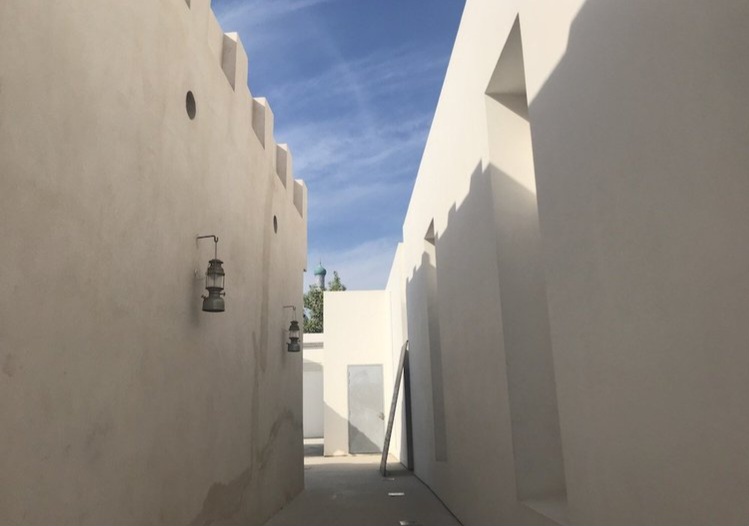
Along the way, a tree in a small courtyard or an old window set into a coral-coloured wall occasionally offers a welcome moment of pause. Here, art is not confined to exhibition halls. The neighbourhood itself, through its light, shadows, materials and architectural memories, becomes part of the artistic experience. This connection between public space and art has been one of the central ideas behind the design of Al Mureijah's cultural district.
Even more fascinating is the way the scent of the water seems to take visitors by the hand, leading them through these passageways towards Sharjah Creek and the city's waterfront. Here, the dense, enclosed fabric of the alleyways gradually opens onto the expansive horizon of the water. The transition from the shadows of old walls to the brightness and breeze of the waterfront is among the most delightful aspects of walking through Al Mureijah.
The district's proximity to the creek and the historic centre of the city makes it possible to combine a visit to the Sharjah Art Foundation with a walk along the waterfront and an exploration of the city's older layers. Along this route, Sharjah emerges not merely as a host of international art events, but as a city with its own architectural memory, social life and independent cultural identity—a city that has succeeded in building a living, walkable bridge between its heritage and the experience of contemporary art.
One of the remarkable achievements of Sheikha Hoor and the Al Qasimi family, beyond establishing an international art foundation and organising the Biennial, has been the revitalisation of a historic urban fabric and its transformation into a living environment for art, architecture and social interaction. In this particular part of the world, it stands as an inspiring model.
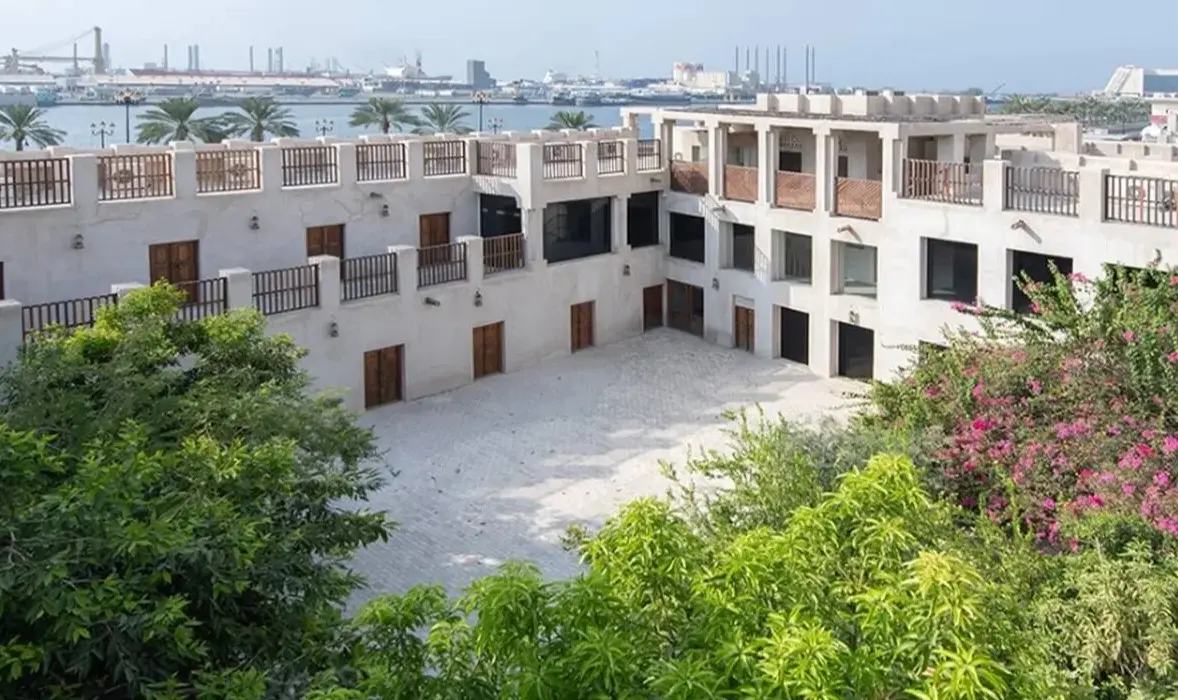
This is distinct from the Al Majarrah district, where the Sharjah Museum of Islamic Civilization is located.
Today, Hoor Al Qasimi, this cultural architect of the Middle East, is connecting Al Mureijah to St Mark's Square. The tastes and pleasures of wandering through the alleyways of Al Mureijah and the streets of Venice may be entirely different, but there is something exhilarating about seeing a successful woman expand the boundaries of contemporary art.
- From Childhood Curiosity to a Professional Journey
Sheikha Hoor Al Qasimi was born in 1980 in Sharjah, United Arab Emirates. She is the daughter of Sheikh Sultan bin Muhammad Al Qasimi, the Ruler of Sharjah, a widely recognised figure with a longstanding interest in culture and the arts.
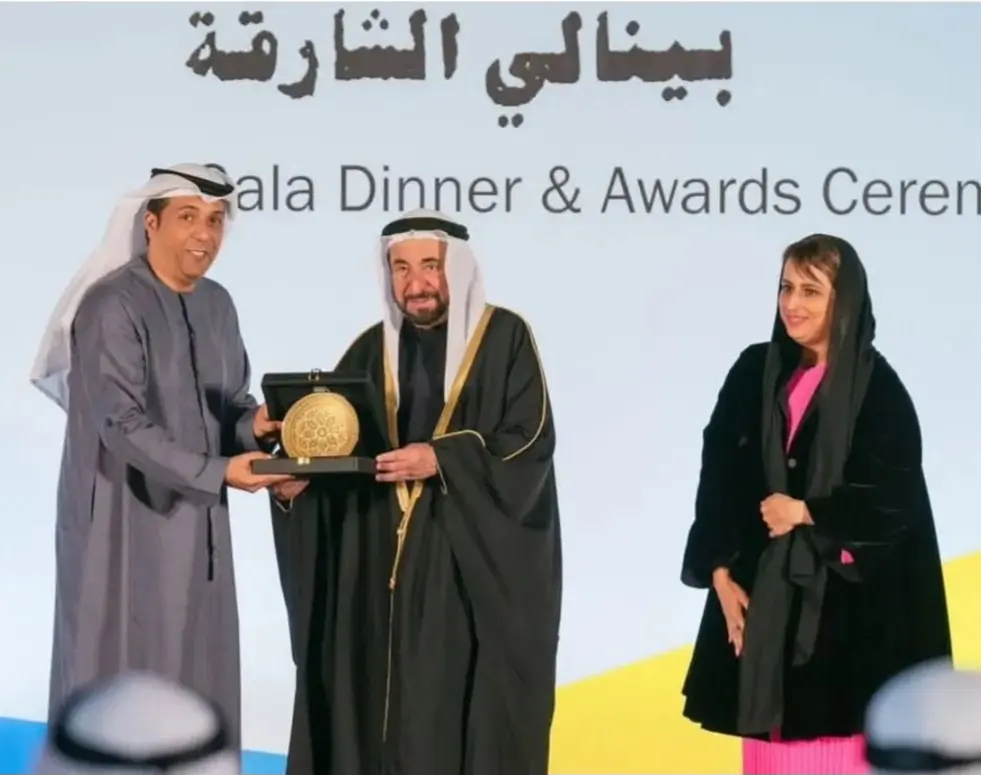
However, to understand Hoor Al Qasimi's professional trajectory, it is important to look beyond her family background and consider the experiences that shaped her relationship with art and cultural activity from an early age.
In an interview with the respected magazine Frieze, Hoor Al Qasimi spoke about her early interest in art. Her father took her to museums and galleries, and she attended art classes outside school. At the age of 14, she spent some time working with a local carpenter. During her school years, she also participated in drawing instruction at the Sharjah Art Institute. By the age of 16, she had already begun teaching drawing—an experience that suggests her relationship with art was never limited to artistic production; education and the transmission of knowledge were also among her early interests.
She moved to London to pursue higher education, receiving a Bachelor of Fine Arts degree from the Slade School of Fine Art in 2002. She subsequently studied painting at the Royal Academy of Arts in London, earning a diploma in the discipline in 2005. The next important stage was her postgraduate study in Curating Contemporary Art at the Royal College of Art in London, which she completed with a master's degree in 2008.
- Sharjah: The Starting Point of a Cultural Transformation
The turning point in Sheikha Hoor Al Qasimi's professional life came in 2003, when, at the age of 22, she became involved in curating the sixth Sharjah Biennial and took on the event's directorship that same year. At the time, she was working with a very small team, but gradually began pursuing a vision that extended far beyond organising a biennial exhibition: transforming Sharjah into a sustainable platform for the production, research, presentation and discussion of contemporary art.
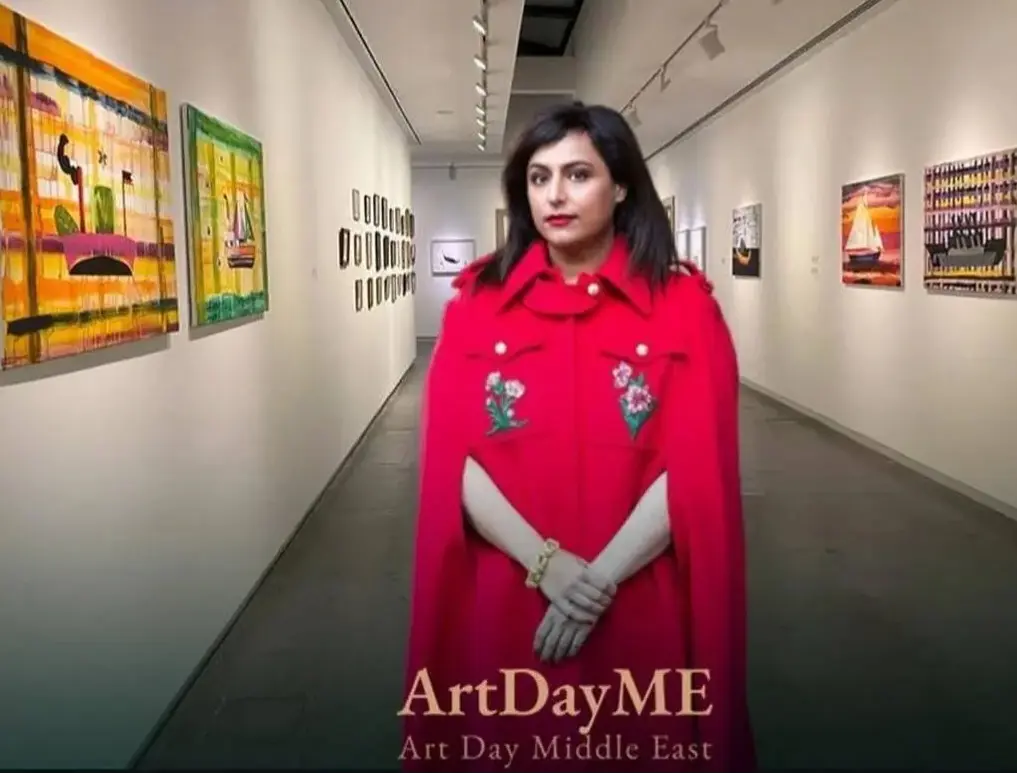
In 2009, Hoor Al Qasimi founded the Sharjah Art Foundation, an independent public institution that has since become one of the region's most important centres for contemporary art. The significance of the Foundation lies in the fact that its activities extend well beyond staging exhibitions. Supporting artists, commissioning and producing new works, providing production grants, organising artist and curator residencies, publishing books and research, presenting film and performance festivals, restoring historic architecture and developing educational programmes are all integral parts of its structure.
Rather than focusing exclusively on bringing prestigious international exhibitions to Sharjah, Al Qasimi developed an infrastructure that enables art to be produced and presented within the region itself. This is an important distinction: a city does not become an art centre simply by hosting exhibitions. It reaches that position by creating the conditions for artistic production, supporting artists, encouraging intellectual inquiry and ensuring the continuity of cultural activity.
- Education: From Children's Workshops to Academic Institutions
One of the most significant dimensions of Hoor Al Qasimi's work is her understanding of education as an inseparable part of cultural infrastructure. The Sharjah Art Foundation organises ongoing educational programmes for children, families, schools, universities and community groups. These programmes include workshops in drawing, printmaking, collage, ceramics, photography, animation, puppet-making, storytelling and interdisciplinary creative practices.
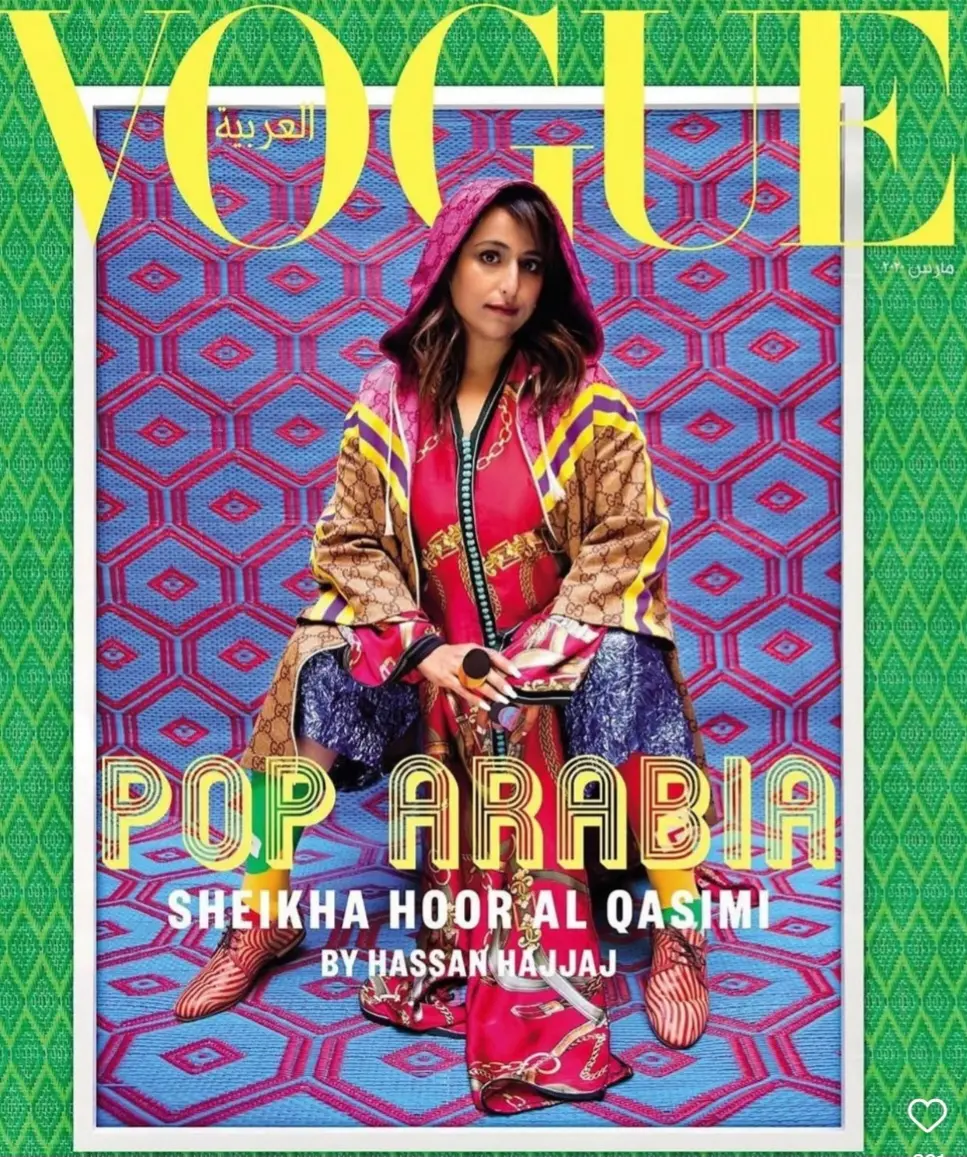
Special programmes are designed for children aged three to fifteen, while the Foundation's educational activities also extend to different areas of Sharjah. Workshops for schools and universities are conducted in both Arabic and English, and many of these activities are offered free of charge. This approach reflects Al Qasimi's belief that art should not be an experience reserved for professional gallery and museum audiences. Instead, it should become part of everyday life and the social experience of citizens from childhood onwards.
This vision is also reflected on a broader scale in her academic responsibilities. Al Qasimi serves as President of The Africa Institute and Global Studies University in Sharjah, an academic complex focused on African, Asian and European studies. She is also President and Director of the University of the Arts Sharjah. Taken together, these responsibilities demonstrate her commitment to connecting art with research, education and knowledge production.
- From the Sharjah Biennial to the Global Art Stage
Hoor Al Qasimi's curatorial career has never been confined to Sharjah. In 2015, she curated the National Pavilion of the United Arab Emirates at the 56th Venice Biennale. Titled 1980–Today: Exhibitions in the United Arab Emirates, the exhibition examined the development of the country's art scene, documenting and revisiting four decades of artistic and exhibition-making activity in the UAE.
In 2020, she curated the second Lahore Biennale. In 2023, she curated the 15th Sharjah Biennial under the title Thinking Historically in the Present—a project that placed the relationship between historical memory, contemporary experience and the possibility of rethinking dominant narratives at its centre.
In 2025, she was appointed Artistic Director of the sixth Aichi Triennale in Japan, titled A Time Between Ashes and Roses, becoming the first non-Japanese person to hold the position. In 2026, she also took on the artistic direction of the 25th Biennale of Sydney, titled Rememory.
- From ArtReview to TIME: Establishing Hoor Al Qasimi's Global Standing
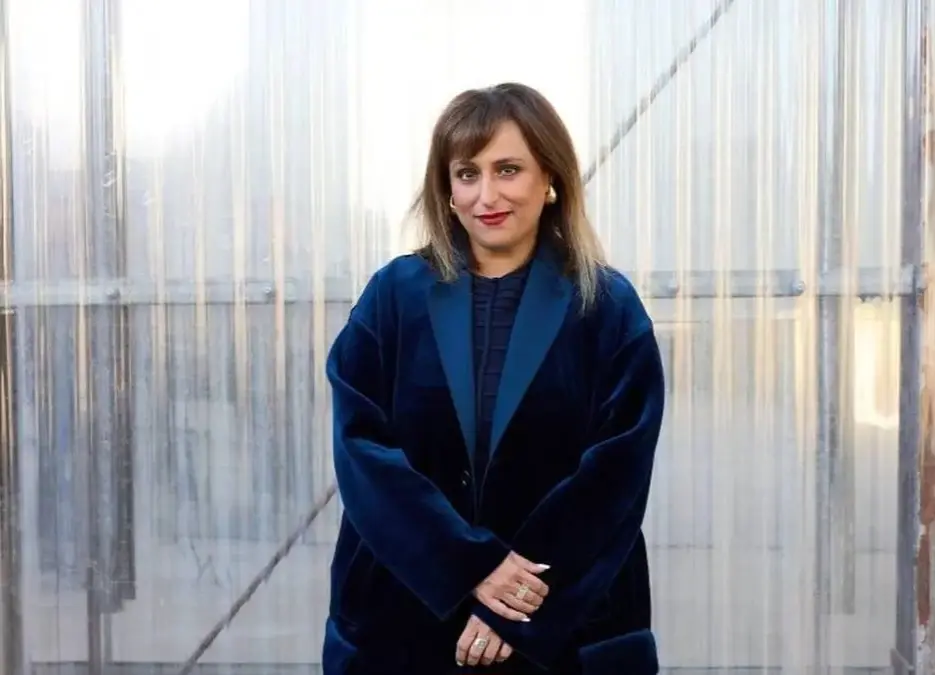
Hoor Al Qasimi's international standing is not defined solely by her curatorial projects or the institutions she has led. In 2024, the respected magazine ArtReview placed her at the top of its annual Power 100 list, which identifies the most influential figures in contemporary art worldwide. The selection reflected her role in supporting artists, developing cultural institutions and building international networks that extend beyond the dominant Western art establishment.
In 2026, the American magazine TIME also included Hoor Al Qasimi in its TIME100 Art 2026 list, recognising 100 influential figures in the world of art. Published for the first time with a specific focus on influential personalities in the arts, the list reflected her standing on a scale extending beyond the world of biennials and regional institutions.
In its profile of Hoor Al Qasimi, TIME highlighted her role in transforming the Sharjah Biennial into a respected international event, her work through the Sharjah Art Foundation and her support for contemporary artists. The magazine also emphasised the importance of the annual March Meeting, a platform that brings together artists, curators, researchers and cultural leaders from around the world. It has become one of Sharjah's major forums for professional dialogue and the exchange of knowledge.
Her inclusion in the prestigious ArtReview and TIME lists within two years demonstrates that Al Qasimi's influence can no longer be defined solely within the boundaries of a particular geographical region or artistic institution. She has become one of the influential figures shaping global conversations about contemporary art.
-Venice 2028: Beyond an Appointment
Hoor Al Qasimi has now reached one of the most significant curatorial positions in the art world. On 20 November 2026, the Board of La Biennale di Venezia, following a proposal by its President, Pietrangelo Buttafuoco, appointed her Director of the Visual Arts Department and Curator of the 62nd International Art Exhibition. The exhibition will run from 8 April to 26 November 2028, with pre-opening events scheduled for 5–7 April.
In describing Al Qasimi, the President of the Venice Biennale emphasised her ability to connect historical memory with the complexities of the contemporary world and to listen to the voices of places and their people. This description resonates with the path she has pursued in Sharjah and elsewhere around the world.
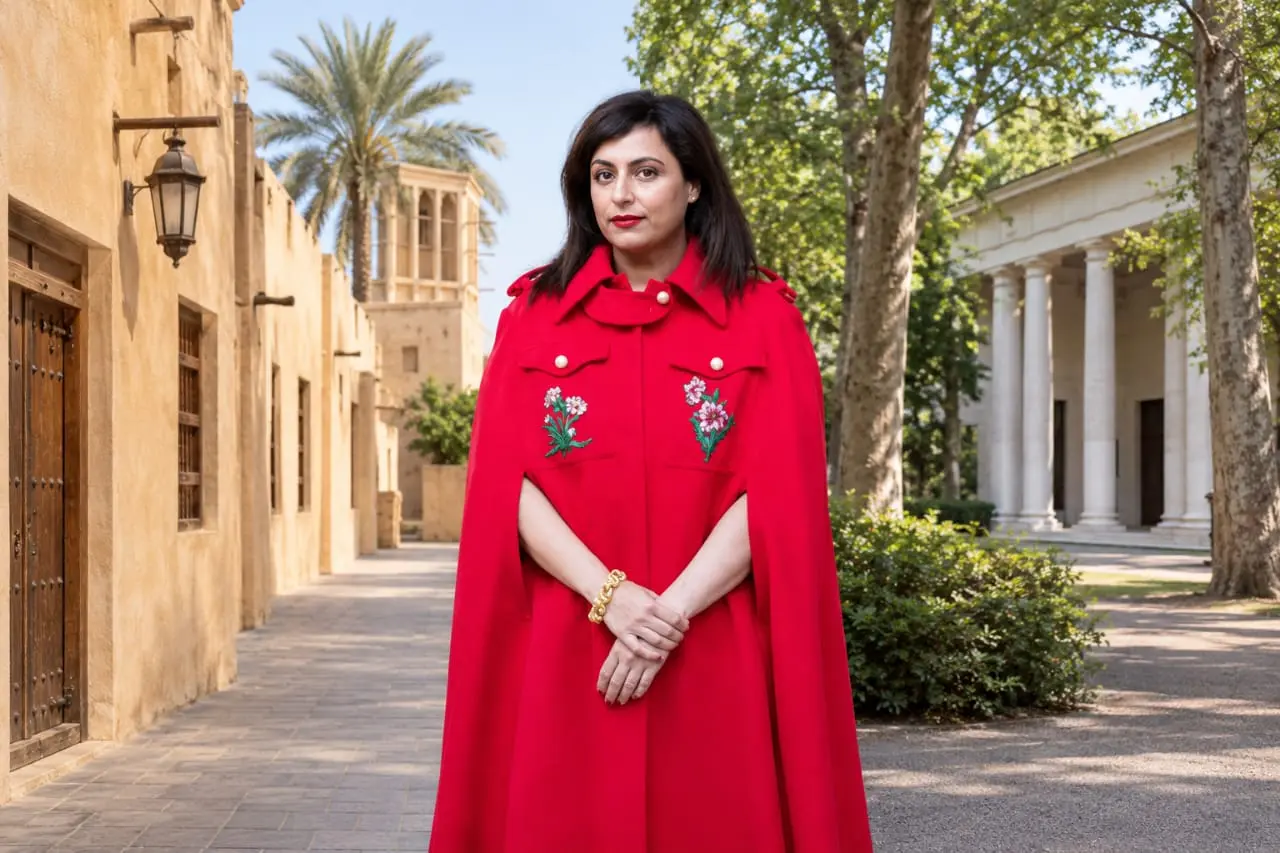
Hoor Al Qasimi: From Sharjah's Al Mureijah to the Venice Biennale 2028
Of course, the title, central theme and list of participating artists for the 2028 exhibition have not yet been announced. It would therefore be premature to judge the final content of the project. What can be said with confidence, however, is that this appointment recognises an individual whose professional record demonstrates that curating, for her, is not simply a matter of selecting artists and arranging artworks within an exhibition. It is about creating the conditions in which diverse narratives can be heard, artistic production can be supported and cultural relationships can be redefined.
Perhaps Hoor Al Qasimi's most significant achievement is precisely this: she did not wait for the global art world to assign Sharjah a place within its established geography. Instead, over more than two decades, she built an institution, supported artists, created educational and research opportunities, and established an international network of cultural collaboration. Venice has now placed its trust in her to bring this experience to one of the world's most important stages for contemporary art.
Hoor Al Qasimi's appointment should be regarded not merely as the achievement of an Arab woman, but as the accomplishment of an approach that builds cultural influence through institution-building, knowledge, continuity and confidence in the artistic potential of regions that have historically received less international visibility.
This is the legacy that could make her presence at the 2028 Venice Biennale an event that extends far beyond a single edition of an exhibition.
LEAVE A RELPY