
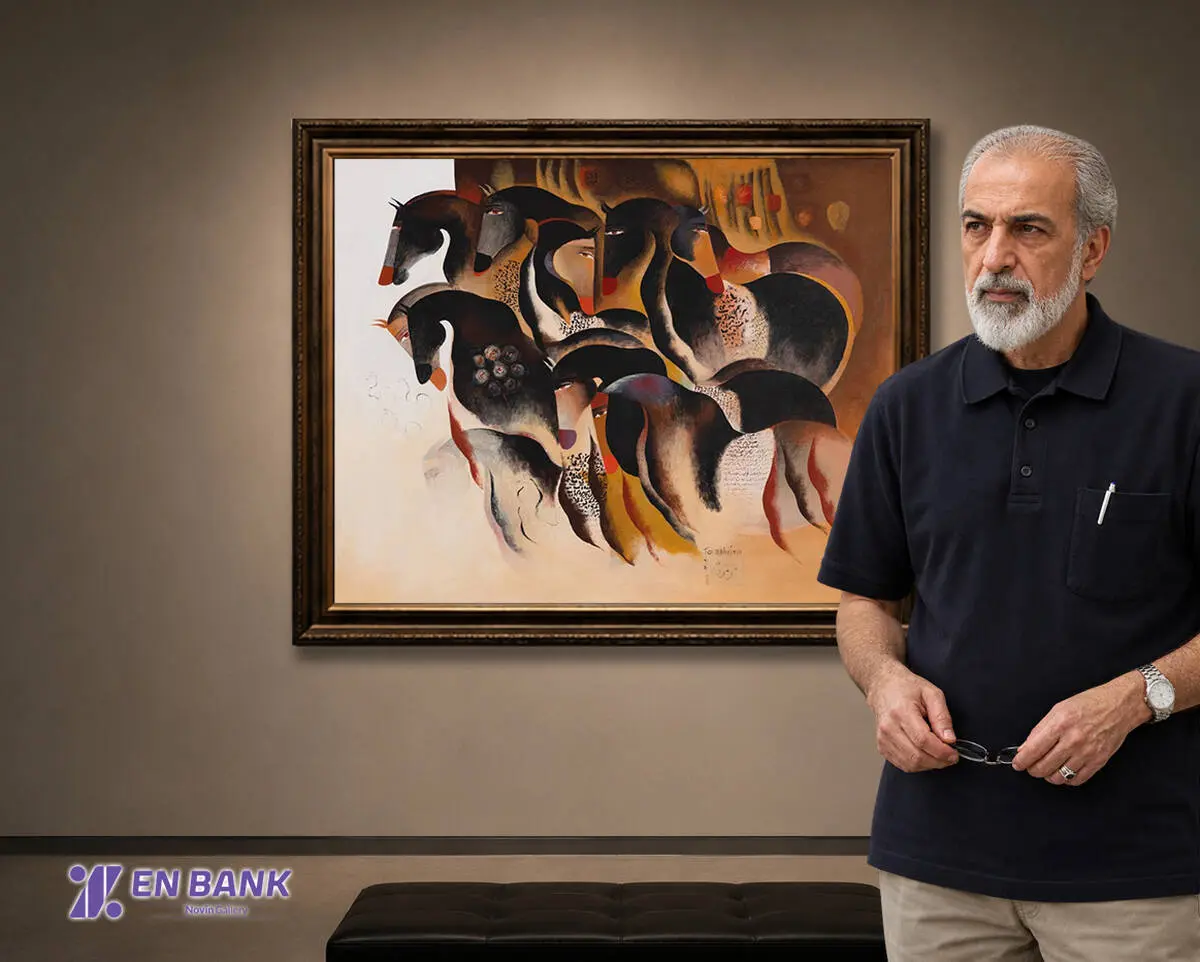
Mohammad Ali Taraghijah’s Horses in the Collection of Novin Gallery, Eghtesad Novin Bank
Taraghijah’s poetic horses transcend their animal nature and become rhythm, memory, identity, and sign. His horses are light-footed beings, released from the earth, and at times they even acquire a distinctly human reading.
ArtDayMe : Eghtesad Novin Bank, Iran’s first private bank, has maintained a prominent presence in Iranian art since its establishment. Through the formation of a distinguished art collection and the establishment of Novin Gallery, the bank has played a pioneering role in presenting and documenting the ecosystem of Iranian art.
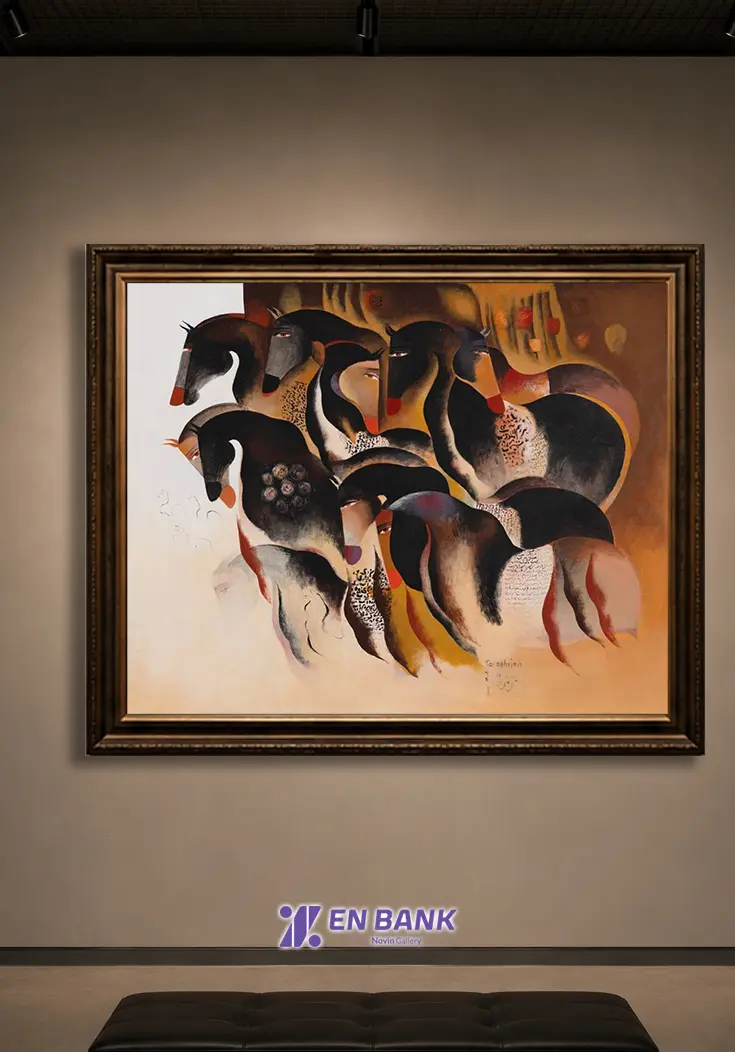
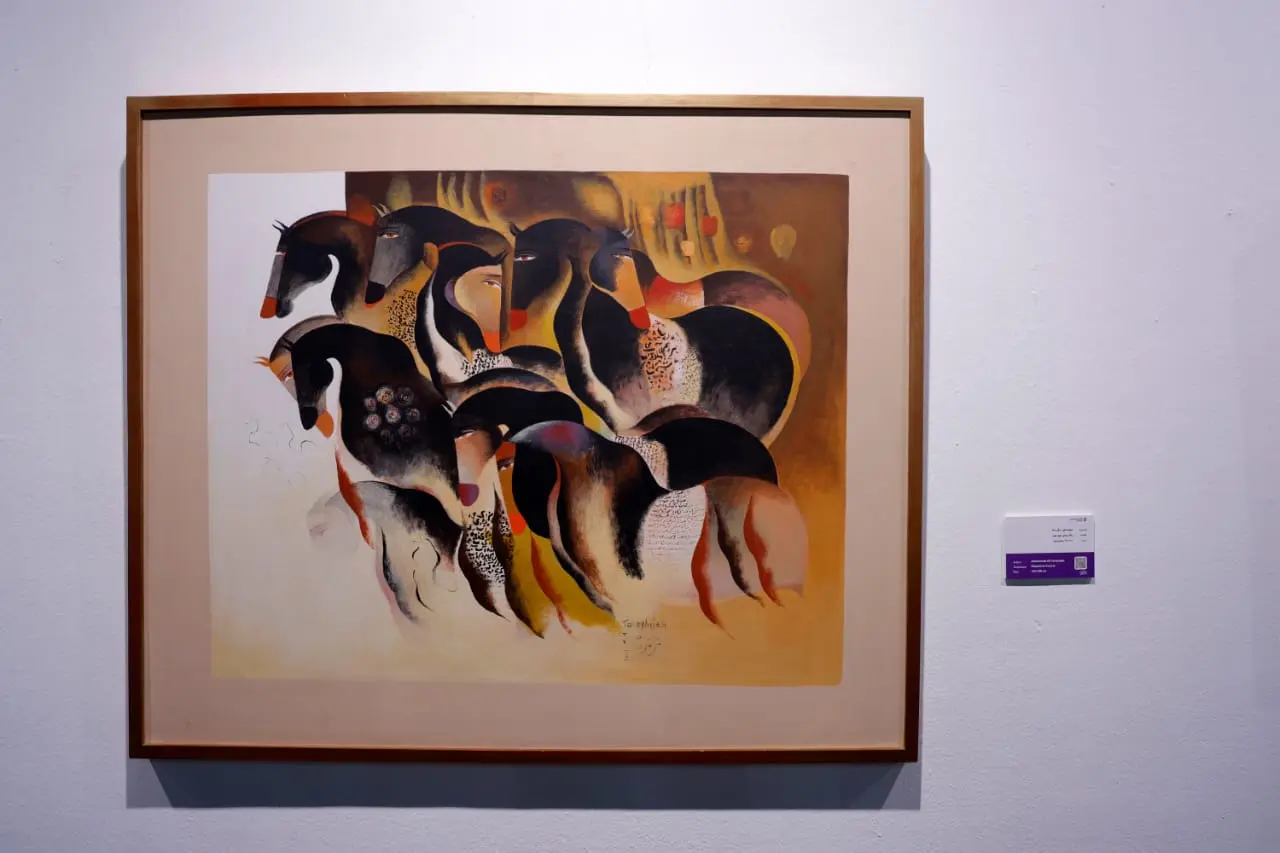
One of the works in the Eghtesad Novin Bank Collection is a remarkable painting by the late master Mohammad Ali Taraghijah [1322–1389 / 1943–2010], measuring 100 × 120 cm and executed in oil on canvas. This untitled work belongs to one of the most important series in Mohammad Ali Taraghijah’s oeuvre, known as the Horses series. It was created twenty years ago, in 2006.
Mohammad Ali Taraghijah was an Iranian modernist and self-taught painter. He studied mechanical engineering but abandoned engineering to pursue his dream of becoming a painter. Winning the Gold Medal at the Iranian Universities Art Competition in 1967 encouraged him to continue along this path.
Taraghijah held his first solo exhibition at Tehran Gallery in 1971, followed by his first international presentation in 1978 at the International Art Exhibition in Basel, Switzerland. Following this exhibition, his works entered international art circles and were repeatedly presented at major art institutions and venues in New York, Tokyo, Delhi, Beijing, Paris, Zurich, and Stuttgart. In 1998, the International Museum of 21st Century Arts (TIMOTCA) in the United States presented his works as representative of Iranian art. Some of his works are held in major art institutions and collections around the world, including the International Museum of 21st Century Arts in the United States, Sharjah Museum of Modern Art, the World Museum Rotterdam, and the collection of the Tehran Museum of Contemporary Art.
Abstract Horses Between Memory, Imagination, and Iranian Culture
In the painting by the late Mohammad Ali Taraghijah, preserved in the collection of Novin Gallery, Eghtesad Novin Bank, the horse is no longer merely a pictorial subject; it becomes a language. A language in which horse figures, human faces, traces of script and writing, patches of color, and areas of empty space all participate in creating a world suspended between memory, imagination, and Iranian culture.
The abstracted horses that dominate this work are among the defining elements of Taraghijah’s personal visual language. Since the 1980s, drawing upon the form of the horse in Persian miniature painting, these horses have maintained a constant presence in some of the artist’s most significant works.
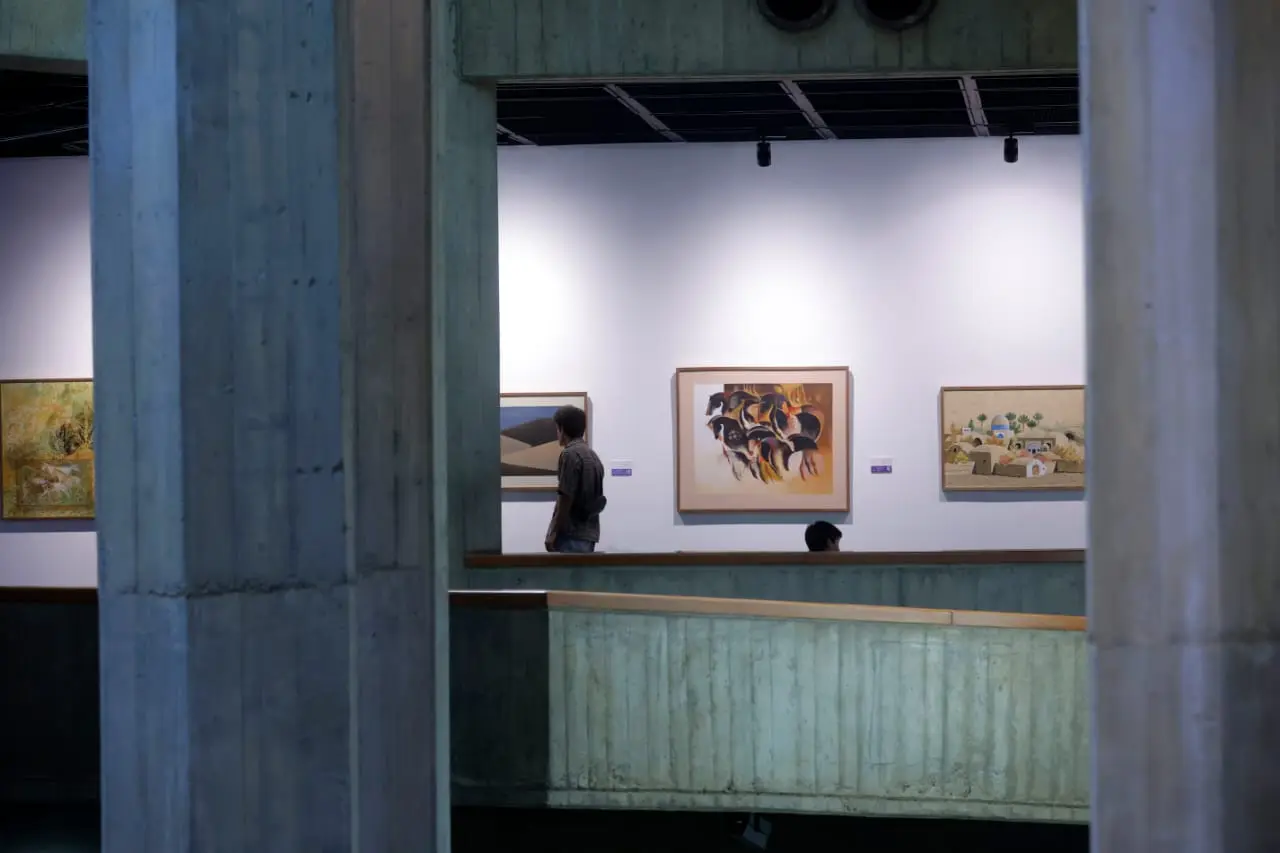
This painting may be read as an image of multiplicity, memory, and liberation; yet more important than any symbolic interpretation is what takes place at the level of the language of painting itself.
Mohammad Ali Taraghijah has detached the horse from nature, reduced and distilled its form, diminished its natural weight and anatomy, given it an almost human face, and then placed it alongside lines, patches of color, and empty spaces. The result is not a herd of horses, but a visual alphabet.
On this canvas, the horses appear to stand beside one another, yet the painting is not about standing still; it is about the desire to leave the ground behind.
Perhaps this is also the secret behind the enduring presence of Taraghijah’s horses: he moved the horse so far away from literal reality that he ultimately transformed it into one of the most recognizable signs of his own visual identity.
First Encounter: Crowding Without Chaos
At first glance, what arrests the viewer is the density of the figures. The horses are positioned extremely close to one another, as though a herd or gathering of beings has converged within a compressed space. Yet this density does not result in visual disorder. Through variations in scale, the direction of the heads, the height of the necks, and differences between light and dark forms, Taraghijah creates an internal rhythm within this seemingly crowded gathering.
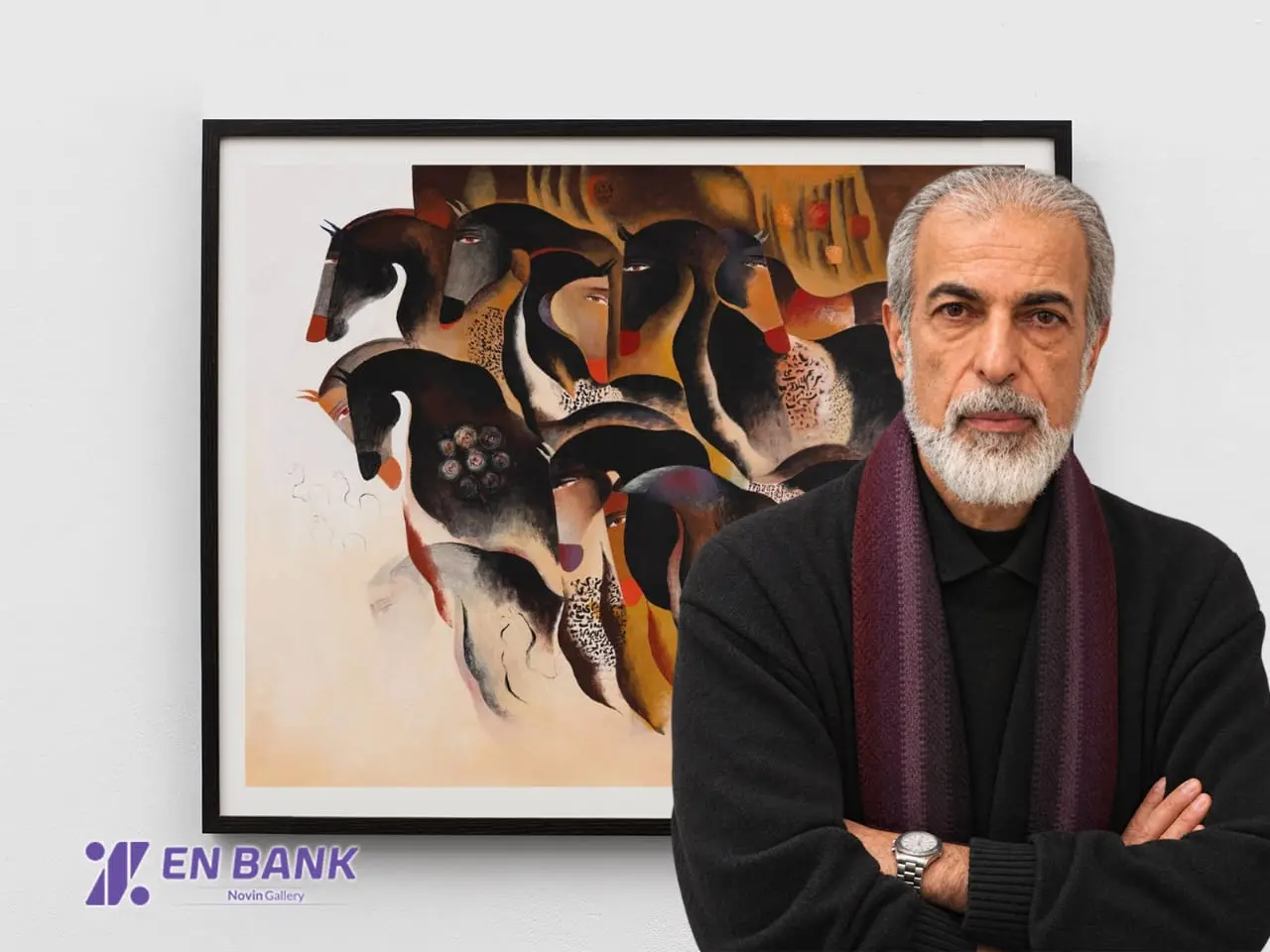
The viewer’s eye moves from one horse to another: from the large figure on the right to the horses at the center, from the partially concealed faces to the patches of writing, and then back again to the animal forms. The painting therefore does not offer a single fixed point of vision; instead, it sets the eye in motion across the entire canvas.
Form: A Horse That Is No Longer a Natural Horse
One of the most important characteristics of the work is its deliberate departure from the natural anatomy of the horse. The necks are elongated, the bodies simplified, and the faces transformed into almost emblematic structures. The eyes are small but highly effective, and in some figures their presence shapes the character of the horse more powerfully than any realistic detail could.
Taraghijah has transformed the horse into a visual prototype: a form that can be repeated again and again without becoming exactly the same horse each time. This distillation separates the work from purely figurative painting and brings it closer to the realm of poetic and abstracted painting.
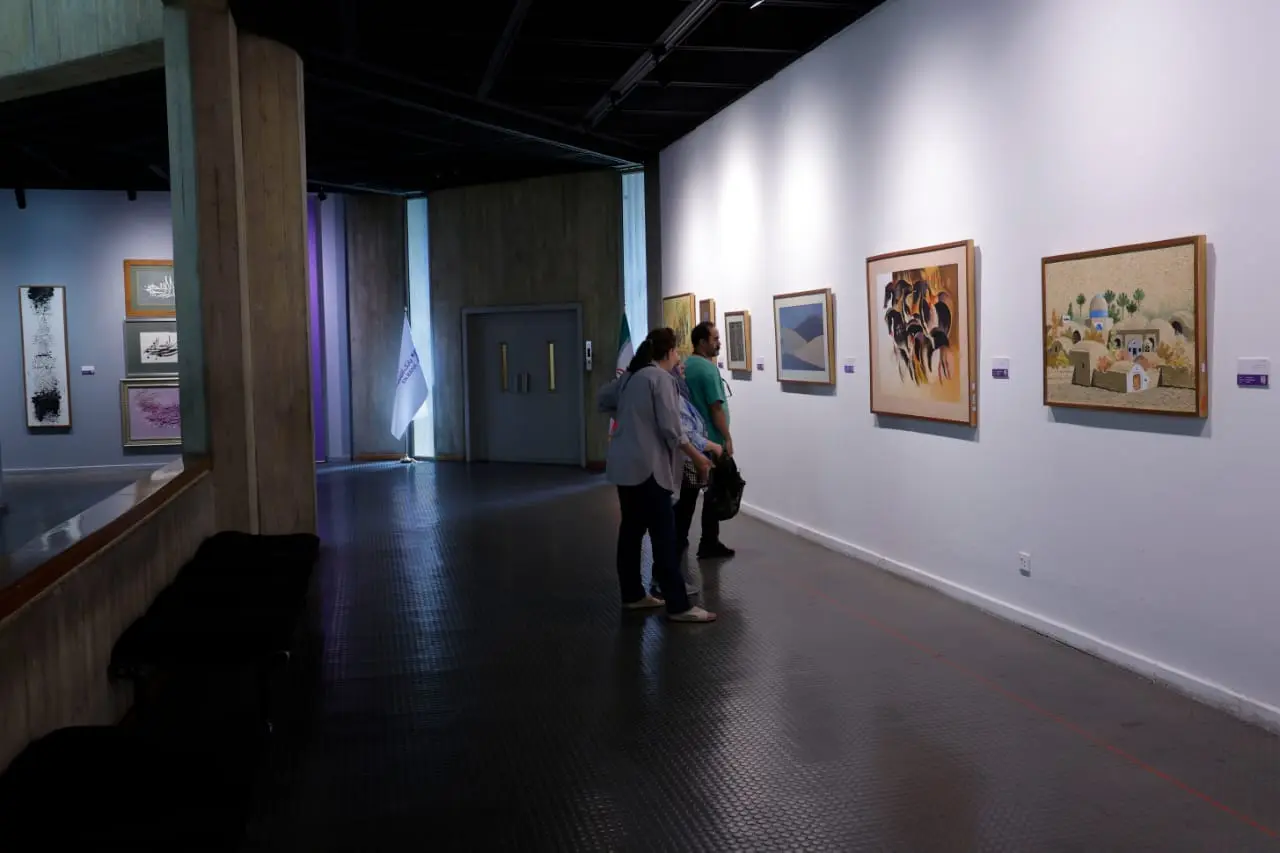
Research and presentations of his work have likewise emphasized the relationship between his abstracted horses, Persian miniature painting, and his search for a personal visual language.
Composition: A Balance Between Weight and Lightness
The composition is built upon a compelling contrast. On the one hand, a large portion of the canvas is occupied by dense, dark figures; on the other, light and almost empty areas around and between certain forms provide visual breathing space.
The visual weight of the painting is noticeably concentrated toward the right and center, where the largest and darkest figures appear. Yet the lighter areas on the left and lower sections of the canvas counterbalance this weight. The painting therefore does not achieve a perfectly symmetrical balance, but rather a dynamic asymmetrical equilibrium.
This point is significant: Taraghijah does not need physical movement to create a sense of motion. The repetition and displacement of forms themselves become movement.
Color: Somewhere Between Earth, Fire, and Memory
The palette of the work by master Mohammad Ali Taraghijah, preserved in the collection of Novin Gallery, Eghtesad Novin Bank, is intensely warm: brown, ochre, gold, orange, red, black, and dirty white and bone tones exist alongside one another. These colors detach the work from a natural landscape and give it the quality of memory—as though the image does not occur in a specific place, but somewhere within a distant recollection.
Red appears on parts of the horses’ faces and necks like an emphatic visual stroke. By contrast, the extensive blackness of the figures gives the composition power and weight, while gold and ochre prevent the darkness from becoming absolute black.
From the perspective of color psychology, the work may also be understood as moving between two poles: the tranquility of earthy tones and the tension of red accents. This contrast prevents the painting’s poetic atmosphere from becoming entirely passive or serene.
Light: Illumination Emerging from Darkness
There is no classical lighting scheme in this work; we are not confronted with a natural light source or realistic chiaroscuro. Instead, light is constructed through the relationship between illuminated and dark surfaces.
The black figures stand out against the lighter golden background, while sections of the horses’ bodies emerge from darkness. This approach lends some of the figures an almost spiritual quality, as though the horses are not entirely grounded in the material world.
This reading corresponds with descriptions of Taraghijah’s visual universe in which his horses have sometimes been regarded as light-footed beings, released from the earth.
Texture: Where Painting Approaches Writing
One of the most compelling elements of the work is the presence of textual and quasi-textual textures appearing across the bodies of some horses and within the pictorial space. These inscriptions are not necessarily designed to be read; here, line becomes visual material rather than merely a carrier of language.
This characteristic connects the work to a tradition within modern Iranian art in which calligraphy and textual signs move beyond their communicative function and become form, texture, and visual rhythm. In discussions of Taraghijah’s work, his use of line and text as texture, alongside horses and other pictorial elements, has likewise been noted as part of his distinctive visual vocabulary.
Space: Neither Landscape Nor Void
This painting does not present us with conventional three-dimensional space. There is no clearly defined ground, horizon, or classical perspective. Instead, the horses inhabit a floating, non-specific space.
The elimination of the ground carries particular significance. The figures are no longer subject to natural weight and gravity. They resemble memory, dream, or sign more than animals standing on a particular plain.
The empty space surrounding certain figures therefore becomes as important as the figures themselves; absence becomes part of the image’s presence.
Repetition: From Herd to Sign
If a single horse in the painting could be read as a motif, its repetition dozens of times produces another meaning. The horse is no longer merely a “subject”; it becomes a building block of the language of painting.
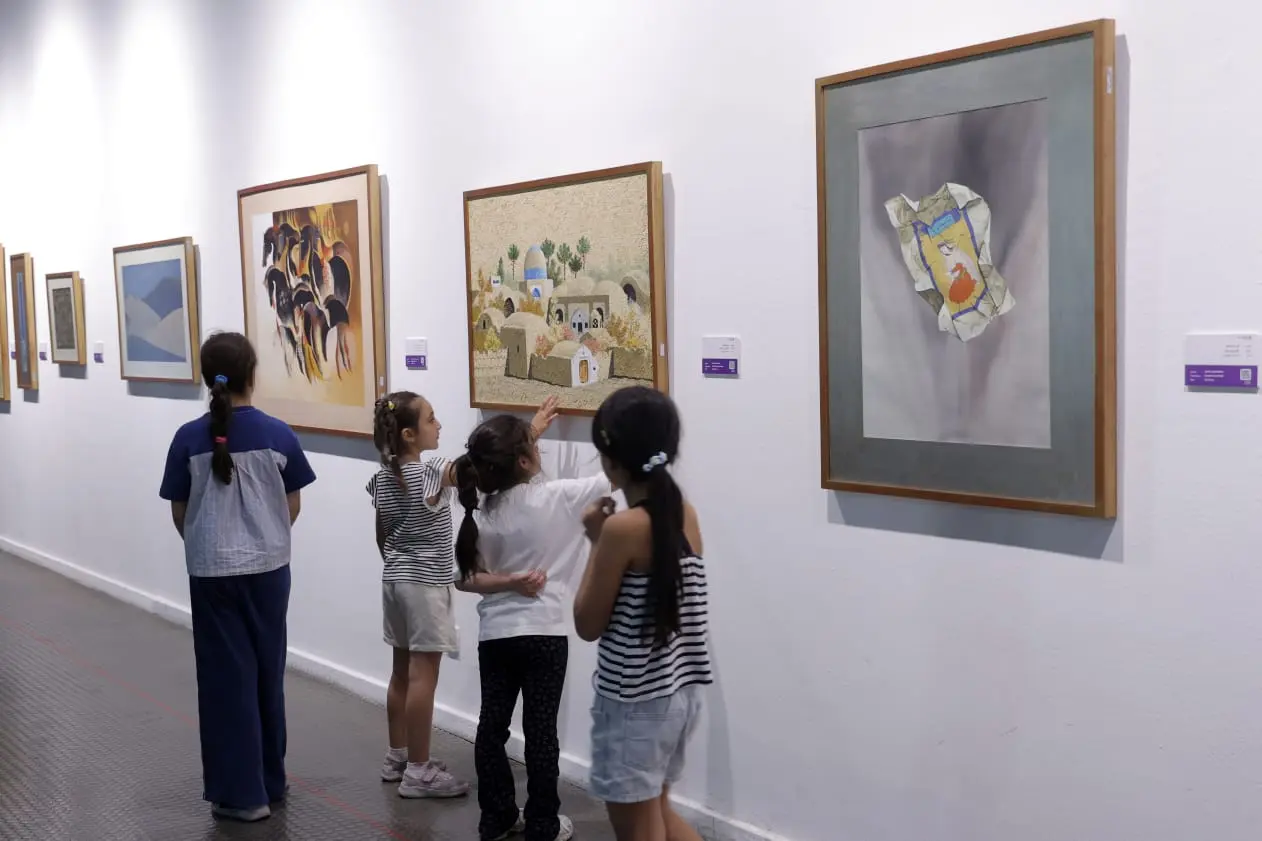
Just as a word, when repeated many times in a poem, moves beyond its literal meaning, Taraghijah’s horses transcend their animal nature here and become rhythm, memory, identity, and sign.
This is precisely where the importance of the horse motif within Taraghijah’s oeuvre can be understood: the horses are not simply a thematic choice; they are part of the artist’s visual signature.
Persian Miniature Painting: A Presence That Was Never Simply Copied
One important way of reading this work is through its relationship with Persian miniature painting. Yet this relationship should not be understood as a reconstruction of miniature painting. Taraghijah translates traditional elements into the language of his own modern painting.
His horses may evoke the horses of Persian miniatures, but they have been separated from the narrative space, scale, and intricate detailing of miniature painting and placed within a modern pictorial field. The work is therefore neither a return to the past nor a complete rupture with it; rather, it constitutes a contemporary reinterpretation of Iranian visual memory.
Human Faces: The Boundary Between Human and Horse
Among the animal figures, traces of human faces and bodies can also be perceived. This coexistence is significant because it softens the boundary between human and animal within the image.
The eyes, noses, and facial structures of certain horses have become so humanized that the viewer may feel they are looking at human figures in the form of horses. Human and animal consequently inhabit a shared world, one in which identities are neither absolute nor clearly separated.
This can also be compared with one of the recognizable characteristics of Taraghijah’s work: the presence of women, faces, and human elements alongside his horses.
The Desire for Liberation
From a psychological perspective, without attributing a definitive intention to the artist, the horse in this work possesses a strong capacity to evoke movement, freedom, travel, and liberation. Yet the intriguing point is that the horses in this painting do not gallop; they appear almost motionless beside one another.
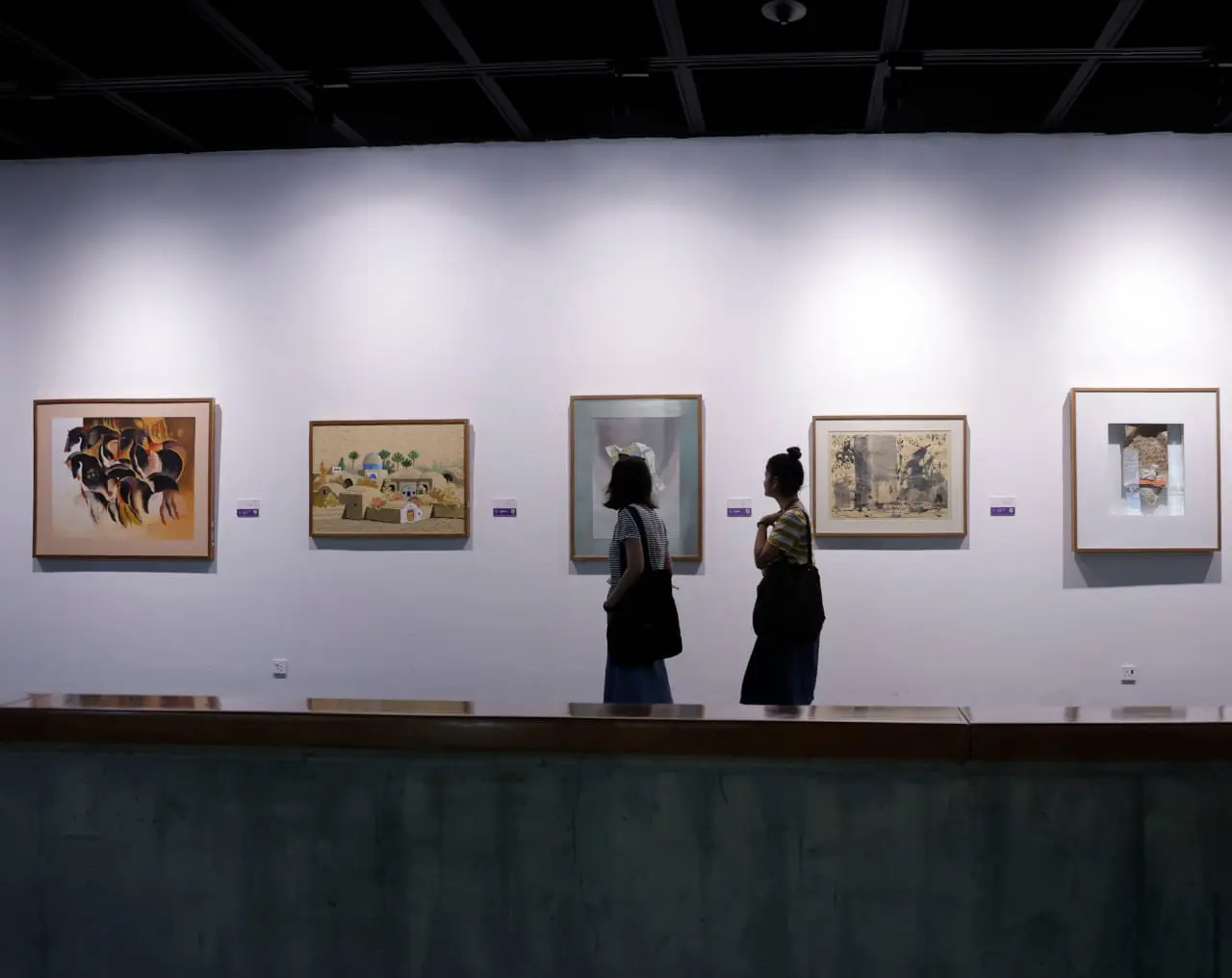
The energy of the work therefore does not arise from movement itself, but from the possibility of movement.
It is as though the artist has captured a moment in which movement has not yet begun—or has momentarily come to a halt. This suspension is one of the elements that contributes to the painting’s poetic character.
Aesthetics: Why Does the Work Still Feel Contemporary?
The aesthetic power of this painting lies in its resistance to belonging exclusively to a particular period or visual fashion. Its simplified forms, earthy palette, elimination of conventional perspective, presence of text, and repetition of horses create a visual language that, while deeply rooted in Iranian culture, remains unmistakably personal to the artist.
In fact, Taraghijah does not ask here, “How is a horse seen?” He poses another questio “How can a horse become a painting?” His answer is not the reconstruction of a horse; it is the creation of a sign of the horse.
Novin Gallery, Eghtesad Novin Bank
Eghtesad Novin Bank — [ www.enbank.ir ] Iran’s first private bank, has maintained, since the beginning of its operations in August 2001, a vision of development extending beyond conventional economic relations. This vision has regarded culture and art not as peripheral fields, but as integral components of the country’s social and cultural capital.
Over more than two decades, the bank has assembled a valuable collection of prominent Iranian artworks, building a treasury of more than one hundred works by leading and influential artists of modern and contemporary Iranian art. This collection is not merely a corporate art collection; it can also be viewed as a visual narrative of part of the history of Iranian art in recent decades.
The establishment of Novin Gallery and the organization of periodic exhibitions drawn from this collection have further demonstrated that Eghtesad Novin Bank has not collected art solely for storage in vaults or corporate spaces. Rather, it has sought to create opportunities for these works to be seen and for dialogue around them to take place among audiences and within the artistic community. At a time when many significant works of modern and contemporary Iranian art remain inaccessible to the public in private collections, presenting such works publicly represents a form of participation in cultural circulation and an effort to strengthen society’s connection with its contemporary artistic heritage.
Today, major financial institutions around the world are not evaluated solely through economic indicators. Their role in enhancing quality of life, cultural development, and support for creativity also contributes to their social standing and institutional reputation. The experience of many leading banks and financial institutions worldwide demonstrates that art can serve as a bridge between economy, culture, and society—a bridge through which financial capital can be transformed into cultural and social capital.
Now, on the eve of August 2026, coinciding with the 25th anniversary of Eghtesad Novin Bank, the institution stands at an important point in its history—a point that could mark the beginning of a new chapter in the relationship between economy and culture.
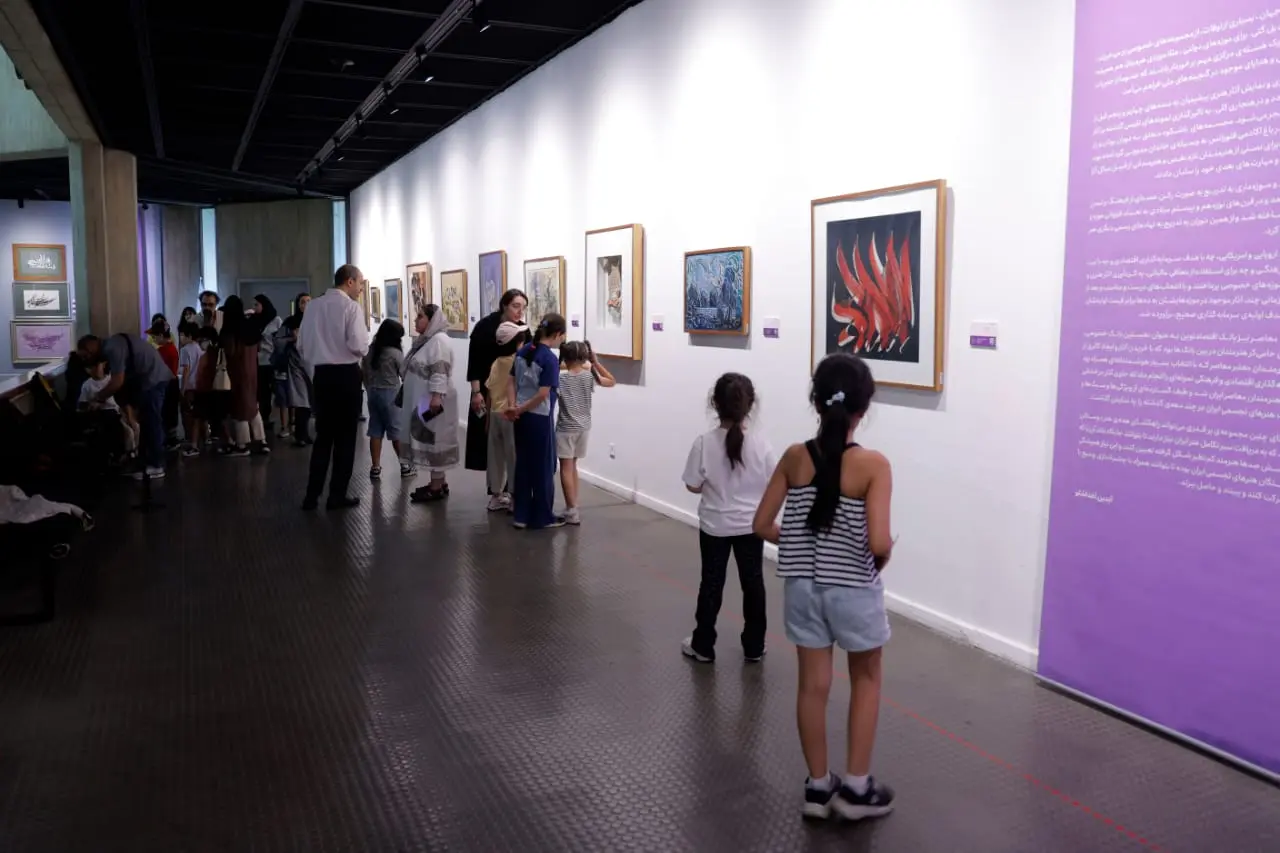
The management of Eghtesad Novin Bank is preparing to articulate a new definition of the role of a financial institution in the arts—one that moves beyond collecting and exhibiting artworks and places greater emphasis on meaningful support for the Iranian art ecosystem, strengthening the creative economy, expanding public access to art, and creating new platforms for interaction among artists, audiences, and the private sector.
At a time when contemporary societies need cultural capital more than ever to strengthen social hope, collective dialogue, and the renewal of identity, the active and purposeful engagement of economic institutions with the arts can play a role extending beyond financial support. Such engagement is, in effect, an investment in the cultural future of society—a future in which economic and cultural development are understood as interconnected and mutually reinforcing.
A quarter-century of Eghtesad Novin Bank’s activity offers an appropriate opportunity for the bank to once again demonstrate its pioneering role—not only in private banking, but also in shaping a new model for the participation of economic institutions in the cultural and artistic life of Iran.
LEAVE A RELPY