
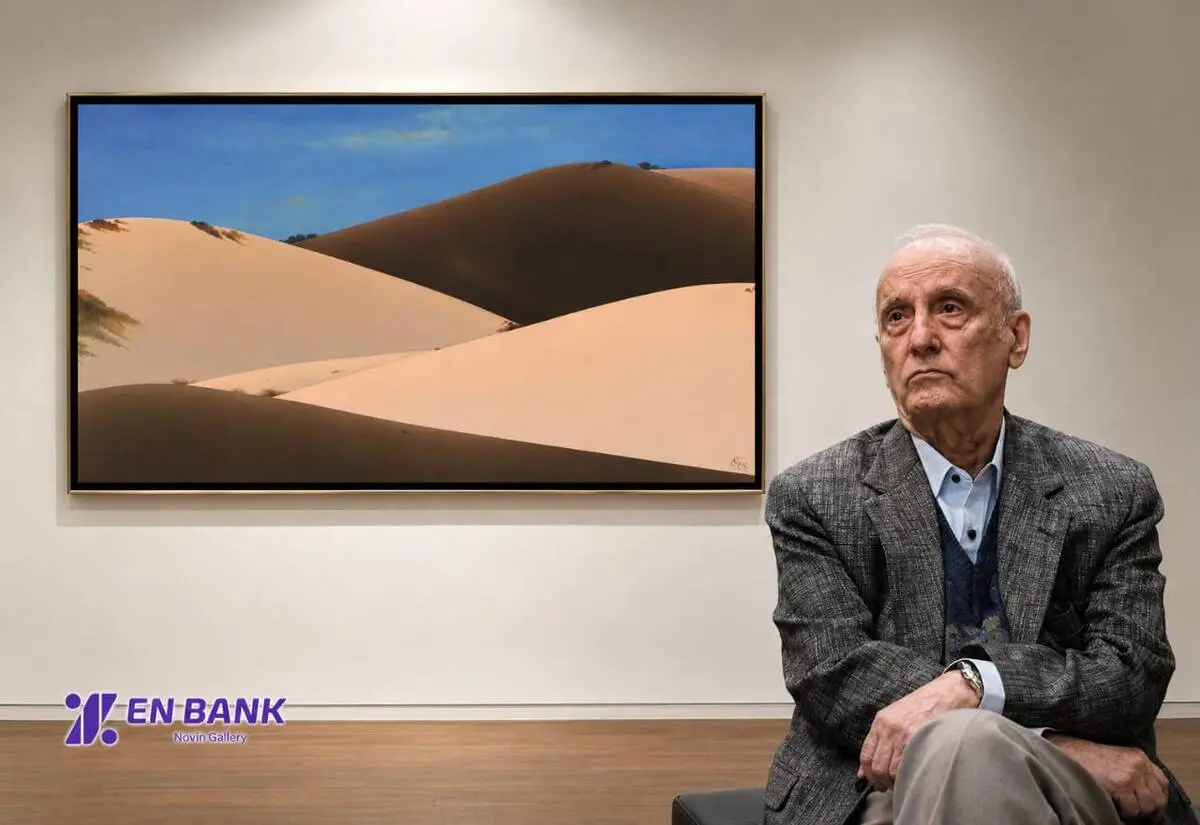
Jalal Shabahangi’s Mountains in the Novin Gallery Collection of Eghtesad Novin Bank: The Geometry of Silence in Sand Dunes
Desert sand dunes in Jalal Shabahangi’s paintings transform nature into a modern visual language through colour, curves, and light. Despite their apparent simplicity, these minimalist landscapes embody a precise sense of order, while the rhythmic succession of curves gives the dunes a distinctive new identity.
ArtDayMe : Eghtesad Novin Bank (EN Bank), Iran’s first private bank, has maintained a prominent presence in the country’s art scene since its establishment. Through the formation of a distinguished art collection and the establishment of Novin Gallery, the bank has emerged as a pioneering institution in presenting and promoting Iran’s artistic landscape.
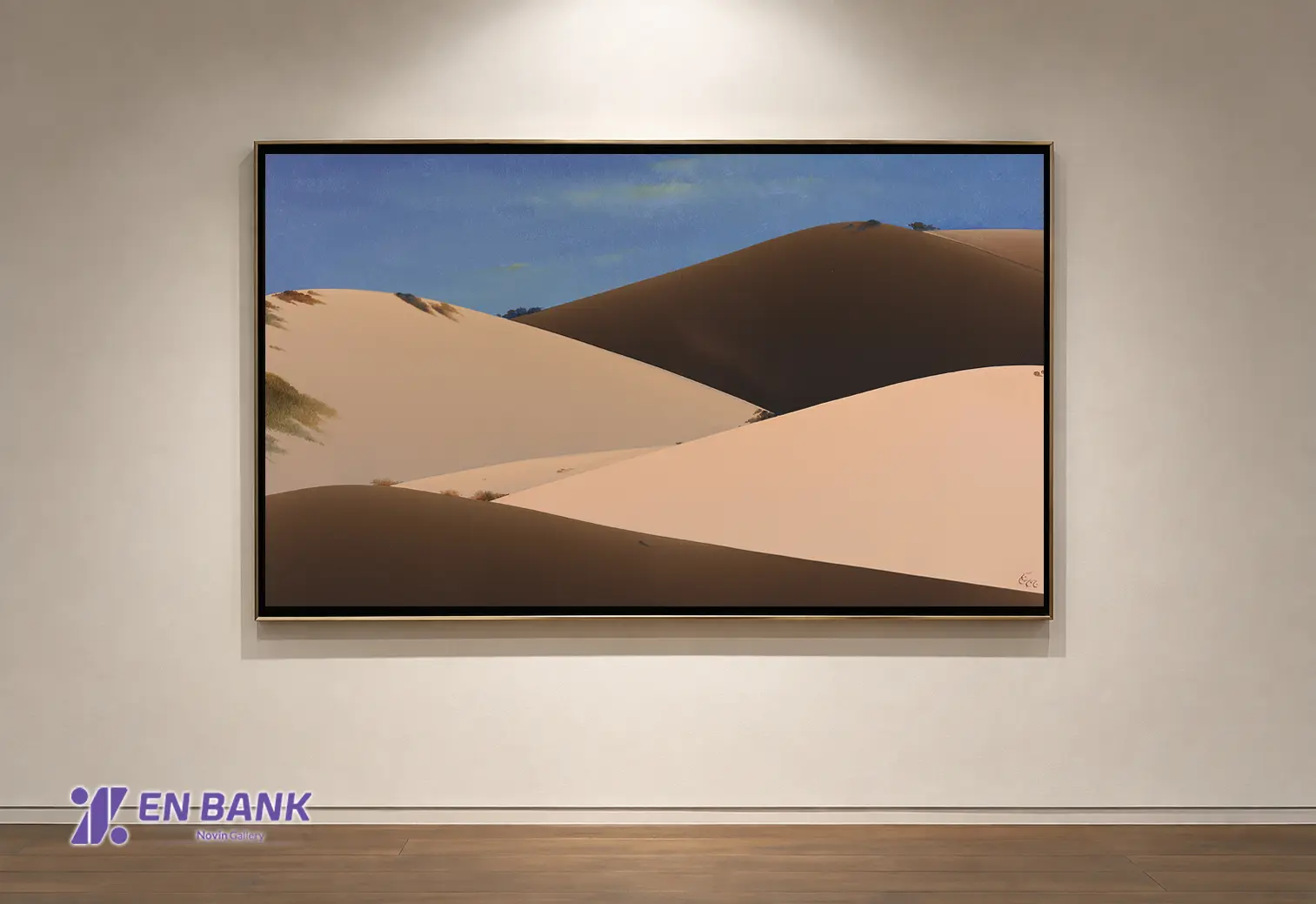
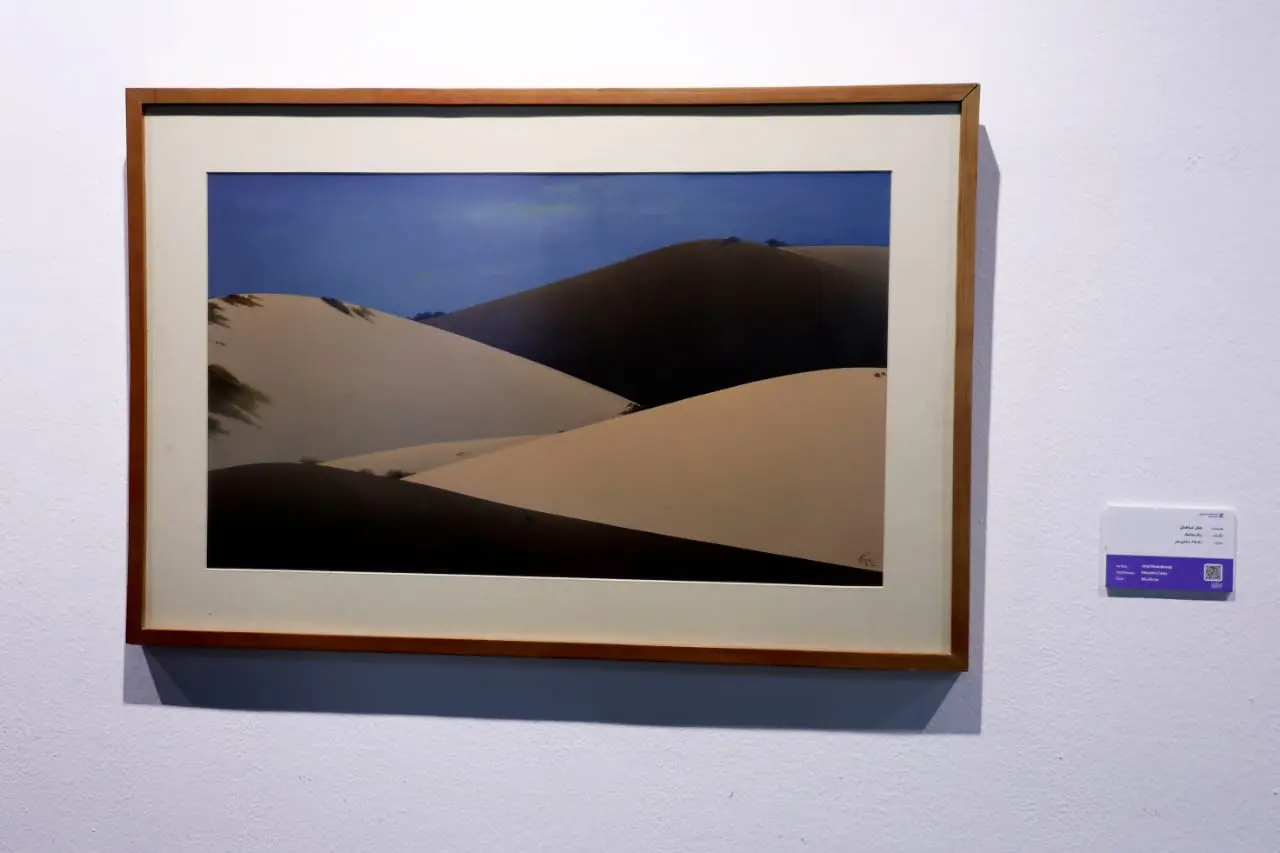
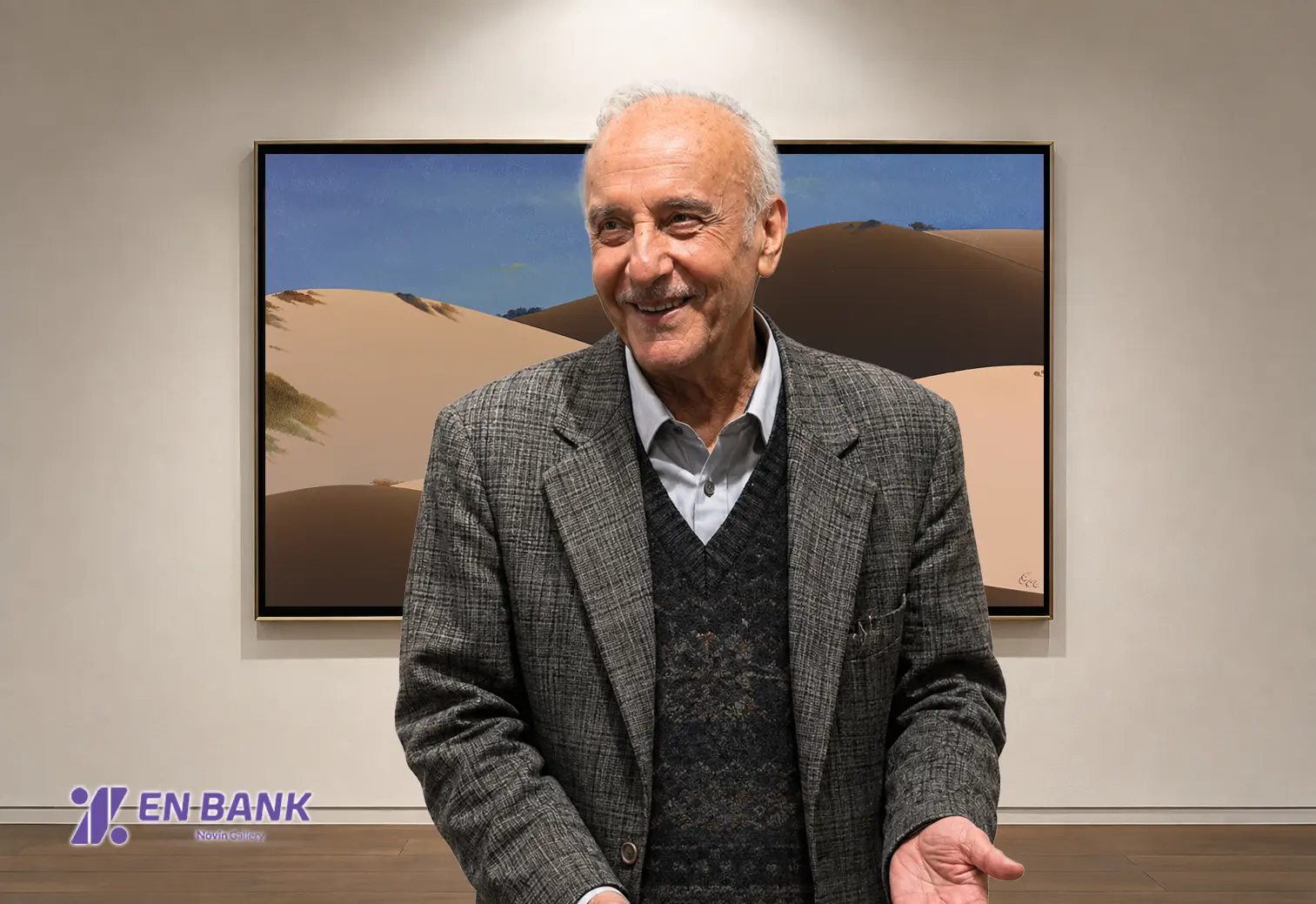
Among the treasures of the Eghtesad Novin Bank Collection is an iconic work by the late master Jalal Shabahangi, belonging to his celebrated series of mountains and hills. The painting measures 50 × 85 centimetres.
Master Jalal Shabahangi (1935–2023) was a graphic designer, painter, sculptor, and full member of the Iranian Academy of Arts. He graduated from San José State University in California, USA, where he earned a master’s degree in graphic design and contemporary painting, as well as a bachelor’s degree in graphic advertising.
Shabahangi was a faculty member of the School of Fine Arts and had three decades of teaching experience. In addition to his work in painting, he was renowned for creating glass sculptures.
This painting by the late Jalal Shabahangi, held in the Novin Gallery collection of Eghtesad Novin Bank, is among the best-known examples of his work. In these paintings, the silent desert and its sand dunes are transformed into a world of form, colour, and movement. Nature moves beyond the details of everyday observation, arriving at a concise, poetic, and modern visual expression.
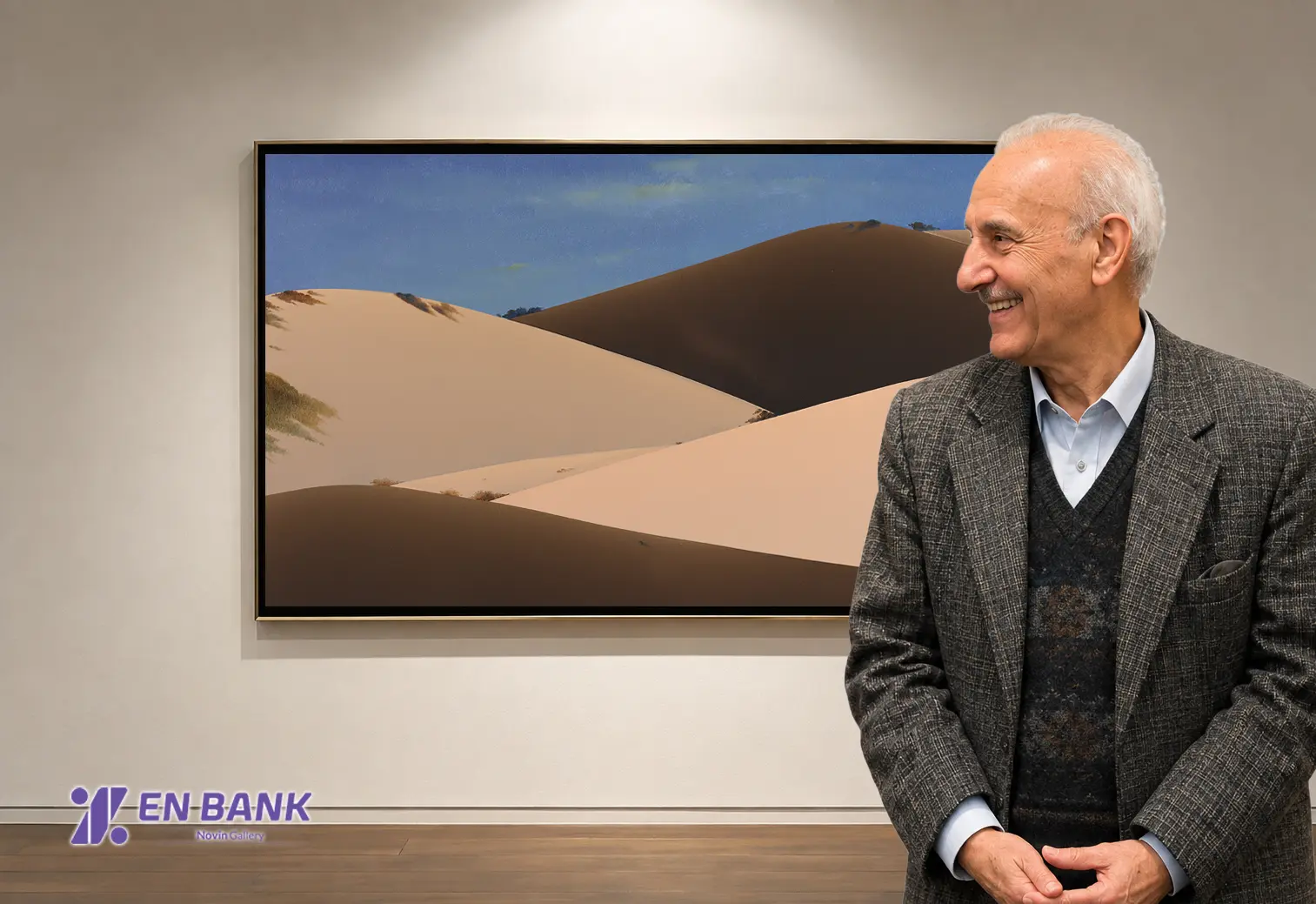
In this 50 × 85 cm painting, the sand dunes are shaped by soft, continuous curves. Combined with chromatic contrasts and the interplay of light and shadow, these curves create a carefully balanced and visually compelling composition.
The first striking feature of the painting is the intelligent simplicity of its composition. By reducing detail and concentrating on the essential structure of the landscape, Shabahangi transforms the sand dunes into independent yet interconnected forms. Each dune possesses its own visual identity while remaining part of a larger order—an order shaped by the juxtaposition of light and dark surfaces, the continuity of curved lines, and the proportions between the elements of the image. Here, nature is represented not through an abundance of detail, but through the precise selection of essential elements.
_Curves That Give the Image Its Rhythm
The curved lines in this painting are the principal means of guiding the viewer’s gaze. The gentle contours of the dunes lead the eye from the foreground to the middle ground and onward to the horizon, creating a sense of quiet movement within the landscape. This visual movement lends the painting a rhythm reminiscent of music, as though the curves, varying in scale, direction, and extension, were notes played in harmony.
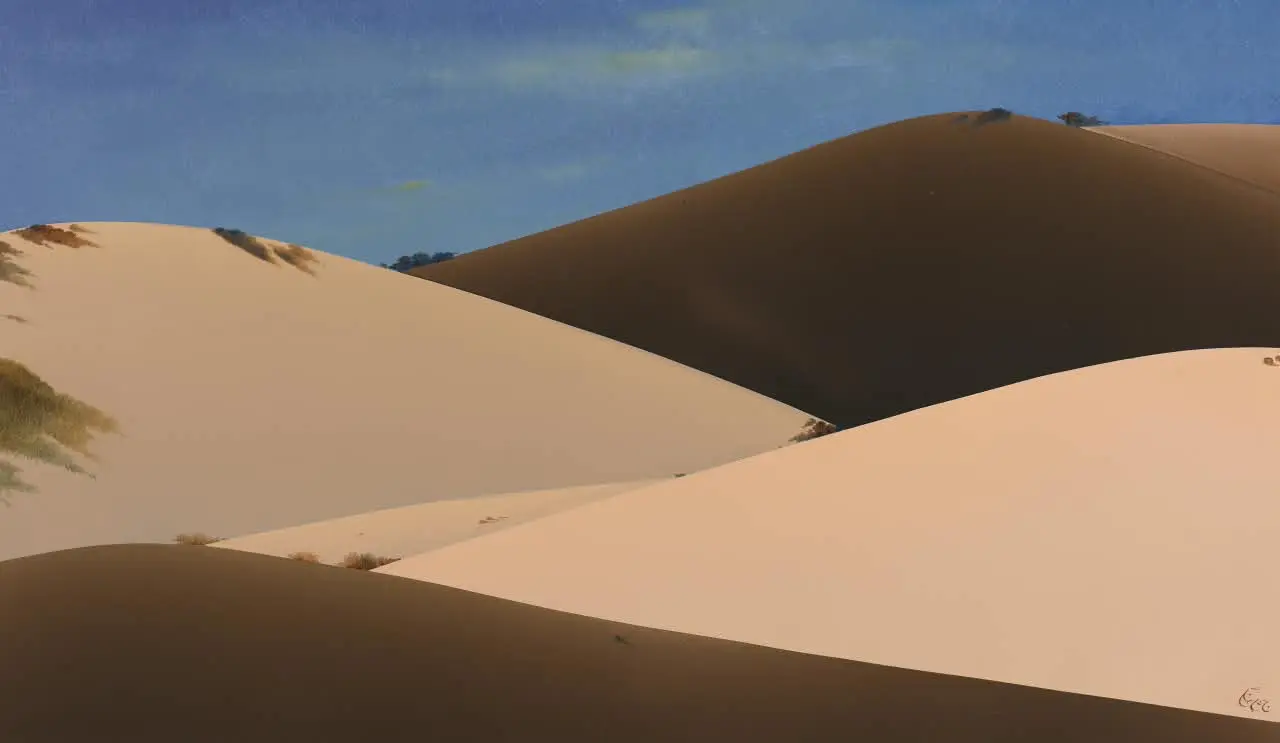
The repetition of curved forms, while preserving their variety, is another defining feature of the composition. The dunes resemble one another, yet differ in size and position, preventing the image from becoming monotonous. The result is a dynamic order in which the apparent stillness of the desert is intertwined with the movement of the viewer’s gaze.
_The Blue of the Sky Against the Warmth of the Sands
Colour plays a fundamental role in shaping the atmosphere and sensory qualities of the landscape. The deep blue of the sky, set against the earthy, sandy-beige, and cream tones of the dunes, creates a contrast between cool and warm hues, lending the image depth and balance. The relatively uniform expanse of the sky provides visual breathing space, while the warm colours of the earth convey the vastness and material presence of the desert.
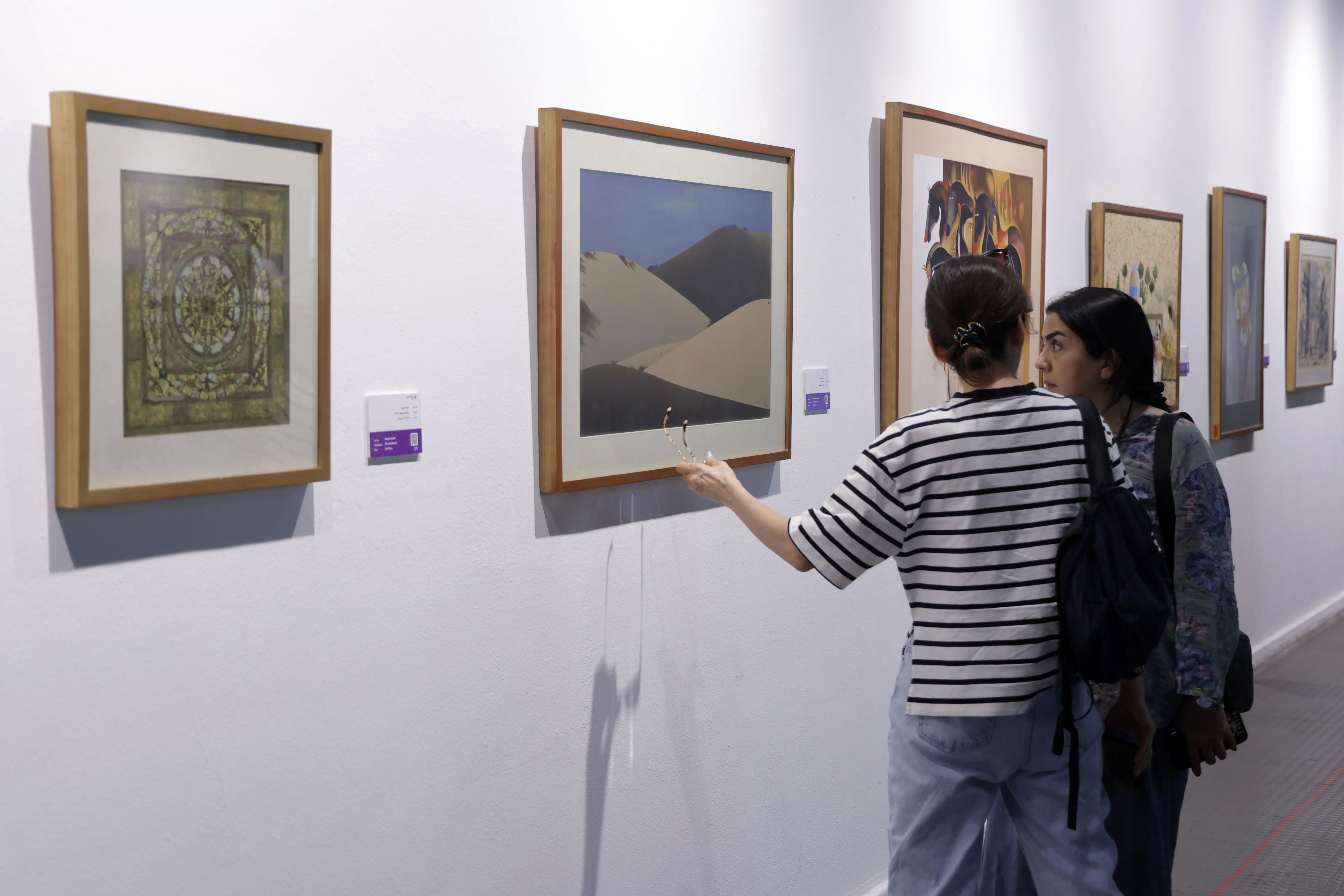
In contrast, very dark brown masses and near-black tones intensify the painting’s visual force. Set against the lighter sands, these dark areas not only emphasise the volume of the dunes but also lend structural strength to the composition.
The significance of colour in this painting extends beyond the selection of attractive hues. Its real strength lies in the relationships established between them. Blue gains depth beside the earthy tones, the lighter sands appear warmer against the dark areas, and each surface acquires its visual identity through its relationship with the others.
_Light and Shadow: The Architecture of Form
In this landscape, light serves as a means of shaping volume and organising space. The illuminated surfaces of the sand stand against darker masses, and the differences in tonal value between them reinforce the image’s depth. The dunes are distinguished from one another without requiring an abundance of detail, occupying a space composed of multiple layers.
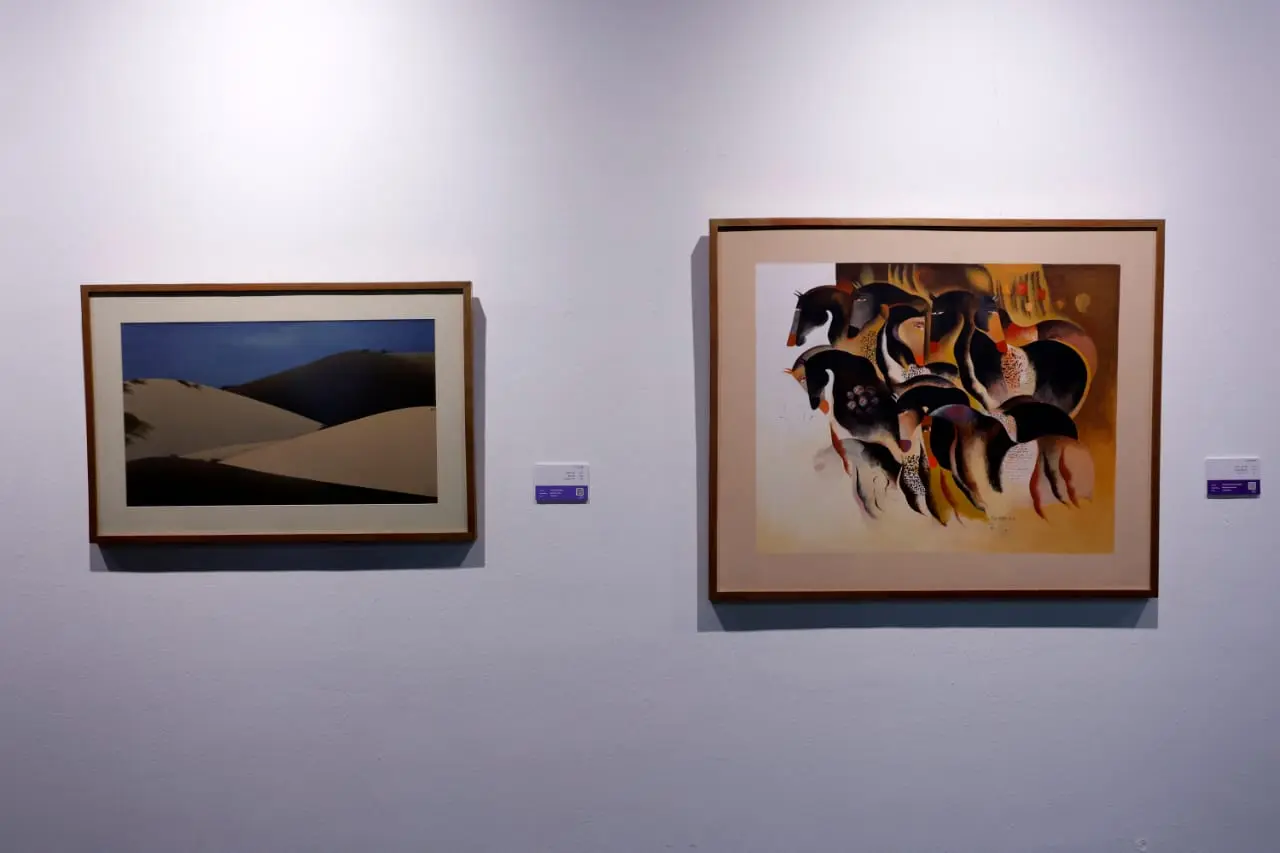
Perspective in this painting relies less on converging lines and geometric rules than on the overlapping of dunes, differences in colour, and the distribution of light and darkness. In this way, the landscape retains two qualities simultaneously: the depth of a natural environment and the autonomy of colour as a defining element of modern painting. This balance between the representation of nature and an emphasis on pictorial structure is one of the work’s compelling characteristics.
_Simplicity as an Aesthetic Achievement
Simplicity in this painting is the outcome of refinement and deliberate selection. By eliminating unnecessary elements, the artist directs the viewer’s attention towards the fundamental relationships within the image: line, surface, colour, light, and distance. This economy of elements gives each component a distinct role, allowing the composition to remain rich and coherent despite its apparent restraint.
Within this structure, the desert transcends its role as a subject of natural description and becomes a setting for aesthetic experience. Before seeking a narrative or symbolic meaning, viewers can appreciate the harmony of forms, the tranquillity of the colours, and the gentle movement of the lines. This quality makes the work engaging both for audiences drawn to landscape painting and for those interested in the visual language of modern art.
_Jalal Shabahangi and the Transformation of Nature into a Personal Visual Language
Jalal Shabahangi, the Iranian painter, graphic designer, and sculptor, was among the artists who made nature and the landscapes of plains and deserts central themes in their artistic practice. His education at San José State University in California and his professional experience in graphic design are important contexts for understanding the development of his visual language. His attention to the organisation of surfaces, compositional balance, and the refinement of visual elements is particularly evident in this painting.
His work with glass sculpture also constituted a significant part of his artistic career, a field in which light, transparency, and the relationship between surface and volume are especially important. This aspect of his practice provides a useful context for considering his sensitivity to visual qualities, although each work must also be understood on its own terms.
In this painting, preserved in the Novin Gallery collection of Eghtesad Novin Bank, nature is not merely depicted. Through selection, simplification, and the careful arrangement of chromatic and formal relationships, it is transformed into a personal visual structure. Despite their apparent simplicity, the sand dunes embody a precise order, while the desert acquires a new identity through an arrangement of surfaces and curves.
_The Desert: A Space Between Stillness and Transformation
At first glance, the desert appears calm and unchanging, yet sand dunes are constantly subject to transformation. Wind can alter their shapes and shift their boundaries. Painting captures this mutable landscape in a moment of stillness—a moment in which the curves appear fixed and the shadows settle into a stable arrangement.
From this perspective, the work can be understood as an encounter between nature’s continual transformation and the enduring presence of the image. What changes incessantly in the outside world becomes a lasting structure within the painting. This interpretation adds a contemplative dimension to the landscape, demonstrating how an apparently simple subject can provide the basis for an experience that extends beyond direct observation.
Ultimately, Jalal Shabahangi’s painting is a compelling example of his ability to transform a natural landscape into a refined modern visual language. The harmony of the curves, the measured contrast between warm and cool colours, the organisation of light and shadow, and the economy of visual elements produce a work whose strength derives from its internal coherence. Here, the desert is not merely an expanse of sand and sky, but an ordered interplay of colour, rhythm, and space—an order that, in its silence, invites viewers to pause, observe, and reflect.
_Novin Gallery of Eghtesad Novin Bank
Eghtesad Novin Bank — www.enbank.ir — Iran’s first private bank, adopted a vision of development that extended beyond conventional economic relations from the earliest years of its operations, which began in August 2001. Within this vision, culture and the arts were regarded not as peripheral concerns, but as integral components of the country’s social and cultural capital.
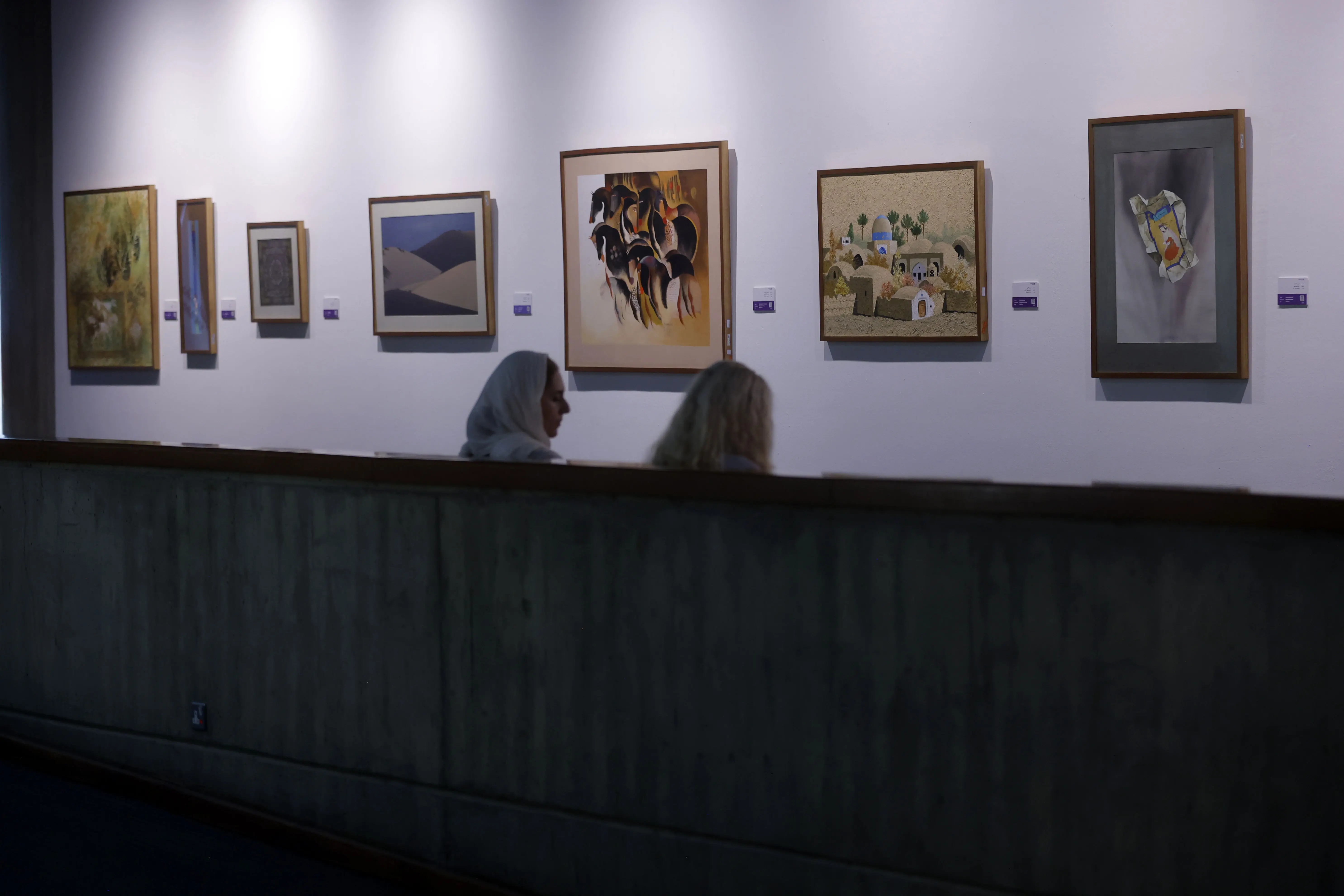
Over more than two decades, the bank has assembled a valuable collection of outstanding Iranian artworks, bringing together more than one hundred works by prominent and influential figures in modern and contemporary Iranian art. This collection is more than a corporate art holding; it offers a visual account of a significant chapter in the recent history of Iranian art.
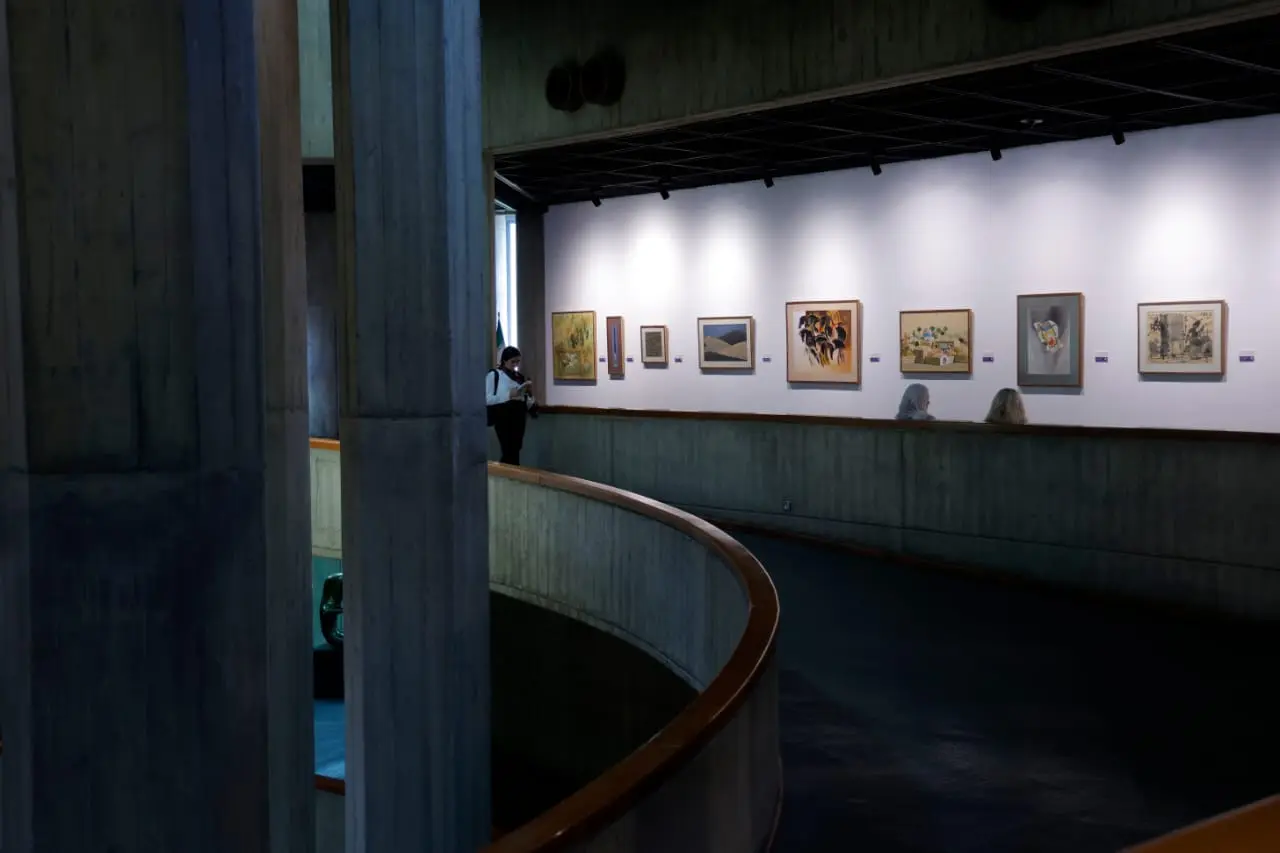
The establishment of Novin Gallery and the organisation of periodic exhibitions featuring works from the collection have demonstrated that Eghtesad Novin Bank has not gathered art solely for storage in vaults or display in corporate offices. Instead, it has sought to make these works accessible to audiences and to encourage dialogue within the artistic community. At a time when many significant works of contemporary Iranian art remain in private collections beyond public reach, exhibiting these works contributes to cultural circulation and strengthens the public’s connection with the country’s contemporary artistic heritage.
Today, major financial institutions around the world are assessed by more than economic indicators. Their contributions to quality of life, cultural development, and the support of creativity also shape their standing and social reputation. The experience of many leading banks and financial institutions demonstrates that art can serve as a bridge between the economy, culture, and society—a bridge through which financial capital can be transformed into cultural and social capital.
Now, as Eghtesad Novin Bank approaches its twenty-fifth anniversary in August 2026, the institution stands at an important point in its history, one that could mark the beginning of a new chapter in the relationship between the economy and culture.
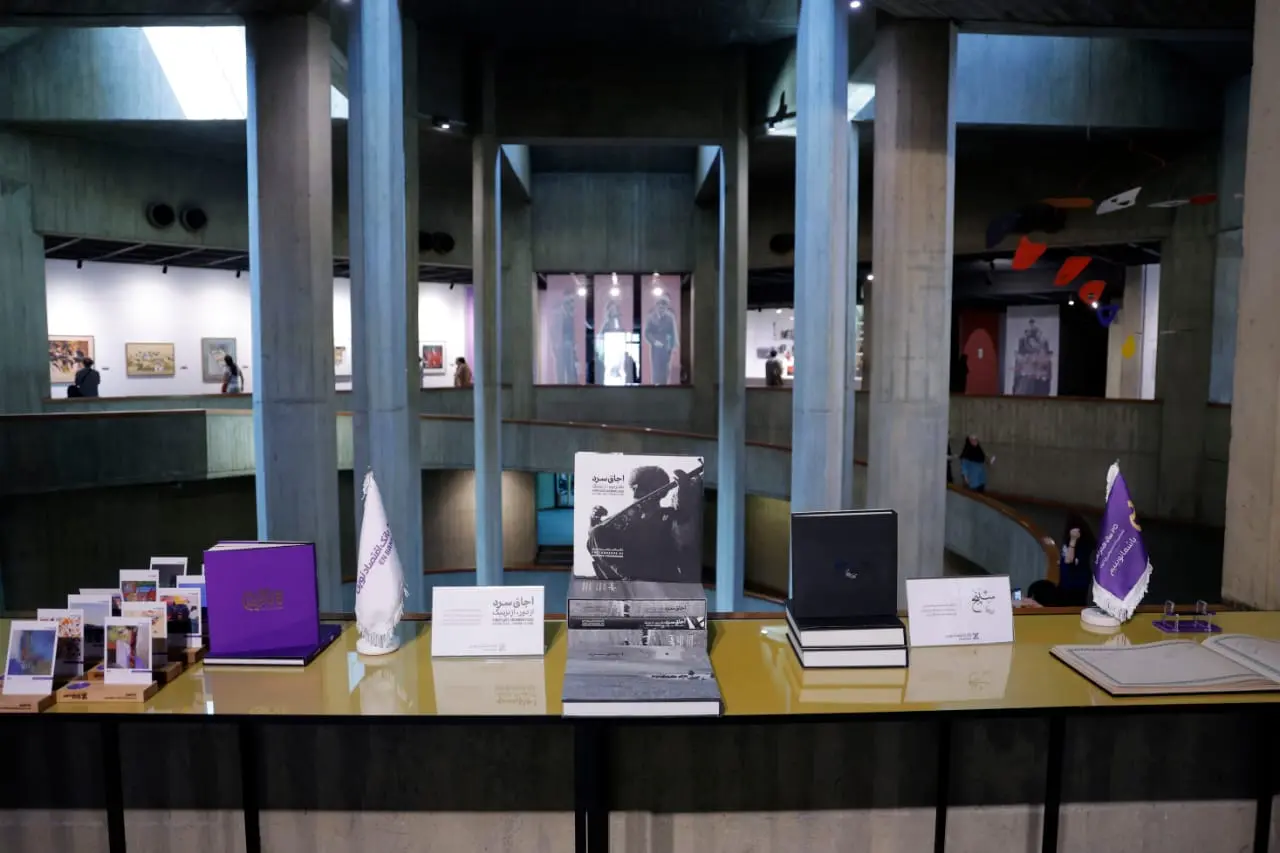
The management of Eghtesad Novin Bank is preparing to articulate a new vision for the role of a financial institution in the arts. This vision will extend beyond collecting and exhibiting artworks, focusing instead on meaningful support for Iran’s art ecosystem, the strengthening of the creative economy, the expansion of public access to art, and the development of new platforms for interaction among artists, audiences, and the private sector.
At a time when societies need cultural resources more than ever to strengthen social hope, collective dialogue, and the renewal of identity, the active and purposeful engagement of economic institutions in the arts can play a role that extends far beyond financial support. Such engagement represents an investment in the cultural future of society—a future in which economic and cultural development are understood as complementary and mutually reinforcing forces.
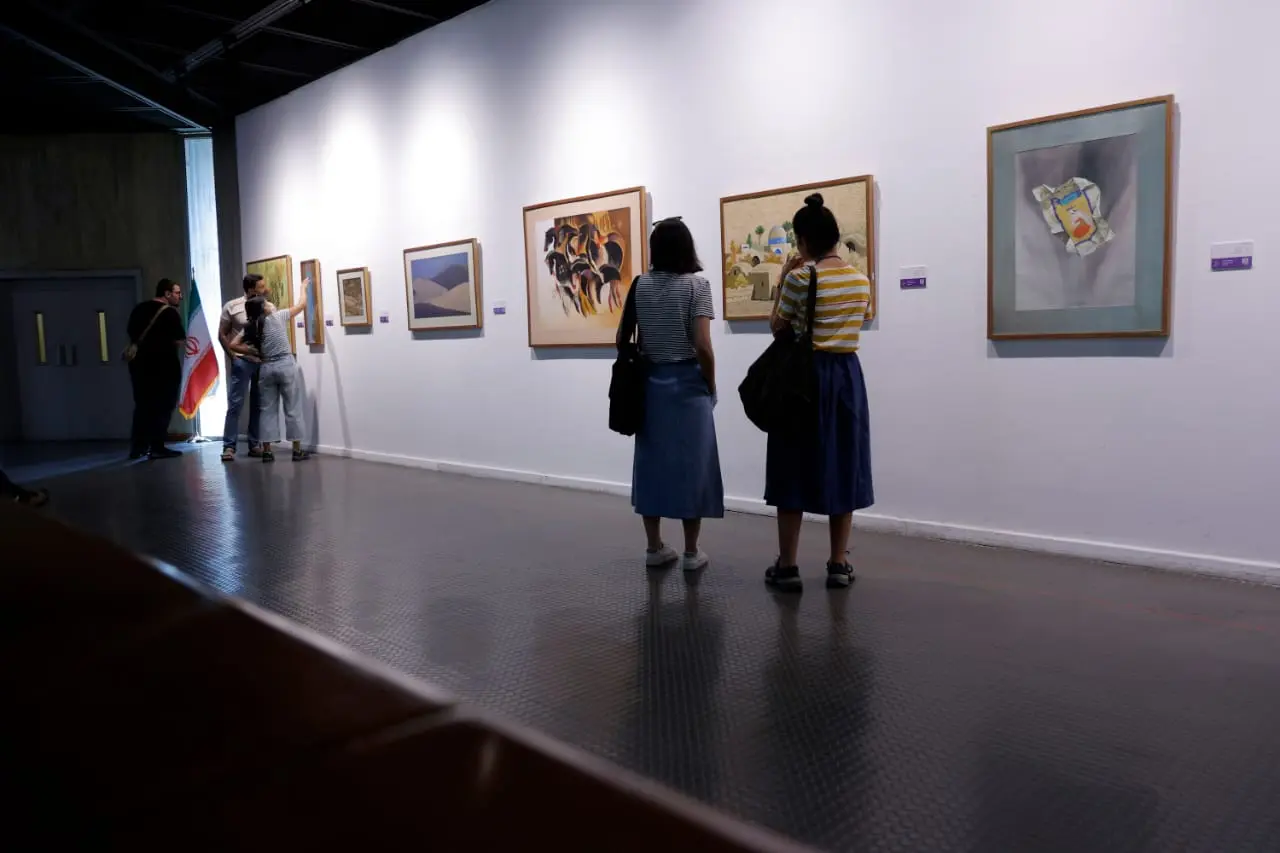
The bank’s quarter-century of activity provides Eghtesad Novin Bank with an opportunity to reaffirm its pioneering role, not only in private banking but also in shaping a new model for the participation of economic institutions in Iran’s cultural and artistic life.
LEAVE A RELPY