
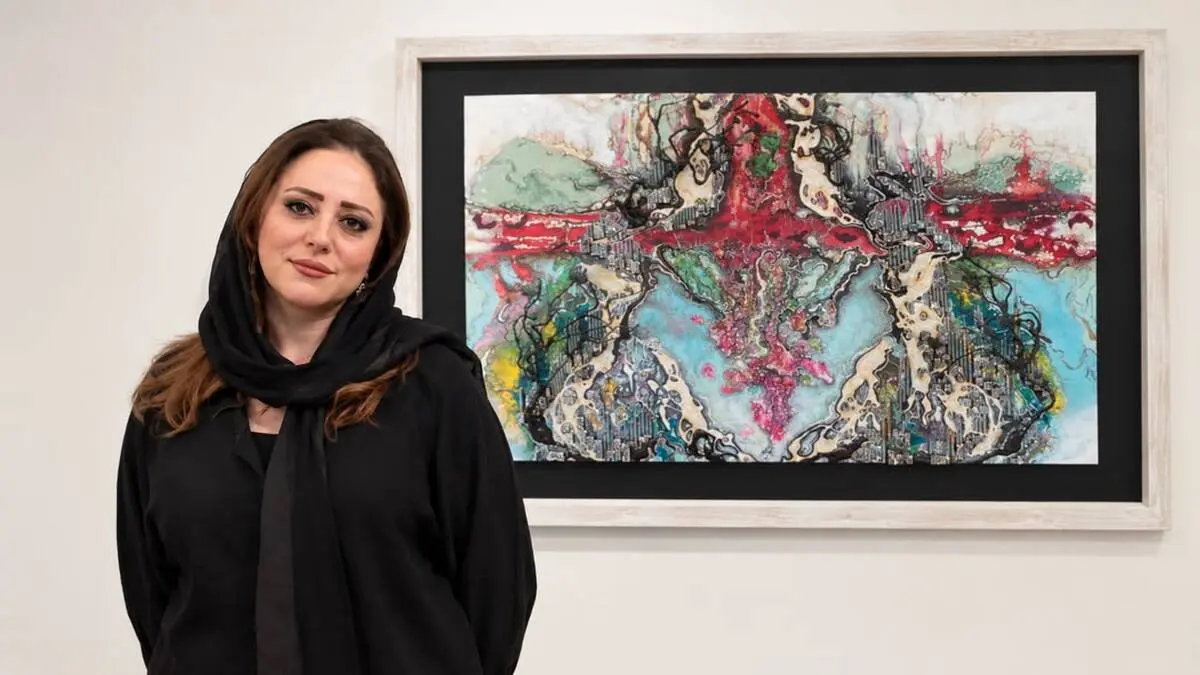
Bita Vakili and a Garden That Remembers History
The power of this painting lies in its ability to allow multiple readings to coexist. Rather than evoking nostalgia, it raises questions—and it is precisely this contemporary spirit that has drawn attention to Bita Vakili within the Middle Eastern art scene.
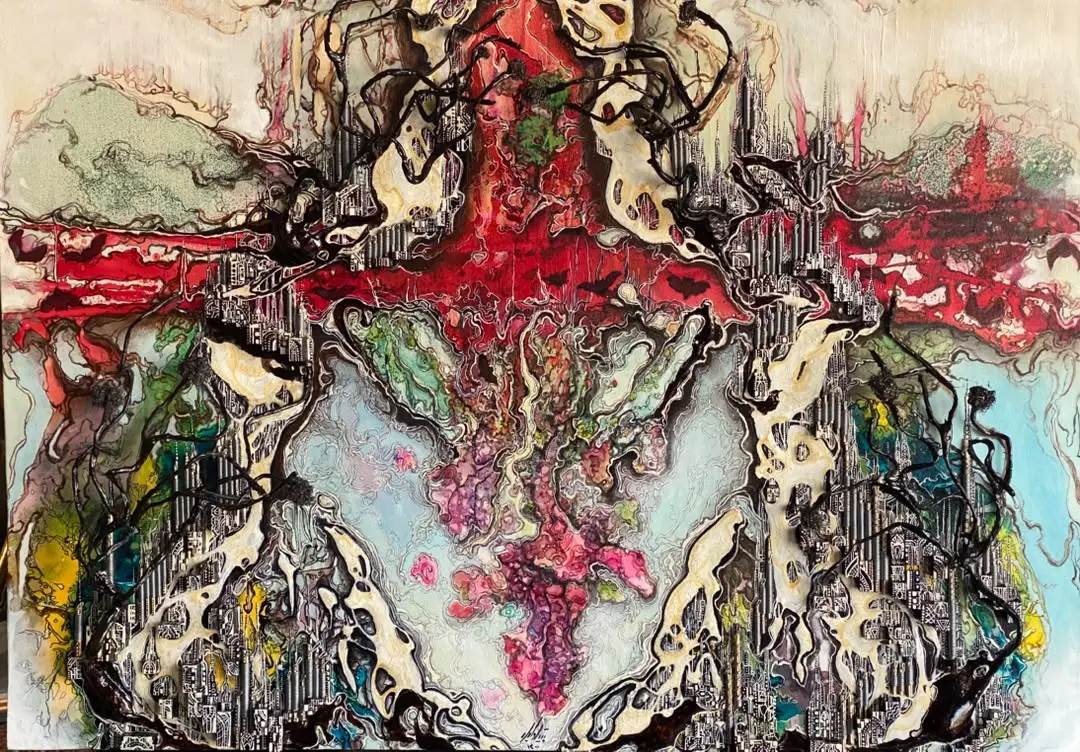
ArtDayMe : Azadeh Jafarian : We examine a painting by the renowned artist Bita Vakili [born in Tehran in 1973], from her series This Garden Is History, one of her best-known bodies of work, distinguished by its evocative color palette and intriguing subject matter.
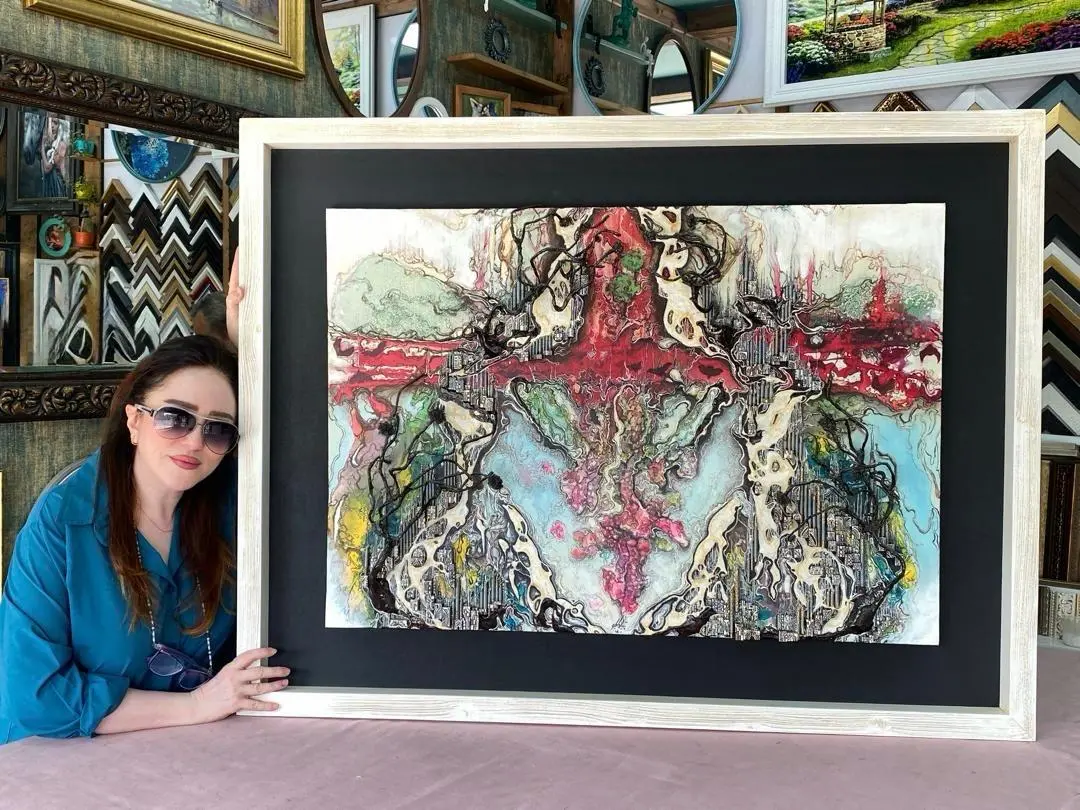
Vakili created this work in 2021, measuring 100 × 70 cm. The painting is currently held in the art collection of "Seyed Amirali Dadmarzi ".
In her work, Bita Vakili often brings together urban morphology, territorial identity, architectural elements, and comparative collage. When confronted with her paintings, it is usually difficult to determine immediately what we are looking at. At first glance, the eye encounters something familiar: traces of nature, architecture, flowers, the body, and perhaps even an urban landscape.
But as we look more closely, these elements begin to move away from their familiar forms and dissolve into one another. It is as though the painting does not wish to reveal anything to us in its entirety. Instead, it invites us to search, discover, and intuit.
These qualities are clearly visible in this work from the series This Garden Is History.
In this painting, the “garden” is not the calm and familiar garden we might expect to encounter in a landscape painting. Here, we face a garden that seems to have lived through many years. Something has grown within it; something has disappeared; something has remained; and something else has emerged once again from the heart of that same devastation.
_Colors That Refuse to Settle
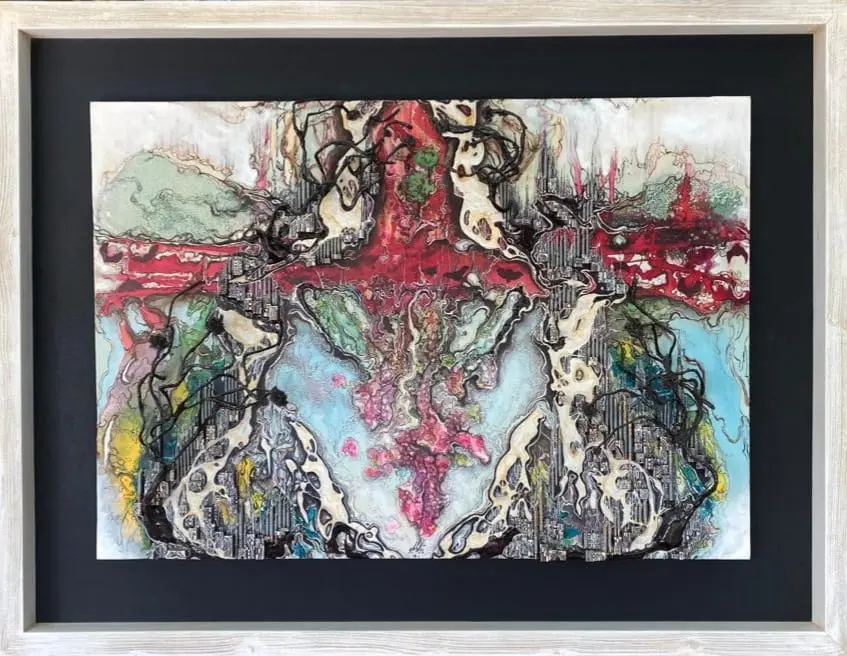
The first element that arrests the eye in this work is color—particularly red.
Intense reds in the upper section of the painting, alongside black lines and white and cream-colored patches, create a tense atmosphere. Red may evoke vitality, yet it simultaneously carries suggestions of blood, wounds, and anxiety. In contrast, turquoise, blue, green, pink, and purple tones in the middle and lower sections establish a different atmosphere—one more closely associated with growth, nature, and birth.
Yet Vakili does not separate these two realms. Red seeps into the quieter colors, while the delicate tones become entangled among dark lines and complex structures.
It is here that color moves beyond an aesthetic choice. In this painting, life is not a simple or trouble-free occurrence.
_Something Is Taking Shape at the Center
At the center of the canvas, a form has emerged that might initially be understood as a flower. But the longer we look, the more alternative shapes begin to reveal themselves. At times, it resembles a living organism; at others, a flower or a root. It might even evoke an embryo in the process of formation.
In my view, the value of this form lies precisely in its ambiguity. The artist does not intend to tell us, “This is a flower,” or “This is a body.” The form remains suspended between several possibilities, allowing each viewer to discover something within it through their own experience.
This central form may be regarded as the heart of the painting—the point toward which much of the work’s visual activity converges. Yet the space surrounding it is far from tranquil. Lines, architectural structures, and masses of color encircle it, as though this living core is struggling to continue within an immense and accumulated history.
_ A City Growing Inside the Garden
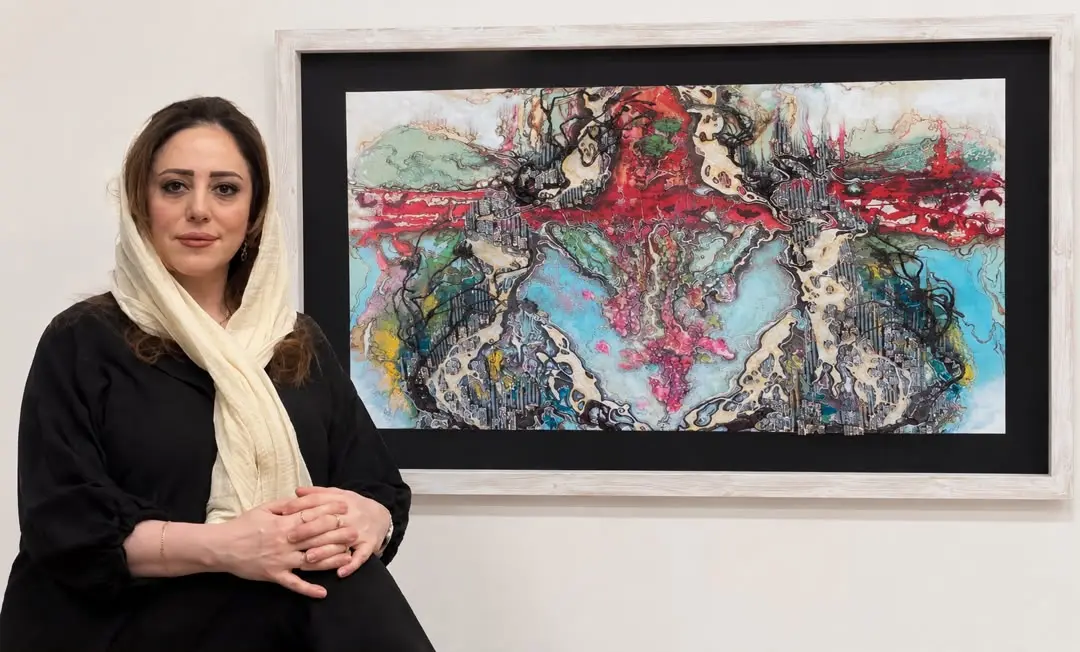
One of the most compelling aspects of the painting is the presence of forms that resemble architecture and urban environments. Amid the abundance of color and line, we encounter buildings and structures that allude to the city.
But here, the city is not an element separate from nature. At times, it seems as though the buildings have emerged from within the garden; at others, nature appears to be reclaiming the city.
This movement between nature and architecture lends complexity to the work. We can no longer say that one side represents “nature” and the other “the city.” The two have become intertwined, much like memories whose different parts cannot easily be separated from one another.
_Lines That Resemble Roots, Veins, and Wires
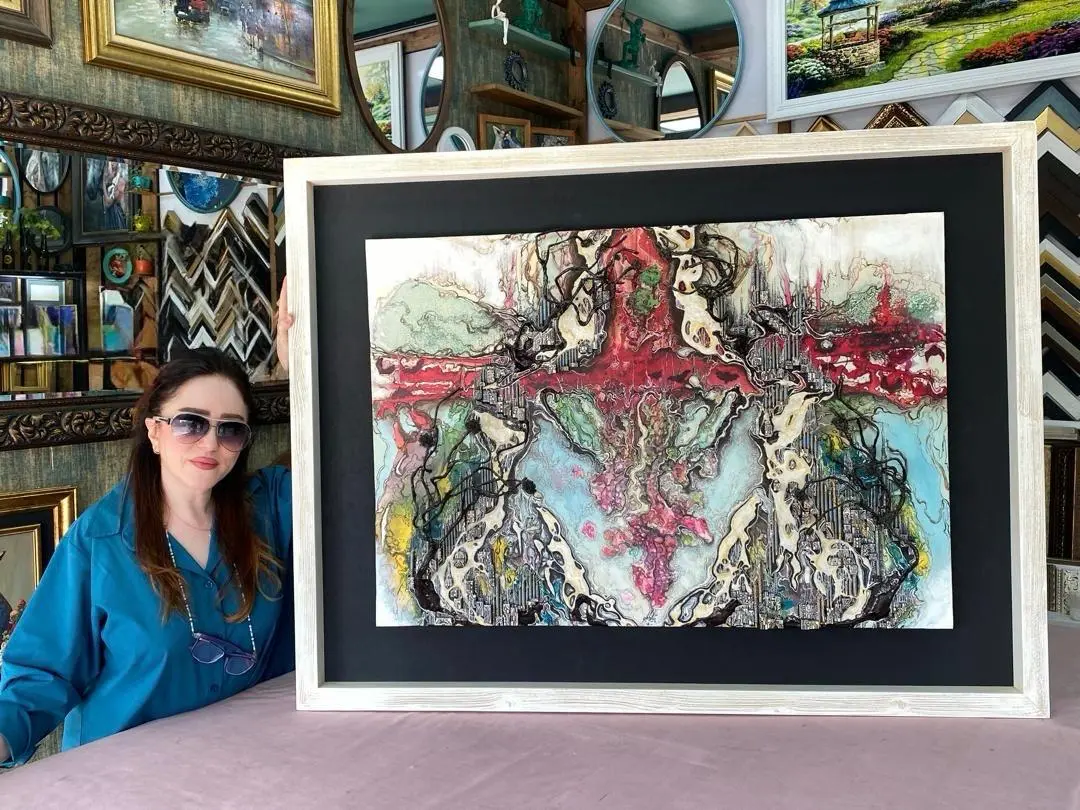
Line occupies a distinctive position in this painting. Dark, sometimes nervous lines move across almost the entire surface of the work. In some places, they resemble branches; in others, roots, wires, or an urban network. In certain sections, they might even be compared to the veins of the human body.
These lines give the painting movement. They do not allow the eye to remain fixed in one place.
We move from top to bottom, enter the center, return to the edges, and discover new details. Rather than presenting a single image all at once, the painting gradually reveals itself.
Perhaps this is why the work cannot be fully grasped in a single glance.
_A Garden Between Life and Ruin
Perhaps the most compelling aspect of this work is precisely this duality. On one hand, we encounter signs of life: flowers, bright colors, growing forms, and organic structures. On the other, darkness, red, density, rigid architectural forms, and fractured lines generate an entirely different sensation.
_Neither Prevails Completely Over the Other
We are confronted neither with an entirely dark painting nor with an optimistic image of nature.
Life and ruin, beauty and anxiety, nature and the city, past and future exist side by side.
Perhaps this is what carries the work beyond the appeal of a visually striking color composition.
_Wandering Through the Painting
This canvas cannot be experienced from a distance alone. Its details draw the viewer closer. Each time the eye pauses over a particular corner of the work, another shape or structure reveals itself.
Here, the viewer resembles someone walking through a garden more than someone standing before a landscape.
There is no predetermined path. One may enter through the edges, reach the center, step back out, and explore another route.
And perhaps this is precisely what the title of the series suggests: to reach history, we sometimes have to wander through its layers.
_History, but Not as a Narrative
Bita Vakili does not present history in this work as an event or a visual narrative. There is no identifiable historical scene or specific figure. Here, history is present rather than narrated.
It exists in the colors, in the density of the surface, in the interwoven forms, and in something that appears to be continually taking shape and disappearing.
This perspective also distances the “garden” from any literal physical place. Here, the garden may be the mind, a memory, the body, a city, or even a land whose past and present remain intertwined.
The power of this painting lies in its ability to allow multiple readings to coexist. Rather than evoking nostalgia, it raises questions—and it is precisely this contemporary spirit that has drawn attention to Bita Vakili within the Middle Eastern art scene.
Bita Vakili, a female painter born in Tehran in 1973, has lived with painting for more than three decades. She has pursued academic studies at both undergraduate and graduate levels and has established a presence at the highest levels of the Middle Eastern art scene, from notable appearances at international auctions to the presentation of her work in more than 80 exhibitions across the United Arab Emirates, Canada, the United States, China, Monaco, Armenia, Malaysia, France, Germany, the United Kingdom, Oman, and, of course, Iran.
Bita Vakili has achieved six notable sales at Christie’s. Her auction record dates back to April 18, 2012, when her work New York Dream sold for a hammer price of $45,000.
Vakili’s paintings have appeared in ten editions of the Tehran Auction. All of her works offered in these editions have sold, achieving a 100 percent sell-through rate. Her most recent auction record was set in the twentieth edition of the event, held in Tir 1403 [June–July 2024], when a triptych from her Garden of History series achieved a hammer price of 550 million tomans.
Bita Vakili’s works are held in important collections, including Pasargad Bank, Gardeshgari Bank, and prominent Iranian collections such as the Mohammadreza Ghaemmaghami Collection [Raha Gallery Collection], the Farjam Foundation in Dubai, the Hamidreza Hashemnia Collection, the collection of the late Professor Firouz Naderi, the Jalil Khosrowshahi Collection, and others.
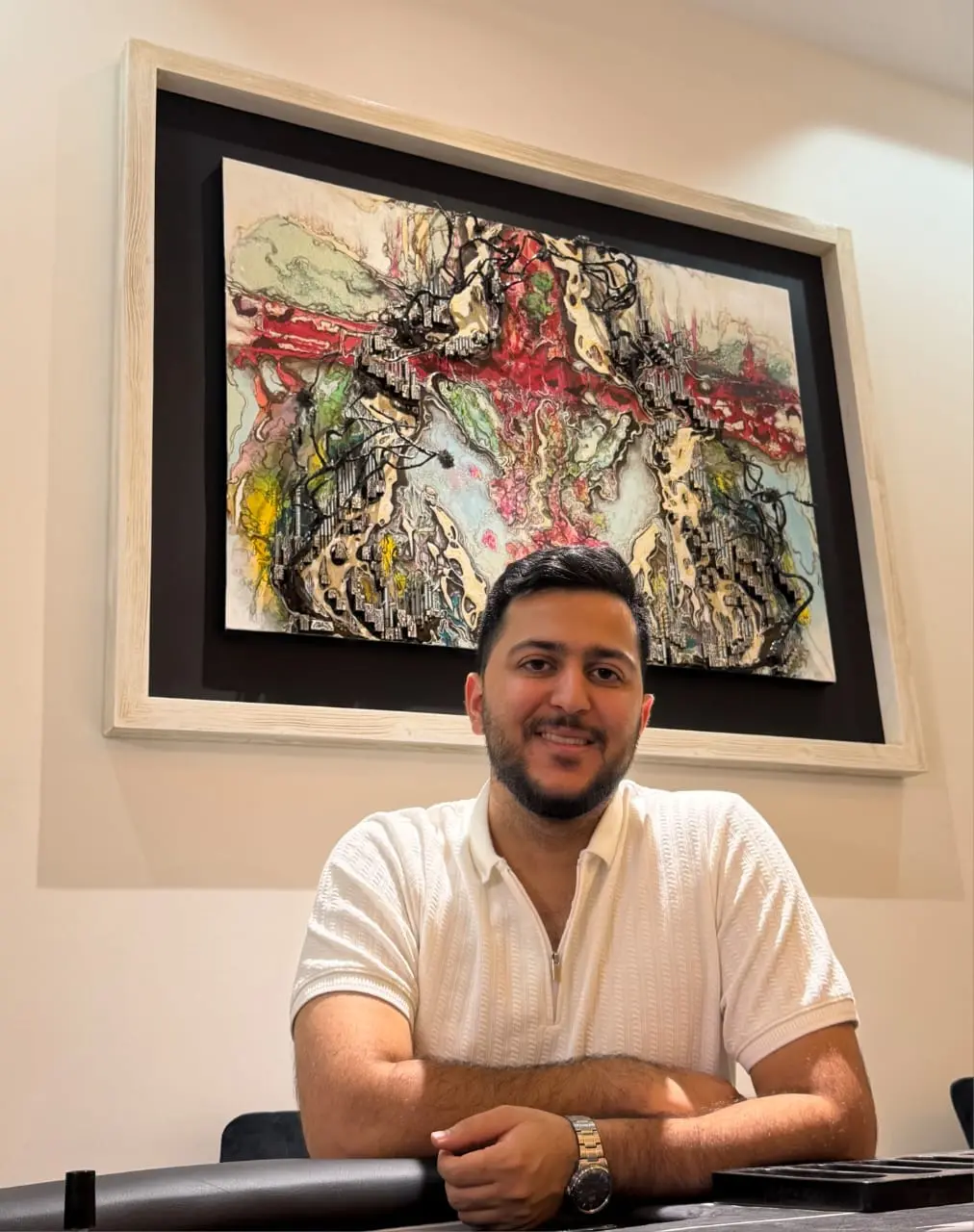
This work by Bita Vakili, from the series This Garden Is History, was created in 2021 and measures 100 × 70 cm. It is currently held in the art collection of "Seyed Amirali Dadmarzi ".
LEAVE A RELPY