
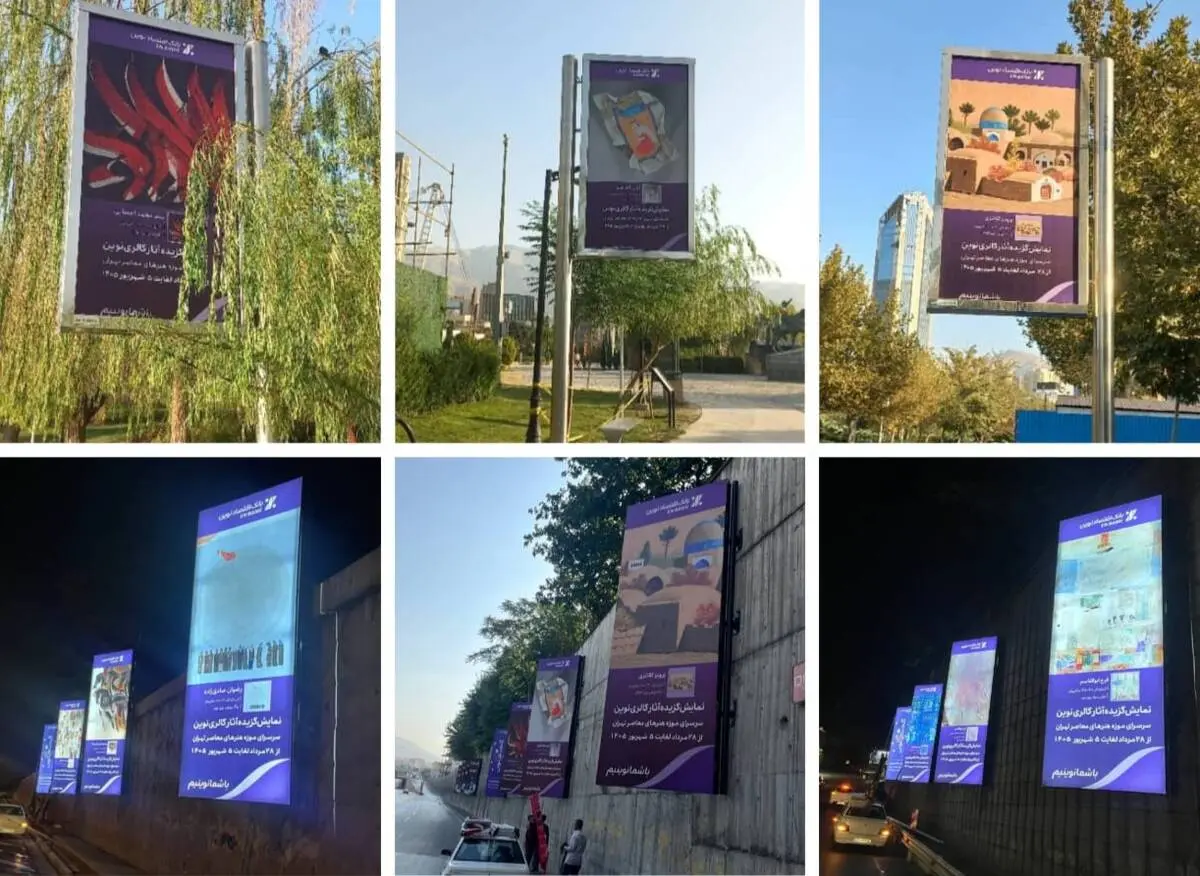
Eghtesad Novin Bank Fills Tehran with Paintings / 106 Artworks on City Billboards / Photos
Tehran has turned into a vast gallery of paintings and photographs these days; part of the art collection of Eghtesad Novin Bank, simultaneously with its exhibition at the Tehran Museum of Contemporary Art, has appeared on the city’s billboards, spreading a wave of color and energy across the capital.
ArtDayMe : Tehran, the capital of Iran, has turned into a large-scale exhibition these days. A total of 106 artworks from the art collection of Eghtesad Novin Bank have appeared on billboards across the city, taking art beyond museum walls and bringing it into the everyday paths of citizens; an initiative that transforms viewing art from a visit to a specific destination into an experience woven into the fabric of the city.
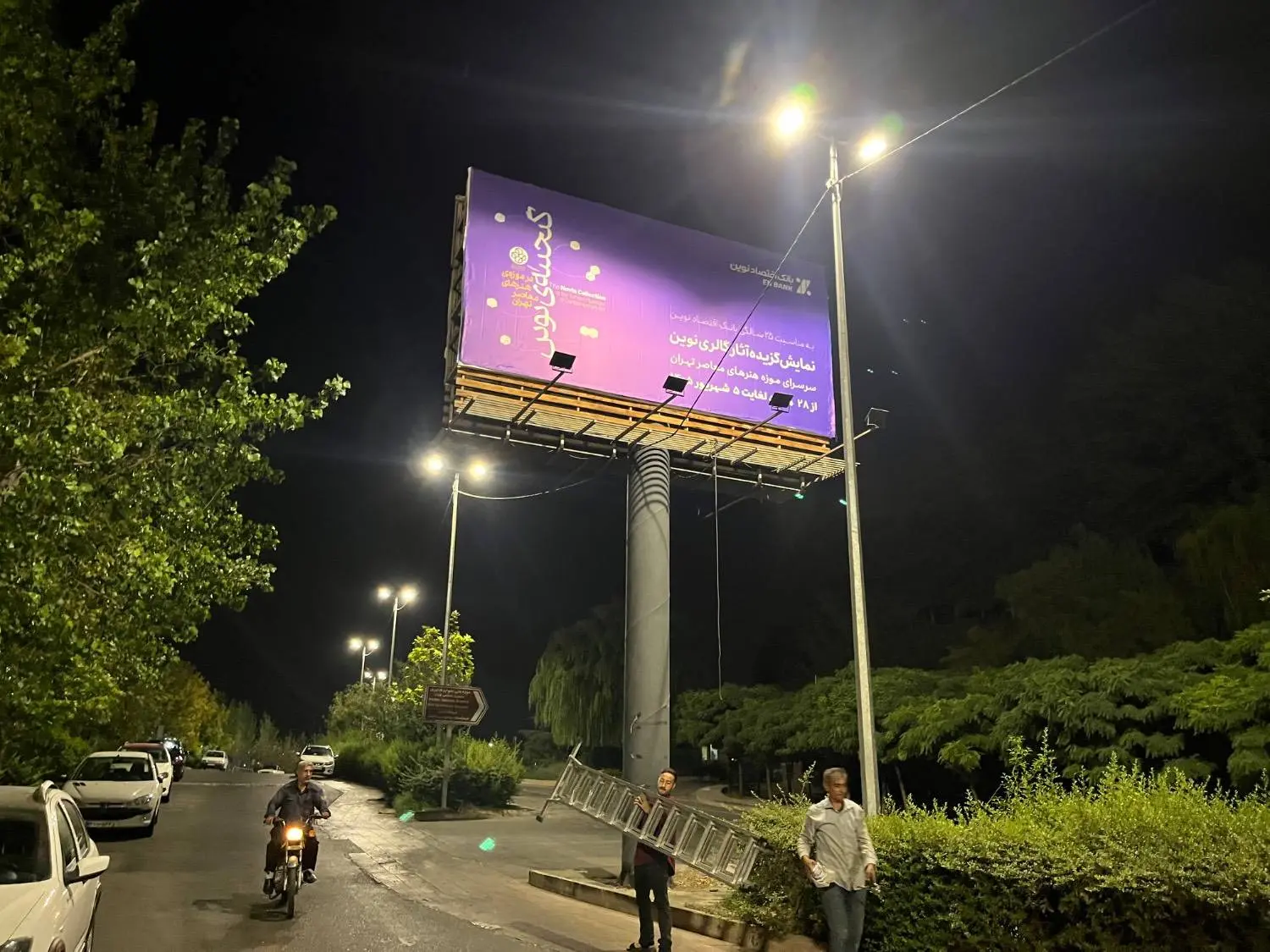
The title chosen by the public relations department of Eghtesad Novin Bank for this initiative, “Tehran Has Become Eghtesad Novin Gallery,” may be the best description of this distinctive experience.
The creation of this collection, which eventually led to the establishment of Novin Gallery, dates back to 2006. Today, Eghtesad Novin Bank is taking a highly intelligent approach to creating added value around this cultural asset.
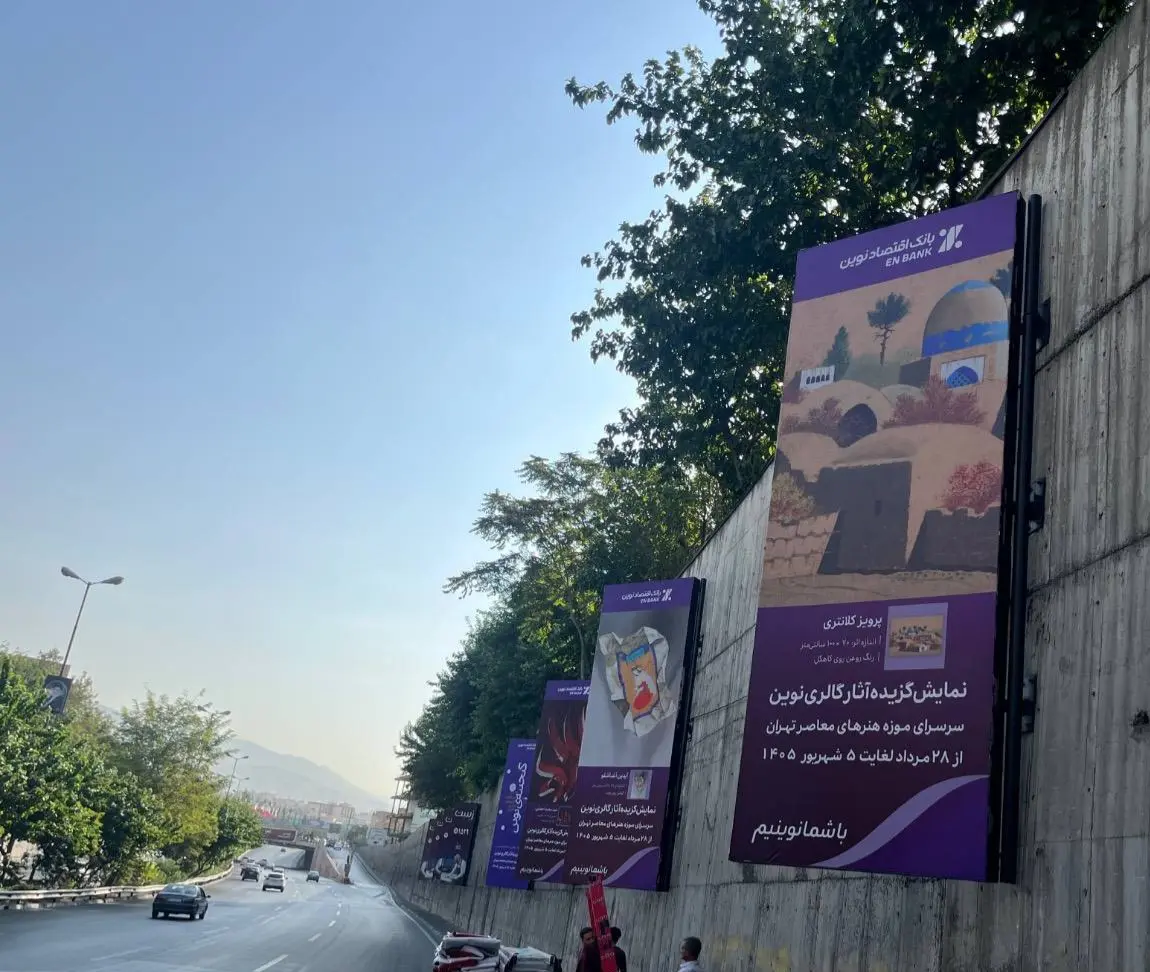
Each of these artworks carries a part of the story of contemporary Iranian art, and together they have formed one of the notable art collections established within an economic institution.
From the Collection to the Streets
These days, a passerby on the way to work or home may stop in front of an image that was previously preserved within the confines of an art collection. In this narrative, Tehran is not merely hosting an exhibition of artworks; the city itself has become the wall of a vast open-air gallery.
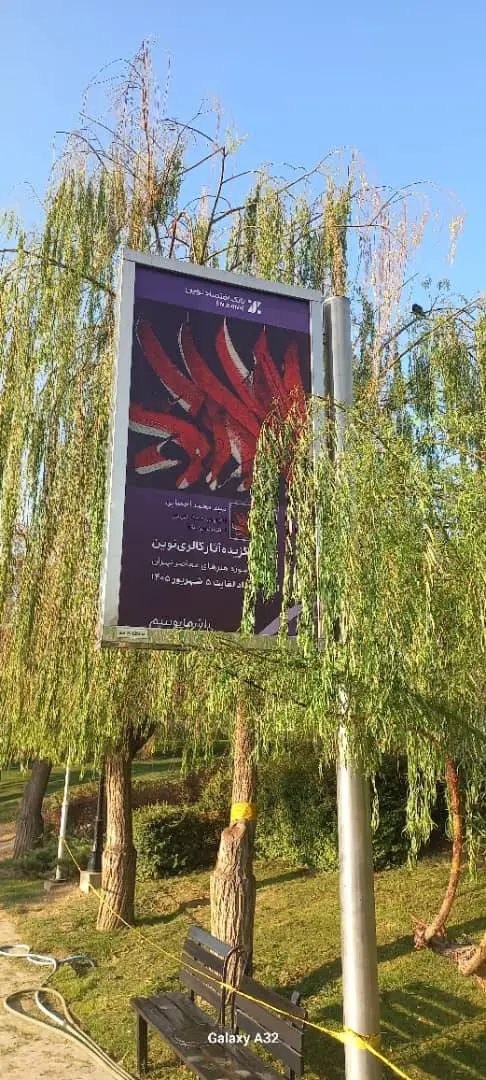
What makes this project distinctive is not simply the number of artworks, but where audiences encounter them. Viewers do not necessarily need to purchase a museum ticket or visit a gallery to see these works. They may encounter an artwork unexpectedly while driving, on their way home from work, or while passing along one of Tehran’s major highways.
In fact, the central idea of the project can be understood through a simple shift in equation: instead of audiences going to a particular place to see art, art comes to the audience.
The images documenting the implementation of the project also show that the artworks from the Eghtesad Novin collection have been installed in busy and important locations across the city and, day and night, along highways, major streets and other high-traffic routes, have become part of Tehran’s visual landscape.
Beyond Advertising: My Cultural Asset, Offered to Your Gaze
At first glance, a billboard is a medium for introducing and promoting a brand. But when the content of those billboards consists of artworks from an art collection, their function changes.
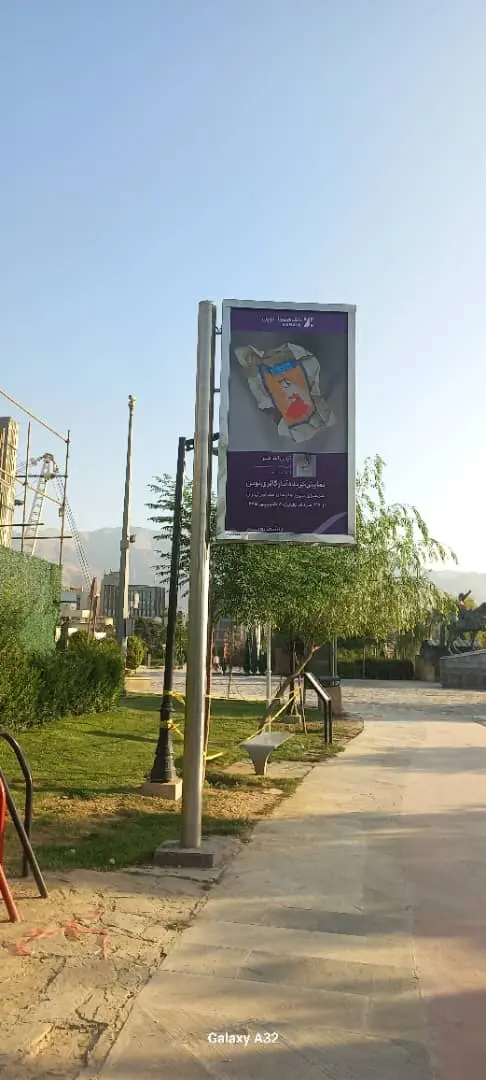
Here, the brand is no longer merely promoting its name and services; it is sharing its cultural assets with the city.
This shift in perspective is also significant from the standpoint of corporate communications. A bank can speak about social responsibility, culture or its support for the arts; but when it places part of its cultural capital before the eyes of millions of citizens, its cultural narrative moves beyond the level of a slogan and closer to a tangible experience.
From this perspective, the Eghtesad Novin Bank project can be seen as part of a broader concept: the cultural social responsibility of corporations and economic institutions. In this approach, art is not merely a decorative element for executive offices or a component of an organization’s visual identity; rather, it is recognized as part of an institution’s social and cultural capital.
A Museum That Continues into the City
At the same time as this citywide display, 25 selected works from the Eghtesad Novin Bank collection are being exhibited at the Tehran Museum of Contemporary Art, where visitors can see the original works until Thursday, August 27, every day from 10 a.m. to 6 p.m.
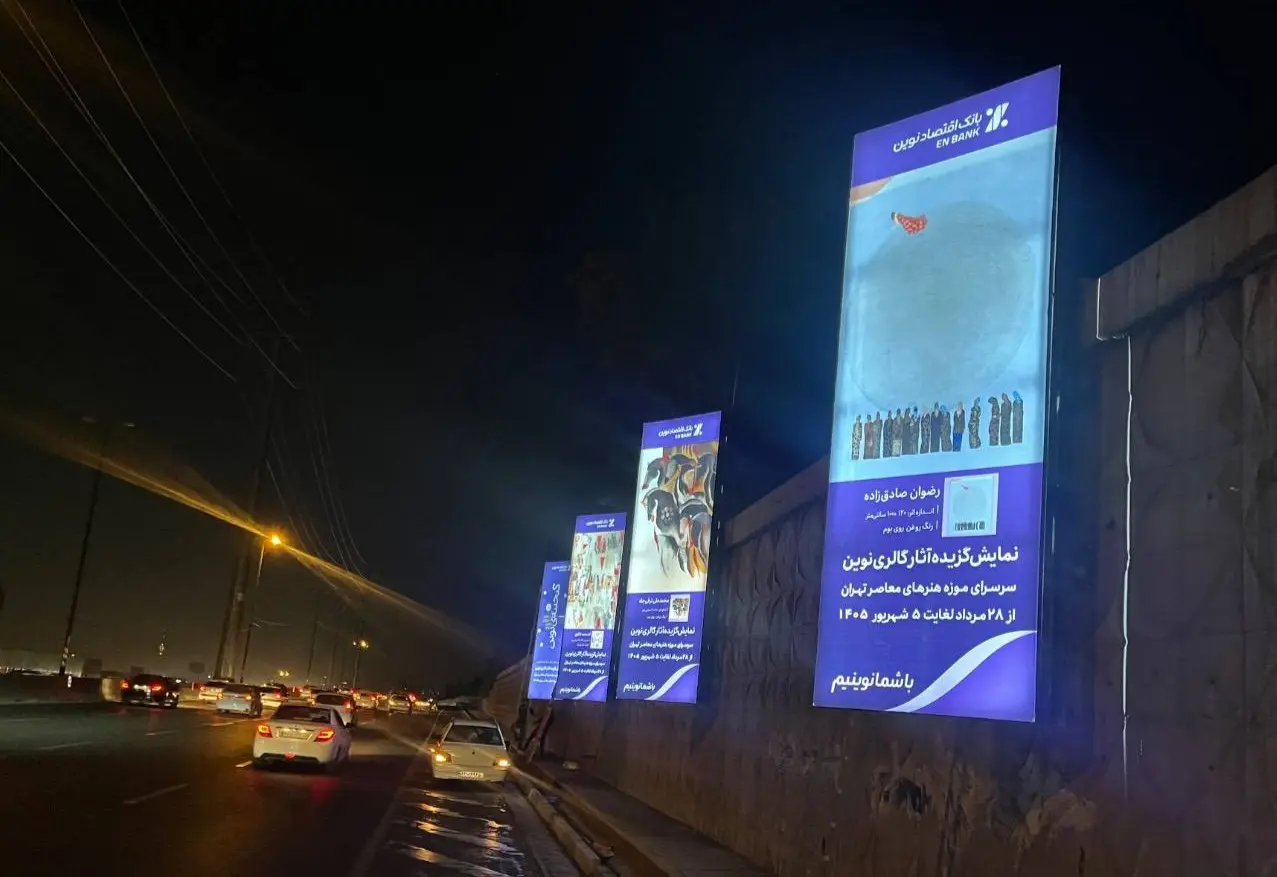
This simultaneity adds another important dimension to the project: enlarged versions of the artworks are seen on the streets, while the originals are on display in the museum. In this way, an audience member’s journey can begin with an accidental encounter on the street and continue with seeing the original artwork in a museum.
Perhaps this is the most fascinating aspect of the initiative: someone who sees an image on a billboard along one of Tehran’s highways may encounter the name of an artist or an artwork for the first time and then, at the museum, seek out the original version of that same work.
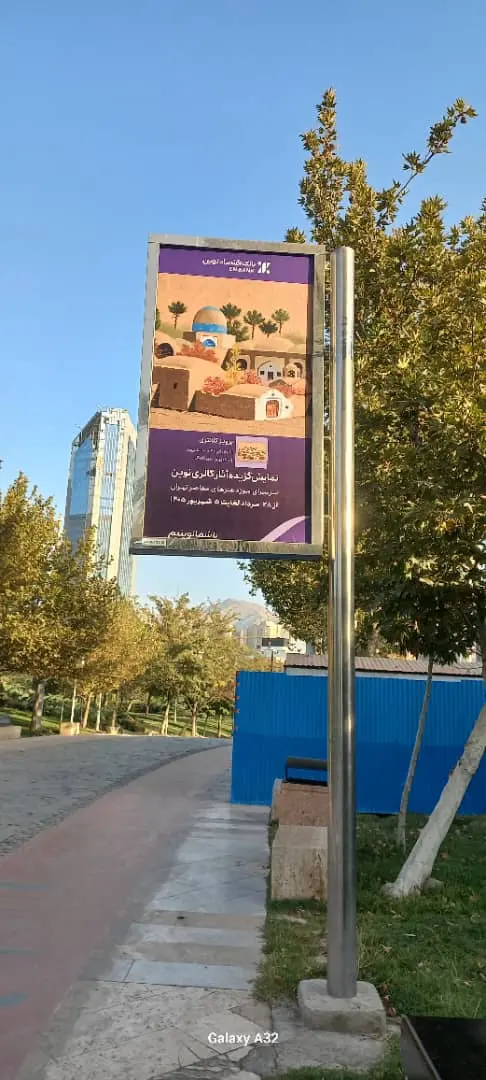
This is precisely the point at which outdoor advertising comes close to cultural communication.
Tehran: A Gallery Without Walls
In cities where a large part of people’s everyday lives unfolds in the streets, public space can become one of the most important platforms for access to culture. The “Tehran Has Become Eghtesad Novin Gallery” project can also be understood from this perspective: transforming part of Tehran’s advertising landscape into a platform for introducing Iranian art.
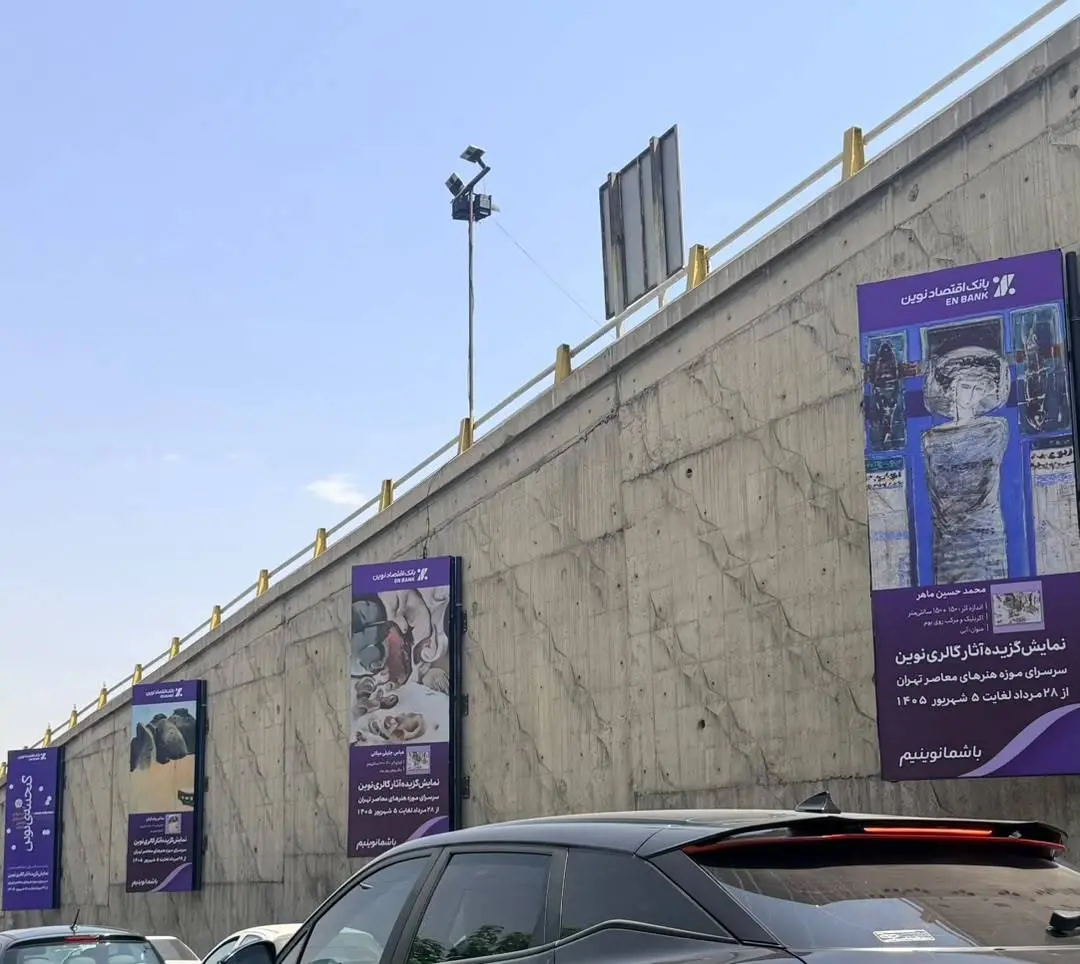
The project also recalls an important reality about corporate art collections: many valuable collections exist within banks, companies and major institutions, but until they move beyond the interior spaces of these organizations, the general public has little opportunity to encounter them.
Eghtesad Novin Bank has now taken part of its collection out of enclosed frames and brought it into the streets—where pedestrians, drivers and ordinary citizens can encounter art without prior planning or appointment.
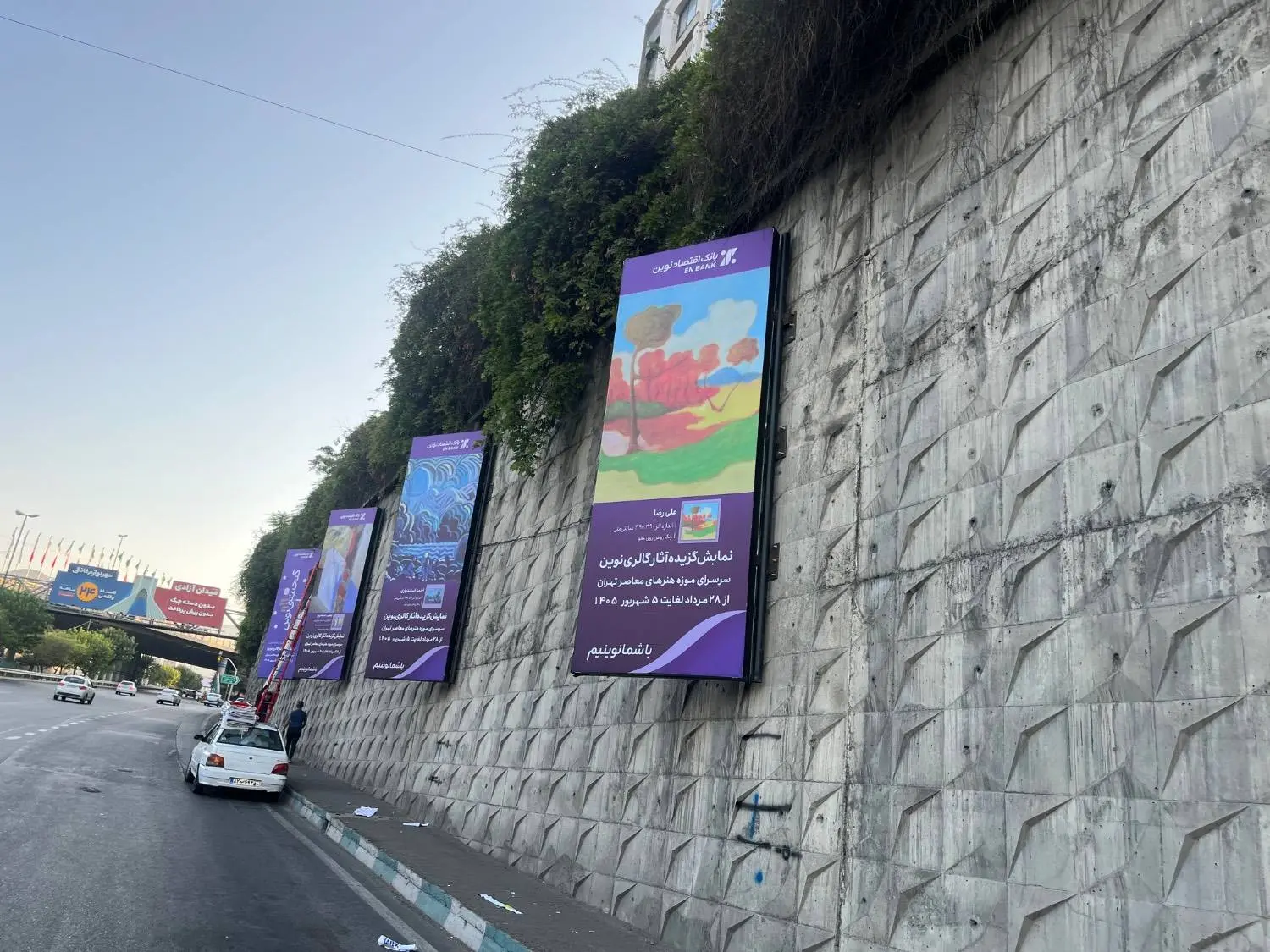
Perhaps this is why the title “Tehran Has Become Eghtesad Novin Gallery” is more than an advertising slogan. In this experience, part of Tehran has genuinely been transformed, for a period of time, into a vast urban gallery;
a gallery whose walls are highways and streets, whose audience consists of millions of citizens, and whose artworks represent a part of the history of contemporary Iranian art.
And perhaps, more importantly, the project raises a question for other economic institutions: To what extent can a collection that has been held by an organization for years become a cultural asset for an entire city?
Eghtesad Novin Bank has created a genuine model—especially as, on the occasion of its 25th anniversary, it has embraced the slogan: “We Are Novin with You.”
LEAVE A RELPY