
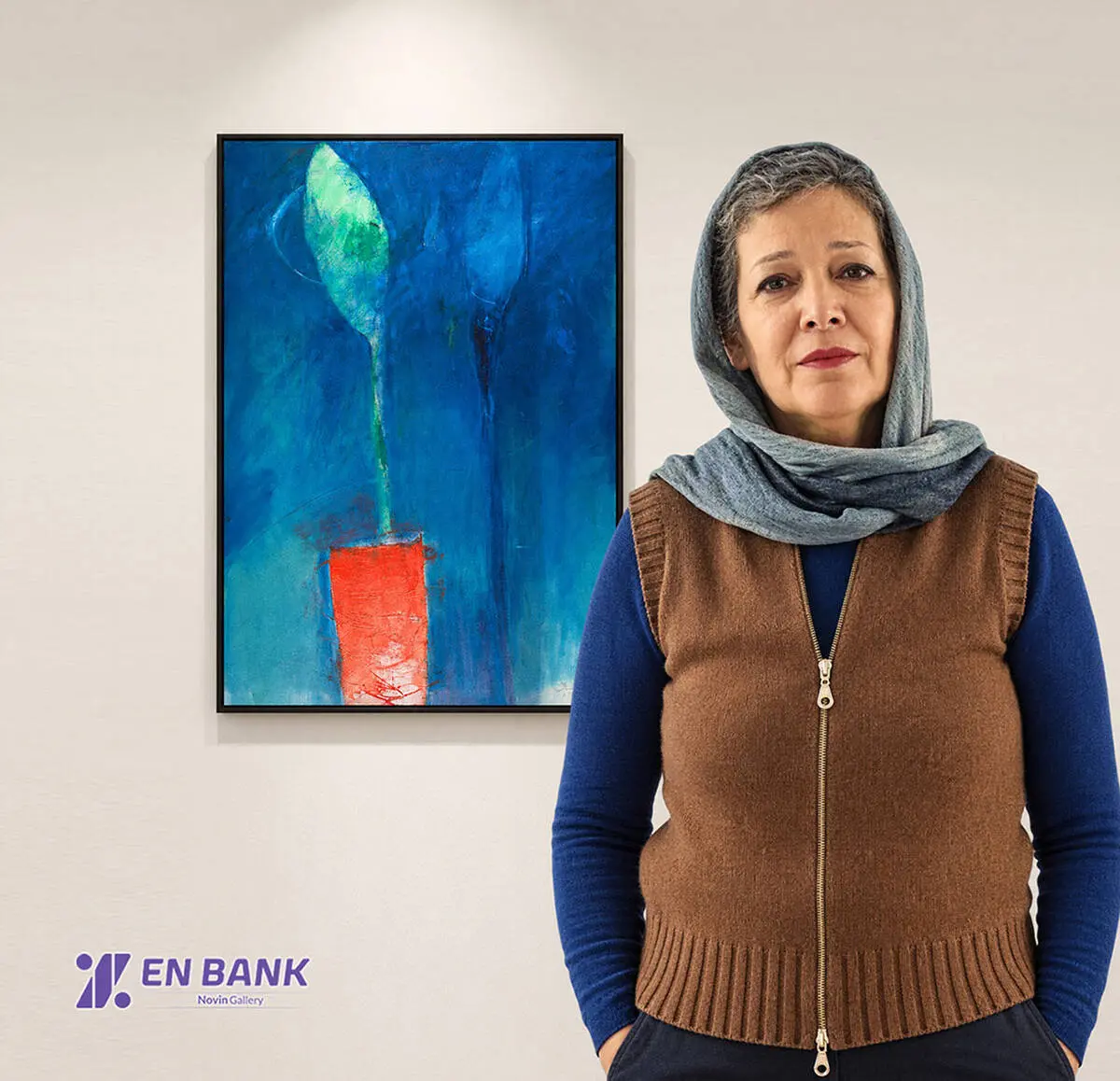
Farideh Lashai in the Novin Gallery Collection of Eghtesad Novin Bank: Beauty Lies in Simplicity
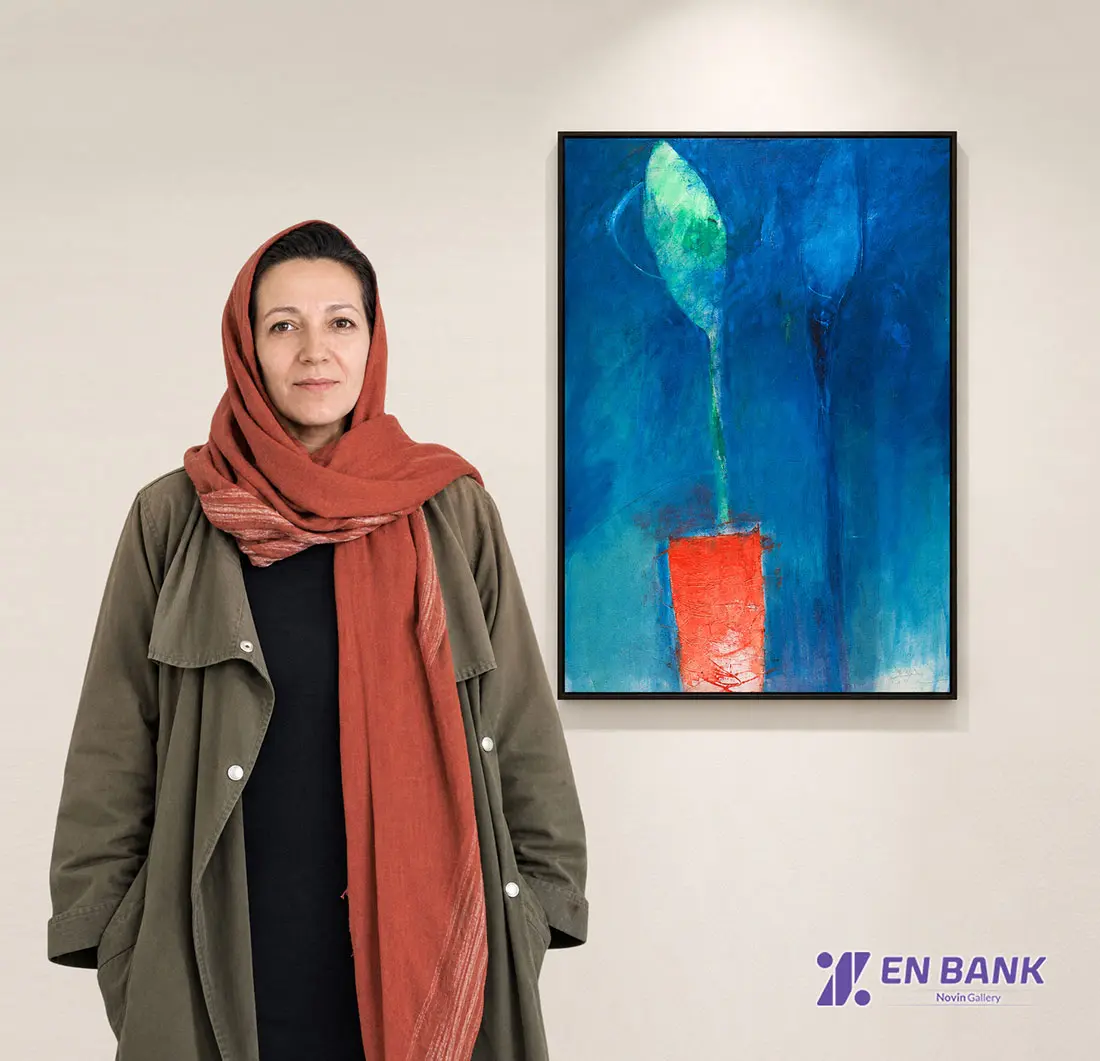
Are we witnessing an image of growth, or a fragile presence suspended in an expansive, ambiguous space? This painting by the late Farideh Lashai, despite its apparent simplicity, evokes a relationship between presence and absence, stability and suspension, and emergence and disappearance.
ArtDayMe : Eghtesad Novin Bank, Iran’s first private bank, has maintained a significant presence in the country’s art scene since its establishment. By building a distinguished art collection and establishing Novin Gallery, the bank has taken a pioneering role in presenting the landscape of Iranian art.
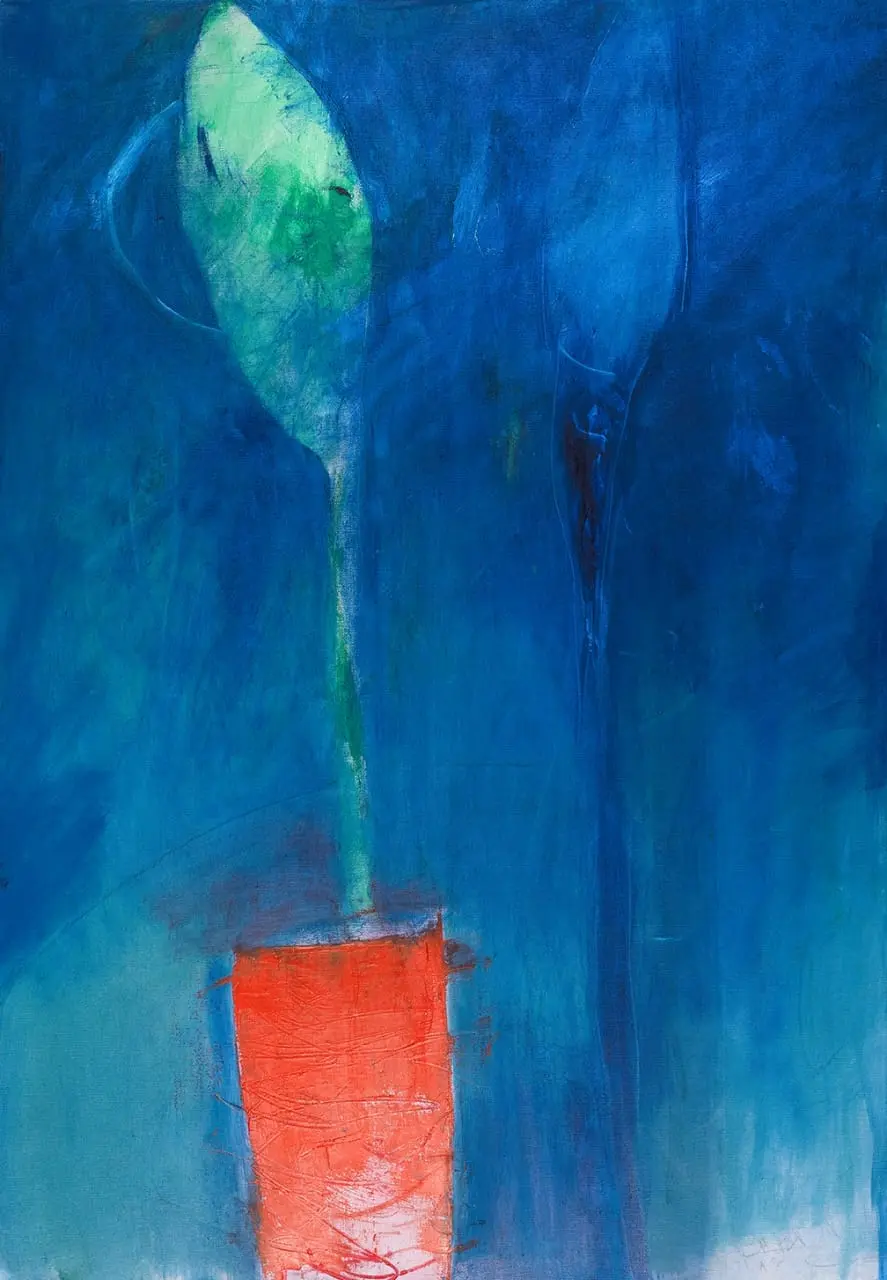
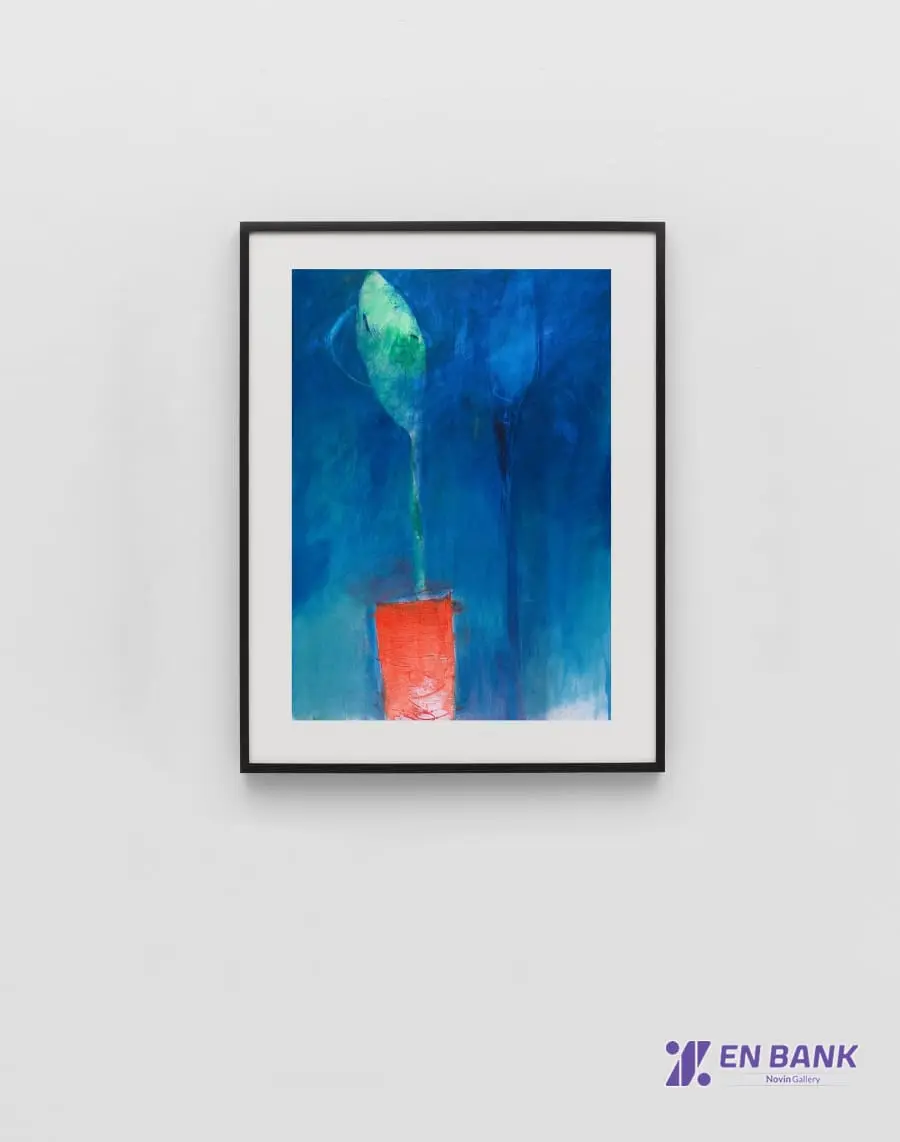
Among the highlights of the Eghtesad Novin Bank Collection is a remarkable work by the late master Farideh Lashai, executed in acrylic on canvas and measuring 100 × 70 cm.
Farideh Lashai (1944–25 February 2013) was one of the leading women artists of Iran’s modernist movement. With her distinctive poetic sensibility, she created an unconventional vision of nature. Her works have received considerable attention in Italy, Germany, the United States, Switzerland, the United Kingdom, France and, of course, Iran.
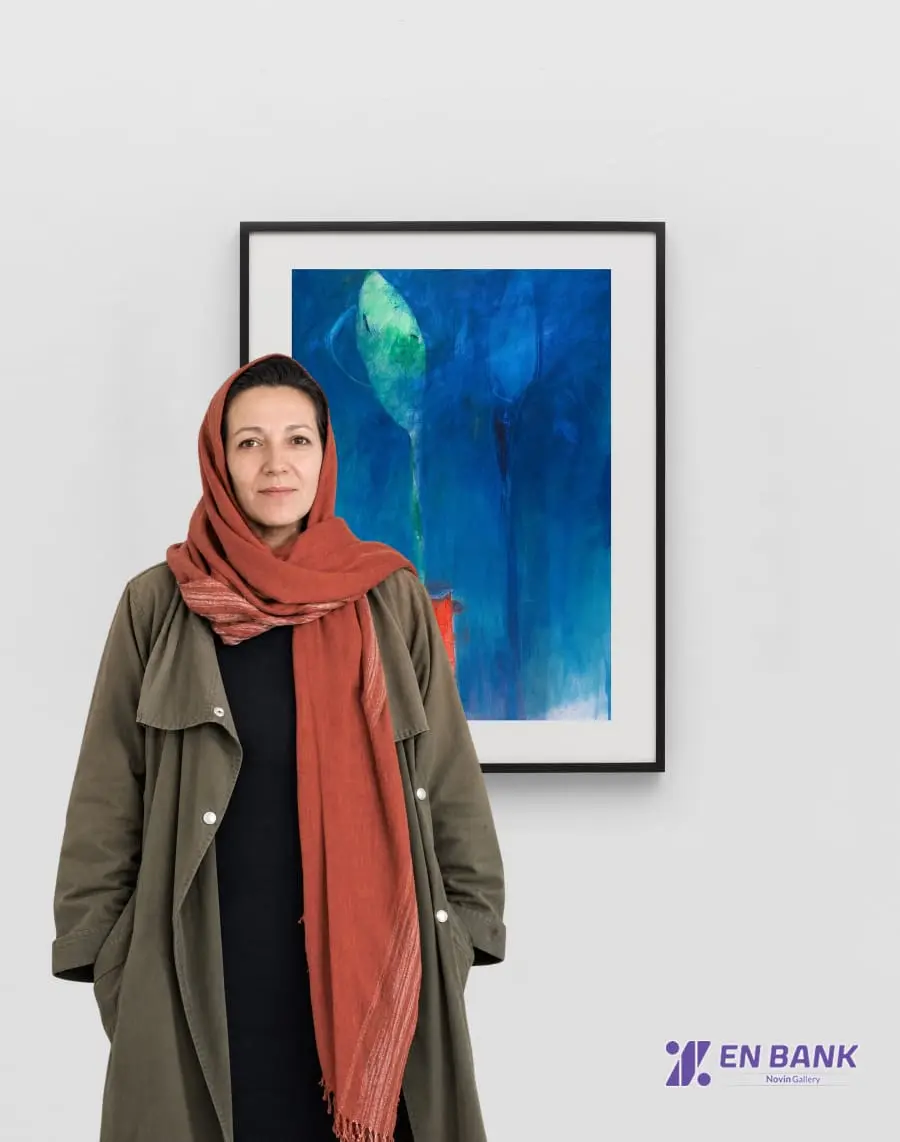
This untitled painting by Farideh Lashai, held in the collection of Novin Gallery at Eghtesad Novin Bank, can be understood as an exploration of the relationship between nature, colour and inner experience. Direct representation of reality gives way to a poetic and somewhat enigmatic visual language. At first glance, the expansive blue background, an elongated green form in the upper section and a red vessel near the bottom attract the viewer’s attention. Although these elements possess recognisable characteristics, they resist being confined to a definitive narrative.
What matters most is the relationship between these elements and the space generated through the interaction of colours, lines and surfaces. The painting invites the viewer to engage in a quiet, contemplative act of looking, allowing meaning to emerge gradually through visual experience.
_ Vertical Composition
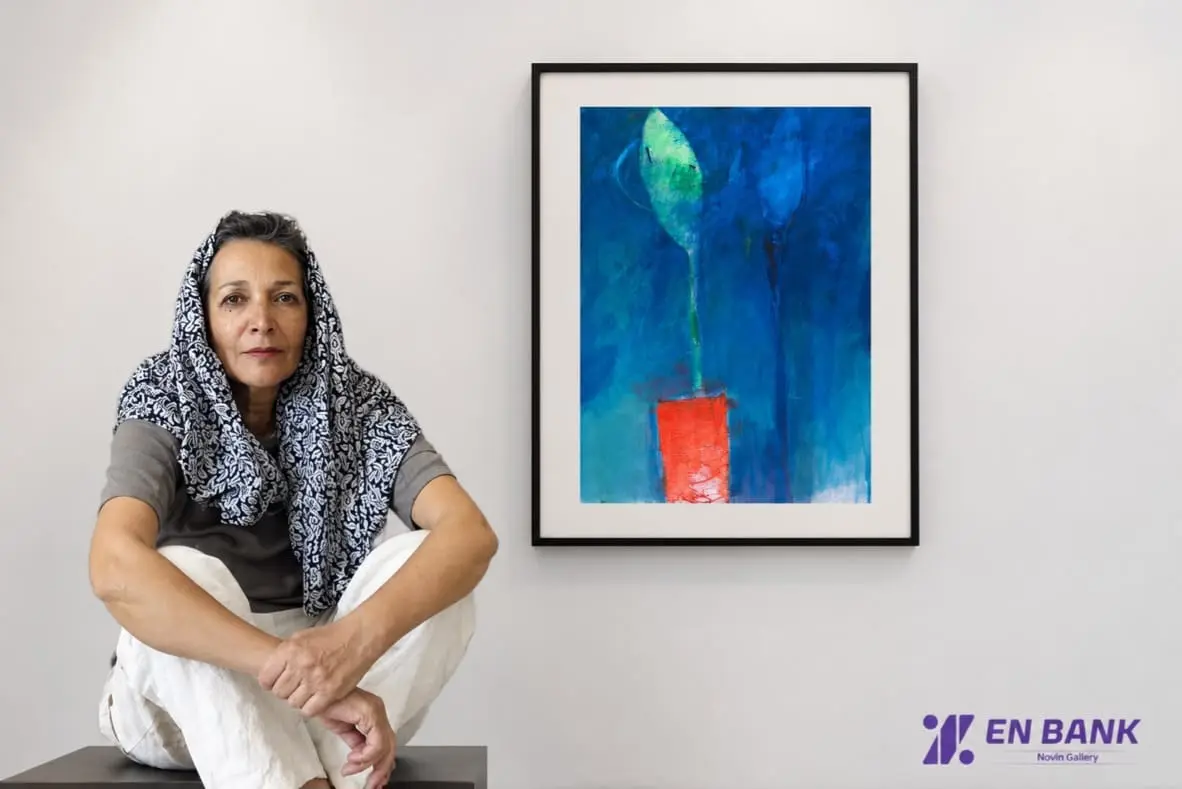
The composition of this work by the late Farideh Lashai is structured around a vertical axis. The green form occupies the upper half of the canvas, while a slender extension descends towards the red vessel below. This vertical connection links the two principal elements, establishing a movement from top to bottom.
The vessel, positioned near the lower edge and close to the central axis, creates a contrast between mass and space against the expansive blue background. Despite its relatively small dimensions, its warm colour and visual intensity give it a pivotal role. By contrast, the elongated green form in the upper section draws the eye upwards.
The surrounding negative space is equally important. It is not merely a background against which the subject is displayed, but an active component of the composition. Its expansiveness places the elements at a certain distance from one another, creating a sense of isolation while simultaneously allowing visual connections to develop between them.
_ From Expressive Shades of Blue to Vivid Red
Blue dominates the palette of this painting by Farideh Lashai, which is preserved in the Novin Gallery Collection of Eghtesad Novin Bank.
The canvas is largely occupied by varying shades of blue, ranging from deep, dark tones to lighter areas approaching turquoise. These variations prevent the background from becoming monotonous. Subtle shifts in colour lend depth to the image and create a fluid, atmospheric quality.
Blue may evoke stillness, distance, solitude or an indeterminate expanse; nevertheless, its significance extends beyond these associations. Variations in intensity and darkness introduce a degree of visual instability, transforming the background from a neutral surface into a living, expressive space.
Against this cool expanse, the red vessel commands attention. The complementary-like contrast between red and blue intensifies the vessel’s presence and directs the viewer’s gaze towards the lower part of the painting. Here, red functions not merely as the colour of an object, but as a visual force that influences the overall chromatic balance.
The light green form above also establishes a complex relationship with the surrounding blue. The relative proximity of the two colours allows them to merge visually, while their difference in luminosity separates the green form from the background. The result is a presence that appears simultaneously distinct and on the verge of disappearing.
_ Line, Form and Expressive Language
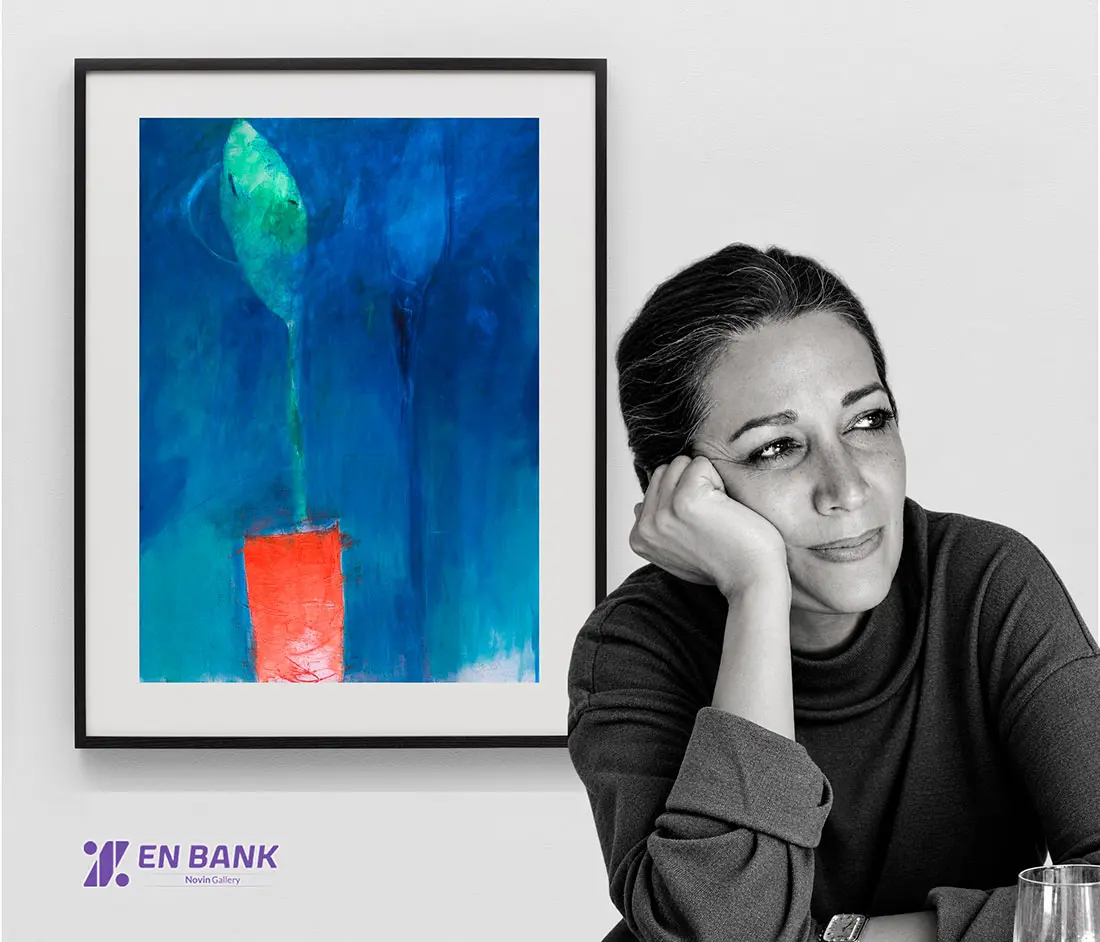
The green form, with its elongated and asymmetrical structure, is the painting’s principal organic element. Its contours are neither rigid nor strictly geometric; in places, they dissolve gently into the surrounding colour. This softens the boundaries of the form, lending it a sense of vitality and instability.
The slender green extension descending towards the vessel reinforces the connection between the two principal elements. Visually, it may be perceived as a plant stem. Yet its significance lies less in identifying the depicted object than in establishing a vertical relationship and guiding the viewer’s gaze.
The red vessel, by contrast, possesses a relatively geometric shape, although its surface is covered with lines, scratches and chromatic variations. Its overall geometric structure thus contrasts with the freedom of its painterly execution. This tension between an ordered form and an expressive surface lends the work a subtle dynamism.
_ An Expressive Surface Texture
The painting’s surface is far from uniform. Brushstrokes, layers of pigment and variations in colour intensity remain visible throughout the canvas. These characteristics suggest that the surface is not simply a means of depicting the subject; it becomes an essential component of the work’s expressive language.
In the red vessel, lines and traces of the painting process are particularly prominent, creating a lively and somewhat restless surface. Across the blue background, variations in layering, light and shadow establish visual depth without relying on linear perspective.
Texture also influences the viewer’s experience beyond its physical qualities. The eye moves between calmer areas and more active passages, generating a visual rhythm that animates the composition.
_Space, Depth and Light
The painting’s space is neither entirely two-dimensional nor governed by conventional principles of three-dimensional representation. Depth emerges primarily through overlapping colours, variations in luminosity, dissolving contours and contrasts between lighter forms and darker areas.
The green form appears closer to the picture plane because of its relative brightness, while certain areas of blue suggest an indistinct and distant depth. However, the absence of a clearly defined light source and realistic shading distances the work from naturalistic representation.
This spatial ambiguity is one of the painting’s defining characteristics. The viewer cannot easily establish the precise location of the elements within a recognisable physical environment and is instead encouraged to focus on the image’s sensory and chromatic relationships.
- Balance, Rhythm and the Movement of the Eye
The balance of this painting by Farideh Lashai is not based on symmetry. The green form above and the red vessel below, despite their differences in shape, scale and colour, balance one another along the vertical axis.
The work’s rhythm does not arise from the direct repetition of elements, but from shifts in colour, the movement of lines and the extension of forms. The eye is first drawn to the luminous green form, follows its slender extension downwards and eventually reaches the red vessel. The expansive blue field then draws the gaze back towards other areas of the composition.
This visual circulation creates a continuous structure in which no element exists entirely independently of the others.
_Meaning, Symbolism and Conceptual Interpretation
One of the notable qualities of this painting by the late Farideh Lashai, held in the Novin Gallery Collection of Eghtesad Novin Bank, is its capacity to invite symbolic interpretation without requiring a single, fixed meaning.
The green form may evoke a leaf, a plant or a sign of growth and vitality, while the red vessel may suggest a receptacle, a source or a point of concentration. These readings, however, should be understood as possible interpretations rather than definitive statements about the artist’s intentions.
The relationship between the green form and the red vessel raises a question about the connection between life and the ground that sustains it: are we witnessing an image of growth, or a fragile presence suspended in an expansive and ambiguous space? By withholding clear spatial references, the blue background leaves this question unresolved.
From this perspective, the painting can be read as an exploration of presence and absence, rootedness and suspension, or emergence and disappearance. Meaning develops primarily through visual relationships rather than direct storytelling.
Beauty Lies in Simplicity
The strength of this painting by Farideh Lashai lies in the apparent simplicity of its elements and the complexity of the relationships between them.
The blue expanse, the green form and the red vessel constitute a limited visual vocabulary. Yet their chromatic contrasts, vertical organisation, varied textures and ambiguous spatial relationships give the image considerable interpretive depth.
The work’s particular strength lies in its refusal to explain itself directly, relying instead on the autonomous language of painting. Colour, line, texture and negative space are organised in a way that invites the viewer to move beyond the mere recognition of objects. Nature emerges here not necessarily as a recognisable landscape, but as an inward, sensory and psychological experience.
The painting’s value can be found in its delicate equilibrium between presence and ambiguity, structure and freedom, stillness and movement. This balance carries the image beyond straightforward representation, transforming it into a space for visual contemplation and personal interpretation.
- Novin Gallery and the Eghtesad Novin Bank Collection
Eghtesad Novin Bank [ www.enbank.ir ] Iran’s first private bank, adopted a vision of development that extended beyond conventional economic relationships from the earliest years of its operation, beginning in August 2001. Within this vision, culture and art were regarded not as peripheral concerns, but as integral components of the country’s social and cultural capital.
Over more than two decades, the bank has assembled a valuable collection of distinguished Iranian artworks, comprising more than 100 works by influential artists associated with modern and contemporary Iranian art. More than a corporate collection, it offers a visual account of a significant period in the country’s recent art history.
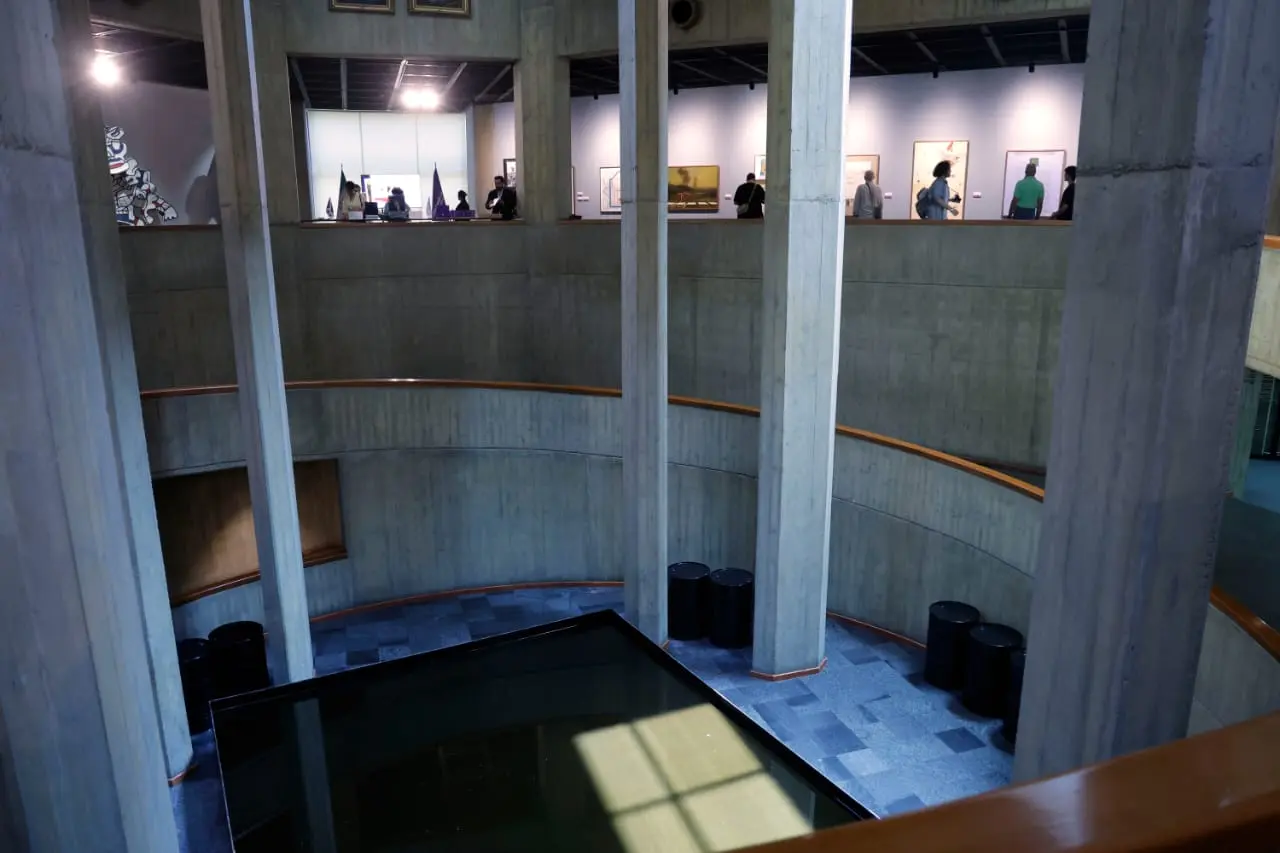
The establishment of Novin Gallery and the organisation of periodic exhibitions featuring works from the collection have demonstrated that the bank’s purpose in collecting art extends beyond keeping works in storage or displaying them in corporate spaces. Instead, it has sought to make these works accessible and encourage dialogue around them among audiences and the artistic community. At a time when many important works of contemporary Iranian art remain in private collections beyond public reach, exhibiting such works represents a contribution to cultural circulation and strengthens the public’s connection with the country’s modern artistic heritage.
Today, major financial institutions around the world are judged by more than economic indicators. Their contributions to quality of life, cultural development and creative expression also shape their social standing and reputation. The experience of many respected banks and financial institutions demonstrates how art can serve as a bridge between the economy, culture and society, transforming financial capital into cultural and social capital.
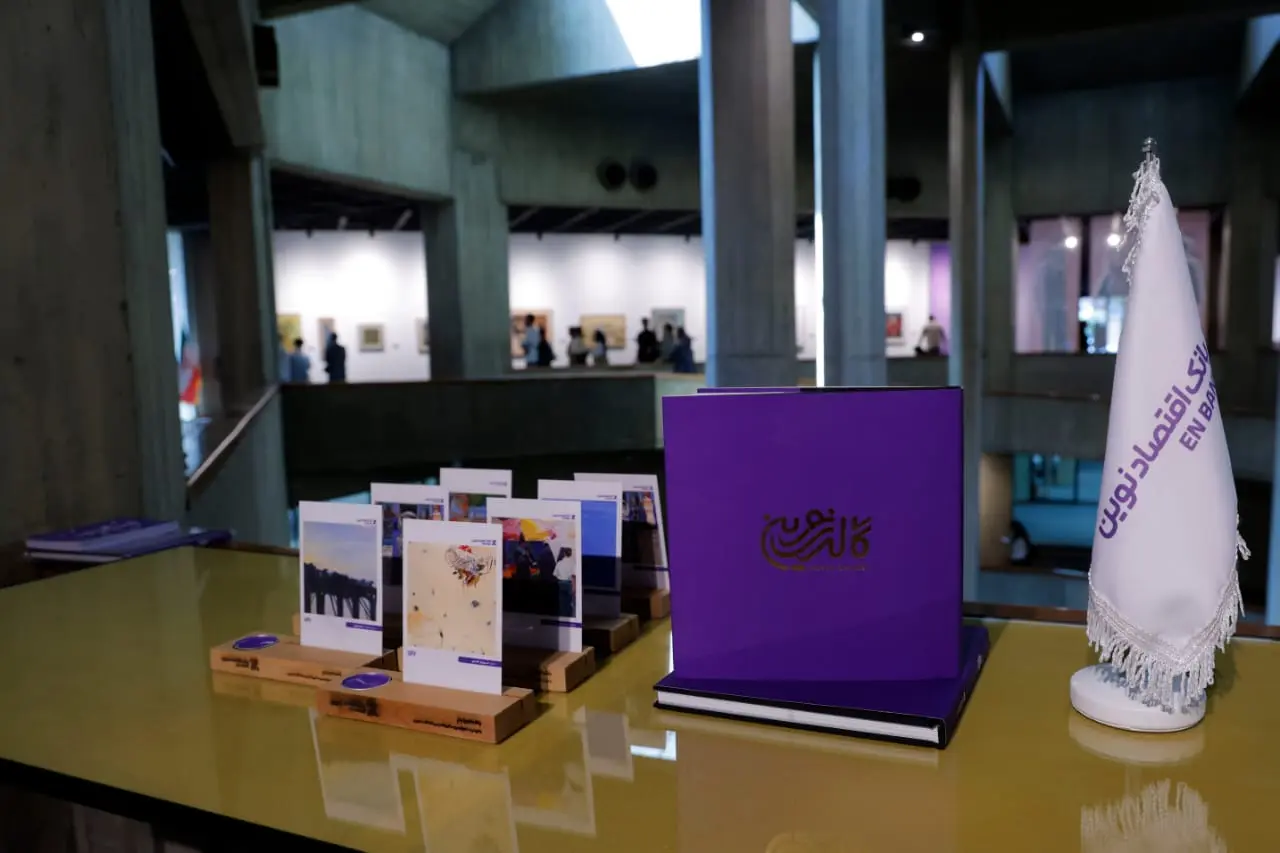
As Eghtesad Novin Bank approaches the 25th anniversary of its establishment, it stands at an important point in its history, one that offers an opportunity to redefine the relationship between economic activity and culture.
The bank’s management is preparing to introduce a renewed vision of the role a financial institution can play in the arts. This vision is intended to extend beyond collecting and exhibiting artworks, focusing instead on meaningful support for Iran’s art ecosystem, strengthening the creative economy, expanding public access to art and establishing new platforms for interaction among artists, audiences and the private sector.
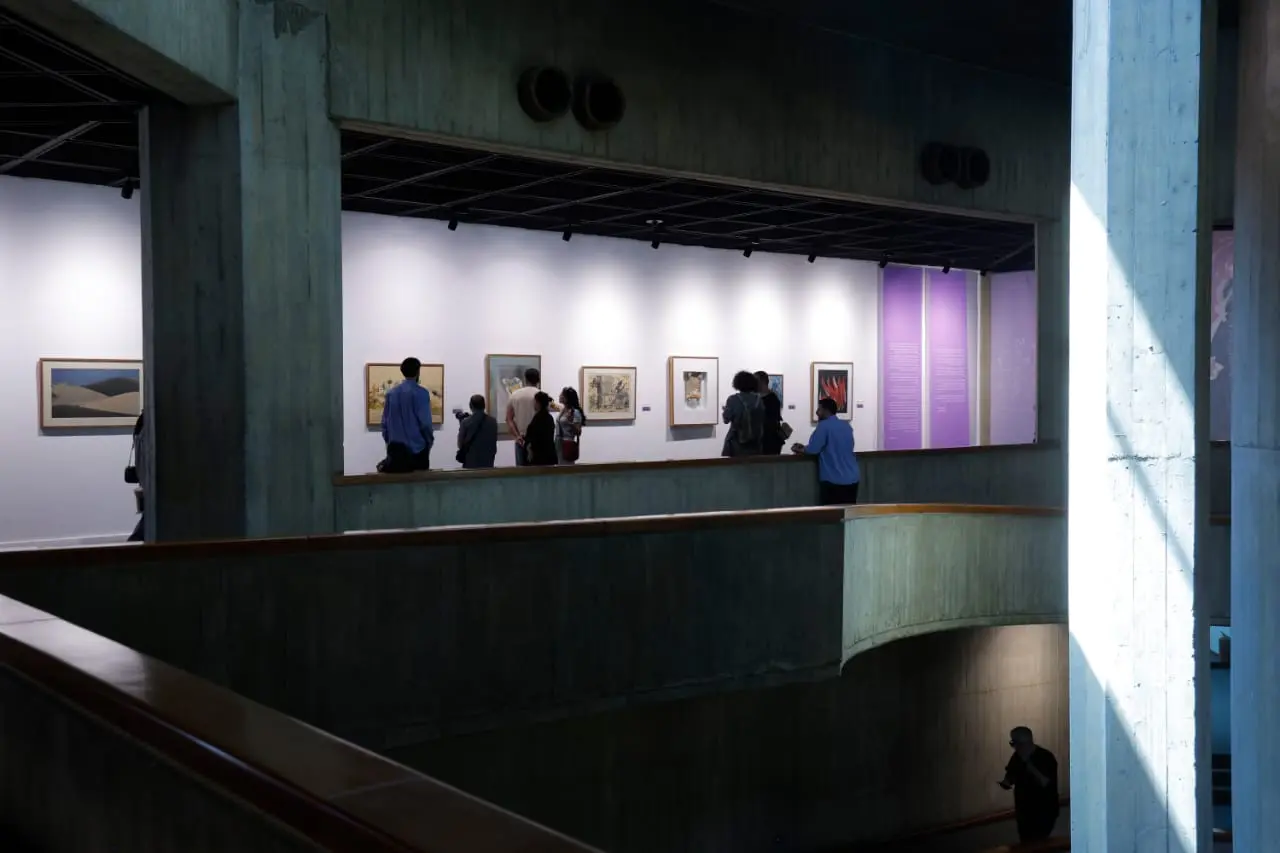
At a time when societies need cultural capital more than ever to foster social hope, collective dialogue and a renewed sense of identity, the active and purposeful engagement of economic institutions in the arts can serve a role that extends far beyond financial support. It represents an investment in the cultural future of society, in which economic and cultural development reinforce one another.
A quarter-century of activity provides Eghtesad Novin Bank with an opportunity to reaffirm its pioneering role, this time not only in private banking, but also in shaping a new model for the participation of economic institutions in Iran’s cultural and artistic life.
LEAVE A RELPY