
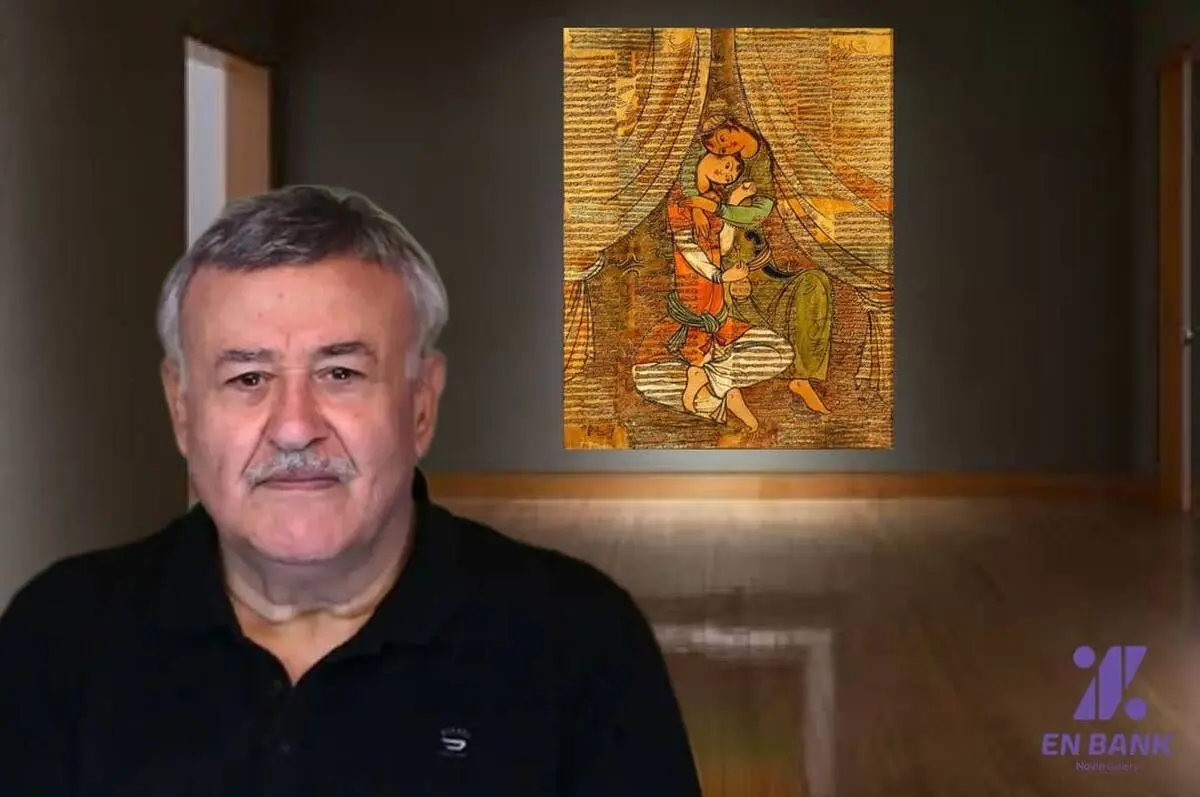
The Novin Gallery Collection of Eghtesad Novin Bank Presents Sadegh Tabrizi's The Lovers
This work is a testament to the continuity of Iranian culture. In this canvas, Sadegh Tabrizi transforms words into color, history into texture, calligraphy into image, and love into the universal language of art.
ArtDayMe : Since its establishment, Eghtesad Novin Bank, Iran's first private bank, has maintained a remarkable presence in the country's cultural landscape. Through the formation of a distinguished art collection and the establishment of the Novin Gallery, the bank has emerged as a pioneering institution dedicated to presenting and preserving Iran's artistic ecosystem.
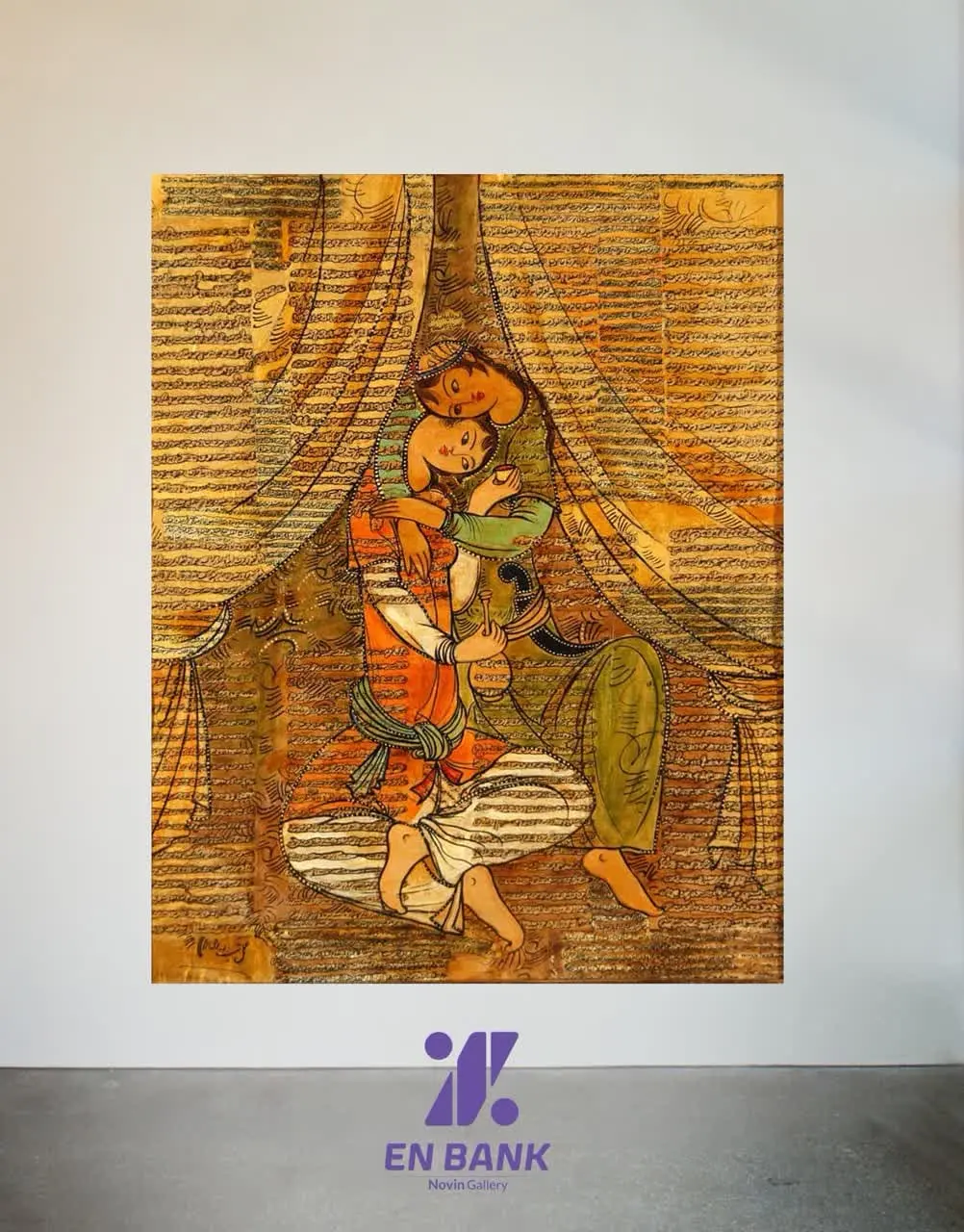
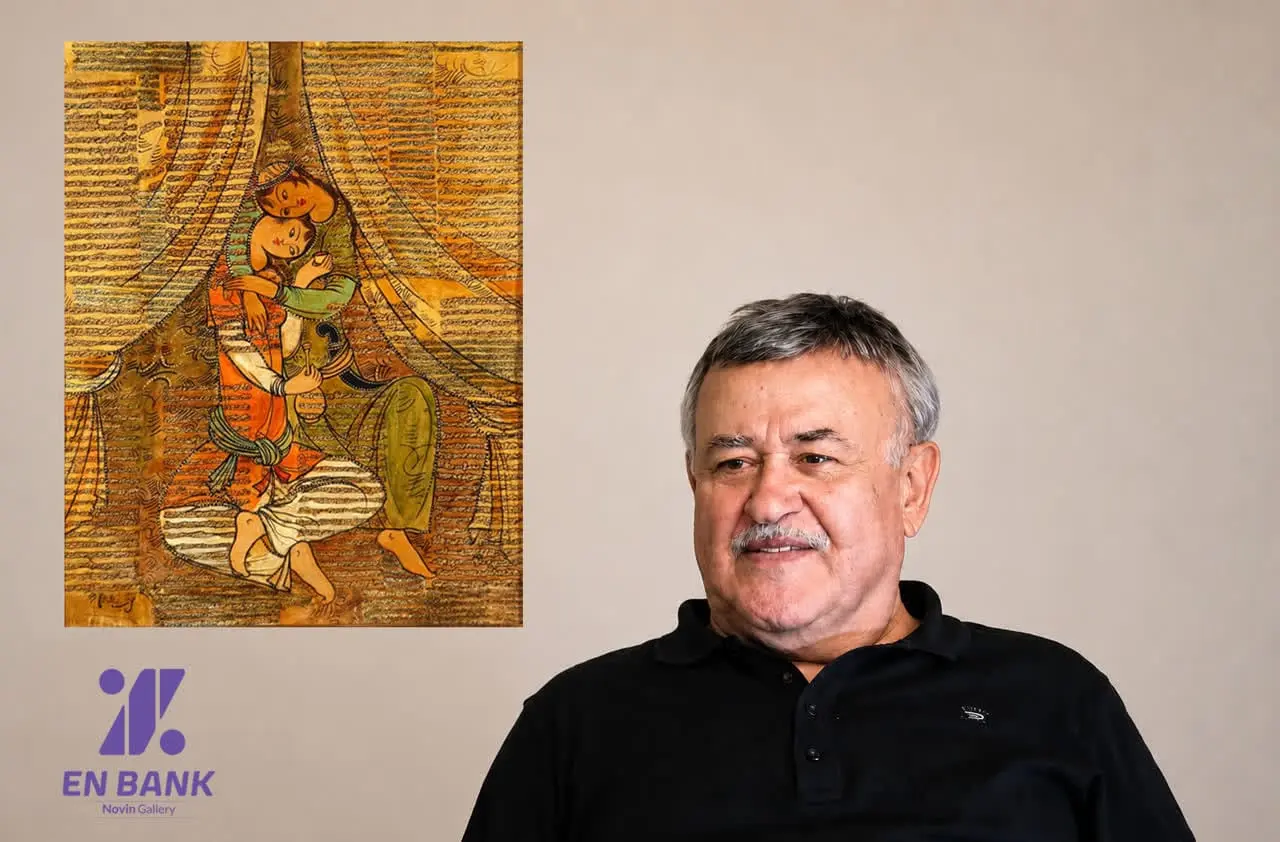
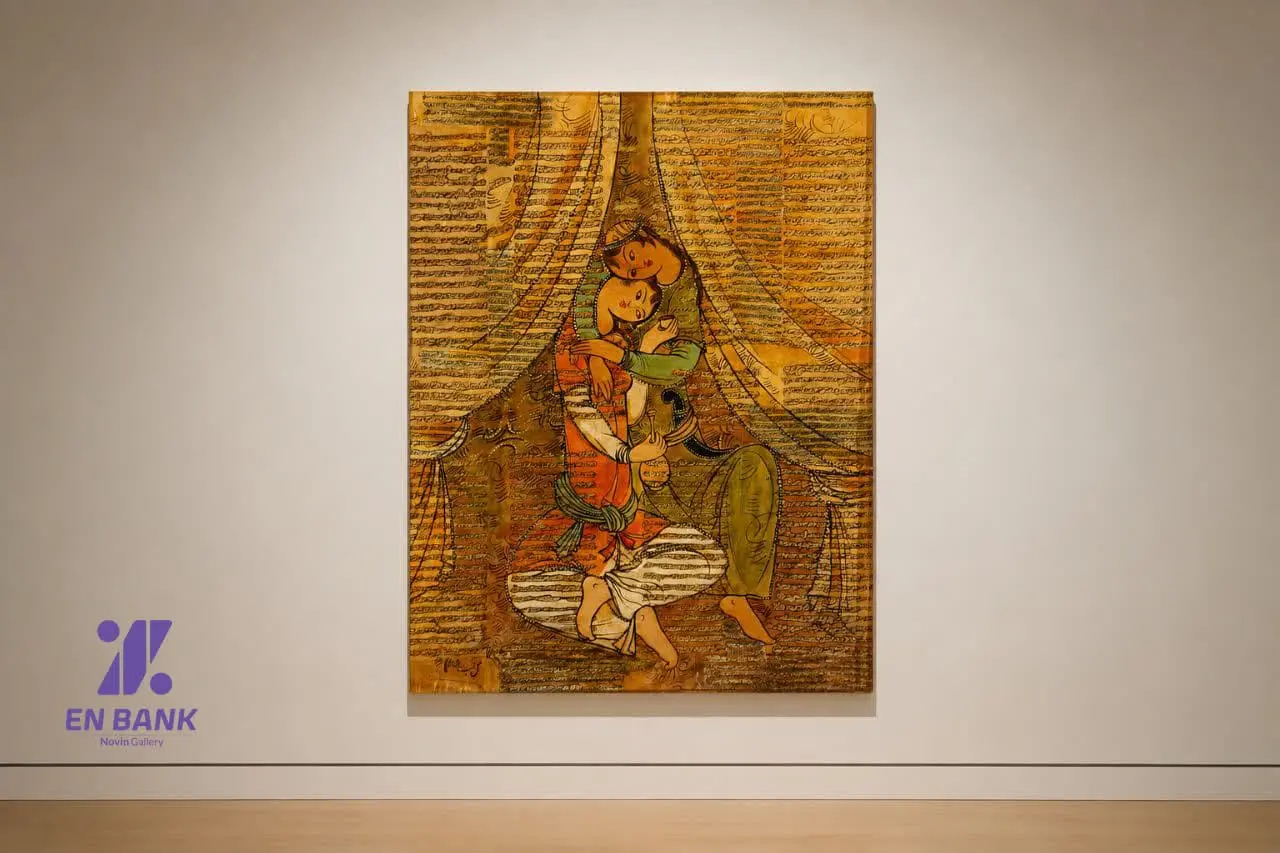
Among the highlights of the Novin Gallery Collection of Eghtesad Novin Bank is an outstanding work by the late master Sadegh Tabrizi. Belonging to his celebrated The Lovers series, the painting was created during the 2000s (1380s SH). Measuring 50 × 40 cm, it is executed using Tabrizi's distinctive technique of painting over manuscript pages, collage, and oil on canvas.
Sadegh Tabrizi (1939–2018) was one of the foremost pioneers of the Saqqakhaneh School, leaving an enduring mark on the evolution of modern Iranian painting. Few artists in Iran have succeeded, as Tabrizi did, in forging such a compelling bridge between the millennia-old heritage of Persian culture and the language of modern art.
He stood at the forefront of the artistic
movement that, during the 1960s, redirected Iranian contemporary art away from the mere imitation of Western modernism toward the rediscovery of a distinctly Iranian visual identity. In his later works, however, this search for identity evolved into a language that is more lyrical, contemplative, and profoundly human.
The painting preserved in the Novin Gallery Collection of Eghtesad Novin Bank is an eloquent example of this mature period. Here, Tabrizi creates far more than an image; he brings history, literature, calligraphy, love, and Iran's cultural memory into a single visual dialogue.
_ A Page of History as the Foundation of Painting
One of the most striking features of this work is Tabrizi's incorporation of manuscript pages into the very structure of the painting. The manuscript is not employed merely as a decorative background; rather, it becomes a living, meaning-bearing element within the composition. Its densely written lines and rhythmic script flow across the surface like layers of historical memory, creating the impression that the image itself has emerged from the depths of history.
Through this remarkable choice, the canvas becomes a meeting place between past and present—a space where words are first seen before they are read, assuming the roles of texture, rhythm, and visual music.
_ Love: The Silent Core of the Narrative
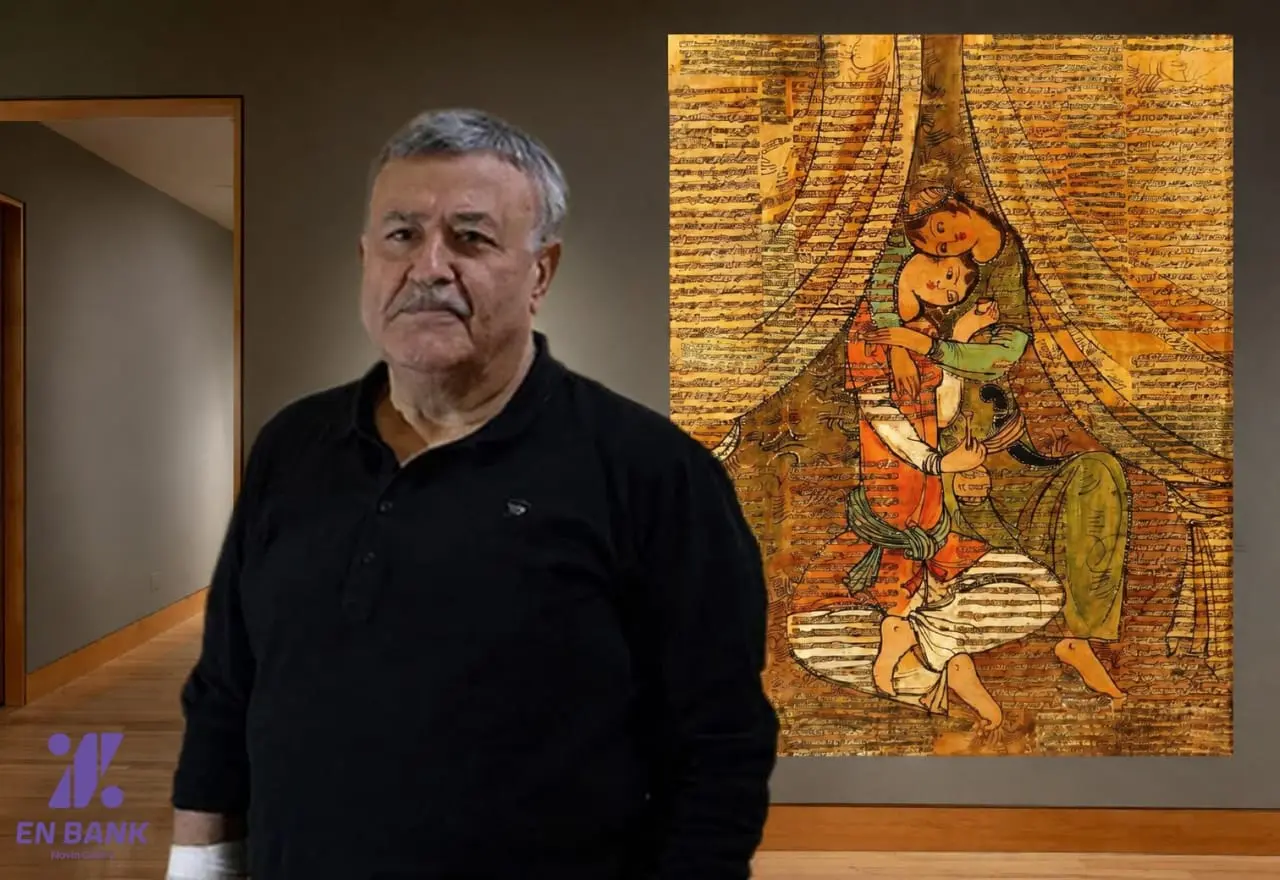
At the heart of the composition, two figures embrace in quiet intimacy. The painting offers no explicit narrative, nor does the artist identify the lovers. This deliberate ambiguity expands the possibilities of interpretation. Are they Layla and Majnun? Khosrow and Shirin? Or perhaps a metaphor for the mystical union between humanity and the Divine Beloved?
Tabrizi offers no definitive answer. Instead, his silence transforms the painting into an open text, inviting countless readings.
_ Persian Miniature in a Contemporary Language
The almond-shaped eyes, elongated eyebrows, delicate noses, small lips, and intentionally stylized anatomy all originate in the rich tradition of Persian miniature painting. Yet Tabrizi never remains confined to historical revivalism. He reimagines these classical elements within a thoroughly modern visual framework, forging a language that is unmistakably his own.
In Tabrizi's art, tradition is never an object of nostalgia; it is the raw material from which new artistic worlds are created.
_ Composition: Harmony at the Height of Intimacy
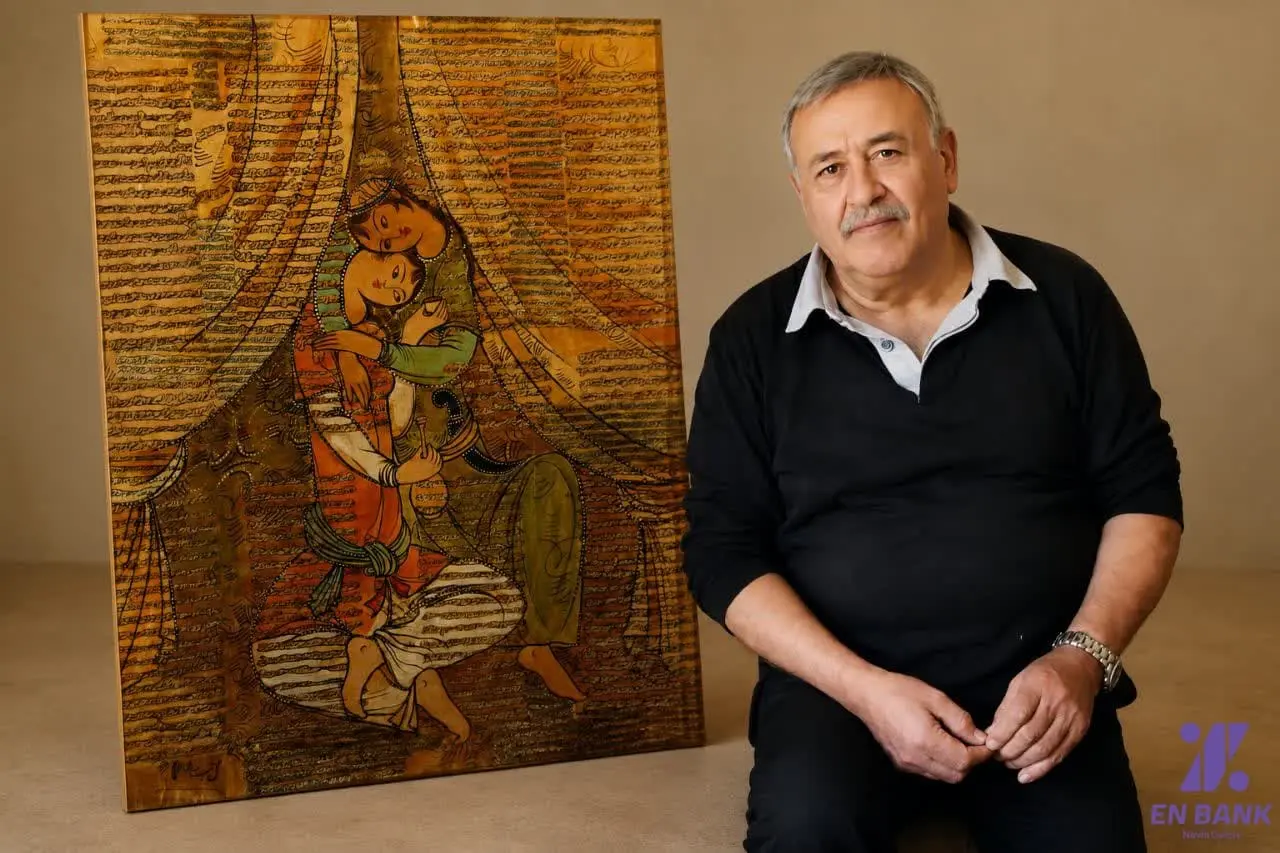
The two figures are arranged within a triangular composition—one of the most enduring and stable compositional structures in the history of art. Every vertical line and sweeping curve within the background guides the viewer's gaze toward this central embrace.
Nothing appears superfluous. Every visual element serves to reinforce the emotional bond between the lovers, conveying serenity, security, and tenderness.
_ Calligraphy: From Language to Image
One of Sadegh Tabrizi's greatest artistic achievements—clearly evident in this painting from the Novin Gallery Collection of Eghtesad Novin Bank—is his transformation of calligraphy into a purely visual element. Here, script is not intended to be read, but to be seen. The continuous rhythmic lines animate the canvas, creating an internal movement that beautifully contrasts with the stillness of the embracing figures.
In this work, calligraphy no longer functions merely as a vehicle of meaning; it becomes the image itself.
_ Colors Drawn from History
The painting's palette is restrained yet masterfully orchestrated. Warm ochres, golds, earthy browns, oranges, and olive greens evoke illuminated manuscripts, ancient architecture, historic ceramics, and the timeless visual culture of Iran.
Light, too, follows the logic of Persian miniature painting. It does not descend from an external source but seems to emanate from within the pigments themselves, creating a luminous, spiritual atmosphere that perfectly complements the painting's theme of love.
_ Texture: A Dialogue Across Time
Among the painting's most compelling qualities is its extraordinary surface texture. Layers of aged manuscript paper, flowing calligraphy, and richly applied oil paint coexist to form a complex visual fabric. This interplay not only enriches the work aesthetically but also offers the viewer an experience in which time, material, and image become organically intertwined.
_ The Legacy of the Saqqakhaneh School
This painting stands as a mature continuation of the ideals of the Saqqakhaneh School, a movement that introduced a new language for modern Iranian art through the creative use of calligraphy, religious symbols, folk traditions, and indigenous visual culture. Yet in this later period of his career, Tabrizi moves beyond symbolic and ritualistic expression toward a more lyrical and deeply human vision—one in which love, memory, and culture form the three essential pillars of his narrative.
_ Beyond a Painting
This work is far more than the depiction of two lovers; it is a meditation on the continuity of Iranian civilization. In this canvas, Sadegh Tabrizi transforms words into color, history into texture, calligraphy into image, and love into the universal language of art. The result is a work that invites viewers simultaneously to contemplate a painting, read an ancient manuscript, and experience the emotional resonance of a Persian love poem.
At a time when much of contemporary art is defined by rupture with the past, Tabrizi demonstrates that true innovation lies not in abandoning one's roots, but in reimagining them with creativity and conviction. This painting stands as a powerful testament to that vision—a vision in which history, beauty, and cultural identity embrace one another in perfect harmony.
Novin Gallery of Eghtesad Novin Bank [ENBank] www.enbank.ir
As Iran's first private bank, Eghtesad Novin Bank [ENBank] embraced a vision of development that extended far beyond conventional financial activity from the very beginning of its establishment in August 2001. The Bank regarded culture and the arts not as peripheral concerns, but as an essential component of the nation's cultural and social capital.
Over the past two decades, Eghtesad Novin Bank has assembled an outstanding collection comprising more than one hundred significant works by many of Iran's most celebrated modern and contemporary artists. This collection is far more than a corporate asset; it represents a visual narrative of an important chapter in the history of Iranian art.
The establishment of Novin Gallery and the organization of regular exhibitions have further demonstrated that the Bank did not acquire these works merely to preserve them within storage facilities or corporate offices. Instead, it has consistently sought to create opportunities for public engagement, scholarly dialogue, and broader appreciation of these remarkable works of art.
At a time when many masterpieces of Iranian contemporary art remain inaccessible within private collections, making these works publicly available represents a meaningful contribution to cultural circulation and strengthens society's relationship with its artistic heritage.
Across the world today, leading financial institutions are evaluated not solely by their economic achievements but also by their contributions to cultural development, quality of life, and the encouragement of creativity. The experience of many internationally respected banks and financial institutions demonstrates that art can serve as a bridge connecting economy, culture, and society—a bridge through which financial capital is transformed into cultural and social capital.
Now, as Eghtesad Novin Bank [ENBank] approaches the twenty-fifth anniversary of its founding in August 2026, the institution stands at an important historical milestone—one that may mark the beginning of a new chapter in the relationship between finance and culture.
The Bank's leadership is preparing to introduce a renewed vision for the role of a financial institution within the arts. This vision extends well beyond collecting and exhibiting artworks, focusing instead on meaningful support for Iran's artistic ecosystem, the strengthening of the creative economy, expanding public access to art, and fostering new forms of collaboration between artists, audiences, and the private sector.
At a time when societies increasingly depend upon cultural capital to nurture hope, encourage dialogue, and renew collective identity, the active and purposeful engagement of economic institutions in the arts can represent far more than financial sponsorship. It is, in essence, an investment in the cultural future of society—a future in which economic development and cultural development advance together.
The twenty-five-year history of Eghtesad Novin Bank [ENBank] offers an exceptional opportunity for the institution to reaffirm its pioneering role—not only in Iran's private banking sector but also in shaping a new model of meaningful participation by economic institutions in the country's cultural and artistic life.
LEAVE A RELPY