
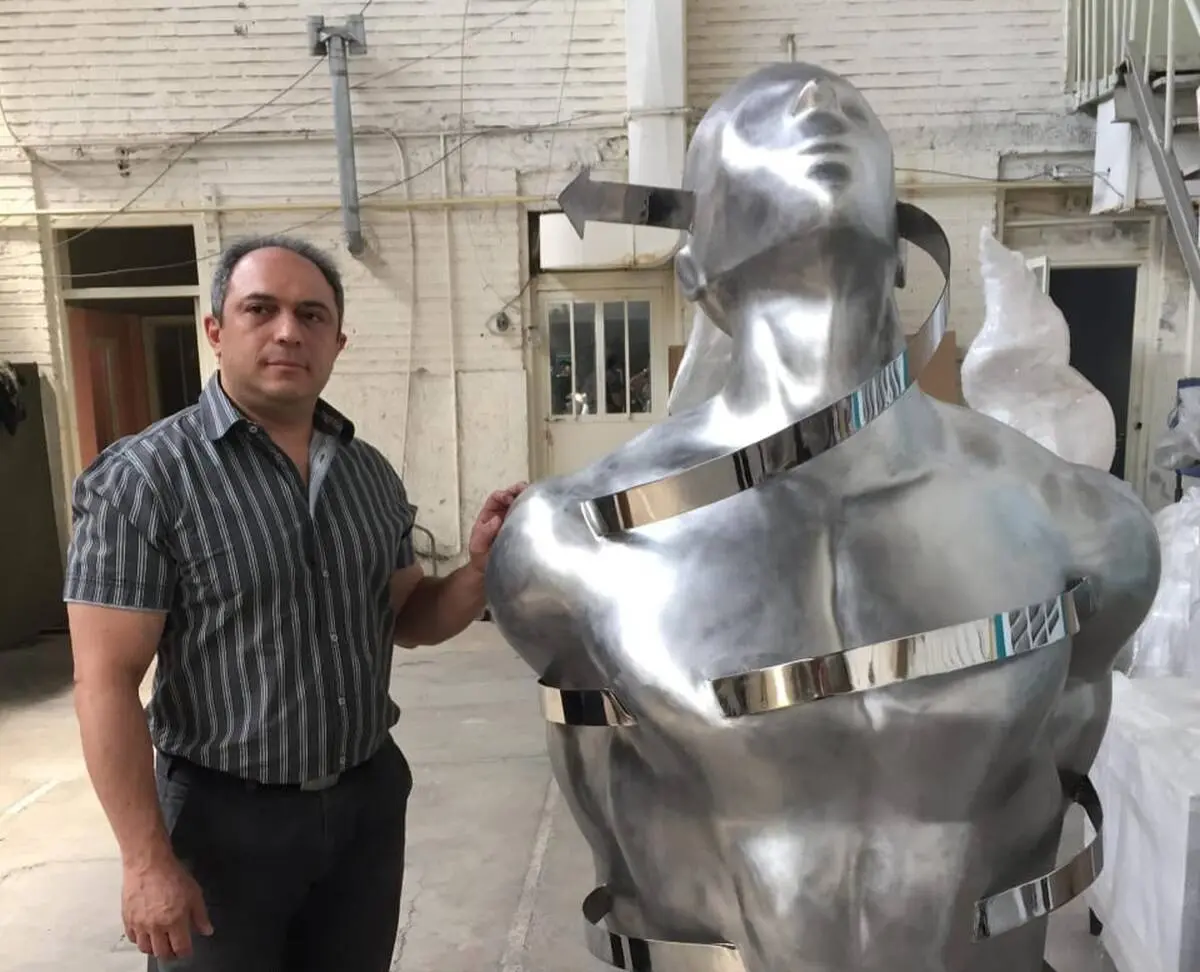
Masoud Akhavan Jam’s Maturity in the Raha Gallery Collection | A Sculpture About “Becoming”
The sculpture Maturity in the intellectual universe of Masoud Akhavan Jam is a sculpture about becoming. In this work, the human being is not a fixed entity, but someone who is constantly redefining themselves along the journey of life, shaped by time, experience, physical changes, and inner transformation. And that small arrow beside the head may be the simplest, yet most significant, sentence of the work: “Life goes on.”
ArtDayMe : The Raha Gallery Middle East Collection, founded and managed by Engineer Mohammadreza Ghaemmaghami, has maintained a continuous cultural presence for more than two decades, with a focus on promoting the art of the region. The collection preserves a diverse selection of modernist and contemporary masterpieces by Iranian and Arab artists.
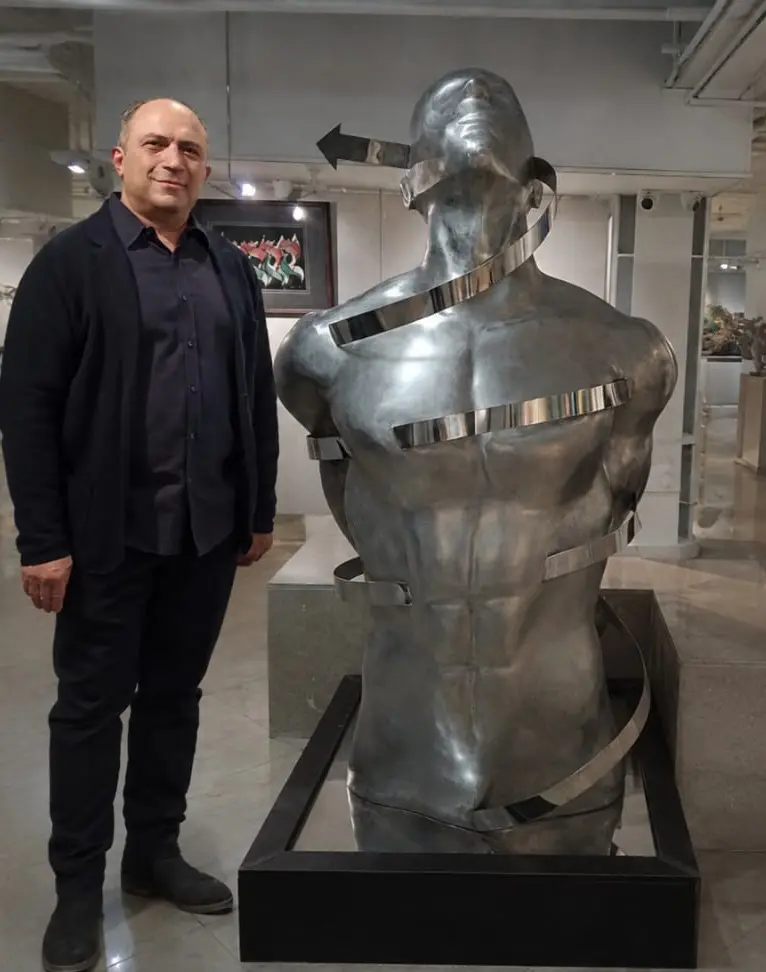
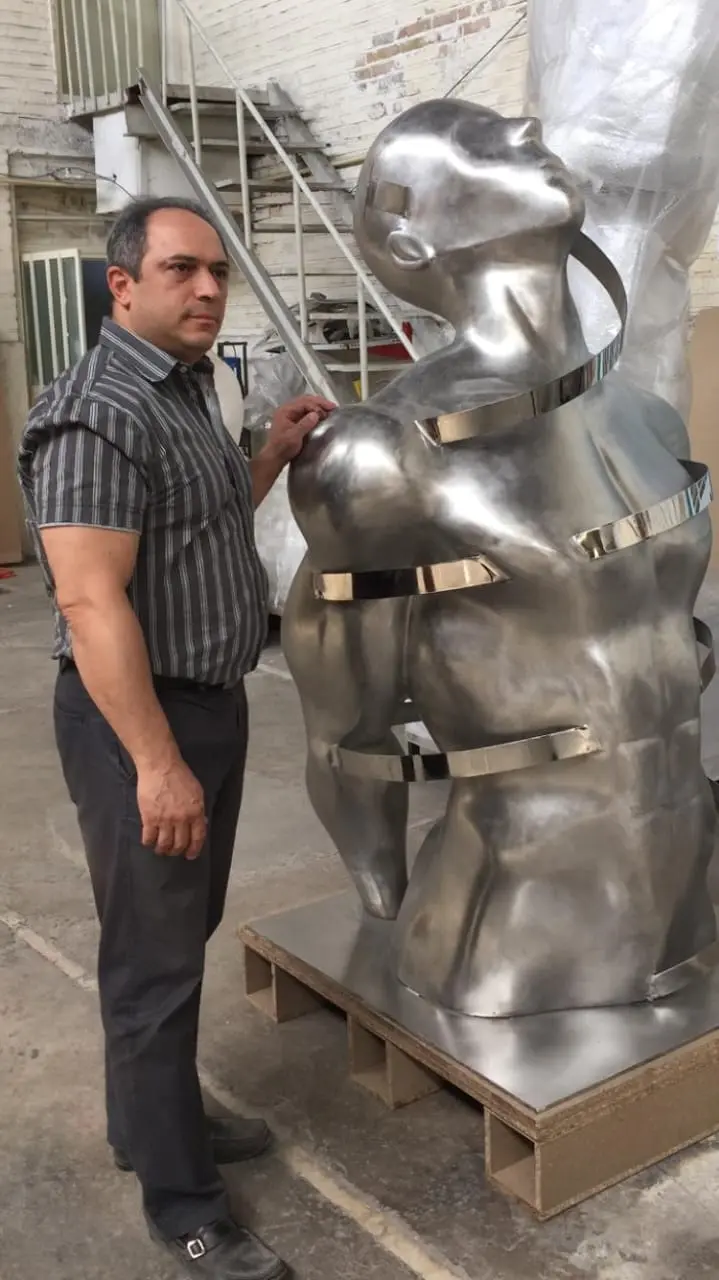
Among these works is the striking sculpture Maturity by Masoud Akhavan Jam—a work created in 2015, using stainless steel with a mirror-polished finish, measuring 170 cm in height.
Masoud Akhavan Jam, born in Tehran in 1969, is a sculptor whose visual language has been shaped largely around stainless steel, bronze, and, in particular, highly polished, mirror-like metal surfaces.
Masoud is among the few Middle Eastern artists to have participated in the last three editions of the Venice Biennale.
He began experimenting with sculpture as a teenager. After studying biology at The George Washington University and earning an Executive MBA from Hochschule Konstanz – University of Applied Sciences in Germany, he brought his technical knowledge and industrial experience into the field of sculpture. His experience managing the design division of his family’s factory also played an important role in shaping his understanding of metal and industrial structures.
His first bronze sculpture was created in 2011. Since then, his human figures and abstract forms have been exhibited in Tehran as well as at events in London, Dubai, Miami, Venice, and elsewhere.
For Akhavan Jam, metal is not merely a construction material. By transforming a hard, industrial, and resilient material into forms that are soft, human, and at times poetic, he explores the tension between strength and delicacy, body and mind, material and meaning.
_ A Figure Surrounded by Time
The title Maturity, a work held in the Raha Gallery Middle East Collection, immediately suggests that the viewer is encountering a concept that extends beyond a purely physical condition.
In the artist’s own statement accompanying the work, he writes: “Along the journey in the path of life comes growth and with it maturity. Body changes. Soul changes. These vast differences shift thought paradigms and lifestyles.”
If the title of the work is taken as the key to entering it, we are therefore confronted with a sculpture about human transformation over time.
_ The Body as a Structure in Transformation
The form of the body in Akhavan Jam’s work, unlike that of many classical figures, is not intended simply to display the anatomical beauty of the human body.
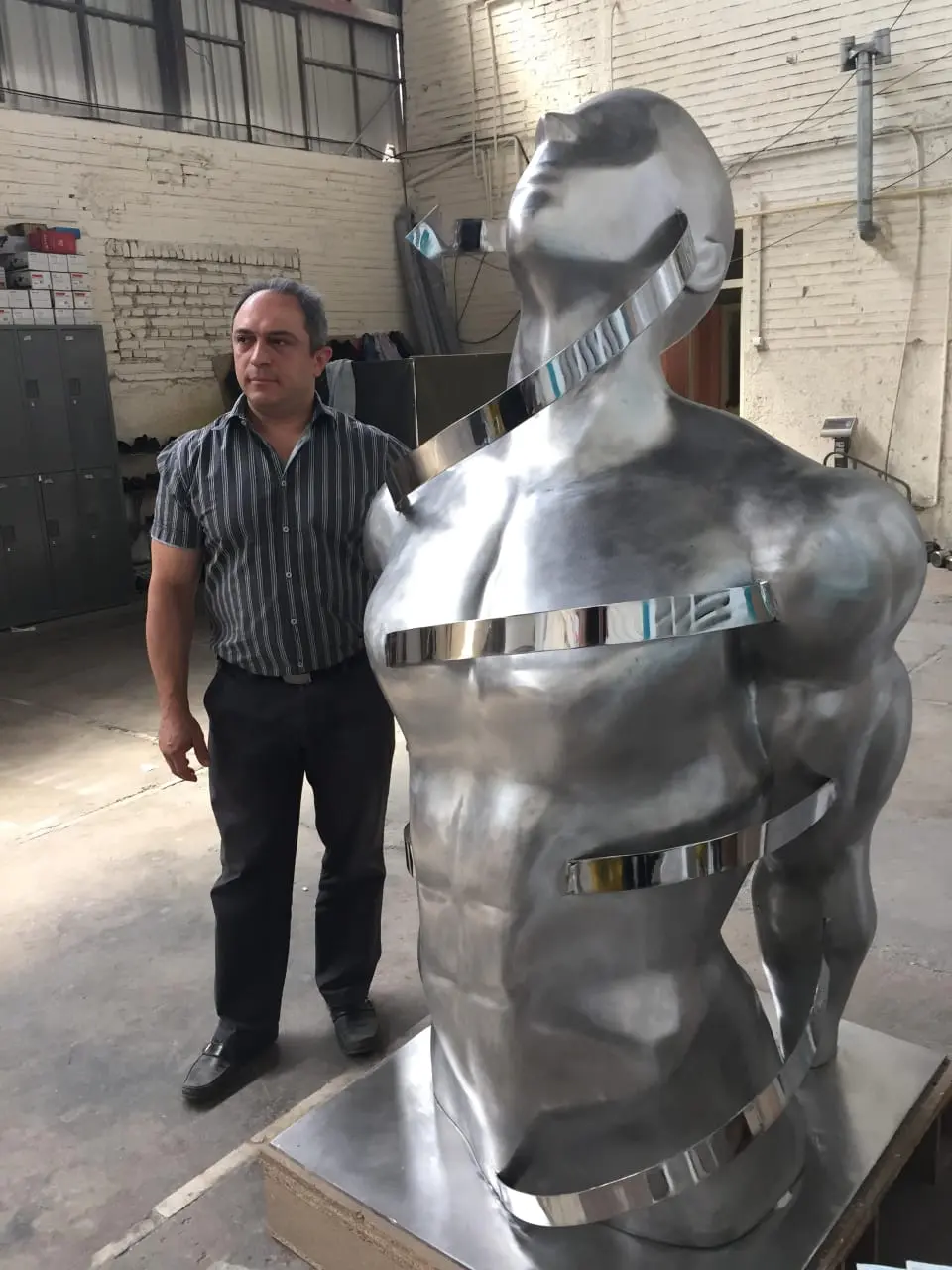
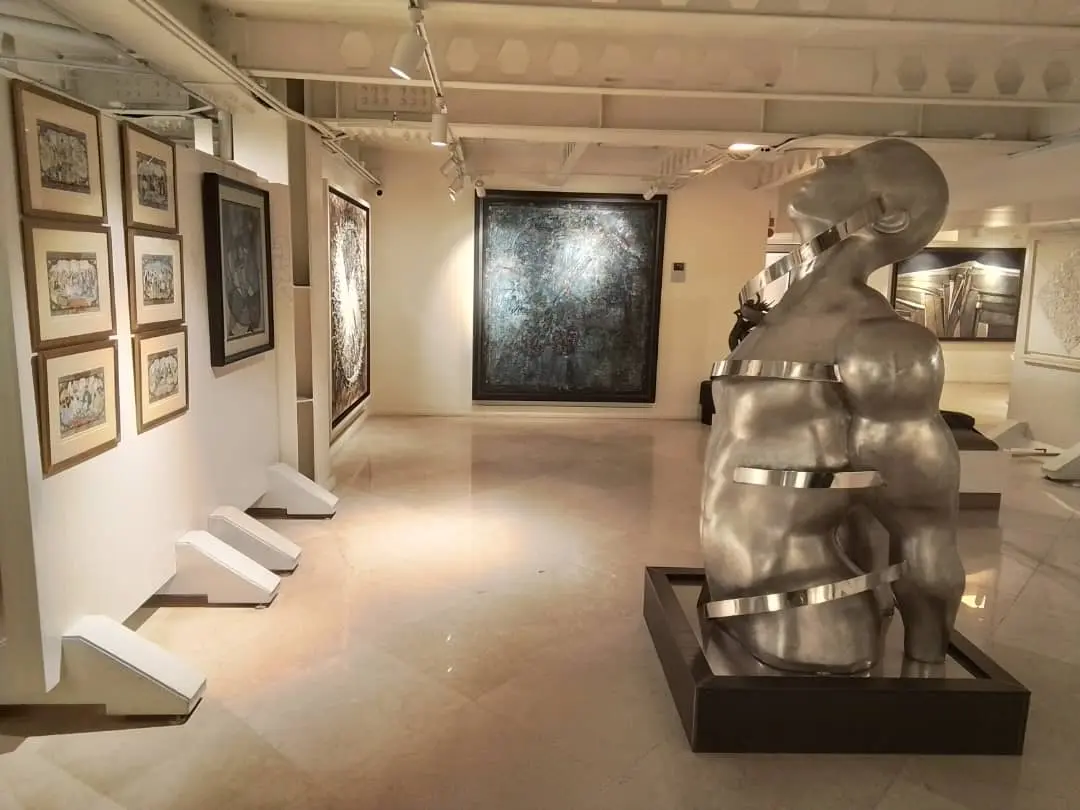
The large torso, broad shoulders, slightly raised head, and elimination of facial details create a sense of monumentality and stillness.
Yet, despite its physical strength, the figure does not appear entirely intact or seamless.
Metal bands cut across the body.
This contrast is crucial:
The body is powerful, yet it is not continuous. The body appears complete, yet signs of rupture can be perceived within it.
This can be regarded as one of the work’s most important visual devices.
_The Metal Bands: The Work’s Most Significant Semantic Element
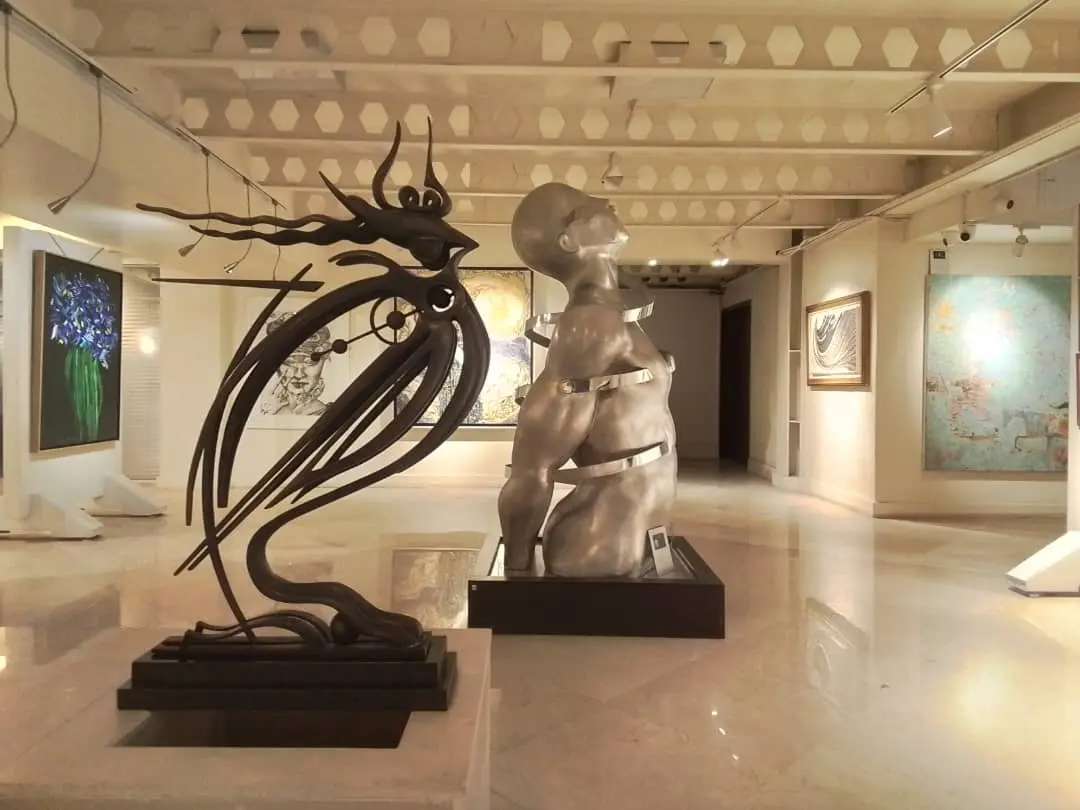
Perhaps the most important formal element in Masoud Akhavan Jam’s Maturity is the series of slender, gleaming steel bands that pass around the body and encircle it at different points.
These bands are not merely decorative.
They resemble lines drawn by time across the human body.
Beginning around the neck, they move across the chest, spiral around the torso, and cut across the body again at lower levels.
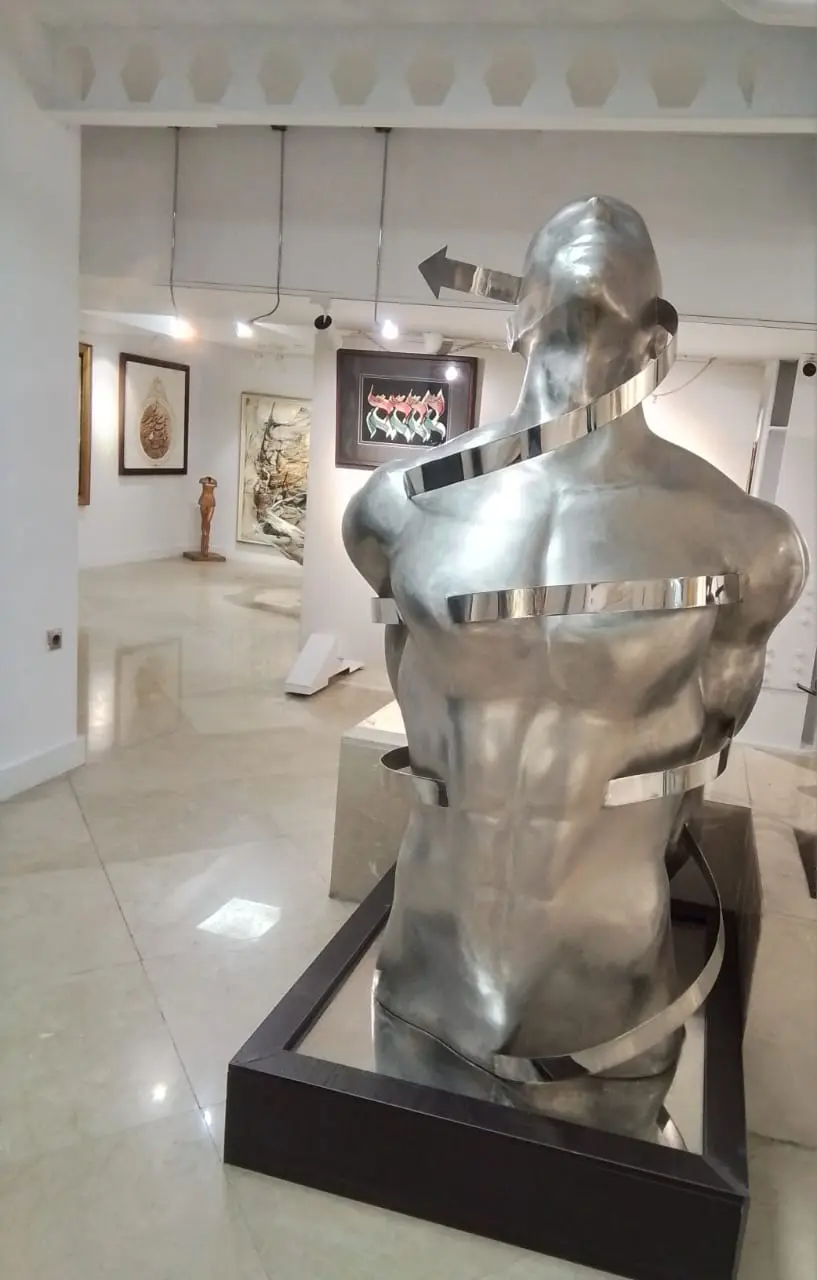
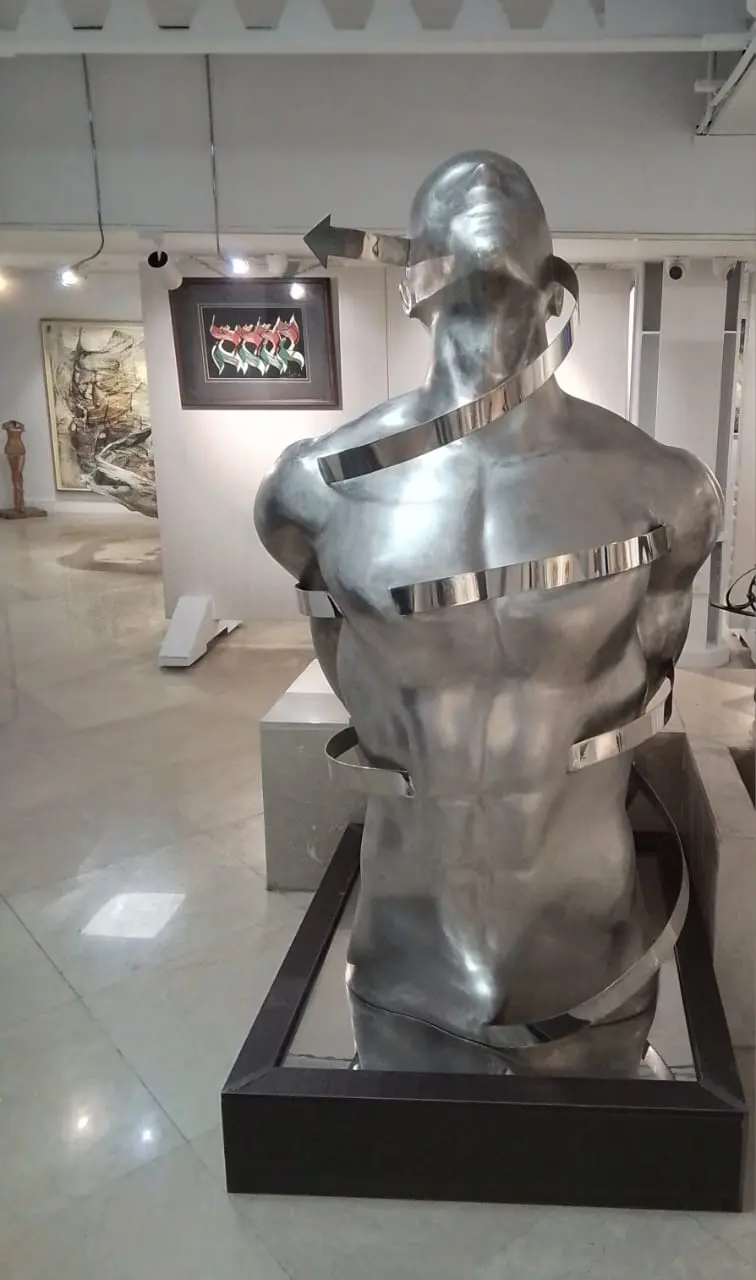
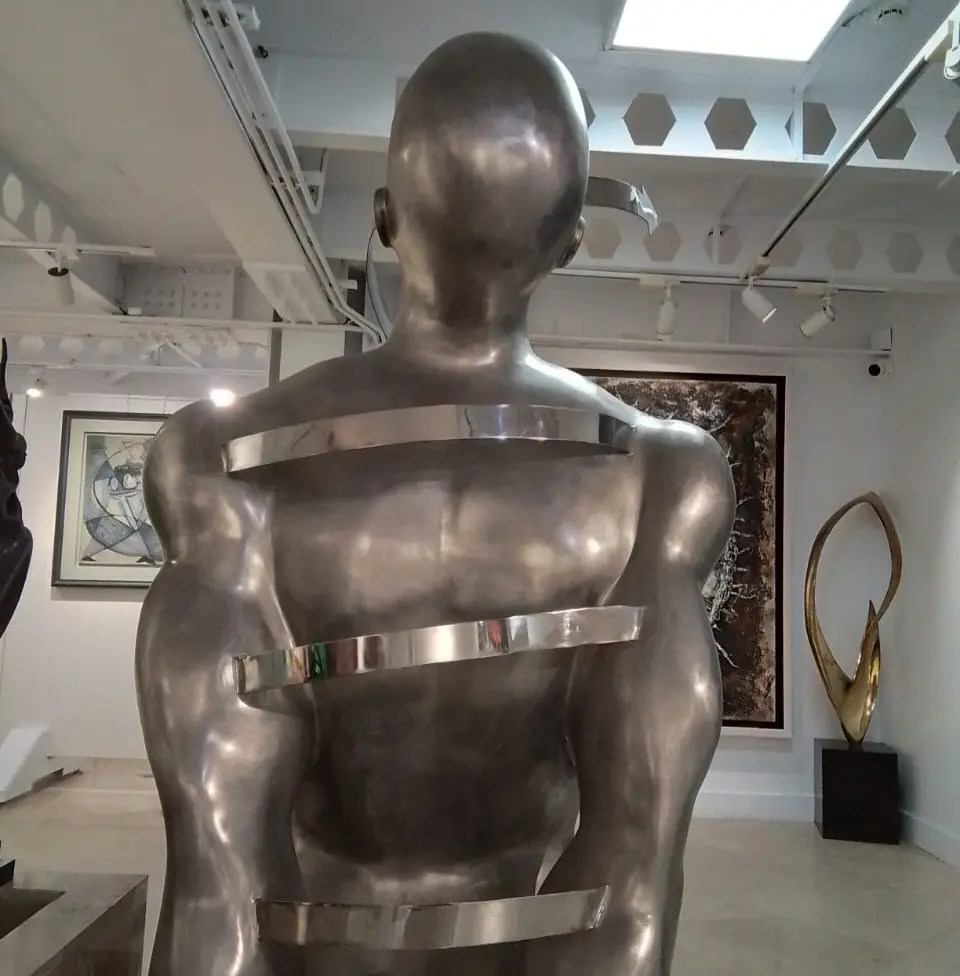
The same logic continues across the back.
The bands therefore form a continuous, spiraling element that surrounds the body from the outside.
They can be read as metaphors for time, experience, memory, and the changes of life—forces from which human beings cannot step outside.
_ A Three-Dimensional Sculpture
If the artist’s intention had simply been to divide the body, he could have used horizontal or vertical lines.
But his choice of a line that twists, spirals, and moves through space is significant.
These lines are not static. They travel around the body, compelling the viewer to experience the sculpture from different angles.
For this reason, Maturity is fundamentally not a work that can be fully understood from a single viewpoint.
The sculpture is completed through the movement of the viewer.
The frontal view offers one set of information, while the rear view continues and completes that visual narrative.
The body, in effect, is not merely a “surface”; it is a spatial trajectory.
_Maturity: A Transformation of Thought, Not Merely of the Body
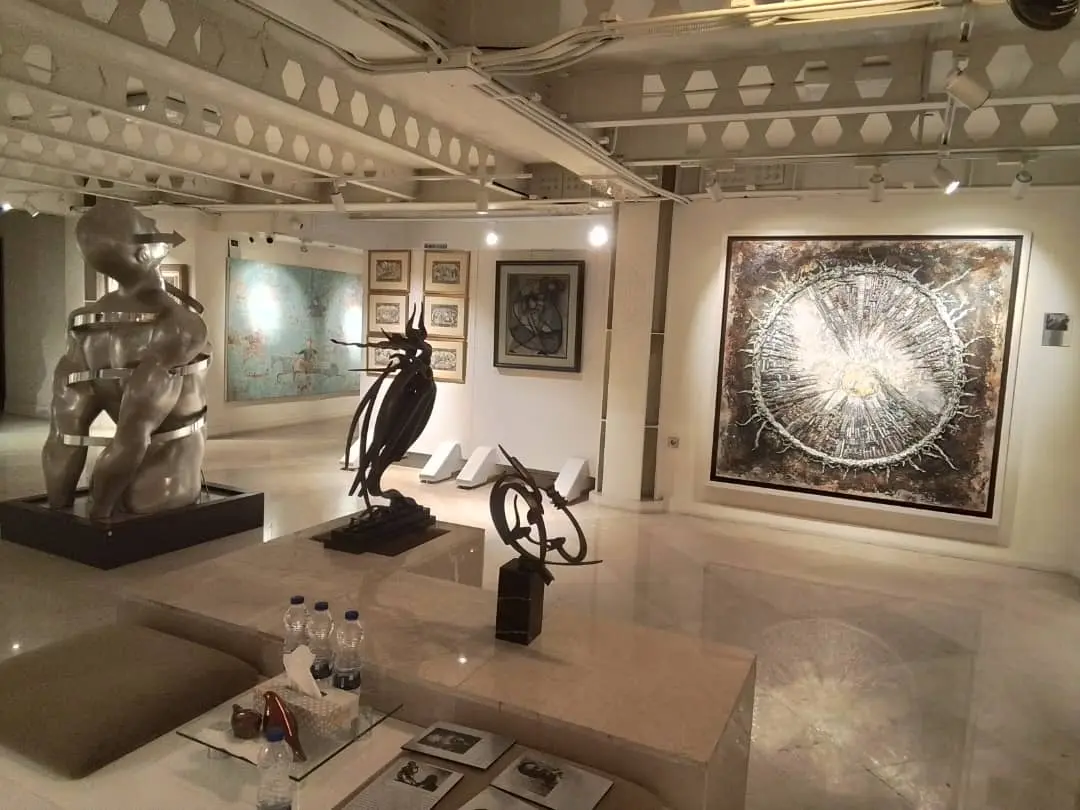
At the top of the head, one of the metal bands ends unmistakably in the shape of an arrow.
This detail is one of the keys to reading Akhavan Jam’s Maturity, held in the Raha Gallery Middle East Collection.
Unlike the other forms in the sculpture, the arrow is a direct and immediately legible sign:
Movement. Direction. Continuation.
And perhaps most importantly:
Moving forward.
If the bands are understood as a metaphor for time, the arrow suggests that time does not stop.
Maturity, too, is not a final destination.
Human beings move from one stage to another.
For this reason, Maturity should not be understood merely as “arrival”; rather, it can be read as a “process of becoming.”
_ A Remarkable Detail: The Arrow Is Beside the Head, Not at the Lower Body
This choice may suggest another layer of meaning.
The arrow is positioned around the head and neck—the areas closest to the mind and thought.
This corresponds with the artist’s own statement, in which he explains that changes in body and soul transform patterns of thought and lifestyles.
Thus, maturity in this work is not simply a transformation of the body.
It is a transformation in the way of thinking.
The body changes, but ultimately what matters is the transformation of the mind and of one’s perspective on life.
_ The Mirror-Polished Surface: The Viewer Enters the Work
One of the significant characteristics of Akhavan Jam’s practice is his use of stainless steel with highly polished surfaces. In Maturity, this quality takes on particular importance.
The metal surface reflects its surroundings and, at times, the image of the viewer, transforming the sculpture from a completely enclosed object into an interactive presence.
The outside world enters the body of the sculpture.
This creates a compelling reading:
We look at a human body, yet at the same time, we see a part of ourselves reflected upon it.
From this perspective, Maturity is not only about that figure.
It is also about us.
_ The Fascinating Contrast Between Material and Meaning
In material terms, stainless steel is hard, resilient, industrial, and seemingly cold.
Yet the artist uses precisely this material to construct the human body—a body inherently associated with concepts such as emotion, vulnerability, growth, aging, and death.
A striking contrast emerges:
The human body is made from a material that is far more resistant to time than the human being itself.
The human changes; the steel remains.
The human ages; the sculpture does not.
This contrast may constitute one of the work’s deepest conceptual layers.
_ The Outer Surface and the Inner Ruptures
From the front, the metal bands resemble cuts passing across the surface of the body.
Yet they do not completely tear the body apart.
The body remains unified.
This can be read as a metaphor for human experience:
Experiences change us, but they do not necessarily destroy us.
Wounds, failures, experience, time, and change become part of the structure of the human being.
In this sense, maturity is not the elimination of wounds, but rather the transformation of those wounds into part of one’s identity.
_The Upward Gaze of the Sculpture
The figure’s head is slightly tilted upward.
The gesture carries a sense of looking toward the future, contemplation, or the search for an answer.
Together with the arrow positioned around the head, this posture reinforces the idea of mental movement:
The mature human being has not only undergone physical change; their way of seeing has changed as well.
_ The Rear View of the Sculpture: The Second Half of the Narrative
The rear view of the work, which can be seen in the Raha Gallery Collection showroom, is particularly important because it demonstrates that the bands are not merely a visual device confined to the frontal view.
They continue around the back of the body, creating a spiraling structure.
This transforms the sculpture from an “image” into a genuinely three-dimensional form.
If the sculpture were viewed only from the front, the bands might be perceived simply as lines placed upon the body. From the back, however, it becomes clear that they move through space and surround the figure.
This is precisely where Akhavan Jam’s sculpture distinguishes itself from image-making.
_ Composition and Balance
Despite the spiraling lines and opposing directions, the work maintains an overall sense of balance.
The primary mass of the body occupies the center, while the slender bands distribute visual energy around it.
The torso is stillness; the bands are movement.
This contrast between the heavy mass of the body and the lightness of the lines is one of the strengths of the sculpture’s composition.
The body stands like a column, while the bands move around it like time itself.
_ The Relationship Between Strength and Vulnerability
The figure created by Akhavan Jam possesses a remarkably powerful human body; the shoulders and chest are pronounced, and the overall form is solid and commanding.
Yet this same body also appears vulnerable, disrupted by the lines that cut across it.
The contrast can be read in this way:
The more mature a human being becomes, the more powerful they do not necessarily become; rather, their awareness of their own vulnerability may also deepen.
This reading resonates with the broader conceptual universe of Akhavan Jam, in which the artist explores ideas such as the power of the mind, conflict, and the relationship between opposing forces.
From this perspective, the sculpture presents the human body as a field of change and transformation within Akhavan Jam’s intellectual and artistic universe.
_ A Sculpture About “Becoming”
Maturity is not about reaching a particular age.
Here, maturity is an ongoing process.
The body changes. The soul changes. The mind changes.
Experiences shape the human being, while time, like the very metal bands encircling the figure, continually moves around us and transforms us.
But there is a subtler point:
The bands do not destroy the body; they redefine it in a new form.
For this reason, Maturity can perhaps best be described as a sculpture about becoming.
The human being in this work is not a fixed entity, but someone who is constantly redefining themselves along the journey of life, under the influence of time, experience, physical change, and inner transformation.
And that small arrow beside the head may be the simplest, yet most significant, sentence of the work: “Life goes on.”
The work belongs to the Raha Gallery Middle East Collection.
LEAVE A RELPY