
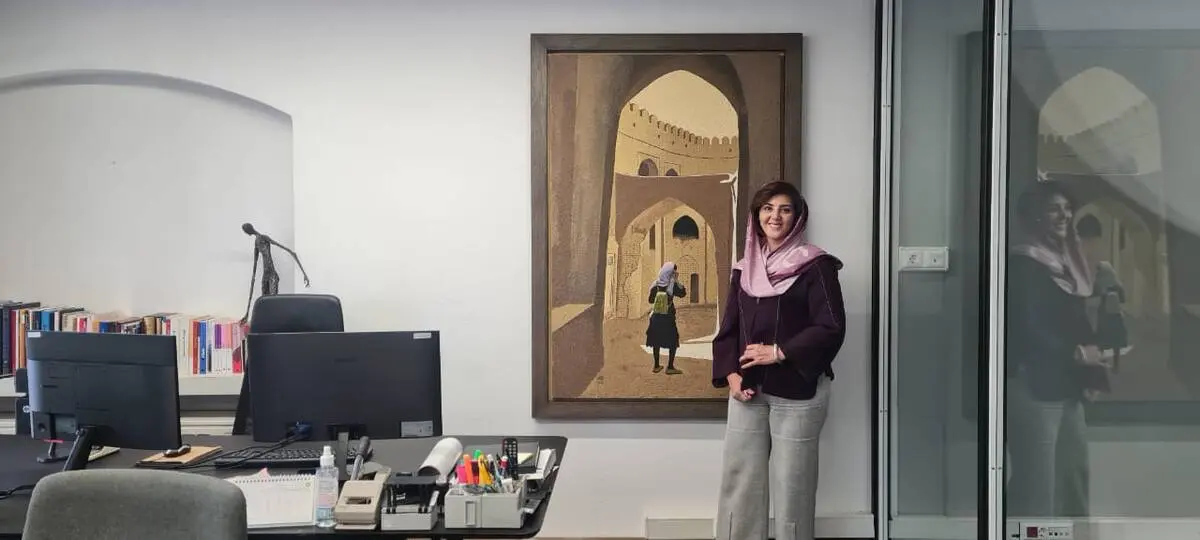
Zohreh Mehraban: 20% of Wealth on the Wall: Why Are the World’s Wealthy Becoming Art Collectors?
Founder and Director of Maad Gallery: “Twenty percent of wealth—that is the share that high-net-worth individuals allocated to art in 2025, according to a global study. But the story is not only about money; behind this figure is a generation of collectors seeking to discover artists, build collections, establish their own signatures and names, and shape their aesthetic identity and cultural legacy.”
ArtDayMe : Zohreh Mehraban, Founder and Director of Maad Gallery, says:
“In today’s world, the relationship between wealth and art is no longer limited to purchasing an expensive painting for a home or office. In recent years, collecting has become one of the most serious ways in which affluent individuals engage with art; a practice in which a purchase is not merely the end of a transaction, but the beginning of a long-term relationship with the artist, the gallery, art history, and even future generations.
Recent figures from the global art market offer an interesting picture of this transformation. According to the tenth annual Art Basel and UBS Global Art Market Report, published in March 2026 and examining the performance of the market in 2025, the global art market grew by 4% in 2025 to approximately $59.6 billion.
In the same year, approximately 41.5 million art transactions took place worldwide—a figure that demonstrates that the art market is far larger than a handful of historic auctions and a limited number of works selling for tens of millions of dollars.
But perhaps more important than the size of the market is understanding who is buying in it, and how they are buying.
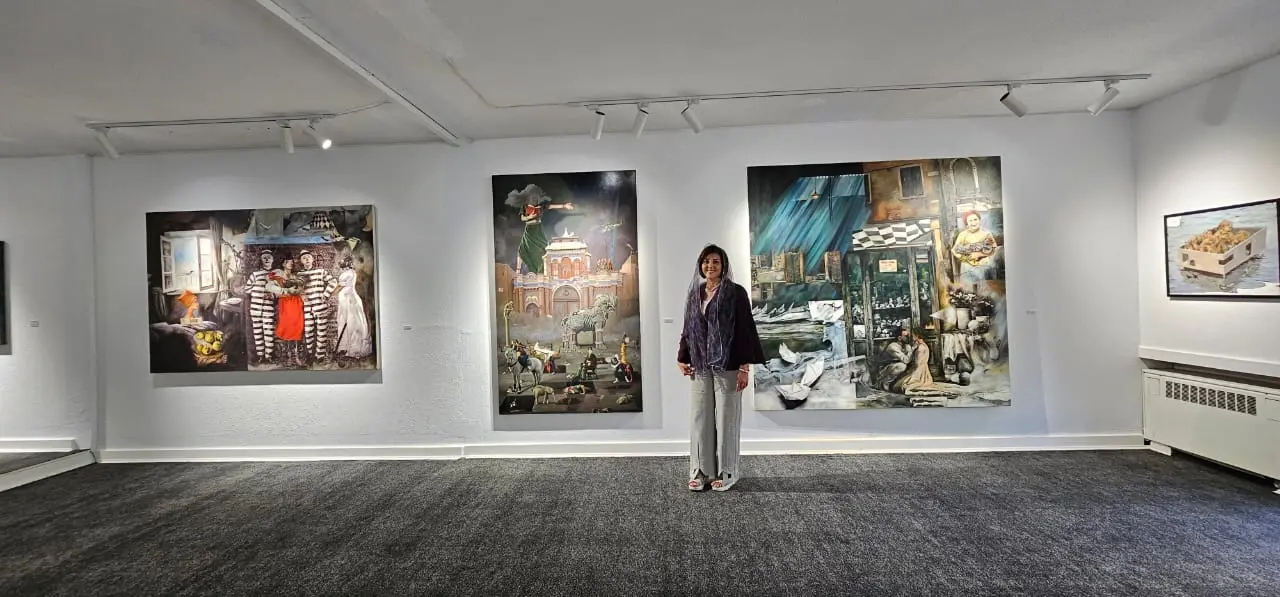
_ 20% of Wealth: A Figure Worth Considering
Zohreh Mehraban adds:
“The Art Basel and UBS report, based on a survey of 3,100 high-net-worth individuals (HNWIs) across 10 major markets, offers one of the most interesting pictures of collecting behavior today.
The collectors surveyed allocated an average of 20% of their wealth to art in 2025, compared with approximately 15% in 2024. Among individuals with more than $50 million in assets, the average share allocated to art reached 28%.
Of course, this does not mean that every wealthy individual should allocate 20% or 28% of their assets to the art market. The study reflects the behavior of a specific group of affluent collectors in the markets surveyed and is not a prescription for all investors.
But it conveys a clear message: for a segment of the world’s wealthy, art is no longer a peripheral purchase; it has become a serious component of how they define wealth and lifestyle.”
_ $438,000 for 14 Works
The Founder of Maad Gallery says:
“The purchasing behavior of the collectors surveyed is also noteworthy. According to the same study, HNWIs spent an average of approximately $438,990 on 14 works in 2024. Ten percent spent more than $500,000, while 7% spent more than $1 million on art.
These figures also challenge an old misconception: collecting does not necessarily mean purchasing an extremely expensive masterpiece.
A collection can be built from a large number of works at different price points—a collection that gradually takes shape, develops a theme, establishes connections among its works, and ultimately acquires its own distinct identity.
In fact, the difference between an ‘art buyer’ and a ‘collector’ often lies not in the size of their capital, but in the way they approach buying.”
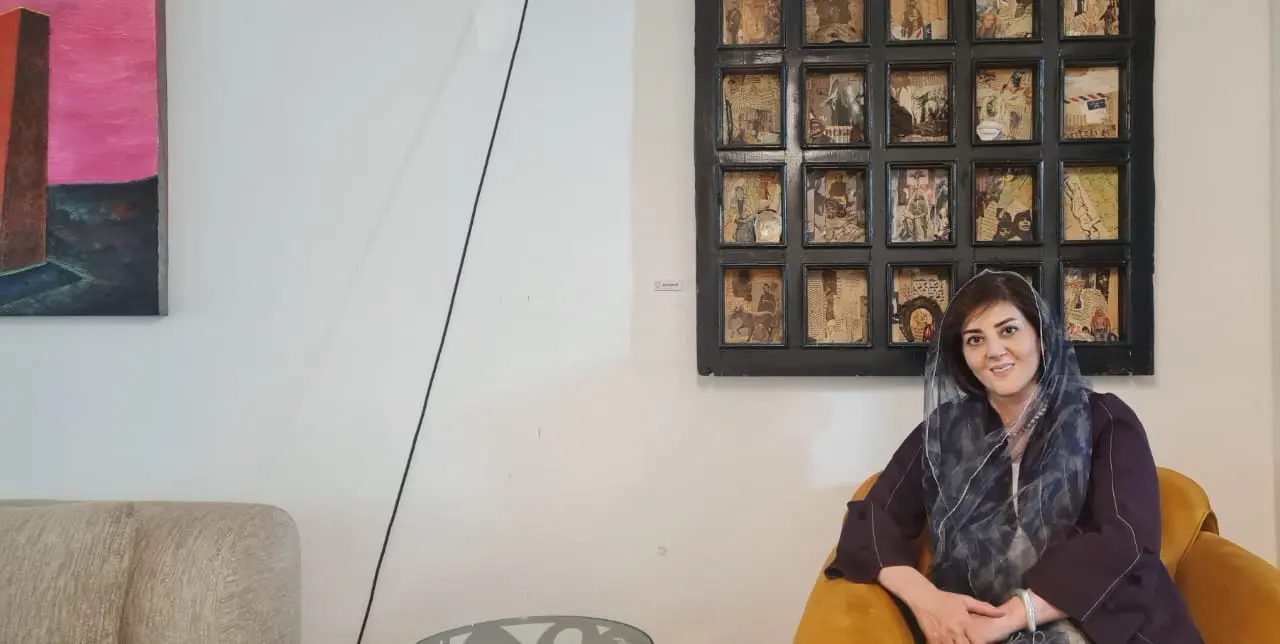
_ A Collector Does Not Simply Buy Art; They Build a Narrative
Zohreh Mehraban notes:
“A painting may be beautiful, significant, or even valuable on its own; but collecting acquires meaning when connections emerge among the selected works.
One collection may be built around a particular generation of artists; another around contemporary Iranian painting; another around women artists; or around an artistic movement, a geographic region, or even a concept such as nature, migration, identity, or memory.
In such circumstances, every new acquisition does not simply add to the number of works; it adds to the language of the collection.
This is the point at which buying art moves beyond a consumer decision and becomes a cultural activity.”
_ 66%: The Art of Discovery
One of the most compelling figures in the Art Basel and UBS report is 66%. The art manager and curator says:
“Sixty-six percent of the HNWI collectors surveyed said they had purchased works by artists they had discovered for the first time. In 2022, that figure stood at 43%. This change is significant.
The art market does not move forward solely through the purchase of established names. A segment of professional collectors continues to look for artists whose careers are still taking shape.
Of course, ‘discovering an artist’ is not the same as ‘predicting an increase in the value of their work.’ The art market offers no guarantee that an artist’s prices will rise.
For a collector, however, discovering an artist early can have a different meaning: the opportunity to accompany an artistic journey before that journey becomes fully established.
This is why getting to know the artist, visiting exhibitions, studying the work, speaking with gallery owners and curators, and even visiting studios become important.”
_ The Art Market Does Not Exist Only at Auction
She adds: “One of the notable changes in today’s market is the diversity of purchasing channels. Last year, 58% of the collectors surveyed purchased art at art fairs, while 51% bought art through Instagram.
At the same time, galleries and dealers remained the most widely used channels and the most important channels in terms of spending.
These figures show that today’s collector may encounter an artwork at a gallery, meet an artist at an art fair, follow the artist on Instagram, and ultimately purchase through a gallery or directly from the artist.
Therefore, information and connections have become as important as purchasing power.
Capital entering the art market does not necessarily result in a strong collection if it is not accompanied by knowledge.”
_ Buying Cheap Is Not the Goal of Collecting
The Director of Maad Gallery believes: “There is sometimes a perception in the art market that a professional collector is someone who can find a work ‘for less than its true value.’
This approach brings collecting too close to trading.
A work may be purchased at a low price and later achieve a higher financial value; but the opposite may also happen.
A good collection is not necessarily one that has experienced the greatest price appreciation. A good collection can be one that is artistically coherent, historically defensible, and supported by reliable documentation.
In such a collection, the purchase invoice, certificate of authenticity, exhibition history, provenance, condition of the work, and information about the artist are not secondary details; they are part of the identity and value of the collection.”
_ From Buying a Single Artwork to Building a Legacy
Zohreh Mehraban believes:
“Perhaps one of the most important reasons wealthy individuals are turning toward collecting goes beyond economics: legacy—and, beyond that, the expression of their own aesthetic sensibility.
The Art Basel and UBS survey reports that 80% of respondents across generations said they intend to pass their collections on to their children or spouses in the future.
An art collection can become a family’s narrative of a particular historical period; it can reveal when and why its owner chose particular artists.
From this perspective, the artwork itself is not the only thing passed from one generation to another; the story behind its selection is passed on as well.
That is why professional collecting considers the future of the collection from the very beginning: How should the works be preserved? How should they be documented? Who will make decisions about them? Does the collection have a clear theme and rationale? And will the next generation understand why these works were chosen?”
_ The Middle East: An Opportunity to Build Collections with a Narrative
The Founder of Maad Gallery believes:
“In the Middle East, too, collecting can be approached as something beyond a series of scattered purchases.
The Middle East is home to several important generations of modern and contemporary artists, diverse movements in painting and sculpture, calligraphy, traditional and contemporary art, as well as a growing network of galleries and art events.
For a Middle Eastern investor, this environment can provide an opportunity to build collections with a distinct identity—collections that are not simply a number of purchased works placed alongside one another, but collections that tell part of the history of Middle Eastern art.
It is even possible to go beyond this and build collections that may eventually be suitable for public exhibition, catalogue publication, collaboration with museums, or incorporation into a cultural foundation.
Here, private capital can play a role that goes beyond purchasing: it can contribute to preserving the artistic memory of an era.
Where Does Becoming a Collector Begin?
For someone who has decided today to enter the world of collecting, perhaps the first step is not buying, but asking a few questions:
What kind of art am I interested in?
Do I want to build a historical collection, or a collection focused on classical, modern, or contemporary art?
How much capital can I allocate to this without creating financial pressure?
Have I studied the artists I am considering buying?
Do I know their exhibition history and professional trajectory?
Does the artwork have clear documentation and provenance?
And, most importantly, am I buying this work solely because I expect its price to increase, or, even if its price never changes, would I still enjoy having it as part of my collection?
The answer to this final question can clarify the boundary between an impulsive purchase and genuine collecting.”
_ When Capital Becomes Culture
Zohreh Mehraban, Artistic Director, concludes:
“The global art market returned to growth in 2025, reaching $59.6 billion; but perhaps more important than this figure is the change in buyers’ behavior. Today’s market is not only about the sale of expensive artworks; it is also about discovering new artists, building personal collections, establishing direct relationships with art, and passing collections on to future generations.
I believe that in Iran, too, the time has come to distinguish between ‘buying a painting’ and ‘collecting.’
Buying a single artwork can be a momentary decision; collecting is a long-term project.
It is a project that begins with money, but is built with much more than money.
Knowledge, taste, patience, relationships with artists and galleries, an understanding of art history, and the ability to recognize value before it becomes fully established are the elements that transform a buyer into a collector.
For this reason, the most important thing an investor can acquire from the art market is not simply an artwork, but a place in the cultural history of their time.”
LEAVE A RELPY